Tales of Two Jewries Don’t Tell Much Anymore

By Shaul Kelner

Published March 02, 2007, issue of March 02, 2007.
  • Print
  • Share Share

If you happen to have missed the latest round in the debate over interfaith marriage, outreach and in-reach, fret not. This dog has been chasing its tail for nearly two decades, and shows no sign of tiring or jumping out of the deep groove it has cut as it runs in circles.

The latest go-around was sparked when an analysis of the 2000-1 National Jewish Population Survey was thrown onto the field. Titled “A Tale of Two Jewries,” the research by sociologist Steven M. Cohen shows that, on an aggregate level, higher proportions of the in-married are Jewishly engaged than the intermarried. Proponents of in-reach and of outreach have, predictably, responded to form.

It is a sterile debate. As the committed pluralist Cohen has himself often acknowledged, one would and should expect that the Reform, Conservative and Orthodox movements will each adopt policies tailored to their particular constituencies and ideologies. The same goes for the federations, Jewish community centers and other agencies.

One size does not fit all. In practice, this is precisely what has been happening. Why, then, isn’t it reflected in the debates that play out in the press?

Ever since the so-called “continuity crisis” was declared in the early 1990s, intermarriage has been treated rhetorically as the hot-button boundary issue portending the demographic decline of American Jewry. Intermarriage has since become a normal part of most American Jews’ friendship and family networks, but the conceptual frameworks that policymakers and expert observers offer seem strangely frozen in time, as if the experience of the past 17 years has meant nothing.

There are two major problems with the communal discourse on intermarriage: the assumption of communal decline, and the notion, to borrow Cohen’s title, of “two Jewries.”

The bottom line of the “vanishing American Jew” argument is that intermarriage — independent of low Jewish fertility — will lead to a much smaller Jewish population. The prediction has been made now for several decades. The fact that it has not yet been clearly borne out tempts one to ask Hillel’s question, “If not now, when?”

Of course, the prediction may eventually be validated. But does a shrinking population imply communal decline? Is the vitality of Jewish life primarily a matter of numbers? Most observers, Cohen among them, agree that is not.

In 1990, many read the famous, but exaggerated, 52% intermarriage rate as evidence that the community was collapsing. Instead of decline, the 1990s brought massive institutional growth: day schools, university Jewish studies programs, and even many of the family foundations whose investments of billions into Jewish life are helping set the communal agenda today. The Reform movement, the denomination where intermarriage is most common, did not face institutional decline but rather saw a 13% growth to 896 synagogues in 2007 from 790 in 1985.

American Jewish life has institutional, political and cultural dimensions, each of which are distinct realms that operate by their own rules. As sociologist Calvin Goldscheider has taught us, demographic determinism has been a poor predictor of the Jewish future.

The debate over outreach and in-reach will continue being rehashed as long as we continue to think in terms of a sharp disconnect between two highly differentiated populations. As the lived experience of most American Jews attests, the in-married and the intermarried are not two distinct groups. Social scientists may place them in different categories for analysis, but in their actual lives the intermarried and in-married remain connected to one another in extended families, friendship circles, workplaces and, yes, in Jewish institutions.

The fact that these connections remain is what makes intermarriage so transformative for American Jewish life. And it is precisely this fact that both sides in the debate over outreach and in-reach have missed.

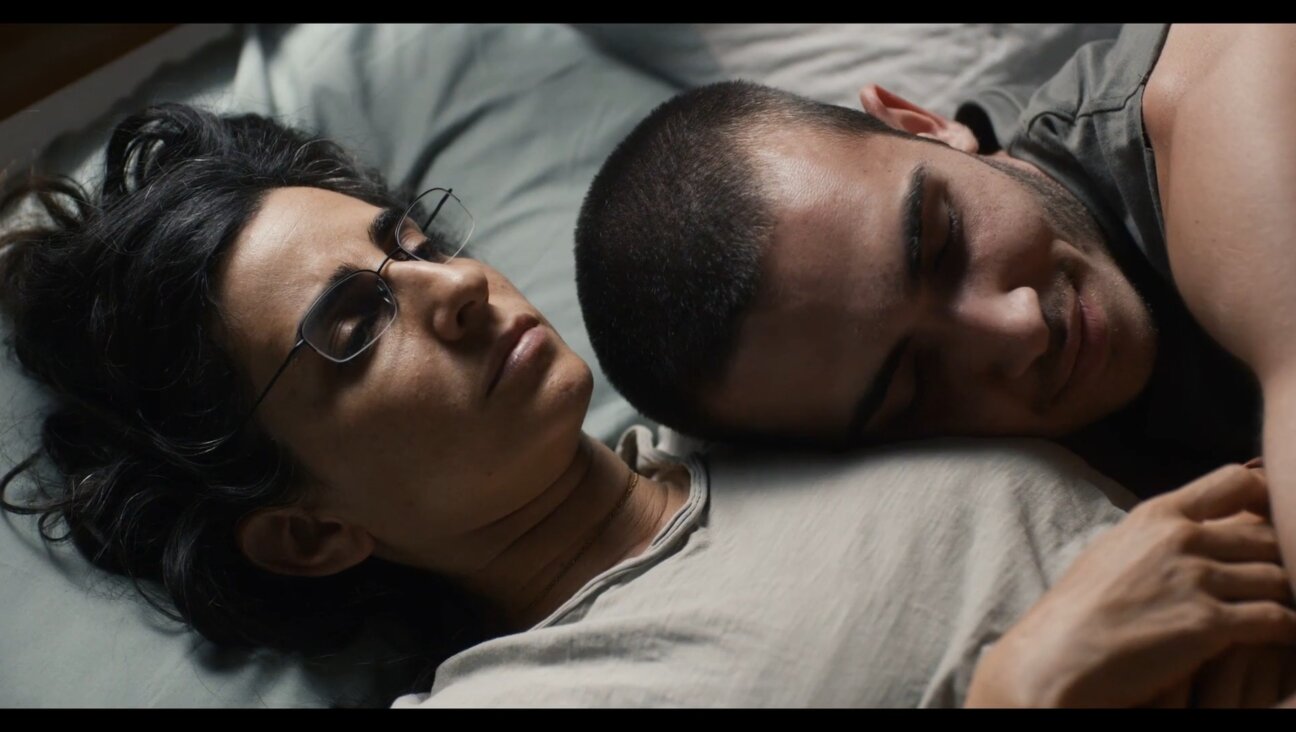
The debate over intermarriage has been focused on how “we” should deal with “their” potential absence. Accept or fight? Ignore or welcome? All the while, those American Jews who are intermarrying have remained decidedly present, maintaining social and familial ties and introducing religious and ethnic diversity into communities that have few established frameworks for even thinking about diversity, let alone dealing with it.

Critics of intermarriage offer dire warnings of its implications for the Jewish future. But look around. American Jewry is already more heterogeneous. Its boundaries are more fluid than previous generations could ever have imagined. The community has not disappeared, though it is different.

In other words, the future is already here. If only our communal conversation could catch up.

Shaul Kelner is an assistant professor of sociology and Jewish studies at Vanderbilt University in Nashville.


  • Print
  • Share Share

The Forward welcomes reader comments in order to promote thoughtful discussion on issues of importance to the Jewish community. In the interest of maintaining a civil forum, the Forward requires that all commenters be appropriately respectful toward our writers, other commenters and the subjects of the articles. Vigorous debate and reasoned critique are welcome; name-calling and personal invective are not. While we generally do not seek to edit or actively moderate comments, the Forward reserves the right to remove comments for any reason.


Comments
Lisa Thu. Mar 1, 2007

Intermarriage is destroying the Jewish people. We don't need a "different" community. We need real Jews to pass on our ancestors traditions, customs, culture to their children and not some watered down gentile version of Jewishness. I would rather see the Jewish community disappear than have people who celebrate Christmas represent Jews. The situation in the Jewish community is a tragedy and can be compared to the Holocaust because so many Jews have been lost due to intermarriage. Intermarriage is a disaster and no amount of sugarcoating it, like Mr. Kelner does, changes anything.

Jane Thu. Mar 1, 2007

I know several families in which the father is not Jewish and the mother is in which Jewish law is followed more consistently and joyfully than in many families with two Jewish parents. The children have one solid identification: Jewish. One dire prediction does not fit all.

Yehudah Sun. Mar 4, 2007

Martin states that "the pressures to assimilate are great", as if assimilation is a present-tense or future-tense phenomenon. Assimilation is in the past-tense. The process of Americanization took place a few generations ago. With the exception of Yiddish-speaking haredim, nearly all American Jews are English-speakers for whom the American identity is their primary identity. Although one hears of "multi-culturalism", in essence distinctiveness has never been on the agenda of the Jewish community. There is literally no Jewish creativity in Hebrew, and there is no awareness of the role of one's own language in the creation of a clear and unique identity. Efforts need to be focused on an education that will re-create a Jewish identity that is a reflection of our being a distinct people among the peoples. Non-distinctiveness and continuity are contradictory terms.

Martin Sat. Mar 3, 2007

I agree with the comments critical of Kelner's piece. The percentage of Jews as a percentage of Americans has shrunk -- and intermarriage has contributed to that very significantly. We constitute a very tiny percentage of the American and world population. Support for Israel depends on a large number of engaged American Jews, and without a large number of Jews, there cannot, by definition, be a large number of engaged Jews. The pressures to assimilate are great -- hard to resist with even 2 engaged Jewish parents. Carly's stmt re her husband's reluctance to raise their kids Jewish is pretty representative.

Lisa Fri. Mar 2, 2007

Lisa, I do agree that there are children from intermarriages that are more "Jewish" than children with two Jewish parents, especially in the scenarios you mentioned. Unfortunately the vast majorities of intermarriages occur between Jewish men and non-Jewish women. Mothers have more influence in the religious education of their children and this has lessened the Jewish influence in intermarried families. The dire predications about the effect of intermarriages on the Jewish community are coming true and there's no denying it.

Sid Fri. Mar 2, 2007

Intermarraige is becoming too accepted, leading others to follow suit. I personally come from from a family in which there is more than the average amount; my solution is to cut ties with these people. I would not recognize most of my first cousins if I met them on the street. I am appalled by otherwise engaged Jews who feel that having a common grandmother can whitewash this problem. Look at Numbers 25:1-15.

Carly Fri. Mar 2, 2007

If Jews want to stop interfaith marriage then they have to ensure that their children are committed Jews. Too many people in my generation (Gen X) were raised without any strong faith. We have a strong cultural association -- but that doesn't make you question interfaith marriage. But -- as someone who married outside the tribe -- I can only tell you that my faith has gotten stronger and it's been encouraged by my husband. I will admit, though, that in discussions about children he's not excited about raising any we might have as Jewish.

Sid Wed. Mar 7, 2007

Let us imagine that every American Jewish person married a member of the opposite sex, not originally Jewish, who became a Jew by choice, thus roughly doubling the Jewish population and that each of these Jews by choice took Judaism seriously. Is this good? Among other things the link between American and other Jews would somehow shrink. A certain amount of back-and-forth between being Jewish and being something else might occur. Let's think about it.

Becca Wed. Mar 7, 2007

Kudos to Kelner! The sooner our communal conversation catches up to what's really going on in American Jewish life, the better. "The future is already here"--and my family is part of it. When my extended family gathers for seder, there may be 2 non-Jewish spouses (including my non-Jewish father), 2 Jews by choice (including my husband), and a bunch of born Jews (including me!) at the table...but there's no one who's "married out." We're all in--whatever the religion of a spouse or parent. No children being raised "out of the faith," no one "lost" to us or to Judaism. I know that statistically our family snapshot is not the nationwide norm--but I think it says a lot about the pull of a strong Jewish identity rooted in committed family life. Has Carly's husband been given any reason to be enthusiastic about raising Jewish children? What have his experiences with Judaism, the Jewish community, and Jewish family been? Sid's cold-shoulder approach doesn't impress me: if my cousins had cut off contact with my family because of my parents'intermarriage, that would have diminished, not enhanced, my Jewish identity. (Instead, my Orthodox cousins are the ones having the whole extended family to them for seder! Carly: I think my non-Jewish father's experience raising 3 Jewish children has been a very good one. (If you want to be in touch with me, I'd be glad to hear from you via my blog, http://miriyab.blogspot.com) There is an organization for non-Jewish women raising Jewish children (The Mothers' Circle), and many resources for interfaith couples raising Jewish children (including JOI.org and InterfaithFamily.com). Not that my family had any of these--and we turned out okay! What we did have--and what such organizations can help others find--was, and is, a meaningful Jewish context of family and community and synagogue life for all of us. You and he might be interested in Jim Keen's book, _Inside Intermarriage: A Christian Partner's Perspective on Raising a Jewish Family_. (I don't know whether your husband is part of any other religious community or faith; my father was raised Protestant but is not a practicing Christian.) Whatever happens with Carly's theoretical children (who may make their own decisions later on, no matter what Mom & Dad decide), _she's_ here, and with her husband's support. She's part of the contemporary Jewish community--which is part of Kelner's point. She and I aren't "them," and we're not absent: we're here, and we're part of "us."

a librarian Tue. Mar 6, 2007

Intermarriage is part of the problem. Bigotted exclusionary Jews who shun even good converts is another part of the problem. Reliance on blood purity is shameful. But another BIG part of the problem is the 2000/01 population survey itself, which is funded for and by the leaders of the major Jewish organizations, by and large a group of self-selected conversative men who pander to the wealthiest in our community to fund the "I love Israel" parades and the country-club events of young lawyers, mid-aged doctors, and successful business execs. The number and type of Jews involved on the federation level is not a reflection of who WE are. Survival of the Jews in America will have nothing to do with population surveys because the people trying to extrapolate from them and guide the community into marrying Jewish and producing lots of Jewish babies are inept. The rabbis of American need to step up and be leaders again, like Heschel and the Soloveitchiks instead of leaving our community to the Republican-loving technocrats.


    Would you like to receive updates about new stories?


    We will not share your e-mail address or other personal information.

    Already subscribed? Manage your subscription.