Jesus, Bob: To Live Outside the Law You Must Be Honest

Dylan’s Born Again Years Documented

By Stephen Hazan Arnoff

Published November 14, 2008, issue of November 21, 2008.
  • Print
  • Share Share

Of all the intangible elements contributing to Bob Dylan’s sustaining genius — prodigious recall of the breadth and depth of American song; a restless, creative spirit, and abiding intellectual curiosity — none has been more powerful than his ability to confound expectations.

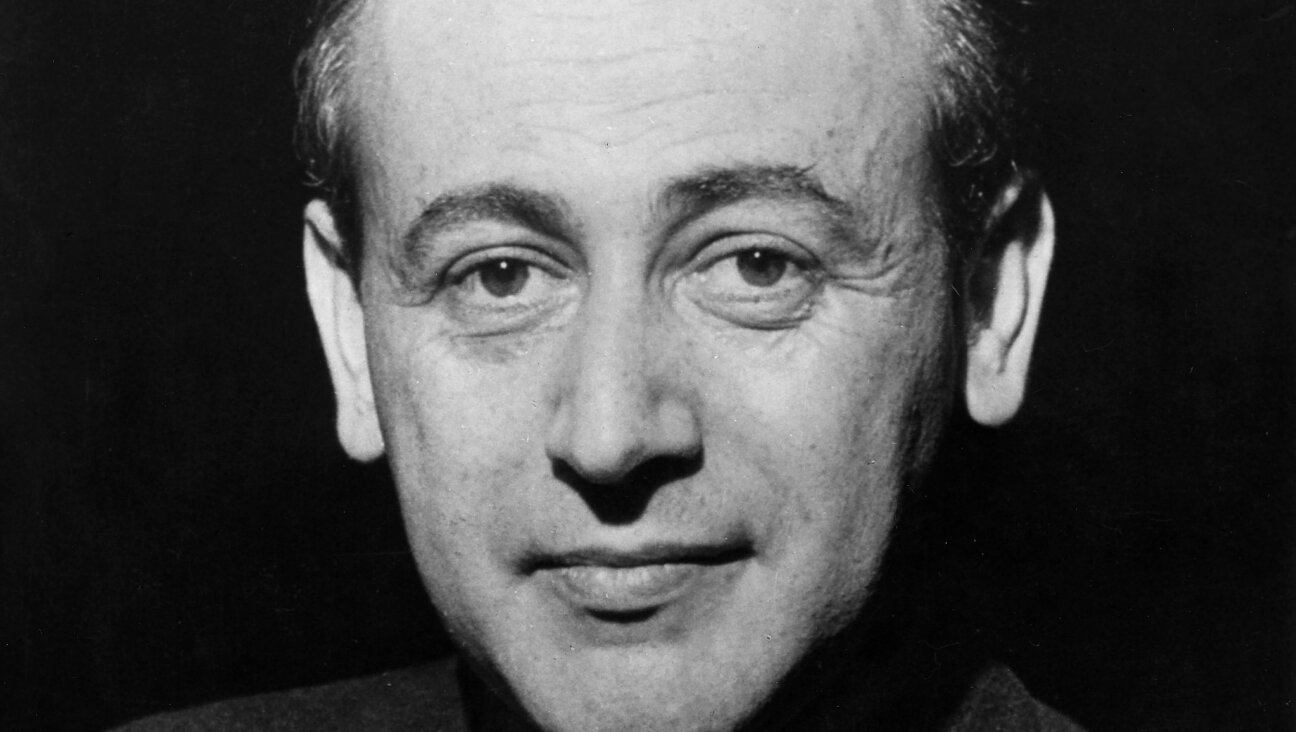
TWO NICE JEWISH BOYS: Robert Zimmerman in 1978.
TWO NICE JEWISH BOYS: Bartolomeo Montagna’s representation of Jesus the Christ from the early sixteenth century.

Pop vocalists on the radio were not supposed to sing through their noses, or sputter and growl from their throats, but Dylan changed that. Not long after establishing himself on the charts, and seemingly overnight for his fans, he swapped lucid, intimate acoustic protest tunes for esoteric electric epics. Radio songs were supposed to be three minutes long, but Dylan changed that rule, too: The second half of “Like a Rolling Stone” served as its own B-side; disc jockeys simply flipped the record over halfway through. A pivotal figure in 1960s counterculture, Dylan all but disappeared from public view as the underground coalesced as a movement: He was a no-show at the Woodstock music festival, even though it was down the road from his house.

“Inside Bob Dylan’s Jesus Years: Busy Being Born…Again!” a new film written and directed by Joel Gilbert, attempts to explain the most confounding period of Dylan’s career. In the late 1970s, Dylan became, to the shock of many of his fans, a born-again Christian. To add what seemed like insult to injury, his albums “Slow Train Coming” (1979), “Saved” (1980) and “Shot of Love” (1981) — steeped in fundamentalist Christian imagery and with proselytizing intent — anchored a series of revivalist tours.

Dylan’s born-again Christianity was a rebellion too far off for many of his fans. At the heart of the film is the unresolved question of why Dylan did it. Born Robert Zimmerman and raised Jewish (including a bar mitzvah) in Hibbing, Minn., he attended a Zionist summer camp as a kid and then dropped out of a Jewish fraternity house at the University of Minnesota. Dylan had always been the rebel with whom young Jews have identified, now remarkably across three generations. Despite his Jewish roots, his fascination with religion generally and with Christianity specifically has been obvious throughout his career, particularly in the core narratives and myths of American roots music carried by the traditional blues, country and gospel that he loves. Just listen to his weekly radio show, where much of his playlist comes from before 1950 and has the same themes of old-time religion that abound in his own music.

According to his then girlfriend, singer/songwriter Jennifer Warnes, even fellow songwriter Leonard Cohen was bewildered: “I don’t get it. Why would [Dylan] go for Jesus at a late time like this?” This is the same Cohen, no stranger to religious syncretism himself, who wrote, “Anyone who says I’m not a Jew is not a Jew/I’m very sorry but this decision is final” while living as a monk in a Zen monastery. You know you are in trouble when the only Jewish performer to compete with Dylan in the realm of rock ’n’ roll gravitas can’t reconcile born-again Bob with the Dylan who had famously sung “Don’t follow leaders/watch the parking meters” in the ’60s.

Gilbert, lead singer of the Dylan cover band Highway 61 Revisited (“Highway 61 Revisited” is also the name of Dylan’s sixth studio album, released in 1965), and director of “Bob Dylan — World Tour 1966, The Home Movies” (2004), tackles this tense period with a series of talking heads interviews. He rarely allows a religious agenda to stilt the construction of the film’s controversial raw material. His weakness, however, is a fan’s naive compulsion to gather the reflections of anyone who knew Dylan during this period without properly parsing the effect of two full hours of rambling comments bridged by stock images.
According to Mitch Glaser and songwriter Al Kasha, who are not only key figures in the Jews for Jesus movement, but also two of the primary talking heads of the film, the “late time like this” of Dylan’s conversion could have been predicted by those paying closer attention to the chaos around him. Glaser, Kasha and other commentators, like the Rev. Bill Dwyer of the Vineyard Christian Fellowship Church, where Dylan studied and prayed, explain how deep pain drives deep “witnessing” in the realm of born-again Christian acolytes; that the tumult of drugs, social and political burnout and the failures of the sexual revolution left many people broken in ways that the Jesus movement — rooted in heady Southern California, where Dylan and many other counterculture heroes lived at the time — exploited to attract vulnerable souls.

In fact, the Jews for Jesus movement continues this work, with centers of worship around the world almost universally regarded by non-messianic Jews as being beyond the margins of organized Jewish life. Much of the 200-member audience at the November 1 premiere screening and concert for the film, held at the New York Society for Ethical Culture’s auditorium, were among either the hunters or the hunted of Jews for Jesus, as the event was co-sponsored by Glaser’s Chosen People Ministries. Glaser was there, and he spoke on a panel with Gilbert and former members of Dylan’s band, Regina McCrary and Rob Stoner. Volunteers with nametags designating them as staff members roamed the hall, collecting e-mail addresses and questions from the audience on colored note cards. All this action seemed to be interpreted by the moderator as an excuse for asking how or why one might come to accept Jesus as the savior.

Unfortunately for Gilbert — who self-produced and now distributes his work on DVD, and at one point in the panel discussion stated with some defensiveness that he is a Jew and not a Jew for Jesus — the content of the evening was spoiled by the sheepish attempts of representatives of the movement to appear casual about their religious goals despite obvious missionary pitches and ploys. Gilbert’s mere desire may have been to find an audience for his work, but placement of the event by Glaser’s group, as well as messianic Congregation Sha’ar Adonai at the Society for Ethical Culture — founded as a nonsectarian movement by humanist Jew Felix Adler – added an element of irony to the insult of a messianic soft sell throughout.

Dylan’s religious stances over the years betray vulnerability to extremes and a profound sense of drama for which a messianic soft sell worked quite well. In the early 70s, after a decade as a musical legend, Dylan, then a young father of four, had thought of joining a kibbutz. He also claims in his 2004 memoir, “Chronicles, Volume One” (Simon and Schuster), that a famous image of him praying at the kotel from this period was posed as a way to disrupt the blind loyalty of cloying fans who would come to dread him as a Zionist and finally leave him alone. But by 1979, exposed to change by his innate spiritual character, the many demons come to roost for his generation after the chaos of the ’60s, and a hard divorce, Dylan plunged headlong into the quest for salvation. Maybe he showed up at Chabad Shabbat programs in Brooklyn’s Crown Heights area a few years later, and at Chabad on both coasts on the High Holy Days ever since, but Dylan’s fans still reflect on this Christian period with dismay — and not just because of Dylan’s religion.

The music from this period is as inconsistent as any Dylan has created — from rote melodies with clichéd images of devils, blood, baptism and unbelievers in tunes like “Property of Jesus,” alongside gorgeous tunes like “I Believe in You” and “Every Grain of Sand.” What weakens the music and Gilbert’s film, and even permeated the atmosphere at the premiere event, is a lack of subtly and nuance that animates Dylan’s best work and is lacking in his worst. From 1963’s “With God on Our Side” to 1997’s “Tryin’ To Get to Heaven” and beyond, Dylan is one of the most committed commentators on the human and divine struggle that popular culture has ever seen. Few artists have had more influence on bringing big questions to the sometimes small-minded world of rock ’n’ roll. The key to understanding what is flat and disturbing about Dylan’s Christian period is exploring what is thick and mysterious about his most compelling work.

Most of the time, Dylan embodies a multilayered approach to his subject — with wordplay, rich cultural allusions, insinuations, irony and clusters of unexplained questions. In his writing and performing, Dylan grasps at defining themes with ferocity and dynamism that allow renowned academics like Milton scholar Christopher Ricks (who dedicated some 500 pages to Dylan in his 2004 book “Dylan’s Vision of Sin”) to compare his canon without reservation to that of Shakespeare and Milton. With a few exceptions, including the aforementioned songs, the Christian period of Dylan’s work remains unconvincingly simplistic, overly literal, humorless and blunt.

One way of understanding Dylan’s religious vision throughout the majority of his career comes from an intriguing passage at the conclusion of Moshe Idel’s “Kabbalah: New Perspectives.” Idel reads Franz Kafka’s “Before the Law” as a fable for the contemporary decline of mystical knowledge in religious traditions stunted by allowing passionately flat answers to layered questions. From Jewish orthodoxies to Muslim fundamentalism to evangelical Christianity, communities are being deprived of the complexity that religious systems can express. For Idel, the spiritual paralysis of the “man from the country” is emblematic of an entire world of religious seekers who have lost the keys to the locked gate of the splendor of the palace of faith. On the verge of death, the man discovers that the door at which he had waited a lifetime would have opened for him if only he had entered with broad possibilities of understanding rather than with fixed answers and static expectations.

Dylan at his best is Dylan at his most open. As he sings in 1966’s “Absolutely Sweet Marie,” “To live outside the law you must be honest.” One should not wait for the Law to open the door, direct traffic or guide the journey. So, too, in Dylan’s rereading of the story of “Akedat Yitzhak” (“The Binding of Isaac”), a classic midrash on the irony and irrationality of belief:

Oh God said to Abraham, “Kill me a son”

Abe says, “Man, you must be puttin’ me on”
God say, ‘No.’ Abe say, “What?”
God say, ‘You can do what you want Abe, but
The next time you see me comin’ you better run’
Well Abe says, “Where do you want this killin’ done?”
God says, “Out on Highway 61.”

Though he uses it as a mythic trail and template for America’s betrayal of the disempowered, the actual Highway 61 runs right down the center of the United States. Beginning in Minnesota at the Canadian border near Dylan/Zimmerman’s birthplace, and ending in New Orleans at the birthplace of the blues he adopted as his roots, the pavement traces the living narrative of slavery’s betrayal, which today’s America, especially after the recent presidential election, continues to unravel. As it challenges God and temporal authority, the song mixes anger, dismay, humor, accusation and wild celebration.

Consider also “Señor (Tales of Yankee Power)” from 1978, where the narrator poses a series of cutting questions and memories for a messianic stand-in accompanying Dylan’s version of the man “Before the Law”:

Señor, señor, do you know where we’re headin’?
Lincoln County Road or Armageddon?
Seems like I been down this way before.

How long must I keep my eyes glued to the door?
*Will there be any comfort there, señor? *

On the cusp of Dylan’s acceptance of Jesus, a soul exposed to a political and theological abyss stubbornly looks for answers. Not long after “Señor,” Dylan submitted fully to the Law that provides a singular answer to plow through doubt, paradox, hurt and unbelief. It results in the oppressive need to gather more troops to ensure that the “good news” remains fresh and unchallenged. It also results in mostly lousy art.

Gilbert’s film is useful for Dylanologists still trying to answer Cohen’s question about what happened to Dylan’s complex, compelling religious commentary during this phase, particularly when some of his deepest spiritual messages would re-emerge in the late ’80s, with “Oh Mercy” and, most recently, with the albums “Love and Theft” and “Modern Times.” To uncover what keeps Dylan’s vision sharp across his career, apply the Talmud’s famous injunction to Dylan’s oeuvre: “Turn it, turn it, for all is within it.” The songs of Dylan’s Christian period — though sincere artifacts of an honest quest by a restless seeker — are often superficial products of his cultural vision. In the end, Dylan’s genius is that, as he sang of one of his favorite outlaws, “no one really knew for sure where he was really at.”

Stephen Hazan Arnoff is a writer and teacher and the executive director of the 14th Street Y of The Educational Alliance, a Jewish community center in Manhattan’s East Village.


  • Print
  • Share Share

The Forward welcomes reader comments in order to promote thoughtful discussion on issues of importance to the Jewish community. In the interest of maintaining a civil forum, the Forward requires that all commenters be appropriately respectful toward our writers, other commenters and the subjects of the articles. Vigorous debate and reasoned critique are welcome; name-calling and personal invective are not. While we generally do not seek to edit or actively moderate comments, the Forward reserves the right to remove comments for any reason.


Comments
kern Fri. Nov 14, 2008

Mr. Arnoff, you have written a lot of words, but after reading them all, I have no idea what you are saying. If you would be kind enough to sum up what is the point of your article/review in a couple of pithy paragraphs, I would greatly appreciate it.

John Sat. Nov 15, 2008

Dylan meant it, he was honest. Whatever brought him to Christian belief was real. It is super-natural. Thats what the problem is, it's like if you never ate an orange you would never know how it taste or smell or felt in your mouth or nose. Once you eat it you know. From there on you have a path to walk and he is walking it. Is he perfect? His songs to this day are filled with references to faith and God above. He has become a bit more mature in his faith and has stopped casting his pearls before swine.

AJ Weberman Sat. Nov 15, 2008

It took me 40 years to figure this verse out. The key to the fact that it deals with Dylan being censored on the Ed Sullivan Show was found in this passage from Tarantula. God - a man of such superior qualities that he is considered a god among men speaks to Abraham, Dylan, a Jew "trip (to make a mistake, In Dirge Dylan wrote, "You were just a painted face on a trip down to suicide road") into the light (in the spotlight) here abraham (Bob Dylan)... what about this boy of yours? (what about Talkin John Birch Society Blues) & don't tell me that you just do what you're told (I know you are a a rebel) i might not be hip to your sign language (poetry) but i come in peace i seek knowledge. in exchange for some information, (some dirt on yourself - in Tarantula Dylan wrote, "i don't care what your daddy says. j. edgar hoover is just not that good a guy. like he must have information on every person inside the white house that if the public knew about, could destroy those people" and in Summer Days Dylan wrote, "If it's information you want, you can get it from the police") i will give you my fats domino records, (Fat Domino appeared on Ed Sullivan's show at least twice drawing record audiences) some his an hers towel (the word towel only appears once in the lyric and written word data base. In Chronicles Dylan wrote, "A young girl was on the balcony beating the dust off a rug, dressed in pink gymnastic tights, had long black oiled ringlets and a bath towel around her shoulders." The fact that Dylan uses towel in the singular sense indicates that something false is involved here) & your own private press secretary (and plenty of positive press) come on. fall down here. (surrender) my mind is blank. i've no hostility. (I am not an anti-Communist, I am a liberal) my eyes are two used car lots. (Then they bury him with stars / Sell his body like they do used cars.") i will offer you a cup of urn cleaner (In Tarantula Dylan signed his name as "your valve cleaner") - we can learn from each other / just don't try & touch my kid (don't try to influence the youth of America)" It should be noted that Dylan walked out of Sullivan's studio rather than be censored. It should also be noted that he entitled this paragraph from Tarantula POINTLESS LIKE A WITCH.

AJ Weberman Sat. Nov 15, 2008

Oh God (Ed Sullivan was looked on as God in the entertainment world) said to Abraham, (Dylan) "Kill me a son" (kill me a song in this case Talkin' John Birch Society Blues.) / Abe says, "Man, you must be puttin' me on" (sounds like the way Dylan speaks) / God say, "No." Abe say, "What?" / God say, "You can do what you want Abe, but / The next time you see me comin' you better run" (you better have a run of luck, an unbroken streak of luck) / Well Abe says, "Where do you want this killin' done?" (Dylan asks Sullivan where he wants to censor him?) God says, "Out on Highway 61 (Sullivan says on my TV Show of course)."

john Sat. Nov 15, 2008

Whatever! You lost me A.J. ! "Feel free to think...pursue the truth...live by principles" Relax jack, look out your own window. Leave Dylan out of your trip.

jhan moskowitz Sat. Nov 15, 2008

Oh gee this was so well written, and so insightful,and yet sadly missed some real understanding. Arnoff, has demonstrated that he has a real grasp on some of the poetry of Dylan, but lacks an understanding of evangelicalism, As one of the founders of the recent Jews for Jesus movement( original one was started around 33 CE give or take a year) and an life long Dylan fan (I was at the concert in 1979 in SF) I feel I might have something that would help Arnoff's artice. I will try my best not to evangelize. Dylan's paradigm shift was real, and that translated into a change in worldview, His music was trying to capture and communicate that change, you may have not like what he was saying, but I think being critical of his art at that stage is just bias, The two albums that are most closely attached to that period, are Saved,and Slow Train Coming, there are many no believes who still think that they are still some of his best work, Arnoff feels as though the constraints of a dogamatic faith undermine Dylan's artistic achievements. Would he say the same of a Bach, or a Milton or a Shlomo Carlbach? Dylan used the musical " american christian culture bound" artifacts around him to say what was experiencing. Much like many Jews who become believers in Jesus, it takes time to discover and create the forms that best describe your faith. Joker man, one of his best, represents a letter more mature Dylan, struggling with faith and doubt. One more thing, I am shocked that Arnoff who is such a good critic did not pan the flick, I walked out of it, It needs to be edited, there is too much film wasted on shots of the interviewer.

Marc Brukhes Sat. Nov 15, 2008

First off, it's amazing to see that A. J. Weberman is still alive, let alone still peddling his "Dylanology" rap.... This is an exceptionally sensitive article about the most difficult moment in Dylan's mercurial career. My response to this moment--aside from my appreciate, like Mr Arnoff's, for "I Believe in You" and "Every Grain of Sand"--is to consider how much of Dylan's "gospel" period, especially as revealed later on the Bootleg Series albums, is actually steeped in "Old Testament" (Hebrew Bible) references. As Dylan himself sings on "Infidels" (an album that one would do well to consider in this context, which in my opinion quite thoroughly repudiates the "born again" phase), "It took stranger to get me to look at Justice's beautiful face/And to see an eye for an eye/And a tooth for a tooth"; it took the experience of Christianity to reconnect Dylan, however tenuously, with his Jewishness. I think it should be stated for the record, as well, that over the past decade, whenever the subject has come up in interviews, Dylan has denied being a member of any organized religion; this reminds me, in a specifically Jewish way, of the old Will Rogers joke, "I'm not a member of an organized political party. I'm a Democrat"!! Although I was heartened on my birthday last year to find out that Dylan took an aliyah at an Atlanta Chabad House (it was Yom Kippur!) I think one has to place him in the large pantheon of 20th century secular Jews; if we can accept Kafka, Mahler, and Freud as Jewish heros, why not Dylan as well--regardless of how he spends his Friday nights?

Doug Fox Sat. Nov 15, 2008

I just can't buy this conclusion. It doesn't square with the facts. Anyone who could write and perform the following lyrics certainly knows where his favorite outlaw is at: I believe in you when winter turn to summer, I believe in you when white turn to black, I believe in you even though I be outnumbered. Oh, though the earth may shake me Oh, though my friends forsake me Oh, even that couldn't make me go back. Don't let me change my heart, Keep me set apart From all the plans they do pursue. And I, I don't mind the pain Don't mind the driving rain I know I will sustain 'Cause I believe in you. Copyright ©1979 Special Rider Music

Dovid K. Sun. Nov 16, 2008

Mr. Hazan Arnoff is dissapointed that the music of Dylan's Christian phase is "simplistic, overly literal, humorless and blunt", and not "thick and mysterious", as he terms it. As an Orthodox Jew, let me venture to respond in defense of these songs. Bob sings on the first of his Christian albums, (Slow Train Coming), "[d]on't know which is worse, doing your own thing or just being cool". Could this lyric possibly be referring to himself, in years past, when he could sing such "thick and mysterious" lyrics as "The motorcycle Black Madonna, two wheeled Gypsy Queen. And her silver-studded phantom cause the gray flannel dwarf to scream"? Of course, so many of Dylan's songs back then were brilliant, surreal, word paintings. His songs from the period under discussion, however, are songs with a tachlis message. Again, from 'Slow Train': "[g]onna change my way of thinking, find myself a different set of rules". Obviously, to an Orthodox Jew such as myself, Bob has made a mistake in the faith he has/had embraced. However, he has changed his was of thinking, and the songwriting that flows from that change simply reflects this.

raven Sun. Nov 16, 2008

great article. well written, smart and thoughtful. good job mr hazan arnoff!!!!

SP Sun. Nov 16, 2008

nice one arnoff. i've been reading your dylan's articles for a while and i think you are on something good.

Gary Hobbins Sun. Nov 16, 2008

Many (most?) knowledgeable Jews who read the New Testament are deeply struck by the book's continuity with the Torah and its Jewishness. A percentage become involved with Christians. Once they realise that these Christians do not even understand their own book, let alone its Torah roots, and that this is a DELIBERATE 2000 year old effort to divorce their religion from its Jewish roots, get disillusioned. In terms of openness, a "Messianic" congregation and Chabad are quite similar in that they don't judge newcomers and are very hospitable. Chabad can show it is in line with 5000 years of tradition, the "Messianic" congregations are generally collections of fruits and nuts, mostly gentiles, wearing a variety of skullcaps, tassels and prayershawls. Very nice & sincere people, but their search for Hebrew roots is, if at all present, in its very infancy.

AJ Weberman Tue. Nov 18, 2008

These so-called Christians in the DVD turned Dylan into a self hater. Later he says, "Might be the furher might be the local priest." The following represents that height of Dylan's self hate. “My so-called friends have fallen under a spell” it is not I who has fallen under the spell of Christianity but my fans who have fallen under the false religion of Judaism. “They look me squarely” square: a formal and conservative person with old-fashioned views’ “in the eye” at my Christian thoughts “and they say, "All is well." I am happy being a Jew. “Can they imagine the darkness that will fall from on high / When men will beg God to kill them and they won't be able to die?” Can’t these Jews imagine, the darkness, the night that will come falling from the sky when they end up in hell for rejecting the Son of God, Jesus Christ, as their Lord and Savior? “You're the queen of my flesh, girl, you're my woman, you're my delight,” you finally have my rapacious sexual appetite under control “You're the lamp of my soul girl,” you light the path for my soul to travel and offer me hope “and you torch up the night” and you illuminate the present “But there's violence in the eyes, girl, so let us not be enticed” but there is violence in the thoughts of the Jews, Jesus, so let us not be lured into a trap by them, as was Jesus. “On the way out of Egypt, through Ethiopia,” this was the route the Jews took after being exiled by the Romans “to the judgment hall of Christ (also the judgment of those who killed Christ)” to the judgment which the Jews justly deserved, 5,000 years of exile, for killing the Son of God, deicide.

john Wed. Nov 19, 2008

Hey hey, Now honestly A.J. What kind of comment is that about "being lured by the Jews, as was Jesus?" Christ was not played by anyone, He came to suffer, bleed, and die on the cross. "Like a lamb led to the slaughter, He opened not His mouth" There was no time during which Jesus was sleep walking, hoping to take the next step in the right direction. You have to get your head around the connections between Isaiah, particularly the 53rd chapter and the crucifixion details in the Gospels. Bob says back in the day, "I'll know my song well, before I start singin" This is a problem for those who want to dismiss his "Christian" period. His New Testament theology is spot on, and being a Jew he sees,[a beautiful picture] the connection with the books of Moses. So, you can not dismiss it out of hand, Dylan's conversion has all the earmarks of being real. As an artist Dylan can not be expected to write the same songs over and over,be they based on Christian experience or any other. Especially Dylan. I don't know what all the fuss is about. Seems some people have a stake in what he believes or not. Weird, don't ya think? Also, Dylan's subsequence behavior is not a way to decide if he is converted, because you nor I know what that behavior is, it all could be an act or a defense mechanism a way in which Dylan decides to deal with people like you and I. Can you blame him? Now,the point I find most disturbing, you saying Dylan is saying the Jews justly deserve "it"...that is a lie from hell. You saying that Dylan is saying that, is a lie.Your interpretation of those moments in history are also not fully understood. You need to go back to Sunday school, and/or you need to study Greek and Hebrew again. Far too many mistakes and opinions are scattered throughout your Theology. Stick to the garbage you know about, and stop littering up my minds landscape with your foolishness. First and foremost Christ came unto his own, He died a Jew, He died for the Jews, all the early church where made up of Jews. To them came the vision,Paul,to take the gospel to the Greek. Now there is no longer Jew or Greek but in Christ all things have become new, and it is a new creation. We worship in spirit and in truth. God is reconciled unto man through Jesus Christ. It is grace, no works, no law, no flesh. Jesus paid it all, all to Him I owe, sin has left a crimson stain, He washed it white as snow. "Love Never Fails" John. p.s. as I write think and read, I have been led to try and understand a little about God. Dylan was the reason right now for this, so, has he not been used by God for Gods own purpose? Ah, Bobby, how we love you.

Les Grodsky Wed. Nov 19, 2008

Why do some Jews convert to Christinity? I believe one of the possible reasons for this for some people, and it is impooible to know which people this may apply to unless you know them very well, is because they feel guilty for the sins they have committed. They have tried to make amends for their sins, but this becomes emotionally draining. If they don't make amends, they believe that God will not forgive them. For their emotional health, they convert to Christianity.

Henry Jakubowsky Sat. Nov 22, 2008

I like the man CIMERMAN and his songs, but do I have to like Bob Dylan with his emotional insecurity due to his Jewish roots? I very much like Chopin's musik but do I have to like Chopin the antisemite?

Joel Sat. Nov 22, 2008

Bob Dylan is just another confused soul that as the Apostle Paul (formerly Rabbi Shaul) says in 2 Timothy 3:7: ... is "ever learning, and never coming to a knowledge of the truth."

Samuel James Quintana Sat. Jun 6, 2009

Speechlessly speaks for its self. The_Mighty_QuinnTana

jermicah Sat. Jun 27, 2009

AJ Weberman: You were SO MUCH easier to understand when you were content to root thru Bob Dylan's trash rather than exposit his lyrical demitrius.

bill Thu. Dec 10, 2009

a j weberman r u shitting me......highway 61 is about.......ed sullivan? dude get a fucking grip


    Would you like to receive updates about new stories?


    We will not share your e-mail address or other personal information.

    Already subscribed? Manage your subscription.