When May a Rabbi Use the Words of Others?

Graphic by Angelie Zaslavsky

By Josh Nathan-Kazis August 24, 2012
The leader of Judaism’s Conservative movement has publicly apologized to two prominent rabbis for his use of their words in his own writings without attribution.

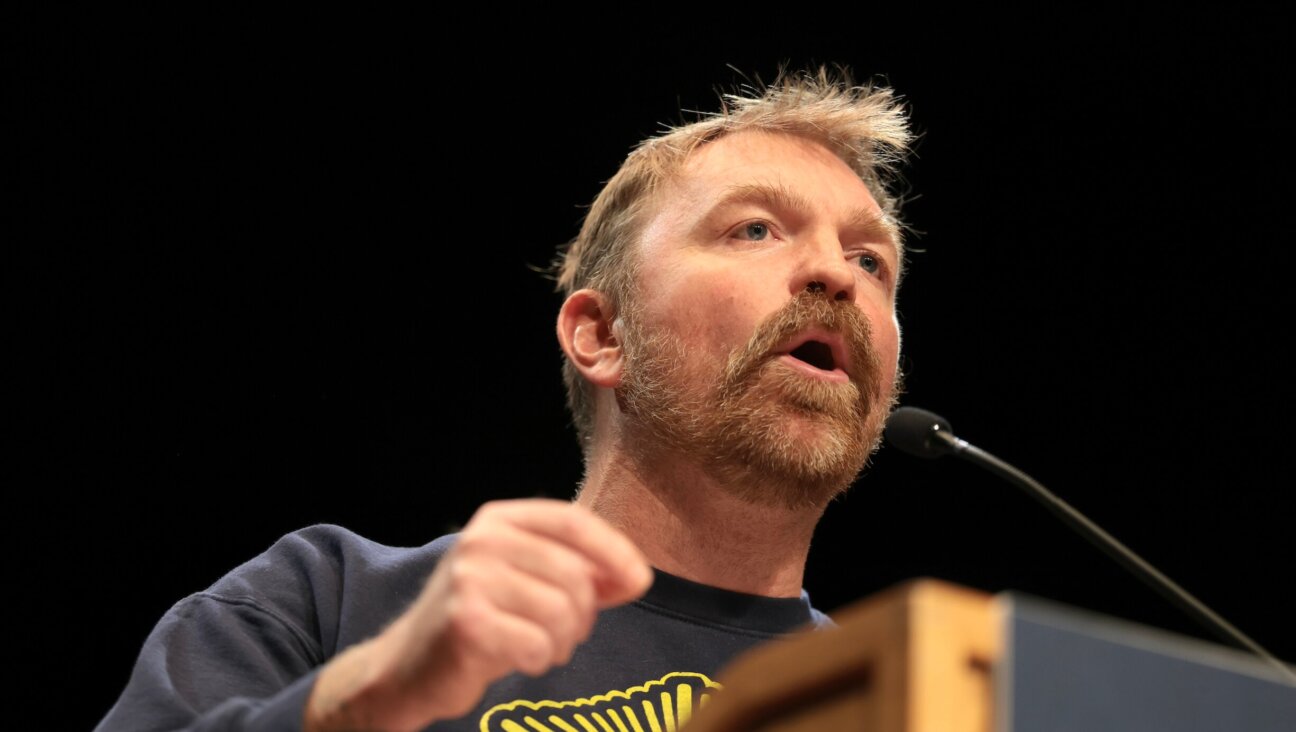
Steven Wernick
Rabbi Steven Wernick, CEO and executive vice president of the United Synagogue of Conservative Judaism, apologized after the Forward inquired about two instances in which paragraphs written by the other Conservative leaders appeared in Wernick’s online writing. Wernick asserted that the incidents did not amount to plagiarism, and he said that plagiarism standards for rabbis are looser than those applied to journalists and academics.
“Among rabbis, while one strives always to credit… the reality often falls short of the aspiration,” Wernick wrote. “Indeed, all but the most disciplined of rabbis have found themselves neglecting to credit… because they forgot that they were not the author of the particularly quote-worthy passage in the sermon they delivered two months or two years earlier.”
Conversations with rabbis and experts suggest that the plagiarism standards applied to rabbis are strict. But many also said that in practice, as Wernick suggests, citation in the context of spoken sermons is not always possible or even desirable.
All agreed, however, that it is never acceptable for rabbis to present others’ words as their own in written work.
“There have been plenty of times where a rabbi will read another sermon, be inspired by that sermon and then create a sermon on a similar topic” without citing the original sermon, said Rabbi Bradley S. Artson, dean of the Ziegler School of Rabbinic Studies at American Jewish University, a Conservative Jewish seminary. “If I present it as my own original insight, that crosses a line in which we undermine our own integrity and the integrity of our entire tradition.”
Artson was speaking without knowledge of Wernick’s unattributed use of others’ work, including Artson’s.
Pulpit rabbis are expected to deliver new speeches all the time: Each Friday night, each Saturday morning, on holidays, at funerals, at weddings. That’s a lot of material, even for full-time writers, which pulpit rabbis are not.
“It just seems a ridiculous thing to ask any human to do all the things a rabbi has to do,” said Randy Cohen, the original writer of the New York Times Magazine’s Ethicist column. In his new book, “Be Good: How To Navigate the Ethics of Everything,” Cohen suggests that Christian pastors be allowed to deliver sermons written by others. In an interview with the Forward, he made a similar argument for rabbis. “He has to be a psychologist to his flock, he has to be a skilled administrator… he has to be a gifted writer and an inspiring orator? Who can do even one of those things?” Cohen asked.
In fact, rabbis have plenty of tools to help them cope. There are sourcebooks, like A Rabbinic Anthology by Claude Montefiore and Herbert Loewe, a 74-year-old compilation that gives rabbis easy access to useful texts.
Other, perhaps more easy-to-abuse options are services that distribute prewritten sermons to rabbis. One, called Torah Fax, sends its 500 subscribers emails and CD-ROMs with weekly sermons, holiday sermons and sample eulogies.
“It’s something to get the rabbis started, not [for them to] copy,” said Bernhard Presler, president of the rabbinic support network Torah Fax. “When you have a funeral… you have a day to write the eulogy, so you need last-minute ideas to get you off the ground.”
Teachers at rabbinical schools say that graduates know that delivering others’ words or ideas as their own is not allowed. And codes of ethics and professional conduct of the Reform, Conservative and Reconstructionist rabbinical associations all explicitly warn against plagiarism. The Modern Orthodox rabbinic association also bans plagiarism.
But Rabbi Jack Riemer, a well-known Conservative rabbi and author who advises other rabbis on sermons, said that citations are not always useful in spoken sermons. “If I were to publish a scholarly article, I would certainly use footnotes, but I’m not sure that I would weaken the drama of the living moment by complicating it with footnotes, knowing that ideas travel…. It would weaken the sermon, and it would not enlighten the congregation,” Riemer said.
In a letter distributed to USCJ members hours after the Forward inquired about Wernick’s writings, Wernick explained that the two instances highlighted by the Forward were a result of the gap between citation standards for written and spoken rabbinic work. Wernick said that he had reused in online writings pieces of sermons he had previously composed for oral delivery.
“… I pulled especially quotable sections of my sermon for use in a blog post and online essay, neglecting to check if they had been borrowed from other sources,” Wernick wrote.
A former pulpit rabbi, Wernick has led the USCJ since 2009. Facing shrinking membership rolls, he has cut the organization’s staff and backed a controversial new strategic plan in an effort to rebuild the organization.
The two instances of unattributed paragraphs apparently written by others appeared in Wernick’s writing published in the past year. In an essay posted on the USCJ’s website to mark the 10th anniversary of September 11, Wernick included a paragraph that former Jewish Theological Seminary chancellor Rabbi Ismar Schorsch wrote for a 2002 essay on the terrorism attack’s first anniversary.
The paragraph Wernick took from Schorsch reads, in part: “The judgment we seek from God is not for life eternal, but an extension of our lives for one more year. Confronted by our own vulnerability, we affirm the gift of life and rededicate ourselves to fill the time allotted to us with acts of compassion and generosity to others.”
In the second incident, Wernick used a paragraph originally written by Artson for a 2002 Torah commentary in slightly different form. Wernick’s version appeared in an August 12 post on his personal blog, which carries the USCJ banner on its logo.
“Here, in stirring eloquence, our greatest prophet and teacher reminds us that the central task of the Jew is to live in accordance with the teachings of God — to conduct ourselves and our dealings with others in such a way that we cultivate the wisdom, compassion and justice possible for all human societies,” Artson’s version reads, in part. Wernick’s version substitutes “political leader” for “teacher,” adds Moses’ name and makes two other small changes.
In a statement to the Forward, which he titled “The Occupational Hazard of Being a Rabbi in the Cyber-Age,” Wernick apologized to Schorsch and Artson, but said that the incidents did not amount to plagiarism.
“In the act of repurposing earlier sermons, the nametags fell off important passages,” Wernick wrote.
Artson was on vacation when queried about the passage he had written. He did not respond to a request for comment. Schorsch also could not be reached.
In his letter to the USCJ, Wernick described the Forward as being out to get his organization.
“Since learning of these charges, I have had many feelings and am the first to admit that in our hurry to respond as rabbis, we are not always careful to make sure we do not commit the offense of misattribution,” Wernick wrote. “However, I have also felt — and not only today — deep resentment of the prosecutorial zeal of this particular newspaper for Conservative Judaism and especially United Synagogue.”
Contact Josh Nathan-Kazis at [email protected] or on Twitter @joshnathankazis
I’m personally matching all gifts to the Forward, up to $36,000. Can I match your gift now?

Hello, fellow Forward reader! I’m Joel Brown, a Forward reader and supporter for more than 15 years, and currently the chair of the board of directors.
I’m an avid Forward reader because it ticks so many of my essential boxes: excellent journalism, Jewish focus and diverse viewpoints. In today’s political climate, what I most appreciate is the Forward’s independence — made possible by the generosity of its membership.
The Forward is committed to bringing you unbiased, nuanced Jewish news. From my position as board chair, I see an exciting future as we expand our position as the definitive independent voice of contemporary American Judaism.
— Joel Brown, Forward board chair
Support our mission to tell the Jewish story fully and fairly.