



Allen Ellenzweig
By Allen Ellenzweig
-

The Schmooze How Italy Saved Its Jews
The vagaries of international film distribution may produce the impression that the French have created a more significant body of work examining their nation’s moral failings under Nazi Occupation than any other European country. We have, for example, feature films like Louis Malle’s “Au revoir, les enfants,” Truffaut’s “Le Dernier Metro,” or Rose Bosch’s recent…
-

The Schmooze Hero in Print, Villain at Home
Few of us ever face a moral decision with life or death consequences, or that threatens to influence, however feebly, the course of history. This may be one reason why the moral calculations of men and women who lived during the rise of the Third Reich and the Second World War prove so durable as…
-

The Schmooze Polish Drama in Black and White
Shot in rich black and white, “Ida” is a quiet, deliberately paced study of the end of innocence for a young Polish woman, Anna, raised an orphan in a convent. It is the early 1960s. On the verge of taking her vows, the Mother Superior tells Anna that her only living relative, an aunt, wants…
-

The Schmooze Josef Mengele in Patagonia
It seems apt that a renowned figure of evil — the Nazi doctor Josef Mengele, the so-called “Angel of Death,” notorious for his cold-blooded “selections” at Auschwitz — should inspire a film whose mood is at once mysterious and sinister, yet whose visual style is strangely poetic, perhaps even terrifyingly beautiful. In the space of…
-

The Schmooze Guru of the Sexual Revolution
In “The Strange Case of Wilhelm Reich,” shown recently at the New York Jewish Film Festival, Austrian writer and director Antonin Svoboda presents us with a sobering but odd theatrical feature about the controversial analyst and sex philosopher Wilhelm Reich. Reich, a Jewish refugee from Nazism who came to the United States in 1939, had…
-

The Schmooze For Some Characters, Communism Is Never Over
A tale of adult children discovering the romantic mysteries of their parents’ past hardly presents new thematic territory. These discoveries are made after death thanks to the documentary evidence a parent leaves behind: letters, photographs, school reports, and war-related transcripts. Don’t a son and daughter in a sleepy farming community discover their mother’s hot and…
-

The Schmooze Jew and Cardinal Both
Made as a film for the French-German television network, Arté, “The Jewish Cardinal,” screening January 20 at the New York Jewish Film Festival, nevertheless has the scope and sobriety of a feature film. Without much of the bloat of the standard biopic, its focus is the period of French prelate Jean-Marie Aron Lustiger’s elevation through…
-

The Schmooze Triumph and Tragedy of First Woman Rabbi
Diana Groó’s “poetic documentary” “Regina,” screening January 15 at the New York Jewish Film Festival, is constructed out of meager visual evidence. There is, after all, only one surviving photo of her subject, the Berlin-born Regina Jonas (1902-1944), who became the first ordained female rabbi. But if necessity is the mother of invention, then Groó’s…
Explore
Most Popular
- 1
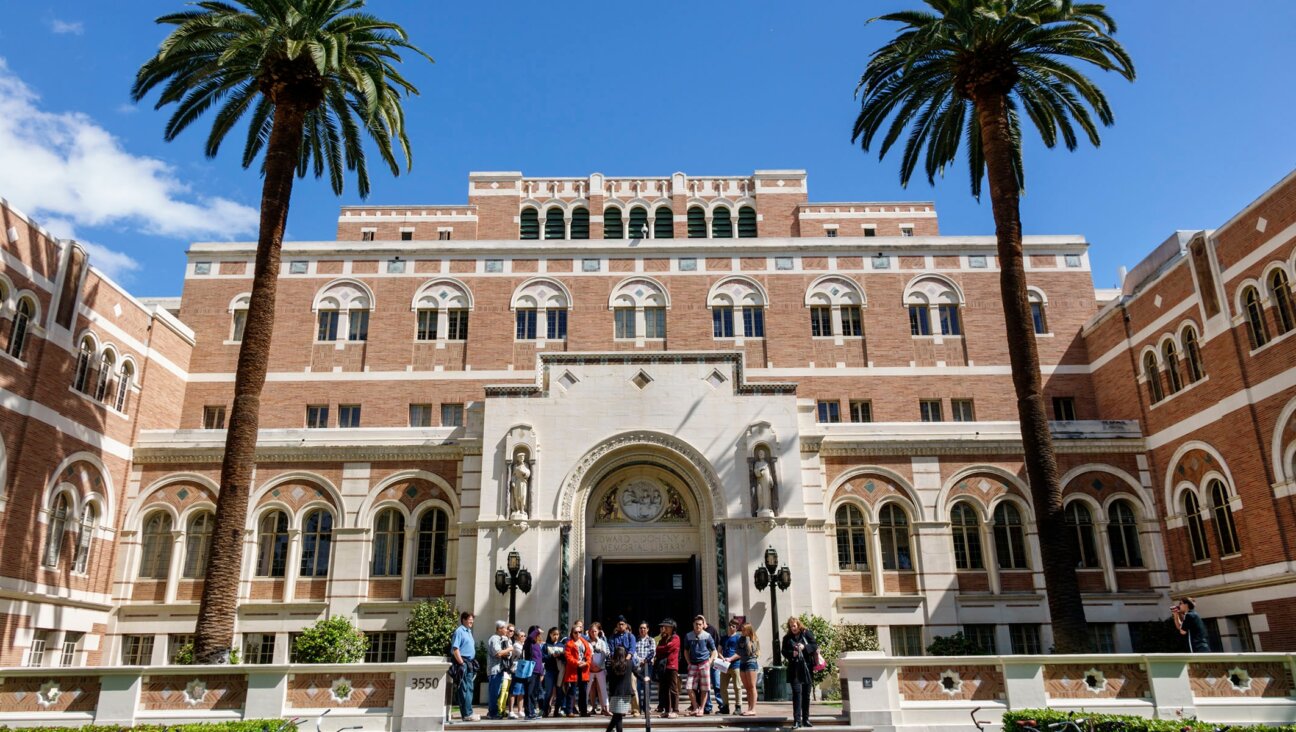
Fast Forward USC cancels commencement speech from Muslim valedictorian after she shared link to anti-Israel website
- 2

Fast Forward 2 House members lead the charge to oust the speaker. Both have been accused of trafficking in antisemitism.
- 3

Opinion The head of the largest Christian Zionist organization is no friend to Israel — he wants an apocalypse there
- 4
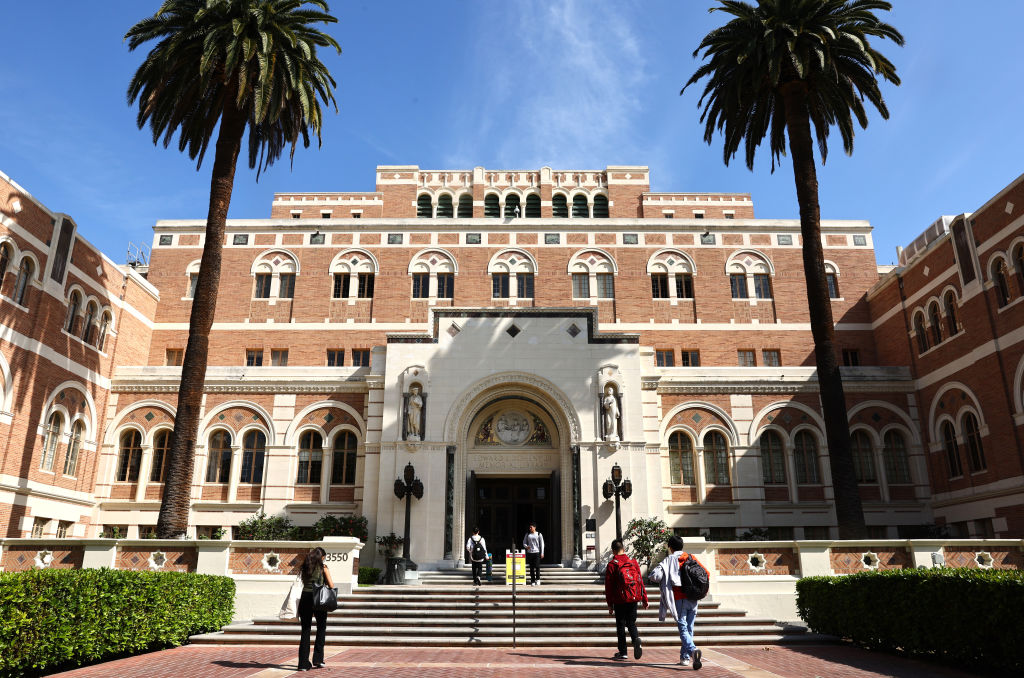
Opinion USC: Don’t blame Jews for canceling your valedictorian
In Case You Missed It
-
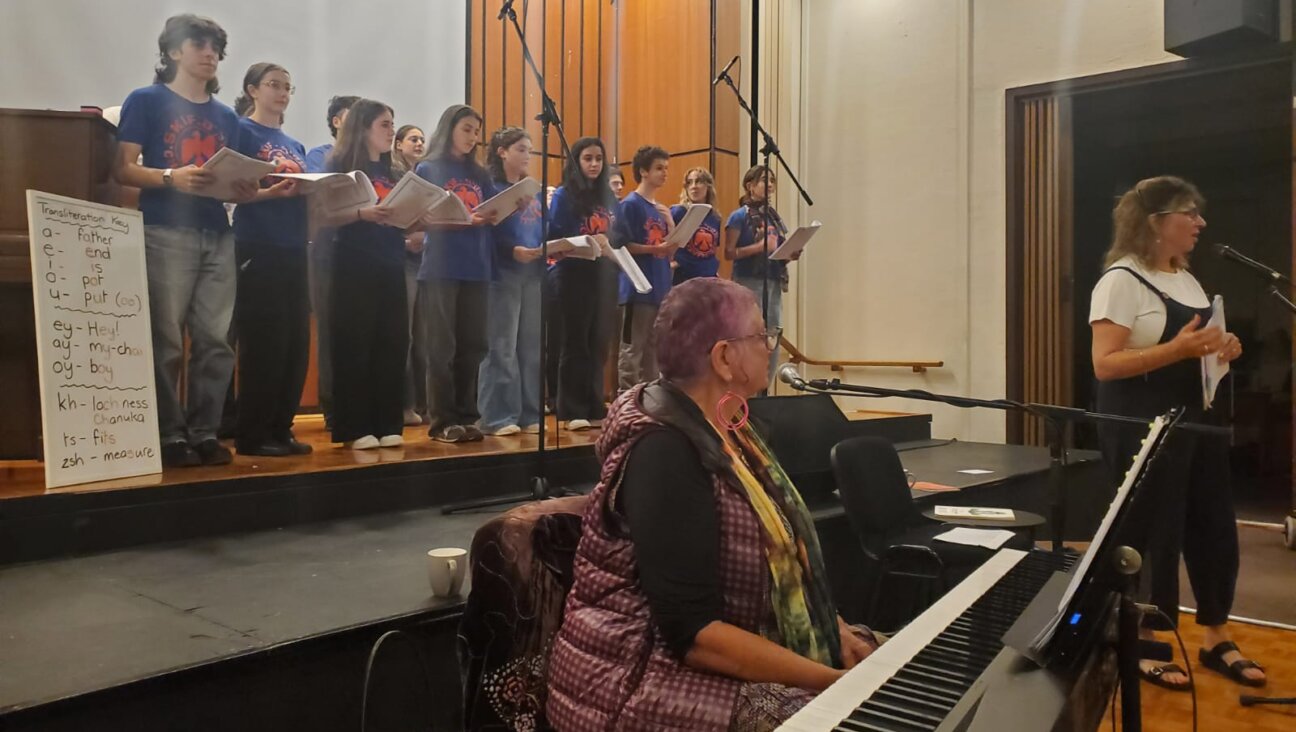
Yiddish אַ נײַער איניציאַטיוו צו פֿאַרשפּרייטן ייִדישע פּסח־לידער געשאַפֿענע אין מעלבורן A new initiative to share Yiddish Passover songs composed in Melbourne
דער קאָמפּאָזיטאָר, ברוך קאַלושינער, האָט אָנגעפֿירט מיט ייִדיש־כאָרן און געלערנט מוזיק אין די ייִדישע שולן
-

News Why did this Mormon drive 10 hours to buy whiskey? To help out a Jewish friend for Passover
-

News 100+ arrested in day of unrest and mass protest at Columbia U over Gaza and Israel
-
Yiddish ווידעאָ: פֿאַר וואָס מײַן בוך וועגן מײַן אייגענעם יציאת־מצרים וועט זײַן אויף ייִדישVideo: Why my book about my own ‘Exodus’ from the Hasidic community will be in Yiddish
שפֿרה־קריינדל לאָווען האָפֿט אַז איר בוך וועט העלפֿן חסידים וואָס האָבן מורא צו מאַכן דעם איבערגאַנג
Engage
-
Catch Up on Yiddish Events

-
Shop the Forward Store
100% of profits support our journalism




