



Mark Oppenheimer
By Mark Oppenheimer
-

Culture Why Rabbi Schneerson Was Good For Jews But Bad For Biographers
Rebbe: The Life and Teachings of Menachem M. Schneerson, the Most Influential Rabbi in Modern History By Joseph Telushkin HarperWave, 640 pages, $29.99 My Rebbe By Adin Even-Israel Steinsaltz Maggid, 250 pages, $24.95 At the end of time, when climate change or an asteroid or the Messiah’s arrival has rendered moot Pharrell Williams, the Affordable…
-

Culture From Orthodox Teen Lesbians To the Holocaust, An Author Courts Controversy
If I were making a list of topics I am not looking forward to discussing with my young daughters, the top three might be (and I am not sure in what order) sexual desire, the Holocaust and Israel’s treatment of the Palestinians. So I don’t know whether to be grateful for Leanne Lieberman’s books or…
-

Culture Navigating Battlefield of Orthodox Marriage and Divorce
Marriage and Divorce in the Jewish State: Israel’s Civil War By Susan M. Weiss and Netty C. Gross-Horowitz Brandeis University Press, 240 pages, $40 Until modern times, an agunah, a “chained” or “anchored” woman, was usually a wife whose husband had been lost at sea or killed on the battlefield; rabbis wrote circles around the…
-

Culture Of Susan Sontag, Debbie Harry, Anna Moffo and Wayne’s World
● My 1980s & Other Essays By Wayne Koestenbaum FSG Originals, 336 pages, $16 Why would you read a collection of essays by a critic who writes mostly about artists (of many kinds — filmmakers, painters, poets, singers, etc.) about whom you do not, with a few exceptions, know anything? Maybe because the critic teaches…
-

Culture Taking a Second Look at Lillian Hellman
A Difficult Woman: The Challenging Life and Times of Lillian Hellman By Alice Kessler-Harris Bloomsbury Press, 448 pages, $30 I don’t know that I have ever read this good a rescue job. Columbia historian Alice Kessler-Harris’s biography of dramatist and screenwriter Lillian Hellman made me feel like a stupid cliché: just another American who knows…
-

Culture If Anne Frank Lived Upstate
Hope: A Tragedy By Shalom Auslander Riverhead Books, 304 pages, $26.95 As sophisticated, politically unpredictable and stylistically diverse as our community of Jewish writers is, it can seem as if the best of them, when they reach for Jewish content, still take down the Holocaust from the shelf. This generalization holds true across generations: grandees,…
-

Culture Gimme Some Old Time Gossip
Gossip: The Untrivial Pursuit By Joseph Epstein Houghton Mifflin Harcourt, 256 pages, $25 The only book I would rather review than a treatise on gossip is a history of pornography: Both promise all the thrill of the source material with only half the need to smuggle the book inside a magazine on the subway. Or…
-

Culture Lee Siegel Fails To Get Serious Enough About Seriousness
Are You Serious?: How To Be True and Get Real in the Age of Silly By Lee Siegel HarperCollins, 212 pages, $24.99 The first I ever heard of Lee Siegel was in 1999, I believe, when he was hosting a panel in New York City, at The Cooper Union. The friend who had invited me…
Explore
Most Popular
- 1
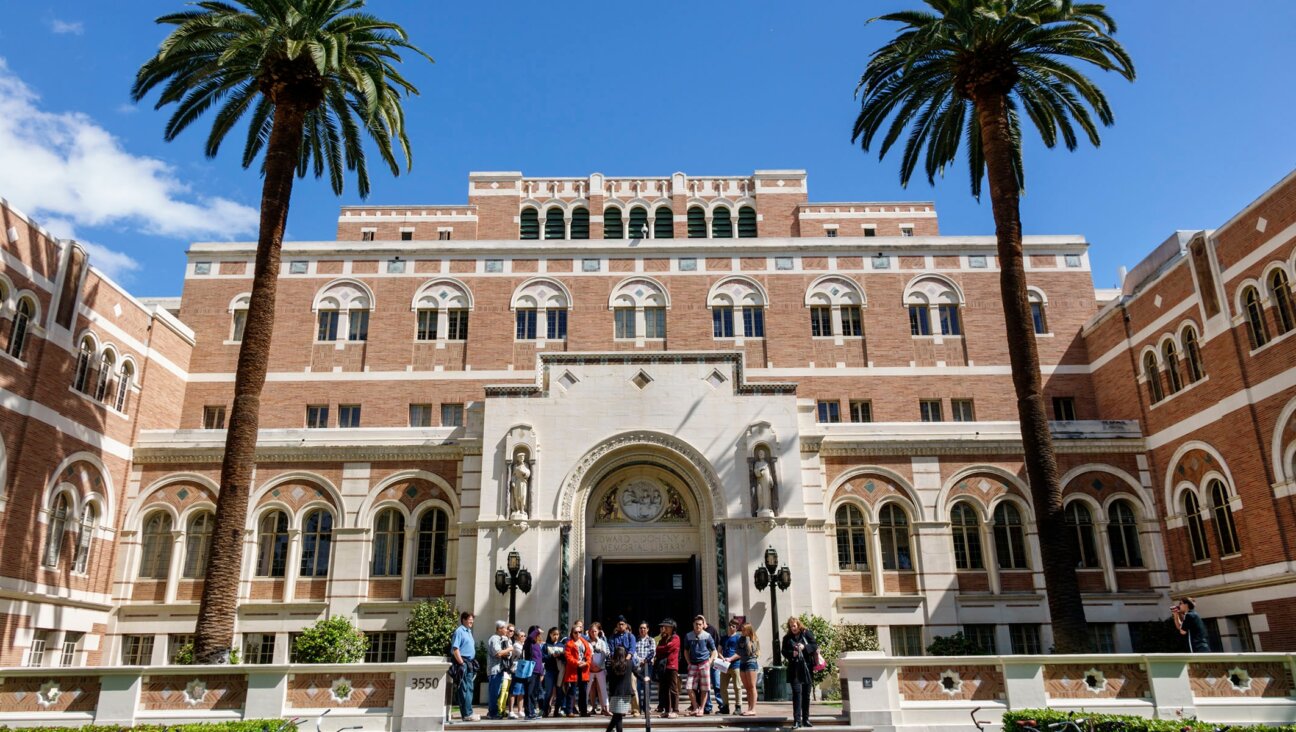
Fast Forward USC cancels commencement speech from Muslim valedictorian after she shared link to anti-Israel website
- 2

Fast Forward 2 House members lead the charge to oust the speaker. Both have been accused of trafficking in antisemitism.
- 3

Opinion The head of the largest Christian Zionist organization is no friend to Israel — he wants an apocalypse there
- 4

Opinion USC: Don’t blame Jews for canceling your valedictorian
In Case You Missed It
-

Fast Forward Israel reportedly strikes in Iran, days after fending off Iranian missile attack
-
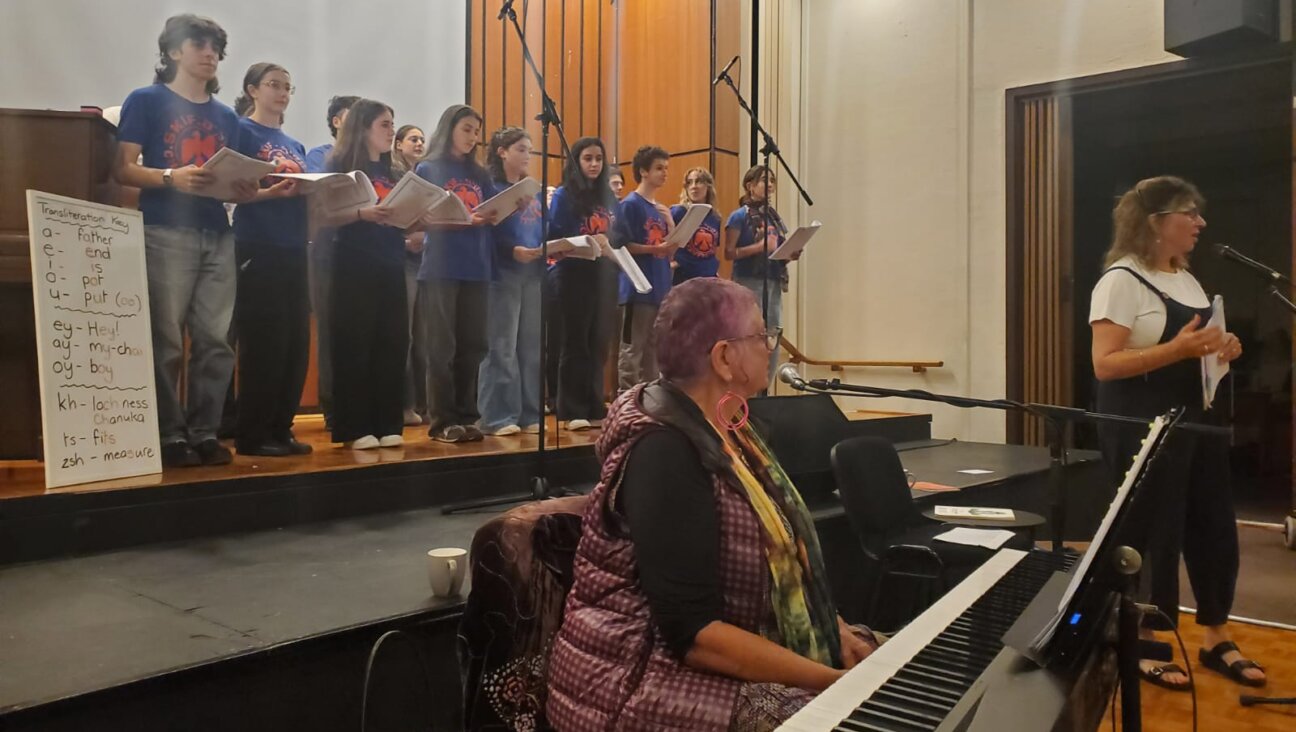
Yiddish אַ נײַע איניציאַטיוו צו פֿאַרשפּרייטן ייִדישע פּסח־לידער געשאַפֿענע אין מעלבורן A new initiative to share Yiddish Passover songs composed in Melbourne
דער קאָמפּאָזיטאָר, ברוך קאַלושינער, האָט אָנגעפֿירט מיט ייִדיש־כאָרן און געלערנט מוזיק אין די ייִדישע שולן
-

News Why did this Mormon drive 10 hours to buy whiskey? To help out a Jewish friend for Passover
-

News 100+ arrested in day of unrest and mass protest at Columbia U over Gaza and Israel
Engage
-
Catch Up on Yiddish Events

-
Shop the Forward Store
100% of profits support our journalism




