Israel boycott battle intensifies at Venice Art Biennale, testing tradition of inclusion
Even as artists threaten to sue if they are not removed from competition, a prestigious global art fair recommits to showcasing Israeli exhibits
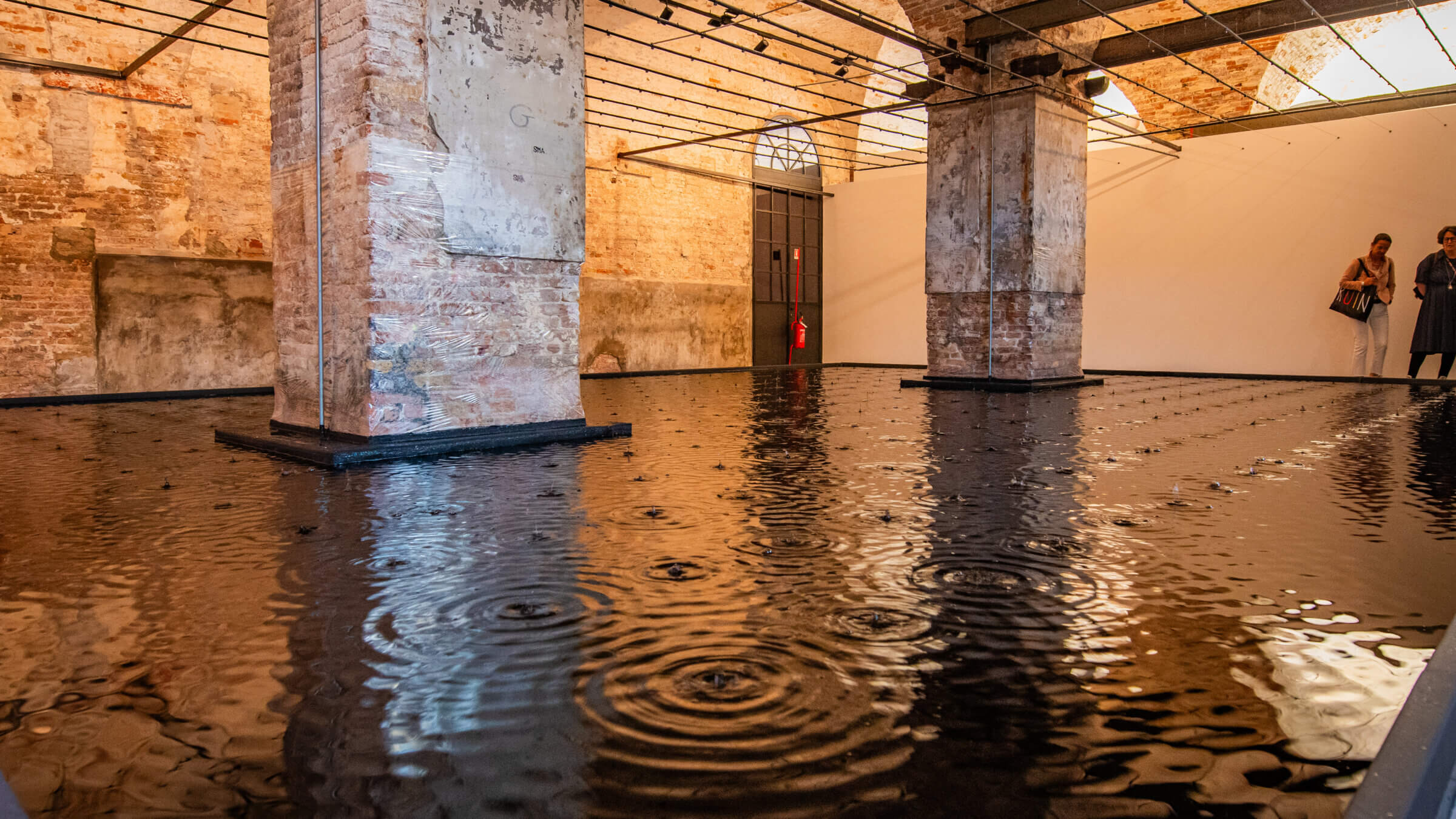
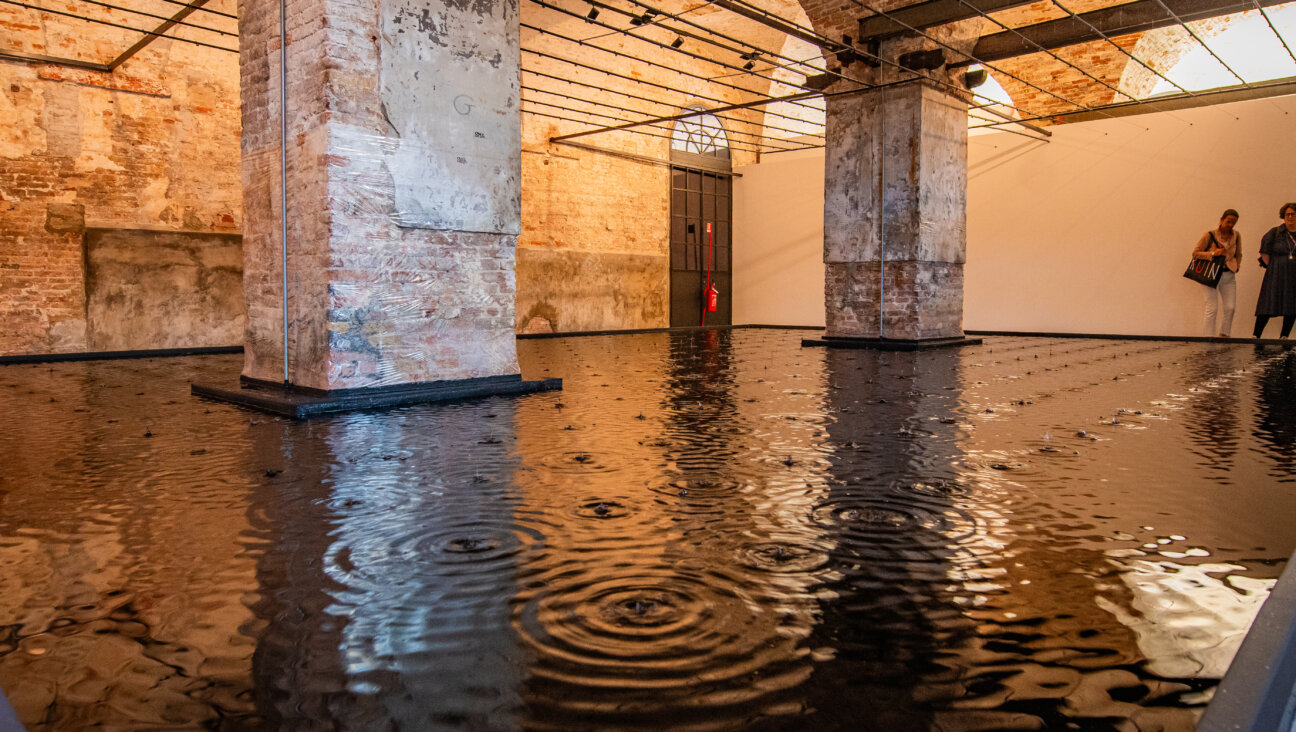
Visitors explore the Israel Pavilion at Arsenale during a press preview for the 61st International Art Exhibition – La Biennale di Venezia on May 07, 2026 in Venice, Italy. Photo by Simone Padovani/Getty Images
The anti-Israel protests that disrupted the opening of the Venice Art Biennale continue to escalate, with more than 100 artists and curators declaring last week that they will bring legal action against Biennale authorities if their names are not removed from consideration for what in normal times are coveted awards for best artist and best national exhibition.
It’s just the latest battle between activists seeking to shut down Israel’s art exhibition in Venice and the Biennale’s administration who are committed to keeping it open.
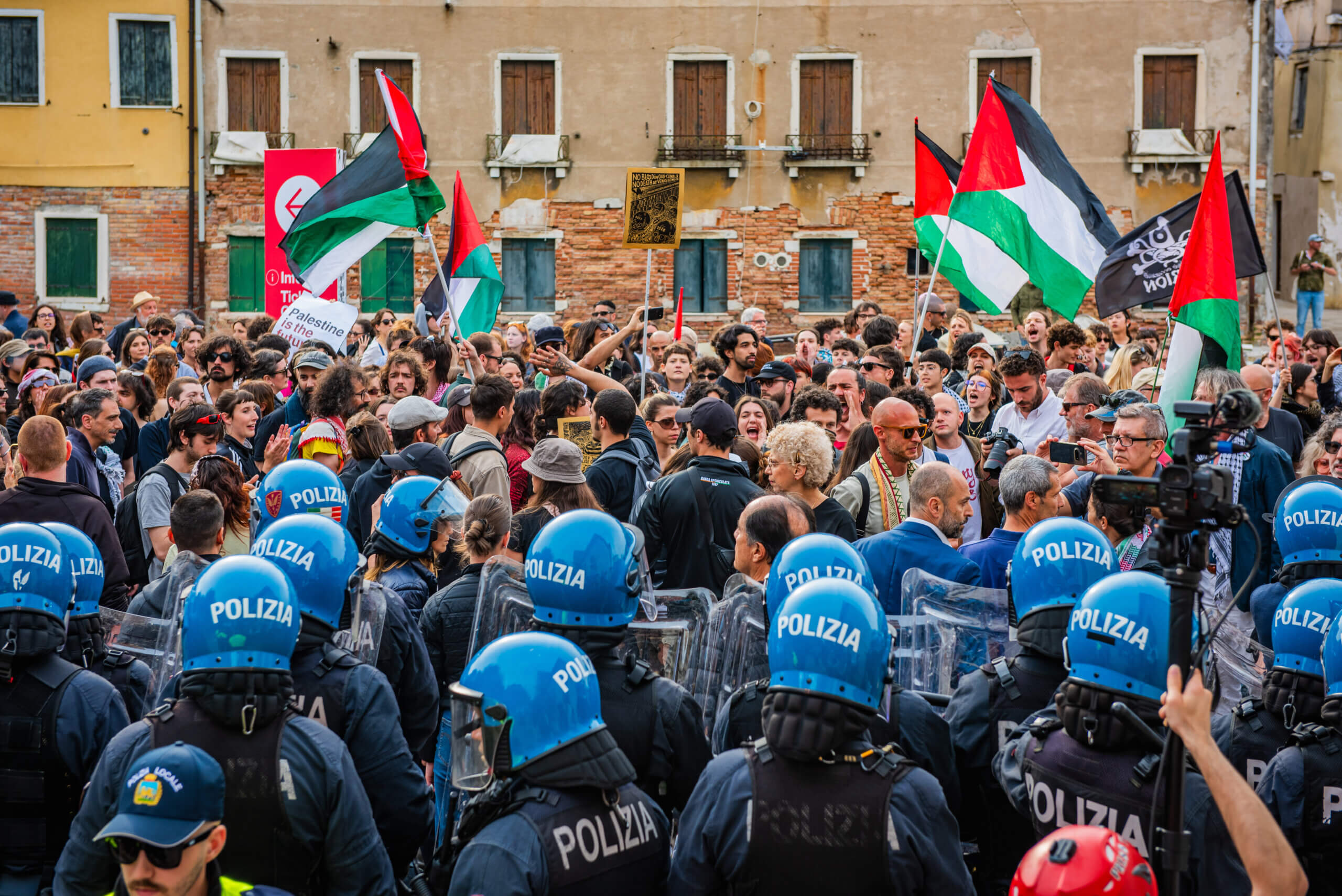
Chaos erupted in the streets on the third day of the biennale’s opening last month as demonstrators engulfed the Via Garibaldi chanting Palestinian liberation slogans during their march toward an art exhibit hosted by Israel, held back by Italian police in riot gear. The demonstration was organized by the Art Not Genocide Alliance (ANGA), a coalition of artists and art industry workers campaigning to ban Israel from participating in the world’s most prestigious art show.
ANGA’s agenda is reverberating throughout the Biennale, which is structured around a main international show that this year is hosting 110 invited artists, 100 national exhibitions and 31 official art shows. Many of the artists now threatening legal action first signed a letter this past March demanding that the directors of the Biennale exclude Israel’s exhibition from the show.
Just before the exhibition opened, the Venice Biennale’s five-member international jury — which oversees the prestigious Golden Lion for best artist and best national pavilion — announced that, in keeping with the spirit of the main international exhibition curated by the late Cameroonian art impresario Koyo Kouoh, who appointed them, it would “refrain from considering those countries whose leaders are currently charged with crimes against humanity by the International Criminal Court” — namely, Russia and Israel.
Belu-Simion Fainaru, representing the Israeli pavilion, reportedly responded by threatening that if he were excluded from consideration for the awards, he would sue the Biennale in the European Court of Human rights on grounds of antisemitism and nationality-based discrimination. Facing potential legal liability, all five jurors took the unprecedented step of quitting. The Biennale administration then announced that the juried awards would be replaced with Visitor Lions Awards, a popular vote by visitors to the show.
It’s that substitute award that the ANGA-allied artists are now renouncing.
There also have been attempts from the other end of the political spectrum to silence artists representing South Africa and Australia because of alleged anti-Israeli biases. Indeed, the 2026 Biennale, which opened on May 9 and runs through November 26, has become a referendum on artistic freedom of expression and on the place in the cultural sphere of the movement to boycott Israel. “Boycott the Genocide Pavilion,” the brochure ANGA demonstrators handed out at their demonstration stated, “For decades, the Venice Biennale has handed Israel an international stage to culturewash its occupation of Palestine,” and stated that in doing so Biennale authorities are helping to “normalize the ongoing decimation of an entire population.”
The president of the Venice Biennale, Pietrangelo Buttafuoco, has refused to cede ground. “Closing the door to some means making openness to others more fragile,” he argued in an impassioned speech announcing the opening of the Biennale’s 61st International Exhibition, adding, “if the Biennale began selecting not works but affiliations, not visions but passports, it would cease to be what it has always been: a place where the world meets, especially when the world is torn apart.”
Serene space
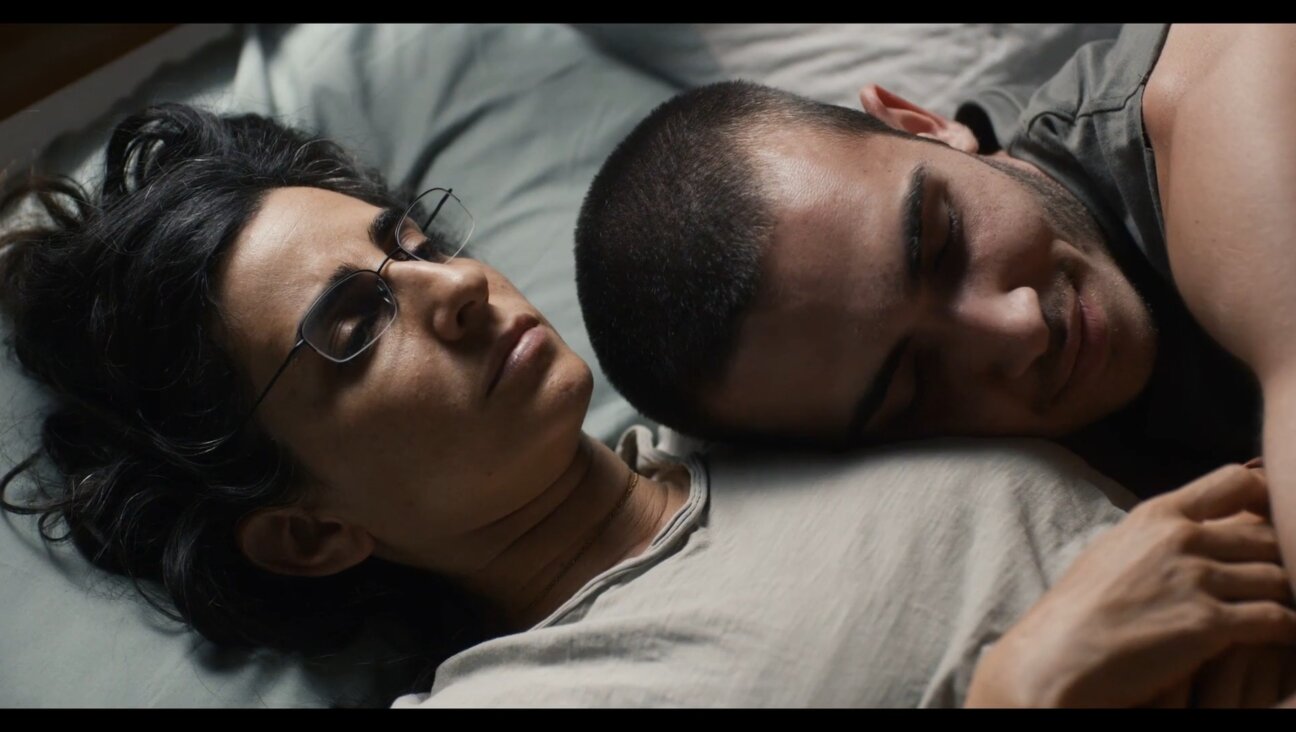
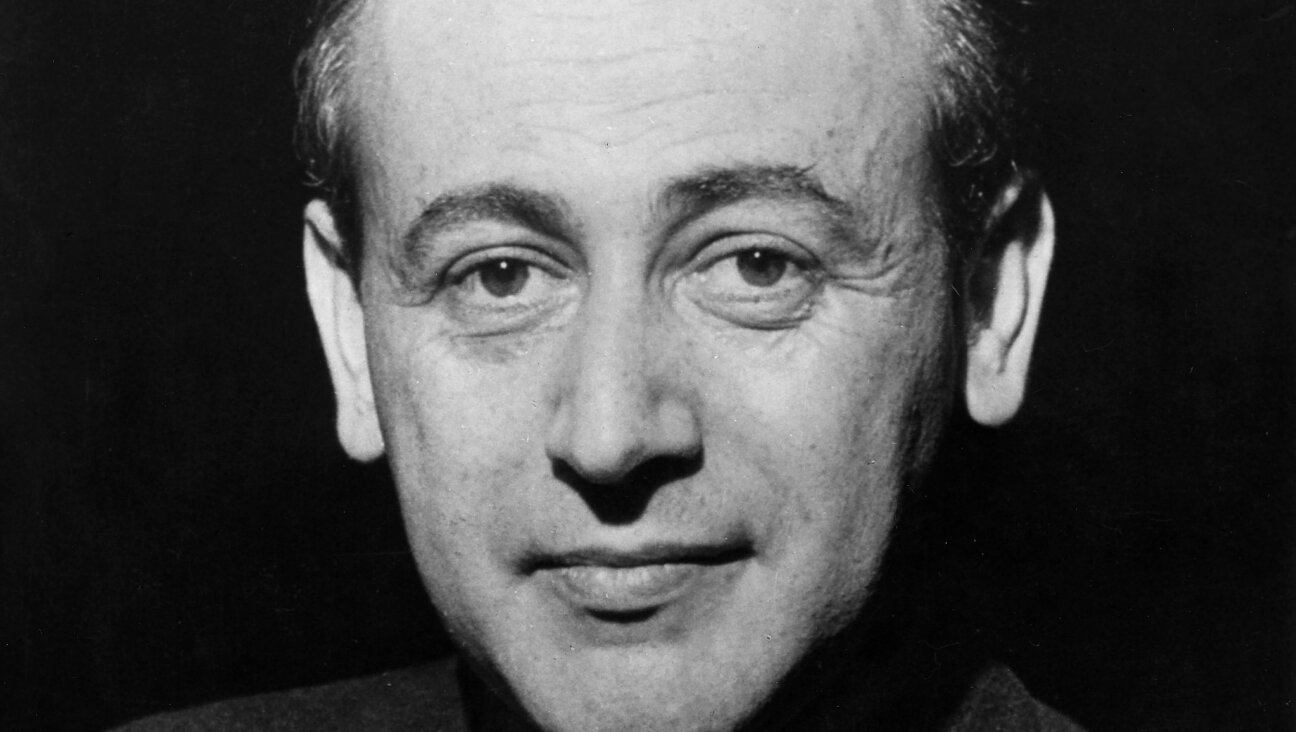
When I stepped into the Israeli exhibition, it seemed to be an invitation to leave behind the fractious world outside. The transcendent artwork, inspired by Paul Celan’s poetry, consists of a large rectangular pool in a tranquil space where the only interruption is the soothing sound of dripping water.
Given Israel’s destructive bombing campaigns, first in Gaza and now in southern Lebanon, presenting Fainaru and his serene artwork to represent the country is a fraught choice. Fainaru lives in Haifa, one of Israel’s most culturally diverse cities, and is a professor at Haifa University, where he told me the rector is Palestinian and more than 50% of his students are Arabs. Fainaru said that his art is about bringing people together and “collective consciousness,” and he argued it should be viewed outside of the political prism that has roiled the Biennale in recent years. “This environment is becoming more and more about boycott, censorship, limitation of freedom, exclusion,” he said, adding “that’s changing the meaning and role of art.”
Some observers who study censorship say the national pavilions at the Venice Biennale have always functioned as cultural diplomacy and in many instances are a form of “artwashing,” a term that refers to the ways that governments and corporations utilize art exhibits to obscure or gloss over unethical policies.
“Clearly they are an attempt to make a country look better, but on the other hand there is something in the art that exceeds the national ambitions,” Svetlana Mintcheva, former director of programs at the U.S,-based National Coalition Against Censorship, said in a phone interview, adding: “It’s counterproductive to censor because it then homogenizes everyone in that particular country as holding particular ideas and that’s not the case.”
The censorship campaign against Israel and Russia took place against the backdrop of the main international exhibition “In Minor Keys,” which emphasizes anti-colonialist themes and the utility of art as a means of reconnecting to local and indigenous practices. The leitmotif of the show, which primarily emphasizes art from the African diaspora, chimes with ANGA’s agenda to give voice to a Palestinian culture that the group claims has been sidelined by Israel’s “colonial expansion.”
Some artworks in the international exhibition address the Palestinian displacement and trauma, while none deal with Hamas’s Oct. 7 massacre or Israel’s wounds.
Gazan artist Mohammed Joha, who signed a March 26 ANGA petition calling for the exclusion of the Israeli pavilion, is exhibiting No Shelter, which the artist made while witnessing the conflict in Gaza. The work consists of collages made from discarded paper, fabric and cardboard intended to call attention to the cycles of destruction and rebuilding that Palestinians endure. Haitian artist Manuel Mathieu’s Genocide portrays a dark sea alongside what looks like pummeled charred flesh. British Ethiopian artist Theo Eshetu’s Garden of the Broken Hearted includes a rotating dais with a live olive tree, a symbol of Palestinian resilience.
And Kouoh and her team gave pride of place in her show to artists who have been victims of Israel’s conflicts. The very first exhibit to greet visitors at the entrance of the massive Arsenale, a brick linear hall serves as the main exhibition space, which t originally was part of Venice’s Renaissance-era ship building complex, features the poem “If I must Die,” by Palestinian poet Refaat al-Areer, which he posted to social media in late 2023, about a month before he was killed along with several of his family members by an Israeli airstrike in Gaza. The poem, which has become a rallying cry for Palestinian activists, sits below a canvas portraying a disembodied face with penetrating eyes against a fractured background by Issa Samb, a Senegalese artist known for his anti-colonial themes.
The subsequent exhibition at the Arsenale is a monumental multi-media installation titled Khalil by Australian artist Khaled Sabsabi, a former refugee from the 1976 Lebanese Civil war. Sabsabi is also representing Australia at its national pavilion in the nearby Giardini fairground.
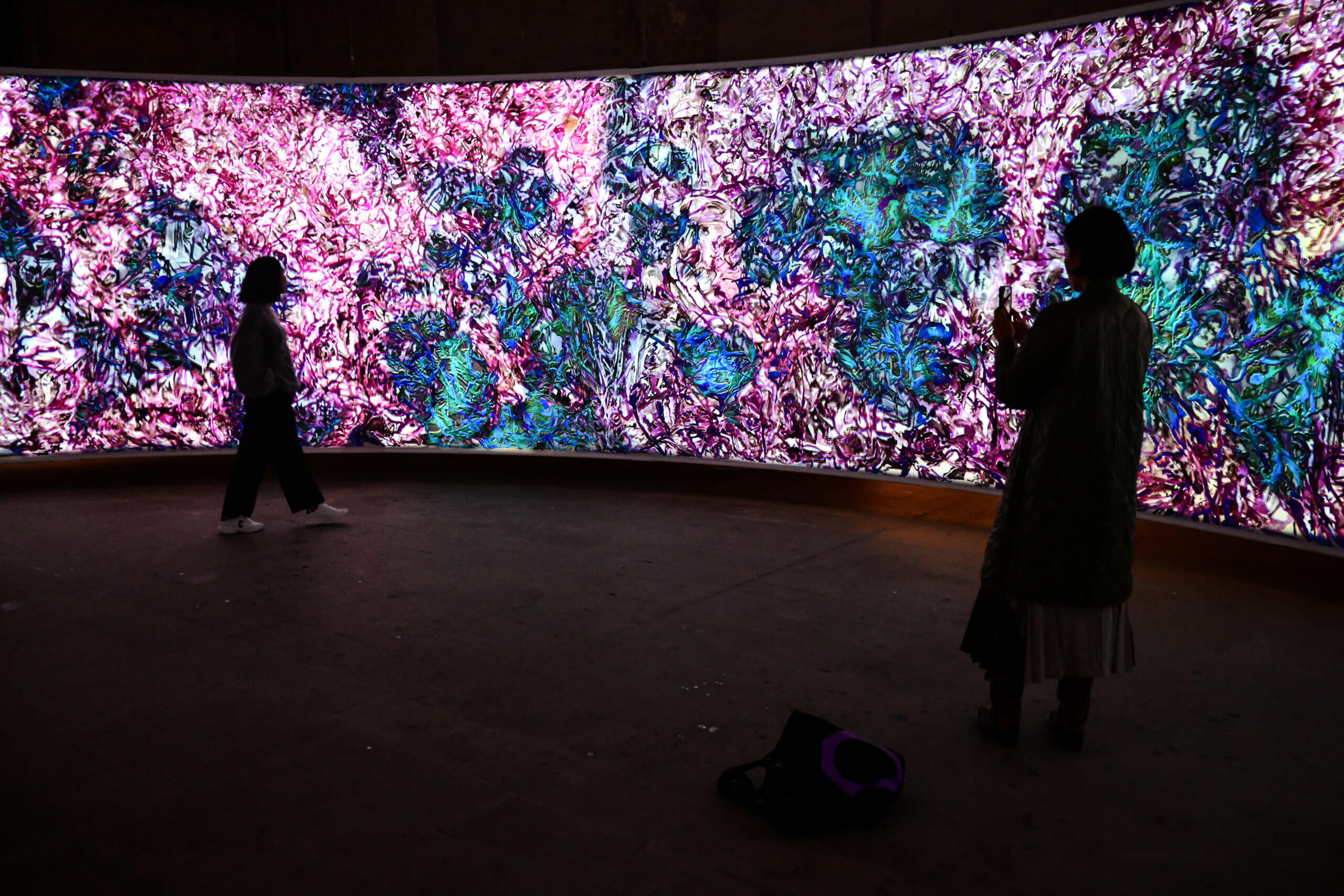
Khalil, which was originally intended to be displayed at the Australian Pavilion, was intended as a meditation on Sufi mysticism. It consists of digital projections on a canvas painted in acrylic with swirling shapes, accompanied by sonorous background music and the piped in scent of Oud, which is used in Middle Eastern perfumery.
But Kouoh’s invitation to Sabsabi to exhibit at the Arsenale, which she extended after he was temporarily disinvited from showing the work at the Australian Pavilion, appears to have as much to do with his notoriety as it does his artistic merit. Sabsabi’s commission to exhibit at the Australian Pavilion was canceled after conservative Australian members of parliament and right-wing newspapers denounced him as promoting antisemitism and terrorism over work he had produced in the past, notably YOU, a 2007 multimedia piece that portrays multiple images of former leader Hezbollah leader Hassan Nasrallah.
Australia’s Museum of Contemporary Art (MCA), where the You is on permanent display, originally described the artwork on its website as “obscuring Nasrallah’s face with beams of light that shine from his eyes and mouth, suggestive of a divine illumination.” But last year, after Sabsabi was dropped from representing the Australian Pavilion, the MCA engaged in an act of self-censorship by removing the section of text deifying Nasrallah and updating the description of the artwork to inform viewers that: “The Australian Government listed the entirety of Hezbollah as a proscribed terrorist organization in 2021.”
Meanwhile, subsequent larger furor in the international arts community over Sabsabi’s being censored led to an independent review, which resulted in the reinstatement of his invitation to show at the Australian Pavilion, greatly raising his profile.
Another controversial figure is Gabrielle Goliath, the video and performance artist invited to represent South Africa, was the only artist to be officially banned. Elegy, the work she had planned to show, is a performative piece about gender and LGBT violence that has also addressed the killing and displacement of Palestinian women. But Goliath’s commission was canceled and the South African pavilion shuttered by the country’s culture minister Gayton McKenzie, a vocal supporter of Israel, who reportedly deemed Elegy “highly divisive in nature and relates to an ongoing international conflict that is widely polarizing.”
After an unsuccessful lawsuit accusing the South African government of unlawfully revoking her commission, Goliath was relegated to presenting Elegy in a rented church in Venice. This version of the work she exhibited there features eight “funereal screens,” with women singing and commemorating female victims of violence, including a murdered South African student and the Palestinian poet Heba Abunada, who was killed in an Israeli airstrike on Gaza in 2023.
The closing of the South African pavilion didn’t stifle Goliath’s voice and, as with Sabsabi, the controversy over her being canceled may have given her a larger platform. After Venice, Elegy will be traveling to London before moving onto Milan.
It’s difficult to imagine Fainaru’s message of “collective consciousness” finding a similar welcome in arts venues throughout Europe and the United States.
Recent events in Venice and elsewhere suggest that the cultural boycott campaign is gaining momentum, putting freedom of expression under increasing strain. And it’s not just principles that are at stake. Closing Israel’s exhibition in Venice and further marginalizing Israeli artists works at cross-purposes with efforts to achieve mutual understanding and peace in the Mideast. “The price of cultural boycotts is quite high, says Mintcheva of the National Coalition Against Censorship, “because you limit any kind of exchange and you limit understanding of dissent within a country like Israel.”
I’m personally matching all gifts to the Forward, up to $36,000. Can I match your gift now?

Hello, fellow Forward reader! I’m Joel Brown, a Forward reader and supporter for more than 15 years, and currently the chair of the board of directors.
I’m an avid Forward reader because it ticks so many of my essential boxes: excellent journalism, Jewish focus and diverse viewpoints. In today’s political climate, what I most appreciate is the Forward’s independence — made possible by the generosity of its membership.
The Forward is committed to bringing you unbiased, nuanced Jewish news. From my position as board chair, I see an exciting future as we expand our position as the definitive independent voice of contemporary American Judaism.
— Joel Brown, Forward board chair
Support our mission to tell the Jewish story fully and fairly.