For many queer Jews, Pride has lost its joy
The fallout after the Oct. 7 attack has compromised spaces where we once felt safe
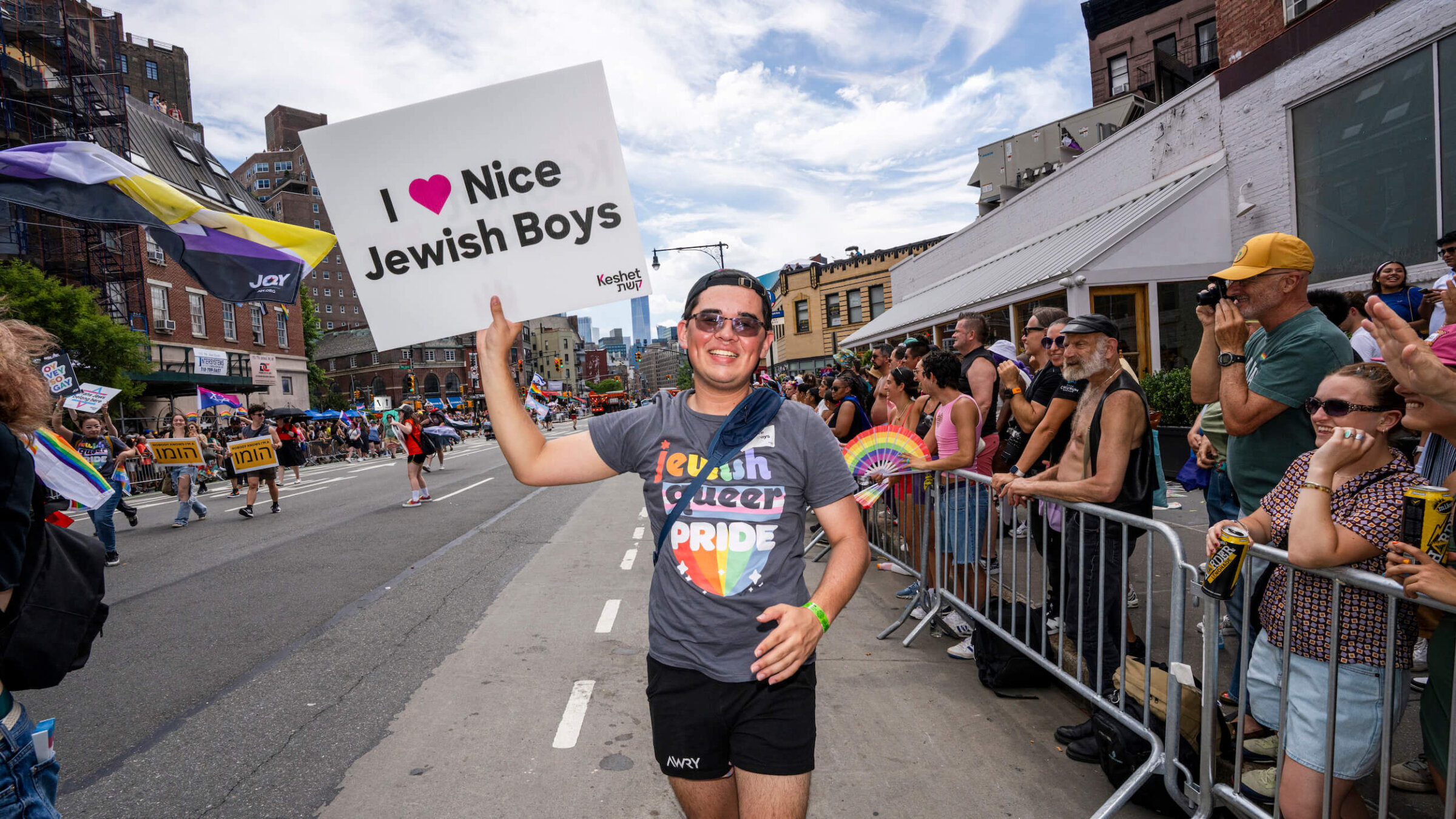
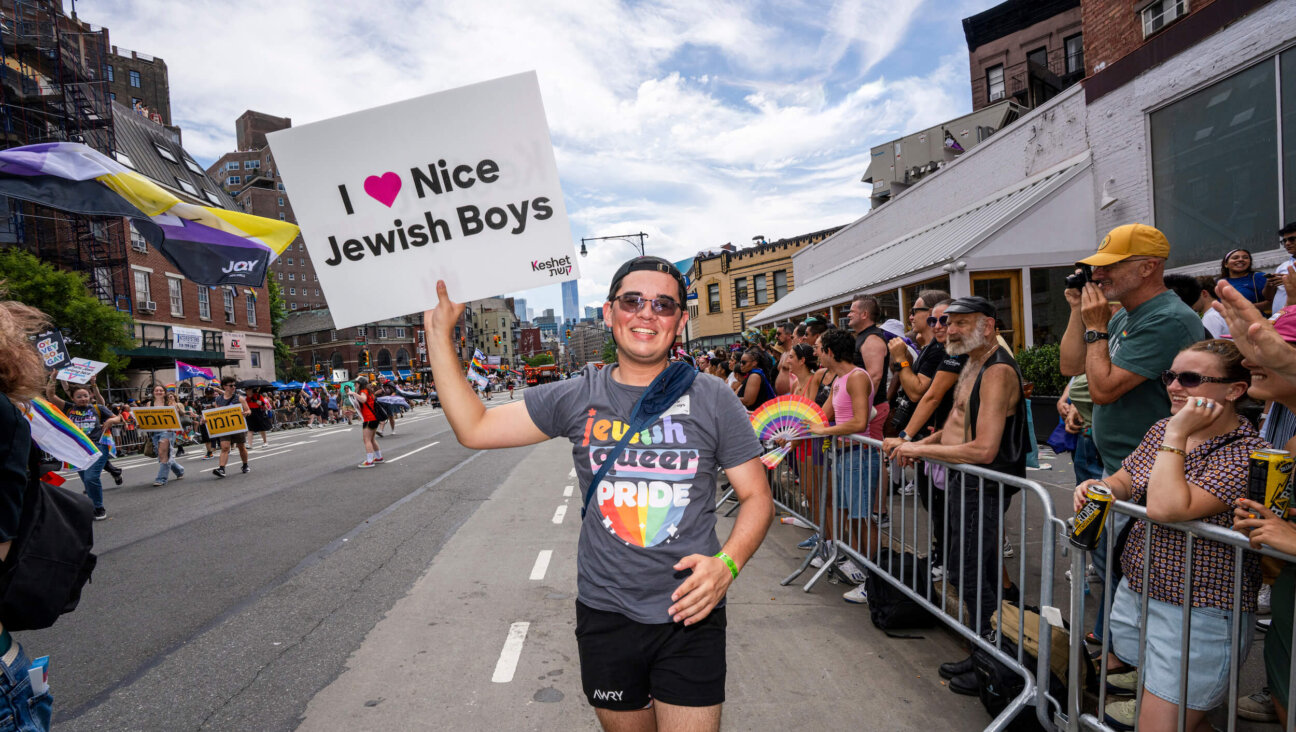
A man carrying a sign from the Jewish LGBTQ+ organization Keshet takes part in the 2025 NYC Pride March on June 29, 2025. Photo by Craig T Fruchtman/Getty Images
I noticed something during last year’s Pride that I could not stop thinking about afterward: silence.
Not total silence. Pride events still filled city streets in San Francisco, where I live. Rainbow flags still hung from windows. But many queer Jews I knew had become quieter in subtle, almost imperceptible ways. Some had stopped posting online. Some had withdrawn from political conversations altogether. Others no longer mentioned being Jewish in spaces where that identity had once felt unremarkable.
A few quietly disappeared from communities they had helped build. Invitations were declined. Group chats went unanswered. One friend told me they hesitated before wearing a Star of David necklace to Pride for the first time in years.
At first, I told myself I was imagining it. Then I began hearing the same thing in private conversations: people calculating whether it was safe to say certain things out loud. Wondering whether expressing ongoing grief over the Hamas attack of Oct. 7, 2023 would cost them friendships, belonging or community. Deciding it was easier to remain silent than risk becoming a problem to manage.
I recognized that instinct, because I felt it too.
As a psychologist and psychoanalyst practicing in San Francisco who has facilitated support groups for queer Jews since Oct. 7, I’ve perceived a clear phenomenon: While for years, many queer Jews experienced queer spaces as a refuge, after Oct. 7, that sense of refuge became less certain.
The spaces where we built chosen family, recovered from shame, fell in love, and constructed identities used to be shaped by the belief that vulnerability should not have to be hidden in order to belong.
Now, in some of those spaces, it feels like certain forms of Jewish grief have become socially suspect.
In some spaces, expressing horror at the massacre of Israeli civilians has felt permissible only when immediately qualified or contextualized.
In conversations over the past year, I have repeatedly encountered the same pattern: queer Jews becoming more cautious and less certain about what they could safely say in response to pressure to express grief only in publicly acceptable ways.
Silence can be a form of self-protection. People grow quiet when they sense that emotional honesty may carry steep social costs inside communities they still want to belong to.
Some queer Jews no longer attend events they once loved. Others still attend, but carefully. They edit themselves in real time, measuring how much grief they can express before it becomes unintelligible to others.
None of this is unilaterally true about queer communities, which are not monoliths. And many LGBTQ people feel profound anguish over Palestinian suffering, as do many Jews.
But queer Jews are exhausted. The strain of constant self-translation; the effort of proving that mourning one people does not entail hatred of another; and the vigilance required to navigate belonging that feels increasingly conditional have taken their toll.
The loss of a place where you were supposed to exist without negotiation feels existential. And as each Pride passes, certain griefs intensify as they remain unspoken.
This Pride, I’m thinking less about who will show up than about who will remain quiet once they arrive.
What kinds of silence do communities require in exchange for belonging?
Joshua Simmons is a psychologist and psychoanalyst who serves on the American Psychological Association’s Collaborative of Jewish Psychologists.
I’m personally matching all gifts to the Forward, up to $36,000. Can I match your gift now?

Hello, fellow Forward reader! I’m Joel Brown, a Forward reader and supporter for more than 15 years, and currently the chair of the board of directors.
I’m an avid Forward reader because it ticks so many of my essential boxes: excellent journalism, Jewish focus and diverse viewpoints. In today’s political climate, what I most appreciate is the Forward’s independence — made possible by the generosity of its membership.
The Forward is committed to bringing you unbiased, nuanced Jewish news. From my position as board chair, I see an exciting future as we expand our position as the definitive independent voice of contemporary American Judaism.
— Joel Brown, Forward board chair
Support our mission to tell the Jewish story fully and fairly.