College in Israel, made clearer: How “The Future Is Calling” helps American Jewish students find their place
World-class universities. English-taught and transitional pathways. A clearer roadmap for families navigating safety, cost, and belonging. The Future Is Calling is helping American Jewish students see Israel as a first-choice destination for higher education.
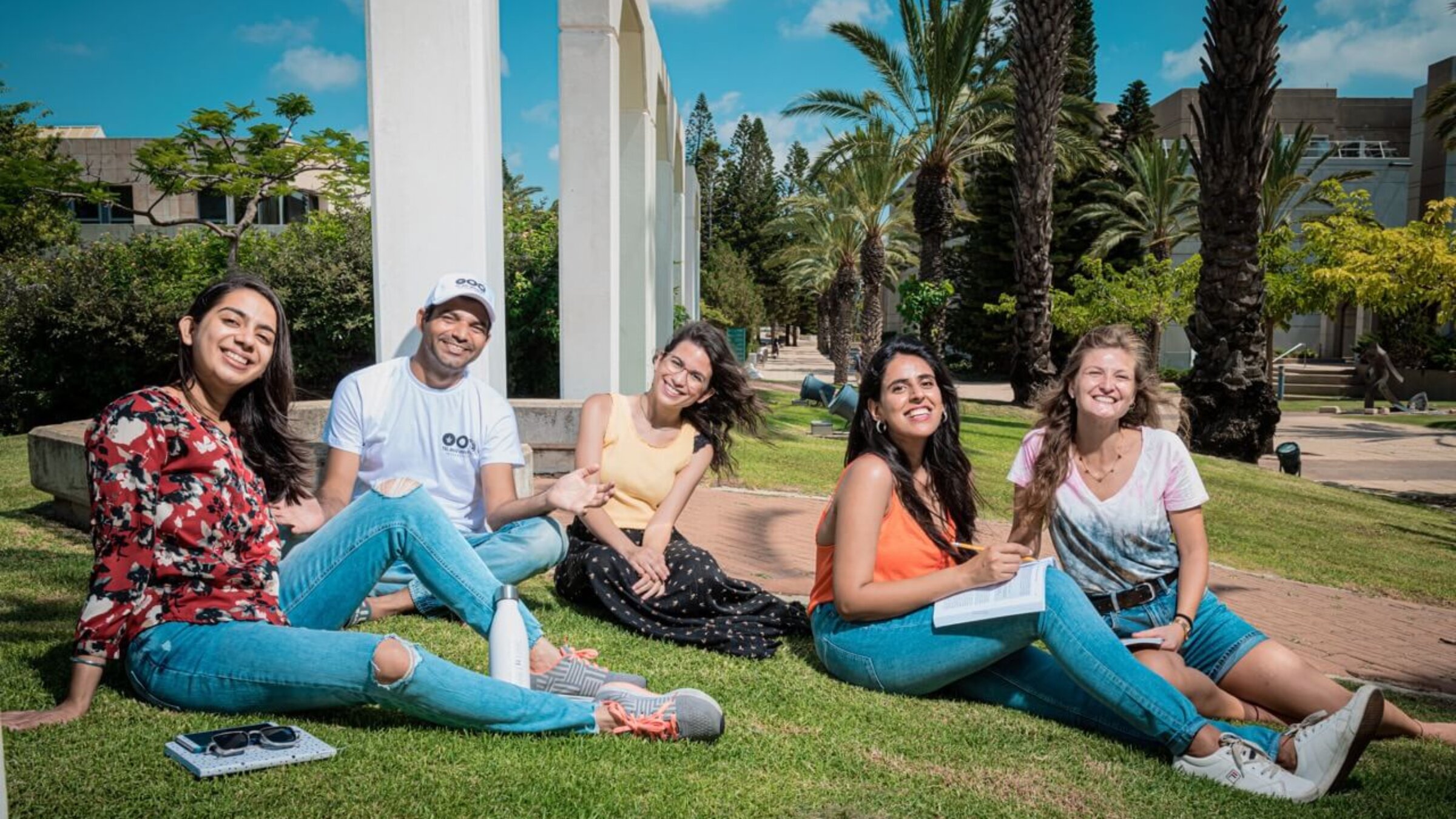
Group campus photo / students on campus Courtesy of The Future Is Calling
A Different College Search
For many American Jewish families, the college search is no longer just about rankings and dorm tours. It’s about values, identity, belonging — and whether a campus will feel like a place where a Jewish student can actually breathe.
Just as important, families want to know students won’t have to trade academic rigor for that sense of belonging. Israel’s universities offer globally respected, academically serious programs — including English-taught and transitional pathways — so students can pursue excellence while feeling supported.
At the same time, there’s a practical reality: tuition in the U.S. has climbed to a level that can feel surreal, even for middle- and upper-middle-income families. More parents are asking the question out loud: is there another path that’s academically serious, globally respected, and financially sane?
“The Future Is Calling,” a campaign supported by the Tzemach David Foundation, exists to make one answer easier to explore: college in Israel — not as a vague idea, but as a concrete, navigable option with real programs, real support, and real student experiences.
A Campaign Built for Clarity
“We saw real informational gaps that exist… A lot of things are translated into English, but aren’t translated into American,” says Tamar Krieger Kalev, Executive Director at Tzemach David / The Future Is Calling.
In the months around October 7, Tamar says she watched interest accelerate — and saw how hard it still was for American families to understand Israeli higher education. Philanthropic funding toward Israeli universities helped expand transitional tracks for international students; it also surfaced how many obstacles families face simply trying to figure out what’s possible. The result is a campaign that aims to translate, clarify, and support — so families can move from interest to confidence without doing forty hours of scattered research.
Translating Between Systems
One reason families stall is that Israeli higher education doesn’t work like the American system — and the differences show up quickly in admissions, degree structure, and program language.
“You don’t apply to a university… you apply to a certain program in the university, and every program has their own requirements,” Tamar explains. That one distinction alone can change how a student searches, compares, and applies — especially if they’re used to thinking in terms of a single application leading to an entire campus experience.
The Future Is Calling exists to make those differences legible, early — and to help families ask better questions from the start.
The Future Is Calling, organized around four pillars.
Four Pillars, One Promise
Tamar describes four pillars that guide the initiative: Personal Growth and Transformation; Academic Excellence and Innovation; Value and Accessibility; and Community and Tradition. Together, they form a simple promise: Israel can be a place of high-level learning and real-world opportunity — while also offering a supportive environment for Jewish life, identity, and belonging.
An option hiding in plain sight
Israel’s universities are deeply familiar to Israelis and olim — but for many American families, they can still feel distant, hard to compare, or difficult to understand. That’s the gap TheFutureIsCalling.org is designed to close.
Instead of asking families to start from scratch, the site offers a structured entry point:
- A view of major Israeli universities and what each is known for
- Program discovery (including English-taught options)
- Parent-facing answers about support systems, adjustment, and logistics
- Resource pathways — so families can move from “interest” to “next step” without guesswork
“The idea is to have… a one stop shop for people to be able to get all the information,” Tamar says.
And unlike a single-institution pitch, the campaign is designed to help families compare across multiple schools. “We don’t represent one university or one college. We represent several,” she adds — a detail that matters if your real goal is fit.
Academic Excellence and Innovation: world-class universities in the heart of a global ecosystem
For American families used to a familiar narrative — “the best education must be in the U.S.” — this is often the most surprising part: Israeli programs are competitive, serious, and connected to real-world opportunity.
Israel’s universities are not “alternative” in the sense of lesser — they are globally recognized institutions with deep strengths in STEM, medicine, research, and innovation. The campaign spotlights multiple universities offering English-taught degrees and support for international students, including Technion (Israel Institute of Technology), Tel Aviv University, Hebrew University of Jerusalem, Bar-Ilan University, Ben-Gurion University of the Negev, and Jerusalem College of Technology (JCT).
Tamar also points to the advantages of studying inside an innovation ecosystem that’s physically close. Students can access internships and training opportunities with global companies that have a strong presence in Israel — alongside the startup culture Israel is known for — and carry those experiences into the next chapter, whether in Israel or back in the U.S.
“Real students, real stories”
The most convincing part of the campaign is also the simplest: the student voices.
Asher Dayanim, an American student at Tel Aviv University, puts it plainly: “This past year has been the most amazing in my life.” He describes Tel Aviv as a place where learning doesn’t end when class does — where the city itself becomes part of the education, full of conversations, cultures, and ideas that keep widening the frame.
And for Ava Schwartz, a U.S. student who chose Tel Aviv University’s Liberal Arts program, it was the academic flexibility that made the decision click. “The liberal arts program at TAU is the only one like it in Israel… it allows me to explore everything from psychology to Jewish Studies while living in the city I fell in love with,” she says — capturing something many students are seeking right now: rigor, range, and an environment that feels alive.
The questions parents actually ask
In any family considering a serious move, “Is it inspiring?” is rarely the first question. The first questions are usually more basic — and more human: Is it safe? Will the degree translate back home? What about language? Can we afford it?
On cost, Tamar notes that tuition can look dramatically different depending on program and institution — and that for families thinking about immigration, there can be additional support: “If the student has made Aliyah… the government will pay for their first degree,” she says. And she adds a line that lands for parents immediately: “You can have your kid come home several times… and you’ll still save a lot of money, even though you’re paying for flights.” The point isn’t that every student should go to Israel. It’s that families deserve a clear look at the option — without needing to already be insiders.
A campaign that acts like a guide
At its best, The Future Is Calling functions less like a brochure and more like a guide — a place to gather momentum and get oriented.
“Usually it’s a phone call where they have a huge amount of questions…” Tamar says. For families that feel overwhelmed, that human layer matters: a real person who can translate between systems, clarify what a program actually is, and help a student find a starting point.
And then, the site becomes the hub. “The idea is to have… a one stop shop for people to be able to get all the information,” Tamar explains — a place to compare institutions, understand pathways, and begin narrowing toward fit.
For some students, the pull is academic: specific programs, labs, or a particular university culture. For others, it’s the integration of Jewish life into the calendar of everyday life — not as an extracurricular, but as an atmosphere. And for many, it’s the combination: a high-level education in a place that offers a different kind of grounding, community, and continuity — with clearer access to opportunity on the other side.
Answering the call
There’s a phrase that appears often across the campaign: “the future is calling.” It’s a tagline, yes — but it’s also a real description of where many families find themselves: on the edge of a decision that will shape not just four years, but a life.
The campaign’s invitation is simple: let Israeli universities be part of your consideration set — not as a niche choice, but as a real option with academic strength, clearer economics, and a supportive Jewish environment.
To explore programs, student stories, and parent resources, visit TheFutureIsCalling.org.

This is a moment of great uncertainty. Here’s what you can do about it.
We hope you appreciated this article. Before you go, we’d like to ask you to please support the Forward’s independent Jewish news this Passover. All donations are being matched by the Forward Board - up to $100,000.
This is a moment of great uncertainty for the news media, for the Jewish people, and for our sacred democracy. It is a time of confusion and declining trust in public institutions. An era in which we need humans to report facts, conduct investigations that hold power to account, tell stories that matter and share honest discourse on all that divides us.
With no paywall or subscriptions, the Forward is entirely supported by readers like you. Every dollar you give this Passover is invested in the future of the Forward — and telling the American Jewish story fully and fairly.
The Forward doesn’t rely on funding from institutions like governments or your local Jewish federation. There are thousands of readers like you who give us $18 or $36 or $100 each month or year.

Support our mission to tell the Jewish story fully and fairly.