Whose Jerusalem?
View our interactive maps of West Bank settlement blocks, and their proximity to Palestinian neighborhoods and the security barrier here.
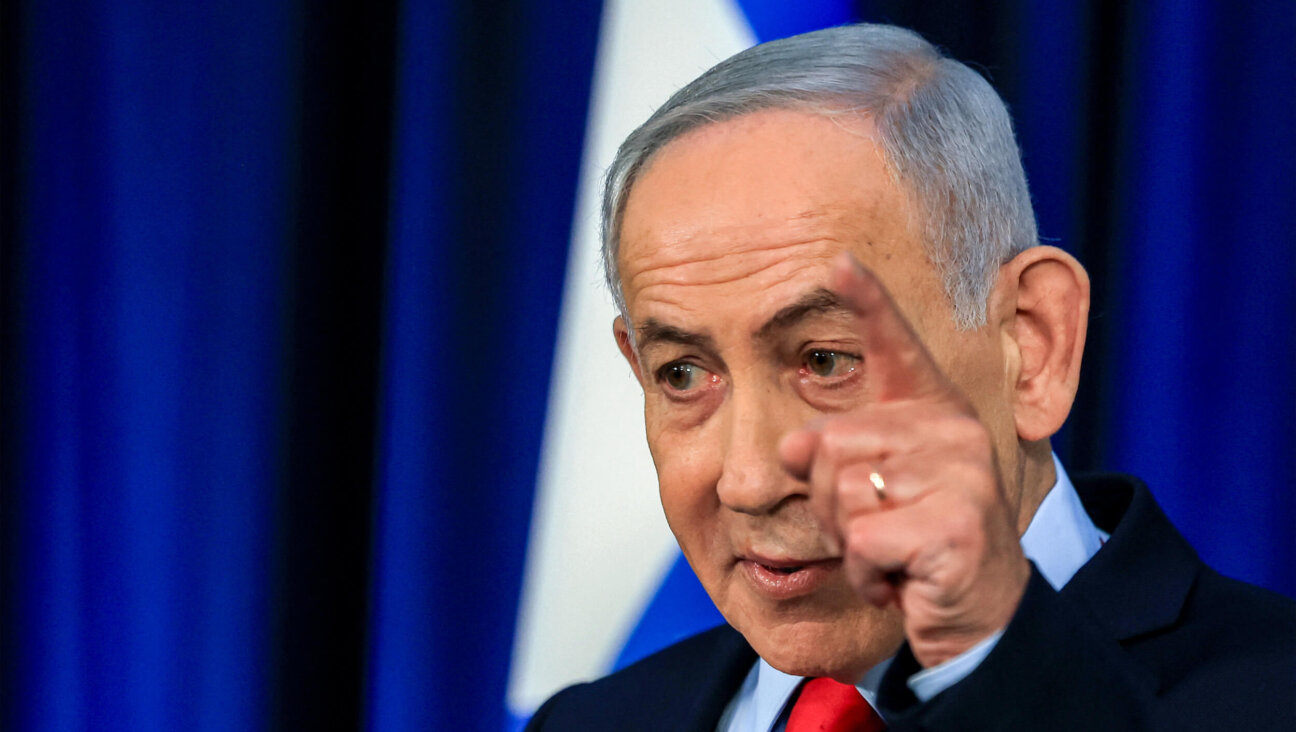
Jerusalem is not a settlement, the Prime Minister of Israel stated unequivocally, and what Jew could disagree?
Jerusalem is the city of gold, the beating heart of the Jewish people, the place where it all began and where it continues. Jerusalem receives our prayers as often as they are uttered; it is the magnet for all those in exile, pulling us in its direction. Jerusalem is not a settlement because a settlement implies something temporary, extemporaneous, movable — and Jerusalem cannot be moved. The ancient stones anchor it forever.
But which Jerusalem does Prime Minister Netanyahu refer to? Before 1967, most of what we now consider Jerusalem was not part of the city, east or west, but part of the West Bank. Israel annexed 28 Palestinian villages after the Six Day War, dramatically expanding the traditional footprint, which has expanded further in the decades since.
Whose Jerusalem? The Jewish quarter of the Old City is essentially now the province of tourists and the Orthodox. West Jerusalem is becoming home to ever-more luxurious buildings owned by Diaspora Jews who rarely live there. East Jerusalem’s neglected Arab neighborhoods increasingly are the site of conflicts with hard-line Jews who insist on moving in with American financial support and Israeli official acquiesence.
As emotionally satisfying as it may be for Jews the world over to hear Netanyahu’s defiant claim of ownership, Jerusalem is home to another people, too. It’s meant to be the capital of another state, too. And the longer and louder Israel lays sole claim to Jerusalem, the more it expands and builds, the harder it will become to take the city’s natural residential divisions — with some exceptions, Jews and Palestinians rarely live near one another anymore — and carve out a secure, reasonable way to share this holy ground.
Perhaps that is Netanyahu’s intention: to solidify and stall. He’s certainly been helped by a Palestinian leadership that waited until the ninth month of a 10-month settlement building freeze to enter peace talks and then was shocked, shocked when the freeze was lifted. Both sides share blame for the deadlock.
But Jerusalem was never part of the freeze, because it’s not officially a settlement. When President Obama issued the mildest of reprimands to yet another ill-timed Israeli announcement of new construction on disputed land in East Jerusalem, Netanyahu’s response was: Israeli governments have built housing there for 40 years, while signing peace treaties with Egypt and Jordan. Why fuss now?
It could just be that Egypt and Jordan never longed for Jerusalem as their capital, as the Palestinians do. Their national aspirations were not dependent on negotiating who controls a holy site and who is called a Jerusalemite. Perhaps they didn’t care.
After suffering through a divided Jerusalem for nearly 20 years, Israel is understandably reluctant to relinquish even a sliver of sovereignty. How does a nation divide its heart? But Palestinians have now been waiting more than twice that long to answer their own national question, and as they wait, the bulldozers and builders chip away at the contours of a solution with the blessings of an Israeli government that seems more unwilling than ever to help the city of gold become the city of peace.
View our interactive maps of West Bank settlement blocks, and their proximity to Palestinian neighborhoods and the security barrier here.
This is a moment of great uncertainty. Here’s what you can do about it.
We hope you appreciated this article. Before you go, we’d like to ask you to please support the Forward’s independent Jewish news this Passover. All donations are being matched by the Forward Board - up to $100,000.
This is a moment of great uncertainty for the news media, for the Jewish people, and for our sacred democracy. It is a time of confusion and declining trust in public institutions. An era in which we need humans to report facts, conduct investigations that hold power to account, tell stories that matter and share honest discourse on all that divides us.
With no paywall or subscriptions, the Forward is entirely supported by readers like you. Every dollar you give this Passover is invested in the future of the Forward — and telling the American Jewish story fully and fairly.
The Forward doesn’t rely on funding from institutions like governments or your local Jewish federation. There are thousands of readers like you who give us $18 or $36 or $100 each month or year.
Support our mission to tell the Jewish story fully and fairly.