She was a dancer who leapt to the top of her field — then the Trump administration fired her
Former Kennedy Center dance director Jane Raleigh is still trying to choreograph her next steps
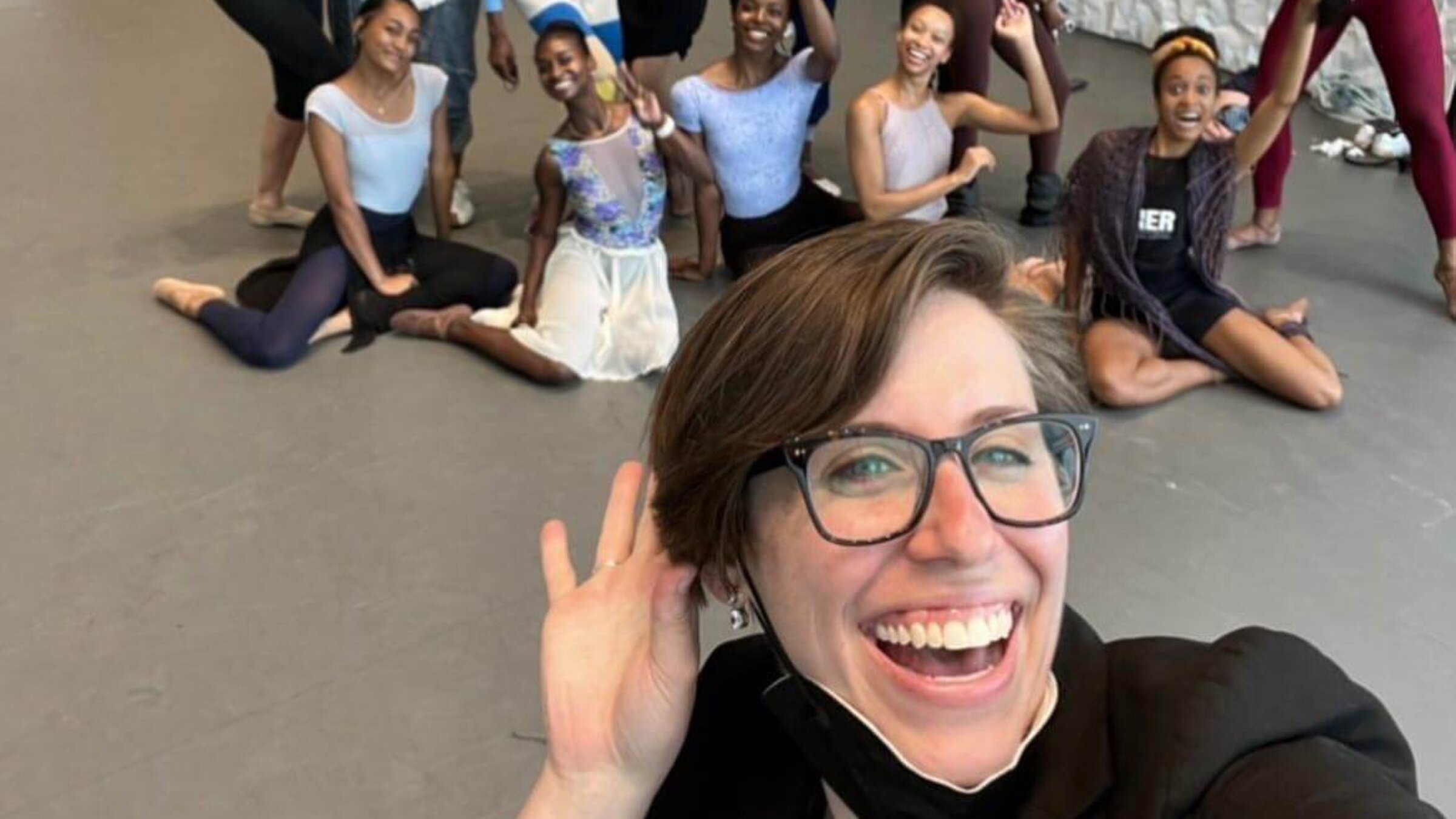
Since her departure from the Kennedy Center, Raleigh has been focused not only on the search for a new full-time job, but also on launching the DC Dance Network. Courtesy of Jane Raleigh

By Stav Ziv December 1, 2025
When she walked up to the Kennedy Center on the first day of her internship in 2013, she was Jane Rabinovitz, a recent grad from William & Mary, fresh off a stint as stage manager for an Argentine aerial tango company performing in Miami, and newly determined to forge a career in the arts.
By the time security escorted her out with her personal belongings 12 years later, she was Jane (Rabinovitz) Raleigh, a veteran employee who’d risen in the ranks to become director of dance programming. In August, she and her small team were fired amid the upheaval fomented by President Donald Trump, who in his second term has installed himself as Kennedy Center chairman and attempted to reshape the institution.

The team was dismissed on a Thursday. By Monday, the center announced its new dance director: former Washington Ballet dancer Stephen Nakagawa. Raleigh was hardly shocked. She’d known since early March about the letter Nakagawa had sent to Richard Grenell, the center’s new president, praising Trump and lamenting “radical leftist ideologies” and the “rise of ‘woke’ culture” in the ballet world.
For six months, Raleigh saw firsthand that “what was happening inside of the Kennedy Center very much mirrored the general chaos that was happening in the government, the DOGE experience that people were having,” she told me over Zoom from her home in D.C. “You’re watching the chess pieces be moved around the board, but it’s people’s lives.”
“There was definitely an overarching feeling of waiting for the shoe to drop,” Raleigh said. “I was committed to staying until I was removed,” she added. But “I did believe from the beginning that everyone would be fired at some point.”
When her time came, the choreography felt familiar. “The cadence of it mirrored what had been happening at the center for many months,” she said. In some cases, entire teams were erased and their programs sunset. In other cases, like hers, “the leader would be fired, and then one, two, or three days later, a new person would just show up.” Often, she said, that person had some connection to Trump or Grenell. (Grenell and the Kennedy Center press office have not responded to multiple requests for comment.)
In the five or seven minutes Raleigh said it took for her and her two assistant managers to be fired, she was informed that this move was the result of “a loss of confidence in my leadership and a loss of confidence in the team’s ability to align with leadership’s vision.”
According to Raleigh, Grenell had communicated that vision in a meeting only the previous week, suggesting they present more “broadly appealing” programming in the vein of So You Think You Can Dance or Paula Abdul. She left the conversation with “a directive to start exploring more commercial offerings,” and immediately began reaching out to agents to pursue it. But before she had a chance to share a proposal, the team was out.
“I didn’t really have a chance to even try,” she said.
From Purim spiels and horas to a career in the arts
Raleigh was born in Washington, D.C., and raised just across the river in Virginia by her Jewish father — that’s the Rabinovitz — and her Catholic mother. Theirs was a mixed household, like the one Raleigh now shares with her husband, who grew up Catholic. But her parents decided to raise their kids Jewish and joined Temple Rodef Shalom, a Reform synagogue in Falls Church, Virginia.

A language lover and future Spanish major, Raleigh “ate up” Hebrew school lessons, even “practicing writing secret notes in Hebrew to myself,” she said. She connected to her Jewish community primarily through the arts. She sang in the youth choir and later became a founding member of the teen choir, Kol Machar. And for many years she performed in the Purim spiels her dad wrote and directed as a hobby. One year when she was in college, the woman playing Esther dropped out of the Tarzan-themed Purim spiel at the last minute. “My dad called me,” she recalled, “and he was like, either you can be Esther or I’m going to have to be Esther.”
Raleigh danced a formative hora at her bat mitzvah and another at her wedding a few years ago. “The hora and Jewish artistic experiences have always been a moment to blend my Jewish life and my secular life,” she said.
In her secular life, she trained seriously in ballet. She minored in dance at William & Mary, led the student dance company, and interned one summer at the American Dance Festival. Soon after graduation, she decided to pursue a career in the arts instead. She grew up going to the Kennedy Center frequently, so that’s where she went.
Her path there led from intern all the way up to dance director. Raleigh curated ballet seasons and contracted, budgeted, and presented both ballet and contemporary dance with an eye toward exposing audiences to a broader variety of work. She brought in Alonzo King LINES Ballet from San Francisco for their Kennedy Center debut in 2024, for example, introducing audiences familiar with classical, narrative productions to a more contemporary vision of ballet by an important living artist.
Raleigh said she felt lucky to put the center’s ample resources to use to support local and emerging artists and present some of the world’s best companies in a worthy setting. “I frequently would have striking moments of realization sitting in the Opera House, when the curtains would go up on shows that I’d be working on,” she said.
“That sense of wonder,” she added, “does not go away.”
A Trump tailspin
Trump took little interest in the Kennedy Center during his first term. He never attended performances back then, Raleigh said, though his daughter Ivanka Trump frequently came to the ballet. Like other presidents before him, he did appoint new members to the historically bipartisan board; Raleigh said she worked closely over the years with a few who were “real ballet supporters.” Unlike his predecessors, Trump repeatedly skipped the annual Kennedy Center Honors.

“We had lived through a previous term, so there was certainly no expectation that anything would be different,” Raleigh said. Until Trump posted on social media in February, shortly after his second inauguration, announcing his intentions to take over as chairman, oust board members, and shake up programming in order to “make the Kennedy Center in Washington, D.C. GREAT AGAIN” and usher in “a Golden Age in Arts and Culture.”
Raleigh found out about Trump’s plan when the public did. At first, she didn’t give it much credence — Trump had said a lot of things during his first administration that he hadn’t acted upon, she said. However, it quickly became clear he would follow through this time, and it “put everybody into a tailspin.”
The purge began immediately. Several board members and longtime chair David Rubenstein were dismissed and replaced by Trump and his appointees. Center president Deborah Rutter was removed after an 11-year tenure, to be succeeded by Grenell.
“Every single day you would come in and be like, what will have happened today?” Raleigh said. A pattern emerged where “basically every payday Friday was mass firings day.” Sometimes it was three people, she remembered, and sometimes 20. Those waves of dismissals were “the most chaotic, traumatic, repeatedly painful thing.”
In response to the uncertainty and upheaval, staff at the Kennedy Center began working to form a union. “The Kennedy Center’s new management has communicated its intention to radically alter the center’s programming priorities, eliminate staff, and dismantle our mission-essential programs,” the union website states. “We no longer believe our institution trusts us and we no longer trust our institution.” Raleigh said her team participated in the organizing effort — which members hoped would help them fight to protect jobs, working conditions, creative autonomy, and more — and she was vocal in backing it.
When she and her team were notified around 11:40 a.m. on Aug. 21 of a meeting that was to take place in the HR suite five minutes later, they knew what was coming. It took just a few minutes for HR and legal to fire them and hand over their termination paperwork, Raleigh recalled.
On the way back to their desks, Raleigh and her team sent a few texts to share the news and “staff from every corner of the building” showed up, as they had done for others so many times by then. They had an hour to say goodbye, get their things, and get out.
Suddenly jobless, they set up at her apartment, divvied up the list of artists they were presenting in the upcoming season, and called them all to share the unfortunate update. It felt particularly difficult to digest the fact that they couldn’t be behind the scenes to support the performances scheduled to take place that weekend as part of the center’s local dance commissioning project. “The piece was about how Black women can support other Black women and femmes to have rest and resilience in the world,” Raleigh said. Without a team, they worried, “Who’s going to take care of this piece of art?”
Next steps
Raleigh’s fears extend beyond the Kennedy Center. She told me she’s concerned about the fate of dance and the arts in the face of the “dismantling, essentially, of the NEA” by the Trump administration and recent shifts by key arts funders, with reports that longtime supporters like the Andrew W. Mellon Foundation, Doris Duke Foundation, and Ford Foundation are now focusing on other priorities. And all this while arts organizations are still recovering from the pandemic’s crushing blow.
“The dance field has not been in a moment of incredible glory and surplus in my entire lifetime,” Raleigh said. So while the current state of affairs is “horrible,” perhaps “this is a moment for us to be thinking about what are new ways and new paths that we can chart going forward.”
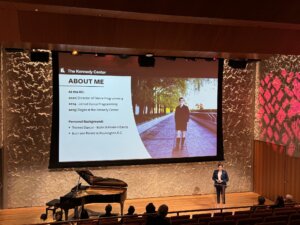
Since her departure from the Kennedy Center, she’s been focused not only on the search for a new full-time job, but also on launching the DC Dance Network. It’s an effort to connect artists to resources and one another. “If we want to build a better fabric, a more supportive fabric, of the dance community nationally, why not start at the tiniest, most local version?” said Raleigh, whose fledgling organization announced its first commission in early November.
Living through the turmoil at the Kennedy Center and witnessing the tumult in the government “has totally transformed my approach to community, my approach to what it means to be a good neighbor,” Raleigh said. “This idea is very Jewish, that we’re commanded to do mitzvot so that we have the opportunity to do more in the future, that we’re compelled to repair the world through tikkun olam. All of that has really been informed from my Jewish childhood.”
She’s stayed in touch with her former colleagues and the union and participated in advocacy efforts. She was part of a group that showed up at the Kennedy Center to personally deliver a petition with more than 1,600 signatures collected by Hands Off the Arts demanding the organization reinstate wrongfully terminated employees, recognize the union, and more. “They’re not getting off the hook,” she said.
Raleigh is waiting to see what kind of dance season, if any, the Kennedy Center announces for 2026-27. It remains to be seen which companies will agree to perform there and whether audiences will attend. In the meantime, Raleigh’s been heartened to see that none of her programming — which runs through June 2026 — seems to have been changed or canceled.
And she’s returned as a spectator, back in the seats where she fell in love with the arts as a kid. In October, she went to see the Stuttgart Ballet perform at the Kennedy Center for the first time in more than 30 years. At the first intermission, the older woman sitting next to her — who said she’d seen the company during their last visit — turned to Raleigh and said, “Isn’t this amazing?!”
“In that moment, we were just audience members having the same transformative experience at the ballet,” Raleigh said. “She clearly didn’t know who I was,” Raleigh added, and “I just got to revel in the ballet with her.”