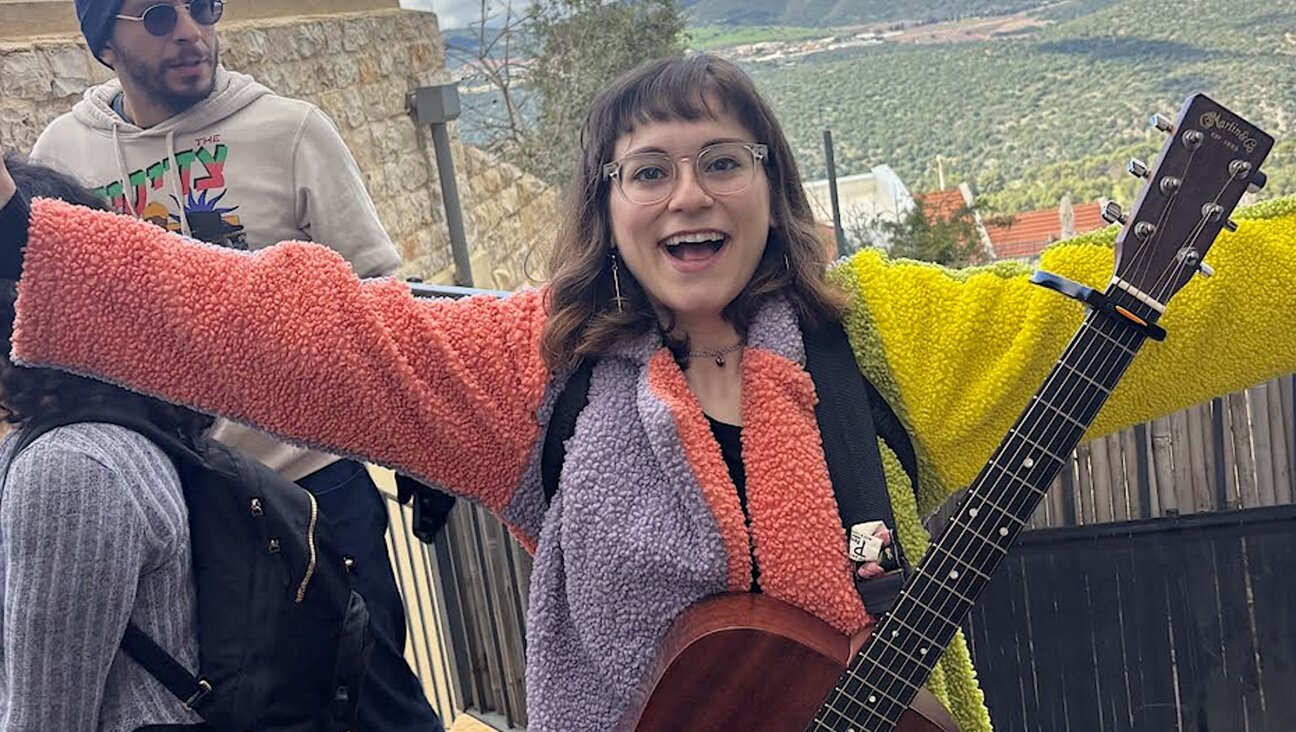
How a Jewish-owned yarn store knitted the symbol of the anti-ICE movement
Knittng store owner Gilah Mashaal sees similarities between her family’s expulsion from the Middle East and what’s happening in the United States
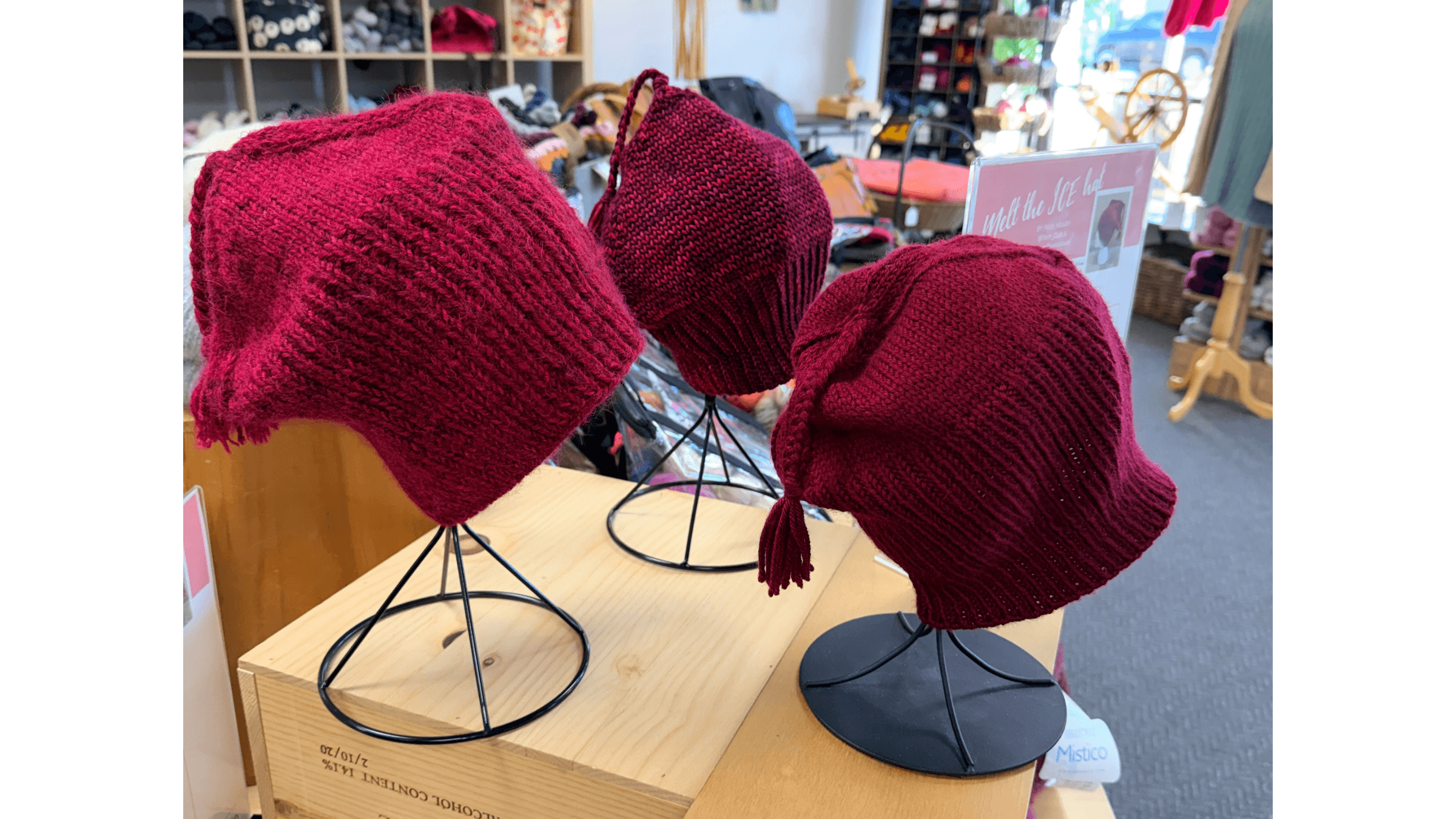
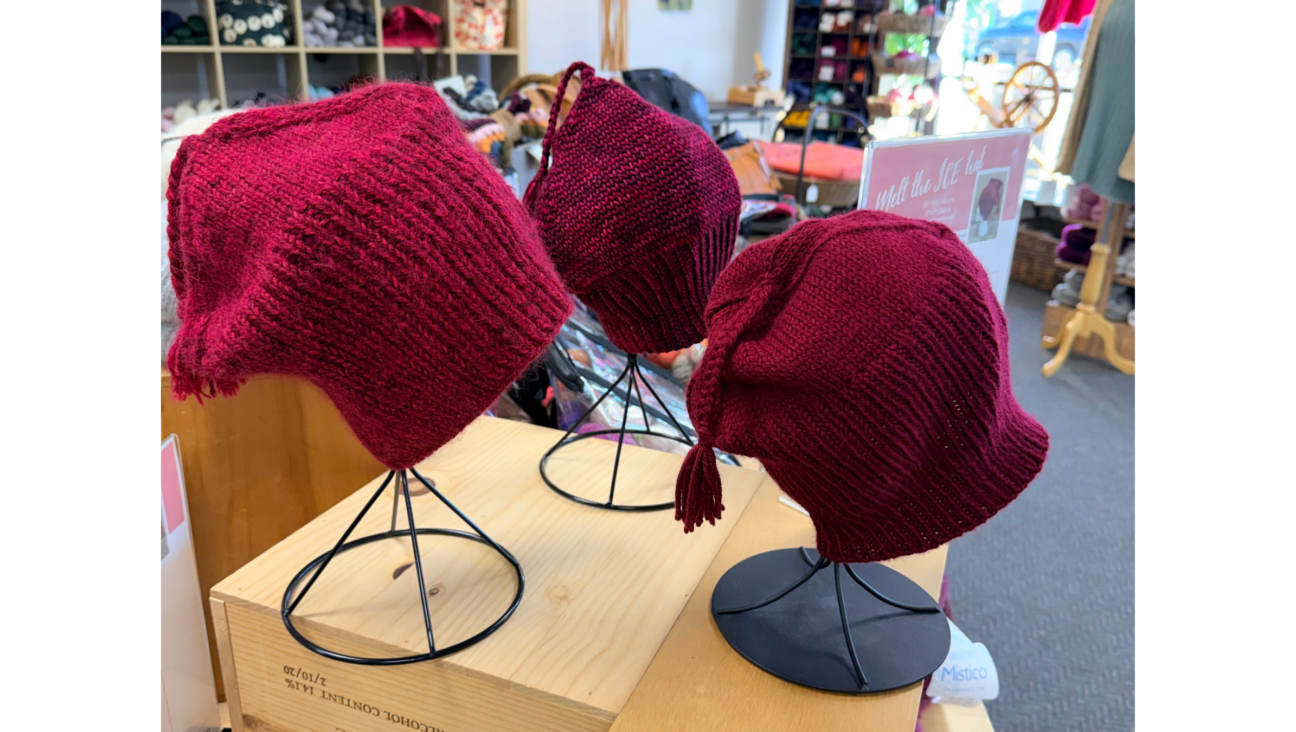
The “Melt ICE” hat, designed by Paul Neary, has become a symbol of the anti-ICE protest movement. Courtesy of Gilah Mashaal

By Olivia Haynie March 12, 2026
In January, as violent confrontations between ICE and protesters erupted in the Twin Cities, a knitting group at Needle & Skein yarn shop in St. Louis Park, Minnesota, started brainstorming what they could do to lift people’s spirits. Paul Neary, a designer at the shop with a special love for fiber arts history, quickly found inspiration: a pointed red knit hat with a tassel worn in 1940s Norway to protest the Nazi occupation and boost morale.
“He showed me the picture of the Norwegian resistance hat and I said that is exactly it,” store owner Gilah Mashaal told me.
Although it’s unclear why the red hats became such a popular anti-Nazi tool in Norway, some have noted the link between their design and the Phrygian cap, a symbol of freedom during the French and American revolutions. Neary reverse engineered the Norwegian pattern, creating a more modern beanie-like shape, birthing the “Melt the ICE” hats now seen at anti-ICE protests across the country. Although, as a Guardian article noted, Mashaal had a rule that “nobody talks politics” in the store, she felt stirred to action.
“It kind of transcends politics, in my opinion,” Mashaal said. “When your neighbors are afraid to leave their homes, or they’re afraid to take their sick children to the doctor, or they can’t go to work, something’s wrong with our society.”
The situation feels personal for Mashaal. Her paternal grandparents were from Baghdad and were forced to leave during the 1941 Farhud, a violent attack on Jews similar to the pogroms of Europe. Mashaal’s family settled in Cairo, but that proved to be only a temporary solution.
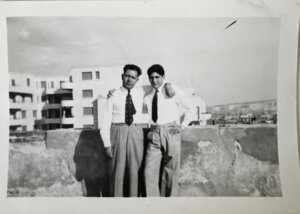
“When my father was 14 years old, the king was deposed so the military took over and things became very very difficult for the Jews in Cairo,” said Mashaal. Her father escaped to France and eventually immigrated to the United States. “They were forced to leave with absolutely nothing and my father told me the story of my grandmother breaking all the dishes in the house because she didn’t want to just hand it over to the military.”
Mashaal said she’s reminded of the terrible conditions her family had to endure when she sees what is happening in her community.
“This is about human decency,” she said. “This is about caring for your neighbor.”
After Neary came up with the pattern, they planned a knit-along for the following week.
“I thought we were gonna have like, you know, maybe 10 people show up,” Mashaal said. “Then all of a sudden there were more than a hundred people in my store.”
The pattern went viral online when the shop shared Neary’s pattern on Ravelry, a site where knitters and crocheters share patterns, projects and tips. When this article was written, 12,251 users reported they were making or had made the hats and 4,446 had put it in their queue of future projects. The design also inspired a number of customized spin-offs including a version that incorporated “Love is more powerful than hate” in morse code and a mini hat that could be worn as a brooch. Mashaal said that the communal values of the knitting world helped make the hats a success.
“They’re very politically minded,” she said. “And when they see something happening that needs attention, everybody comes together and works towards this common goal.”
When we spoke, Neary couldn’t resist a pun, telling me political activism in the yarn community is “literally knit into the fabric of our history.” Knitters in Belgium encoded messages about military activity in their stitches during World War I. Knitting circles have served as a place where women, who were discouraged from being political in public, could exchange ideas about issues such as slavery and women’s suffrage.
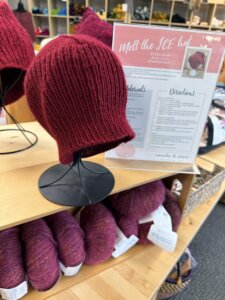
“When you see things happening and you feel helpless, you try to find some way to connect to other people who are also feeling helpless,” Mashaal said. “To create something with your hands is soothing, in a way, and very meaningful.”
Profits from the hats are donated to immigrant aid groups in Minnesota, such as the Immigrant Rapid Relief Fund. Mashaal said they have also received donations from around the world and have raised $760,000 thus far.
Not everyone is happy with Needle & Skein’s new hats. Both Mashaal and Neary told me they’ve received hateful emails, phone calls and letters from people who disagree with their message. But Mashaal said “the positivity far outweighs the negativity that we’ve gotten.”
Neary noted that they have received supportive calls from people who may not necessarily have been as politically engaged before.
“They’ll say something like, you know, ‘Usually I don’t get involved in stuff like this, but this really moved me,’” Neary said. “It’s their kind of gentle way of letting us know, like, ‘We maybe didn’t vote the same way, but obviously we’re on the same team.’”
Mashaal and Neary noted how the knitting community’s diversity connects people across racial, ethnic, gender and generational boundaries.
“It truly does give us all kind of a space to have together to learn more about different people and share comfortably,” Neary said.
“We just all have this one passion. And so we find that one literal common thread.”