Two women race to save Persian Jewish music before it fades
Using tapes of their grandfathers singing in Iran, Galeet Dardashti and Jacqueline Rafii are transcribing and adapting songs that echo centuries of tradition
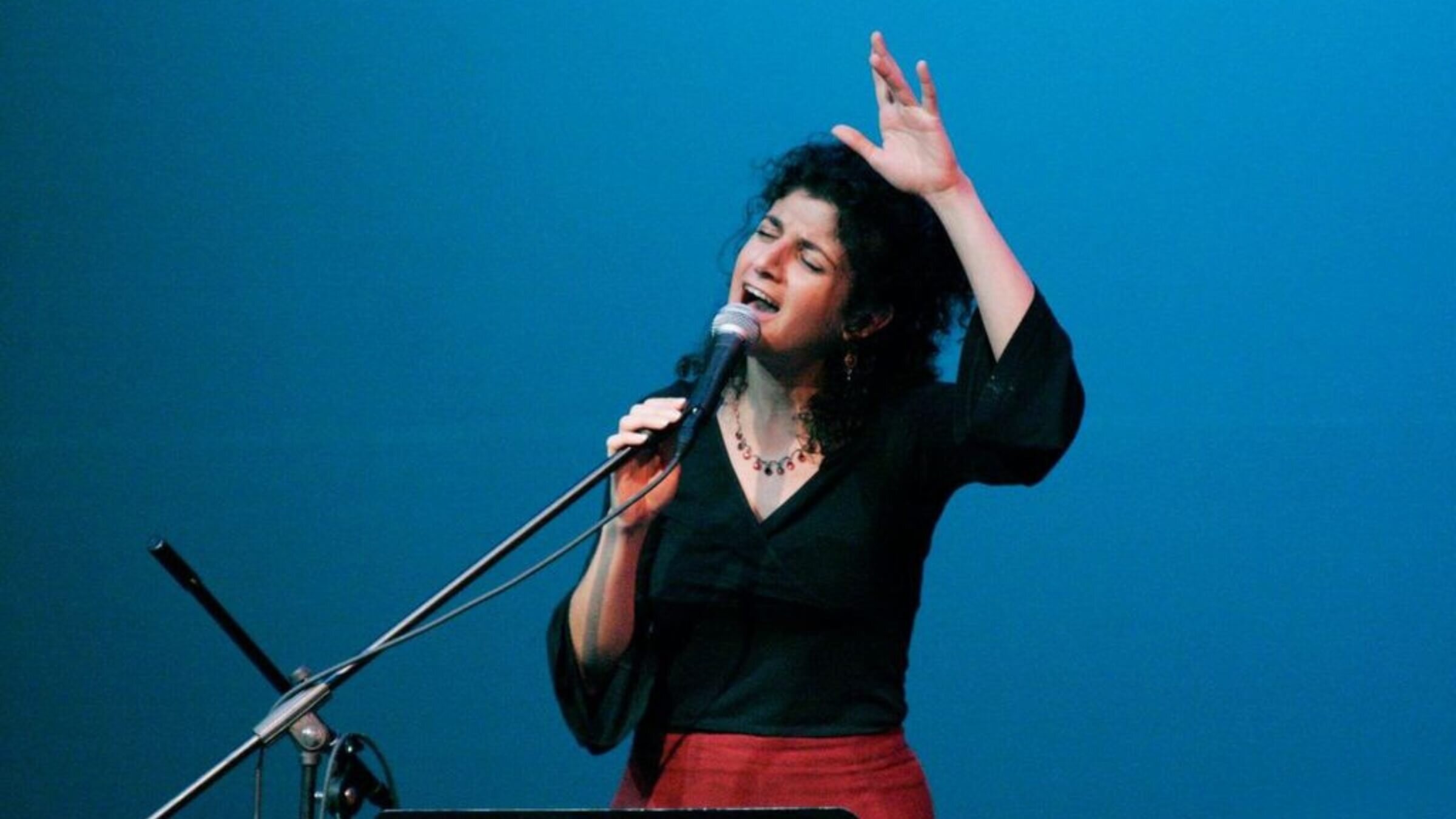
Galeet Dardashti performing traditional Persian Jewish music Courtesy of Galeet Dardashti
By Simone Saidmehr April 5, 2026
In the 1950s, Younes Dardashti, a Jewish man from Tehran’s Jewish ghetto, became one of Iran’s most celebrated singers. As the country underwent rapid secularization under the Shah, Jewish communities that had long been pushed to the margins found new opportunities. Dardashti’s piercing, unmistakable voice filled Iranian airwaves, exclusive concert halls and the Shah’s palace, earning him the title “Nightingale of Iran.”
Years after Younes Dardashti’s death, his granddaughter Galeet is still singing with him in New York.
Using archival recordings of her grandfather’s voice, Galeet Dardashti created her album Monajat — meaning an intimate conversation with God — layering her vocals over decades-old tapes of him singing Selihot, religious poetry chanted nightly before the Jewish New Year.
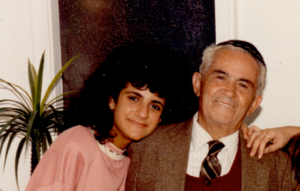
Across the country in Los Angeles, Cantor Jacqueline Rafii is also trying to preserve her Iranian grandfather’s traditional Jewish Persian music.
While in cantorial school, Rafii rediscovered cassette tapes made of her grandfather leading a Passover seder in Tehran. When her family was forced to flee the country following the Islamic Revolution in 1979, they brought that cassette tape with them.
“It was like a time capsule,” said Rafii.
She realized that those grainy and distorted recordings captured a Persian Jewish musical tradition that had only ever been passed down orally from generation to generation. In the diaspora, Rafii worried, they might disappear.
So Rafii sat at the piano with her father to turn what she heard on those old cassette tapes into sheet music so that others might replicate the music Iranian Jews have been singing for centuries.
“We were trying to take this distorted tape from the ’70s and plunk out the notes,” she said. “To write something that had never been written before.”
What began with a single tape became a larger project. Rafii set out to collect and notate as many Persian Jewish melodies as she could. She put out a call on social media to try to find people who remembered Jewish prayers from Iran. Eventually, she found Dardashti, who taught Rafii her grandfather’s Yom Kippur melody for “El Nora Alila.”
A transcription challenge
According to Dardashti, who holds a Ph.D. in anthropology and specializes in Mizrahi culture and music, Jews have played an important role in Persian musical life for centuries.
After the 7th century, when Muslim forces conquered Persia, there were periods during which non-religious music was restricted under Islamic law. Because Jews were classified as najis, or “impure,” they faced limitations on the types of occupations they could legally pursue. Music, being a marginalized and often stigmatized profession, was typically avoided by Muslims. This made it a particularly viable livelihood for Jews who often performed the jobs that were restricted to Muslims.
Because of this, religious minorities, namely Jews, Zoroastrians, and Christians, were responsible for sustaining Persian musical traditions when Muslims could not.
Classical Persian music often features singers interpreting the poetry of figures like Hafez or Rumi. One of its defining features is tahrir, a rapid oscillation in the voice that can sound like a controlled break or yodel, used to convey emotional intensity.
The music relies on modal systems and tonal structures distinct from Western scales. It also includes microtones — notes that fall between the pitches used in Western scales and cannot be easily represented on a standard musical staff. To make the melodies accessible, Rafii notates them “in a format that would be compatible with Western music,” eliminating some (but not all) of those microtones, adding chords to mimic their sound, and establishing a regular meter.
Persian Jewish music draws directly from this tradition, applying its musical forms to Jewish liturgy — Torah chanting, High Holiday prayers, and religious poetry — as well as to songs about daily life written in Judeo-Persian.
“It’s really about interpreting a text,” Dardashti said. “Just as a Persian classical singer would interpret a poem, in Persian Jewish music you’re interpreting Hebrew liturgy in a very similar way.”
For centuries, this music was transmitted entirely orally, passed down from generation to generation, with each singer adding their own interpretation and stylistic flair. During the reign of Shah Mohammad Reza Pahlavi from the 1940s through 1979, Jews enjoyed a golden age in Iran. Jewish musicians, who often came from lineages of family members who had been making music for centuries, moved to the fore and became nationally recognized stars. Dardashti’s grandfather was perhaps the most prominent. Because Israel and Iran had good relations at the time, he frequently traveled between the two countries to share his talents.
Younes Dardashti became a cantor at synagogues across Tehran. Because his chanting was done in a musical style Iranians of all faiths were used to hearing on the radio, Galeet Dardashti says, non-Jews would press their ears to the doors of the synagogue to hear her grandfather’s voice.
A tradition passed down by men
Traditionally, Persian Jewish liturgical music was preserved and performed almost exclusively by men because of Jewish religious norms that limited women’s public singing. Now in the diaspora, that chain of transmission has begun to break down, with fewer and fewer Iranian Jews learning the songs their parents and grandparents once sang.
Rafii says she has faced obstacles in “expressing her cantorial pursuits” to more traditional members of the Persian community in the U.S., where women’s singing is still not embraced. And while she is unsure whether she will “ever in her lifetime … share these melodies personally in such communities,” she remains “hopeful that her work may be useful” to those seeking to transmit Persian Jewish music to the next generation.
For Dardashti, singing Persian Jewish music as a woman is just another layer of the reinvention that has been a feature of Persian Jewish music for generations. Though she too does not perform her music in Orthodox Iranian Jewish settings, she embraces the unique role she can play in leading services for Reform and Conservative Iranian Jews, for whom Ashkenazi-style music is often the default.
“I feel like right now this community needs me; there aren’t many people who can do this work and are willing to do it in an egalitarian setting,” said Dardashti. For the last few years, she has led high holiday services in the traditional Persian style at Kanisse, an egalitarian Jewish community for Sephardic and Mizrahi Jews in New York City.
Though both Rafii and Dardashti are Iranian, neither grew up immersed in Persian Jewish musical traditions.
Like many Iranian Jews who came to the United States after the revolution, their families entered a Jewish landscape dominated by Ashkenazi practice. Dardashti’s father, himself a cantor, trained at the Jewish Theological Seminary, where the focus was almost entirely Ashkenazi. “I grew up the daughter of a Persian cantor who was singing Ashkenazi music,” Dardashti said.
“In order to learn Persian Jewish music, I had to start from scratch,” she added. “I knew nothing.”
She turned to her father, asking him to teach her the melodies he had grown up with in Iran but had not performed formally since coming to the U.S.
Her work, while rooted in a desire to preserve Persian Jewish music, is not without experimentation. Dardashti adds her own flair to her grandfather’s music, laying his vocals over her band and arrangement. “I’m also reinventing, because music isn’t static. Cultural transmission is messy — everyone changes things. So I lean into that messiness.”
Connecting cantors across cultures
Rafii is also continuing to transmit Persian Jewish music in an unconventional way by bringing it to Ashkenazi audiences.
When she entered cantorial school, she said, there were no formal pathways to train in non-European musical traditions. Now, she says cantors from across the country — “in particular, Ashkenazic cantors” — have reached out to her for Persian Jewish sheet music and guidance on incorporating these melodies into their services.
“They want to share how diverse the Jewish family is,” she said. “Now that there’s sheet music for Persian Jewish music, it’s accessible, and they can offer it to their community.”
Dozens of non-Persian cantors have already begun including these melodies in their services.
At Valley Beth Shalom, a largely Ashkenazi congregation in Los Angeles, Rafii regularly weaves her grandfather’s Persian tunes into worship and teaches them to the synagogue’s youth choir.
“I like to include them as part of an everyday service,” she said. “Why don’t we just combine the melodies and make this part of the American Jewish experience?”
This is a moment of great uncertainty. Here’s what you can do about it.
We hope you appreciated this article. Before you go, we’d like to ask you to please support the Forward’s independent Jewish news this Passover. All donations are being matched by the Forward Board - up to $100,000.
This is a moment of great uncertainty for the news media, for the Jewish people, and for our sacred democracy. It is a time of confusion and declining trust in public institutions. An era in which we need humans to report facts, conduct investigations that hold power to account, tell stories that matter and share honest discourse on all that divides us.
With no paywall or subscriptions, the Forward is entirely supported by readers like you. Every dollar you give this Passover is invested in the future of the Forward — and telling the American Jewish story fully and fairly.
The Forward doesn’t rely on funding from institutions like governments or your local Jewish federation. There are thousands of readers like you who give us $18 or $36 or $100 each month or year.
Support our mission to tell the Jewish story fully and fairly.