Tensions in Israel loom large in these Oscar-nominated shorts
‘Butcher’s Stain’ and ‘Children No More’ reveal waning trust in a society traumatized by war
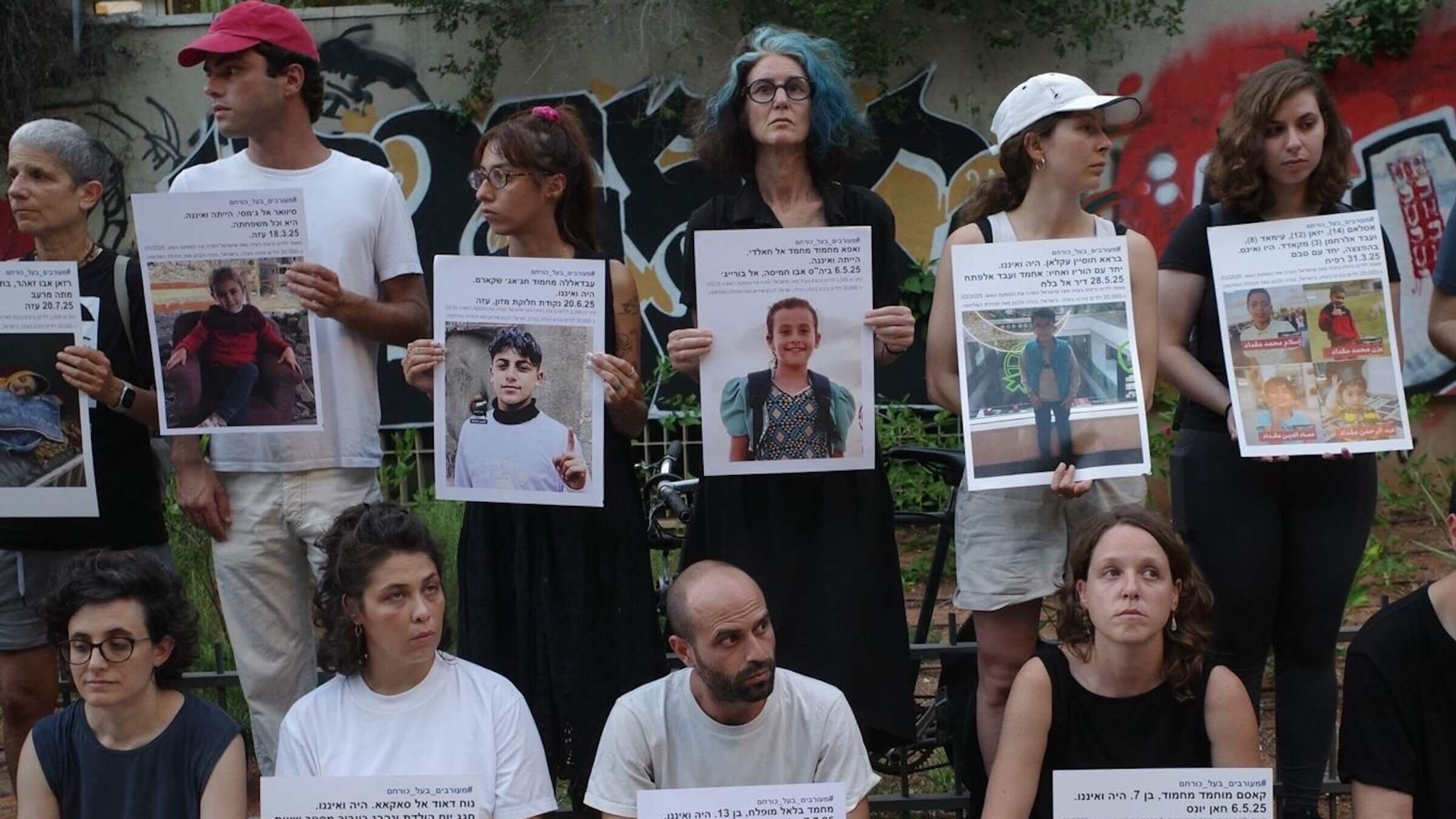
Silent protesters in Israel hold signs of Palestinian children killed by the IDF in the Oscar-nominated short ‘Children No More.’ Courtesy of Medalia Productions

By Olivia Haynie March 4, 2026
Despite a ceasefire between Israel and Hamas, two Oscar-nominated short films show that the deep division that the war sowed in Israeli society will take a long time to mend.
Butcher’s Stain, a nominee for Best Live Action Short Film, is the debut of Israeli director Meyer Levinson-Blount, who based it on an experience he had working at a supermarket. Samir, a Palestinian employee at an Israeli grocery store, is accused of tearing down hostage flyers in the breakroom. A single dad who can’t afford to lose his job, he sets out to find the real culprit, only to find himself betrayed by his Israeli friends.
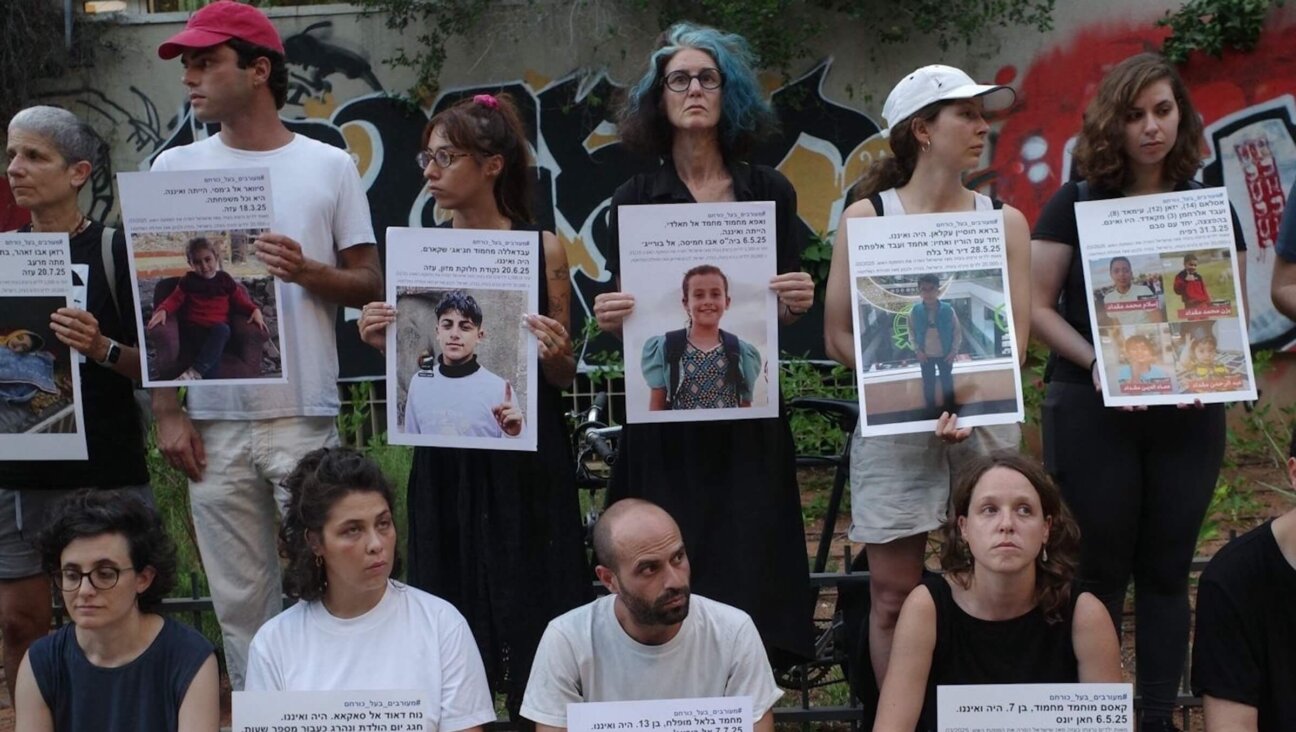
The 36-minute documentary Children No More: “Were and Are Gone,” directed by Israeli filmmaker Hilla Medalia, follows a group of Israeli activists who silently protest the war by going to public spaces and holding photos of Palestinian children killed by the Israel Defense Forces. At the beach and on the street, they are yelled at and physically threatened by passersby who call their acknowledgement of Palestinian death an endorsement of Hamas.
Neither movie particularly stands out in its style or structure as something revolutionary. However they both capture how difficult — and sometimes impossible — it has been to have civil discourse since Oct. 7. People are quick to make assumptions about others’ motivations for sympathizing with either or both sides. Friendships fall apart. Blanket statements alienate people from one another.
The shorts also demonstrate how emotionally charged images have been during the conflict. Both the Israeli hostage posters and the Palestinian flyers showcase the victims’ humanity, hoping viewers will empathize with the subjects regardless of their politics.
But protesters across the world have called the hostage posters Zionist propaganda and tearing them down has been likened by some to a form of anti-colonial resistance. In Children No More, some Israelis respond to the faces of dead Palestinians with the middle finger. In Butcher’s Stain, Samir is accused of supporting terrorism because he posted about children dying in Gaza on social media. To recognize the humanity of someone you may not agree with has become a politically incorrect act.
Reactions to the shorts have further demonstrated the polarizing climate they capture. Israeli culture minister Miki Zohar lambasted both films as being “against Israel,” saying they “amplify our enemies’ narratives.” When I watched Butcher’s Stain at the IFC Theater in New York, the woman two seats down from me became visibly agitated, her knee bouncing up and down as she scoffed disapprovingly before loudly whispering to her partner that the “fucking film” was “antisemitic” for portraying the Israeli employees as bigoted.
There were similar reactions when the Israeli-Palestinian documentary No Other Land won best documentary last year. The film about Israeli forces destroying the Palestinian village of Masafer Yatta was accused of being anti-Israel propaganda. Conservative commentator John Podheretz congratulated “Hamas for its Oscar win” on social media.
Clearly, the Academy was not swayed by last year’s critics to back away from films about Palestinian suffering. In fact, Butcher’s Stain’s selection feels pointed, as it’s the only political drama among the five live action short competitors this year (compared to last year’s lineup that included films about poaching, immigration, child labor, and the Bosnian War). Another Oscar nominee is The Voice of Hind Rajab, a dramatization of Palestinian emergency workers efforts to save the titular five-year old, up for best international feature.
Regardless of whether or not the shorts take home trophies on March 15, they leave audiences with pressing questions about the future now that there is a ceasefire: Can people with different views — in Israel and elsewhere — learn to talk to each other again? Will images of human suffering always be seen as political propaganda? And will Israeli society ever be able to move on?