He saved dozens of kids in Auschwitz — he kept it a secret for nearly the rest of his life
The PBS documentary ‘The Last Twins,’ tells the story of Erno Spiegel, who protected the children subjected to Josef Mengele’s experiments.
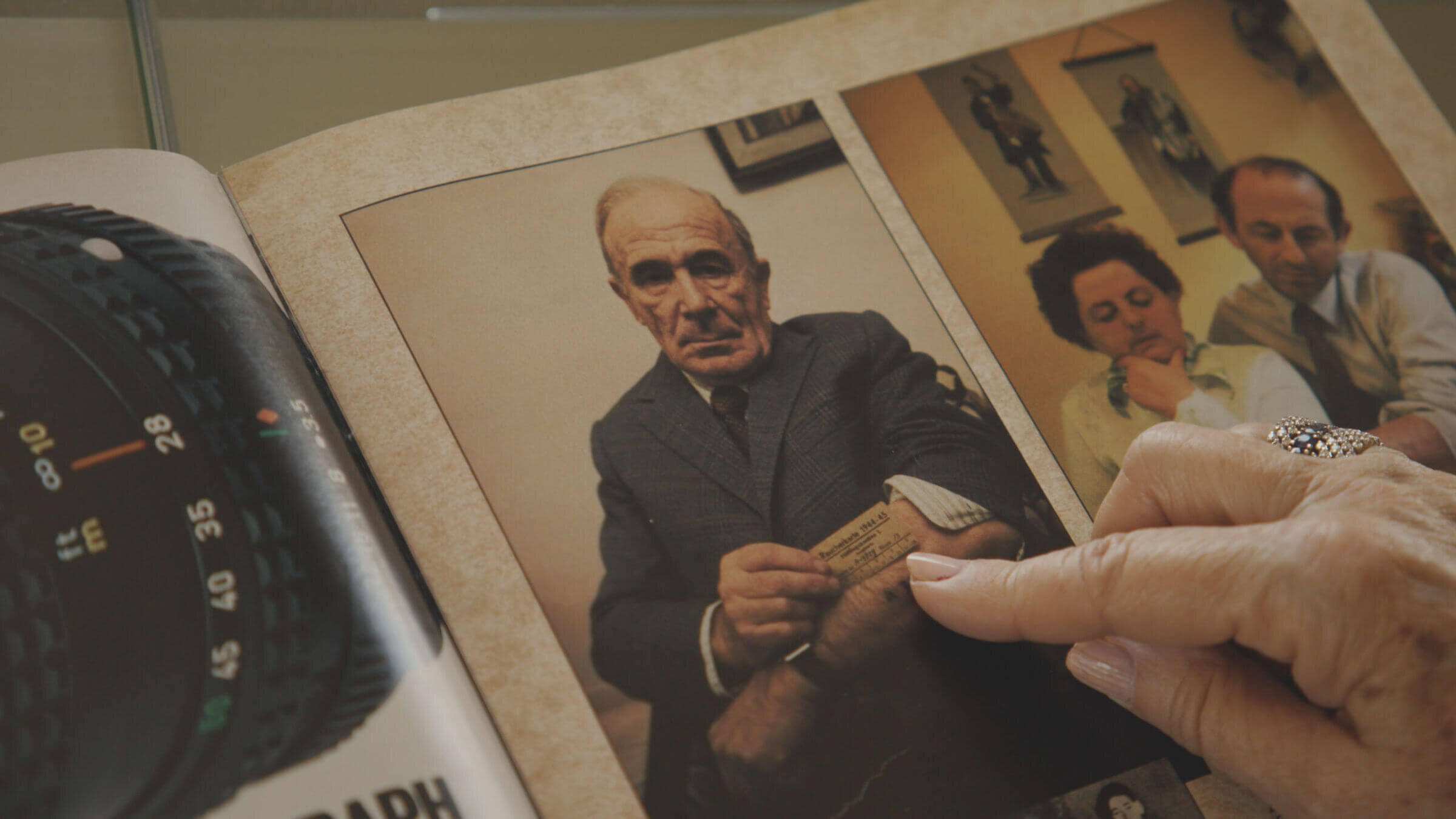
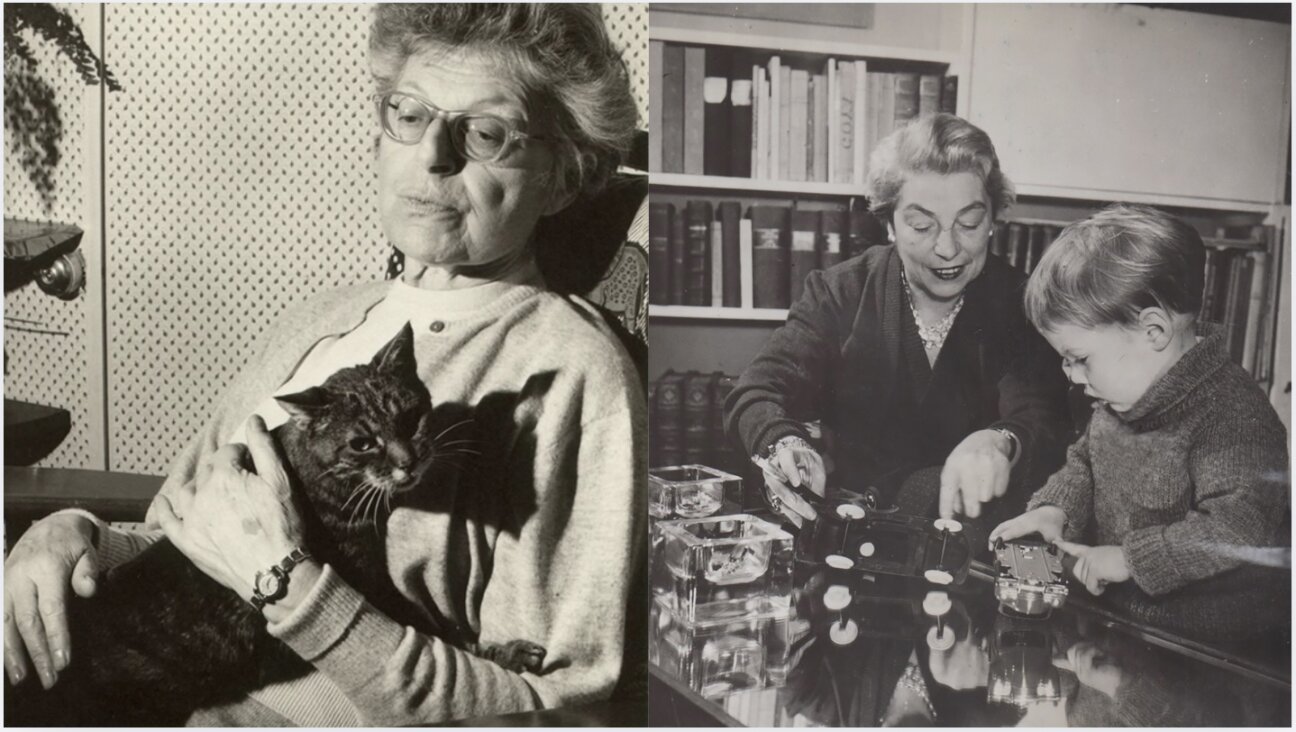
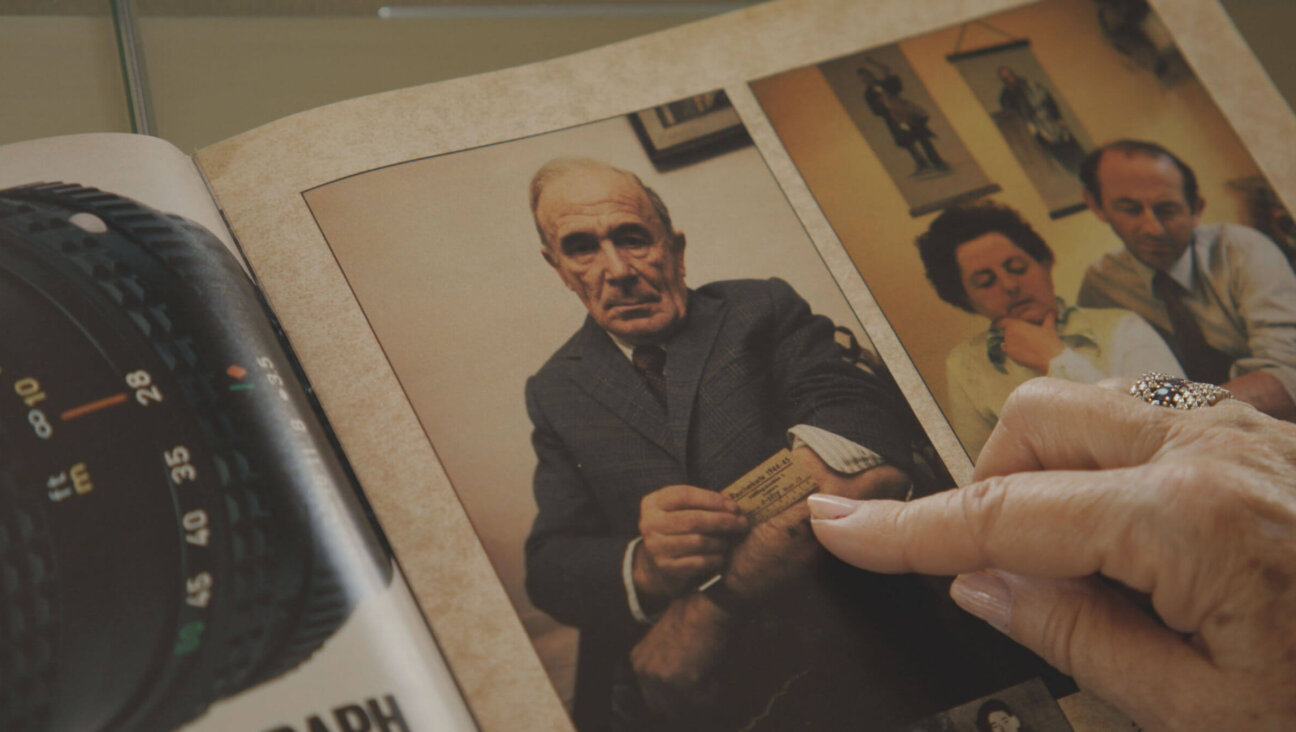
Seeing this photograph of her father Erno “Zvi” Spiegel in LIFE Magazine launched Judith Richter’s years-long journey to uncover the story of his time in Auschwitz. Photo by Matthew O’Neill
By Olivia Haynie April 12, 2026
Growing up in Israel as the daughter of Holocaust survivors, Judith Richter was taught not to discuss the Shoah. While her mother was very open about her experiences, Richter’s father was more reserved, and Israeli society at the time looked down on European Jews for, as they wrongly assumed, not fighting back. It wasn’t until Richter was an adult that she learned her father had played a critical role in protecting children at Auschwitz-Birkenau — a secret she gleaned not from her father himself but from an article on Josef Mengele in a LIFE magazine that her husband happened to spot in a grocery store.
Erno “Zvi” Spiegel was 29 years old when he was deported from Hungary to Auschwitz along with other members of his family, including his twin sister Magda. As a twin, Spiegel was selected to be a subject for Mengele’s scientific experiments, where he injected subjects with diseases and cancer cells to study their effects on the human body; due to their shared genetics, one twin could serve as a control for the experiment. If one died from the procedure and the other didn’t, the surviving twin would still be killed and subject to an autopsy to understand why they lived.
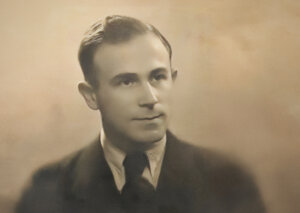
Mengele also charged Spiegel with looking after the other kids he was experimenting on, whose lives Spiegel would end up saving multiple times. The PBS documentary The Last Twins, directed by Perri Peltz and Matt O’Neill, captures the deep and unexpected relationship Spiegel had with his charges through interviews with the surviving sets of twins from Mengele’s lab along with Spiegel’s family. Uncle Spiegel, as the twins called him, was the only adult that many of the kids trusted during their imprisonment.
When SS physician Heinz Thilo ordered the extermination of all sets of twins, Spiegel was able to intervene by telling Mengele that his subjects were at risk. Sometimes siblings were mistakenly brought in as twins, but Spiegel lied about their birth days so they wouldn’t be sent to the gas chambers. Many recounted how he would teach them math and geography to distract them from their horrific conditions.
When she heard these stories for the first time, Richter told me, she was not surprised her father had put such an emphasis on education, even in the camps.
“My father taught me since I was very young that while your material possessions, home, even your freedom can be taken away from you, the single asset that cannot be taken away from you is your knowledge,” she said.
After Auschwitz was liberated, Spiegel led the kids on an arduous journey through Eastern Europe helping them return to their homes — or at least, to what was left of them.
Although Spiegel, who died in 1993, never told his own children what he had done during the war, he spoke with LIFE Magazine for their 1981 article on Mengele’s experiments. The LIFE piece didn’t just cause revelations for Spiegel’s family; one of the survivors, Peter Somogyi, saw the issue, prompting him to contact Spiegel. The two reunited for the first time in almost four decades in Boston, and after that, Spiegel arranged meetings with a number of the other surviving twins.
Richter began researching her father’s story and the lives of those he had saved for an academic project. However, when director Peltz’s mom, who had known Richter for years, connected the two women, Richter realized the importance of turning her father’s story into a movie.
Directors O’Neill and Peltz, who had previously worked together on the documentary Can’t Look Away: The Case Against Social Media, knew the project was time sensitive given how few living survivors are left. Since they first started shooting the film almost a decade ago, all but one of their interview subjects has died. O’Neill added that today’s political climate contributed to the urgency of getting the film to the public.
“At a time of rising antisemitism, of misinformation of the Holocaust,” O’Neill said, “it’s an essential time for journalistic work based entirely on indisputable truths to come out.”
Peltz noted that Spiegel’s heroism wasn’t embodied in one grand act, but “in the step by step, day by day.” Although Mengele’s horrific experiments get a brief mention, the filmmakers chose to focus on the uplifting story of how people came together and protected each other in the midst of tragedy.
“Right now, many of us feel overwhelmed by world events, by things that feel out of control,” O’Neill added. “This is a story of hope in a time of horror and of a man who took the small space that he could control and did good within it.”
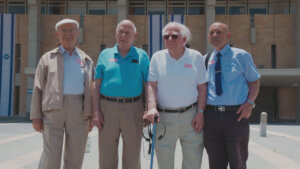
In 2017, Richter organized a reunion of the survivors in Israel, where they dedicated a plaque to Spiegel and the twins in Jerusalem. Richter said her father’s strong sense of social responsibility had a profound effect on her life. She noted that in the homes of some Holocaust survivors, the “children grow up with a very strong sense of revenge.” Instead, her father taught her that the best response to hatred was to ask herself how she could help other people.
“Erno was a fighter in his own way,” O’Neill said. “He fought the Nazis by teaching the kids to call each other by their names. He fought the Nazis by teaching them geography. He fought the Nazis by giving them humanity in darkness.”
The Last Twins will be available to stream on pbs.org on April 13 and have a broadcast premiere on Monday, June 15 at 10/9c.
This is a moment of great uncertainty. Here’s what you can do about it.
We hope you appreciated this article. Before you go, we’d like to ask you to please support the Forward’s independent Jewish news. All donations are still being matched by the Forward Board - up to $100,000 until April 24.
This is a moment of great uncertainty for the news media, for the Jewish people, and for our sacred democracy. It is a time of confusion and declining trust in public institutions. An era in which we need humans to report facts, conduct investigations that hold power to account, tell stories that matter and share honest discourse on all that divides us.
With no paywall or subscriptions, the Forward is entirely supported by readers like you. Every dollar you give is invested in the future of the Forward — and telling the American Jewish story fully and fairly.
The Forward doesn’t rely on funding from institutions like governments or your local Jewish federation. There are thousands of readers like you who give us $18 or $36 or $100 each month or year.

Support our mission to tell the Jewish story fully and fairly.