Bibi: I’m Willing To Take Risks for Peace
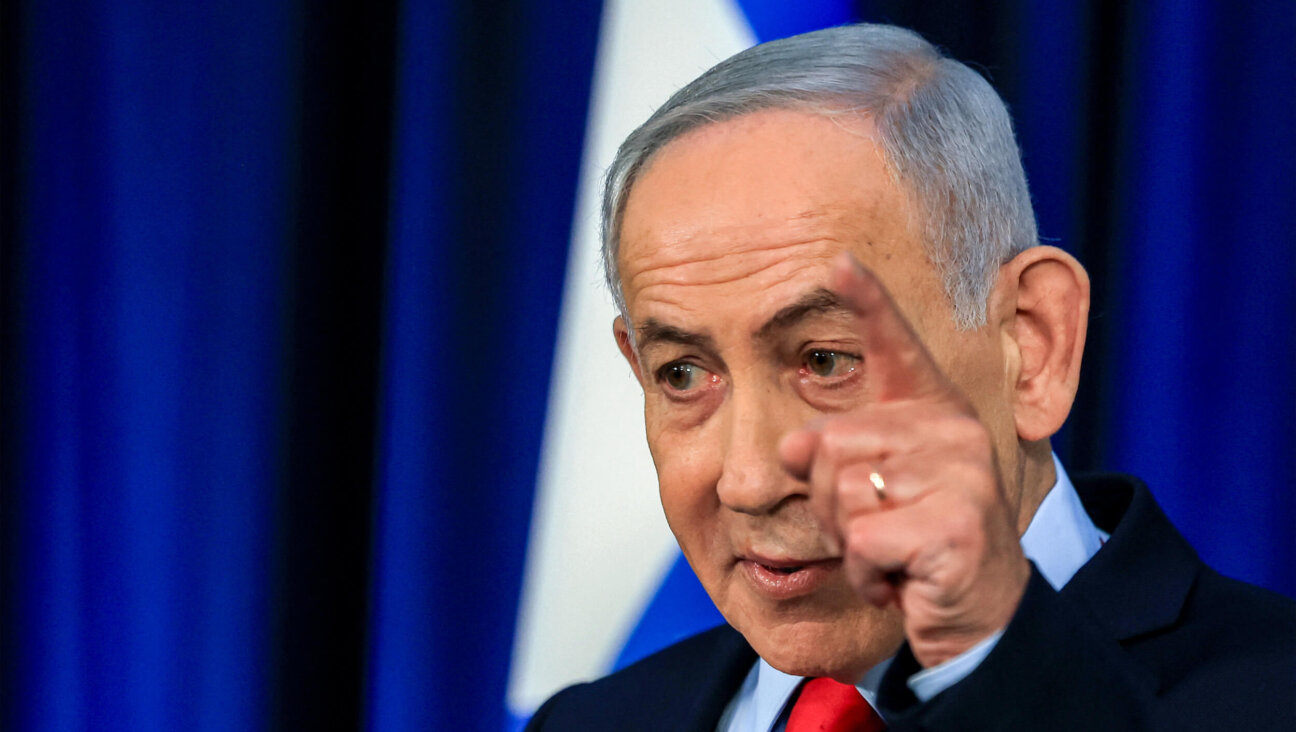
Prime Minister Benjamin Netanyahu has told the European Union’s foreign policy chief that he is ready to take a political risk to reach an agreement with the Palestinians, but only if he does not have to take a security risk, sources say.
During talks with Catherine Ashton, Netanyahu reiterated that he seeks to move forward quickly if direct negotiations with the Palestinians begin. He believes it would be possible to reach an agreement with the Palestinians within a year. A deal would then be implemented gradually over a number of years.
Netanyahu spoke as diplomacy geared toward launching direct talks between Israel and the Palestinian Authority has not yet produced results. Washington and Jerusalem are hoping that officials at the Arab League Summit on July 29 will convince PA President Mahmoud Abbas to agree to direct negotiations.
Meanwhile, Israel is preparing for the end of the freeze on settlement construction in the West Bank, due in late September. The members of the forum of seven senior ministers are divided on the issue, and Netanyahu is ambivalent.
In recent weeks Netanyahu has coordinated efforts to move toward direct talks with the Palestinians. In recent day he has tried to rally the support of Ashton, Egyptian President Hosni Mubarak, and the head of the international Quartet, former British prime minister Tony Blair.
Netanyahu is also trying hard to avoid the sensitive issue of the future of the construction freeze. He has not offered a clear position on the issue so as not to prevent the talks from moving to a direct phase. He says the freeze has not produced the results he had hoped for – direct negotiations with the Palestinians.
PM mum on freeze
On the other hand, Netanyahu is not willing to say clearly whether he will end the freeze or, more importantly, resume construction. He says that for now the cabinet’s decision on the freeze remains in place. That decision states that at the end of 10-month construction hiatus Israel will resume the construction policy of previous governments.
The governments of Ariel Sharon and Ehud Olmert never said so publicly but had tacit understandings with the Bush administration, which allowed Israel to keep building in the large settlement blocs. However, they hardly built in the small and isolated settlements.
Ahead of the freeze deadline, tensions are mounting in the forum of seven. Intelligence and Atomic Energy Minister Dan Meridor told Army Radio on Tuesday that at the end of September Israel will no longer be bound by the freeze. The question will simply be where to build.
“My view is that it would be wrong to build in places where there will be a Palestinian state,” Meridor said. “But it would be right to build in places that are destined to be part of the State of Israel, in the settlement blocs and the communities along the [separation] fence. The government needs to discuss this.”
This is a moment of great uncertainty. Here’s what you can do about it.
We hope you appreciated this article. Before you go, we’d like to ask you to please support the Forward’s independent Jewish news this Passover. All donations are being matched by the Forward Board - up to $100,000.
This is a moment of great uncertainty for the news media, for the Jewish people, and for our sacred democracy. It is a time of confusion and declining trust in public institutions. An era in which we need humans to report facts, conduct investigations that hold power to account, tell stories that matter and share honest discourse on all that divides us.
With no paywall or subscriptions, the Forward is entirely supported by readers like you. Every dollar you give this Passover is invested in the future of the Forward — and telling the American Jewish story fully and fairly.
The Forward doesn’t rely on funding from institutions like governments or your local Jewish federation. There are thousands of readers like you who give us $18 or $36 or $100 each month or year.
Support our mission to tell the Jewish story fully and fairly.