Israel Approves Hundreds of New Settlement Homes

Image by Getty Images
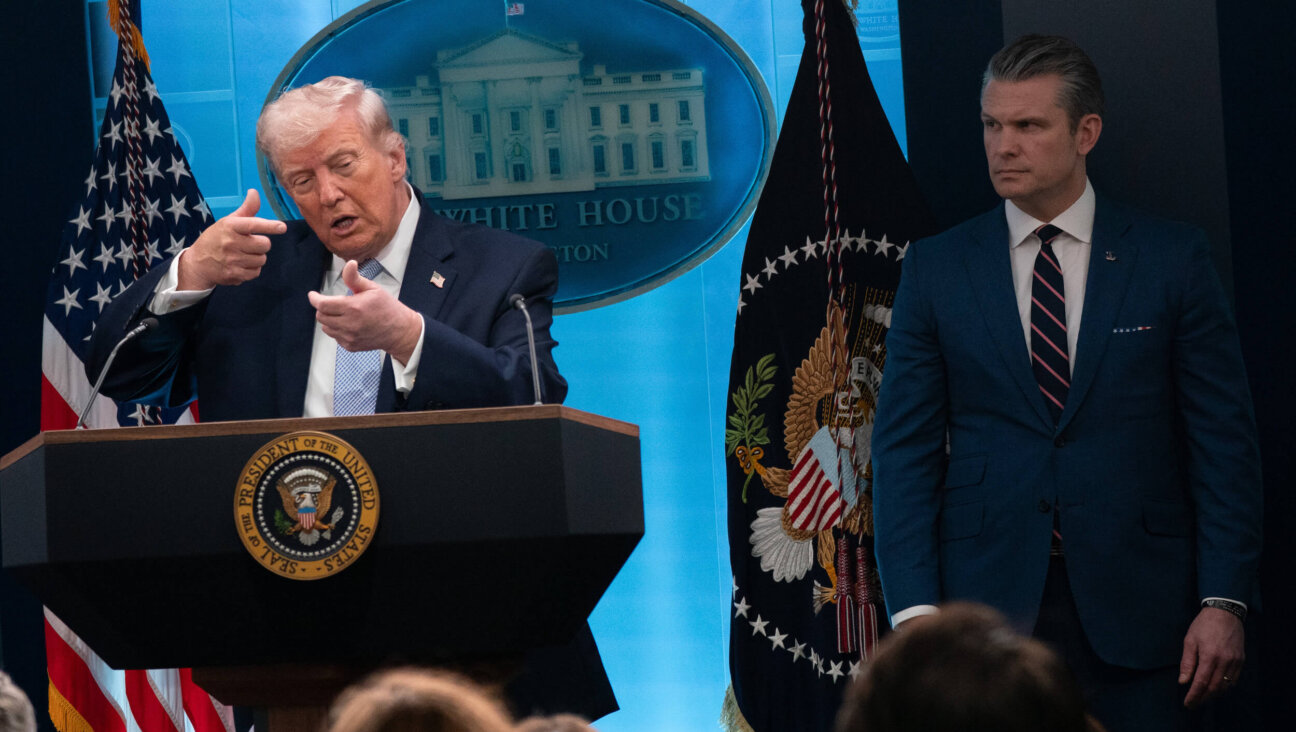
Israel approved building permits on Sunday for hundreds of homes in three East Jerusalem settlements, two days after U.S. President Donald Trump took office, expecting him to row back on the last administration’s criticism of such projects.
The housing projects, on land that the Palestinians seek as part of a future state, had been taken off the Jerusalem municipality’s agenda in December at the last minute at the request of Prime Minister Benjamin Netanyahu, in order to avoid further censure from the administration of Barack Obama.
Israel’s right-wing expects Trump’s attitude towards settlements built in the West Bank and East Jerusalem, areas Israel captured in a 1967 war, to be far more supportive than that of his predecessor.
Netanyahu said he would hold his first conversation with Trump since he took office, by telephone on Sunday. “Many matters face us, the Israeli-Palestinian issue, the situation in Syria, the Iranian threat,” he said in broadcast remarks at the start of his weekly cabinet meeting.
Jerusalem’s City Hall approved the building permits for more than 560 units in the urban settlements of Pisgat Zeev, Ramat Shlomo and Ramot, areas annexed to Jerusalem in a move unrecognized internationally.
Meir Turgeman, the chairman of the municipality’s Planning and Building committee, told Israel Radio that the permits had been held up until the end of the Obama administration.
“I was told to wait until Trump takes office because he has no problem with building in Jerusalem,” Turgeman said, adding there were hundreds more units waiting for approval.
The Palestinians denounced the move. “We strongly condemn the Israeli decision to approve the construction,” Nabil Abu Rdainah, spokesman for Palestinian President Mahmoud Abbas, told Reuters.
In its final weeks, the Obama administration angered the Israeli government by withholding a traditional U.S. veto of an anti-settlement resolution at the United Nations Security Council, enabling the measure to pass.
Trump’s nominee to be U.S. ambassador to the United Nations, Nikki Haley, echoed his condemnation of the world body over its treatment of Israel at her Senate confirmation hearing on Wednesday.
In a proposal that has drawn a Palestinian outcry, Trump has also pledged to move the U.S. embassy from Tel Aviv to Jerusalem.
Israel sees all Jerusalem as is its capital but most of the world does not, seeing its final status as a matter for peace negotiations. The Palestinians have said an embassy move would kill any prospect for peace. Negotiations broke down in 2014.
Trump has also appointed a new U.S. ambassador to Israel, David Friedman, who is considered a settlements supporter.
Commentators in Israel have said it was too early to tell what Trump’s policy on these matters will actually be once he takes office.
Most countries consider settlement activity illegal and an obstacle to peace. Israel disagrees, citing a biblical, historical and political connection to the land – which the Palestinians also claim – as well as security interests.—Reuters
This is a moment of great uncertainty. Here’s what you can do about it.
We hope you appreciated this article. Before you go, we’d like to ask you to please support the Forward’s independent Jewish news this Passover. All donations are being matched by the Forward Board - up to $100,000.
This is a moment of great uncertainty for the news media, for the Jewish people, and for our sacred democracy. It is a time of confusion and declining trust in public institutions. An era in which we need humans to report facts, conduct investigations that hold power to account, tell stories that matter and share honest discourse on all that divides us.
With no paywall or subscriptions, the Forward is entirely supported by readers like you. Every dollar you give this Passover is invested in the future of the Forward — and telling the American Jewish story fully and fairly.
The Forward doesn’t rely on funding from institutions like governments or your local Jewish federation. There are thousands of readers like you who give us $18 or $36 or $100 each month or year.

Support our mission to tell the Jewish story fully and fairly.