‘A Thousand Kisses’ As Yad Vashem Spotlights Hopes Of Doomed Holocaust Victims

Image by Yad Vashem
“Hope to see you in good health, a thousand kisses, mommy,” were the last words Betty’s mother wrote to her before being sent with her eight-week-old baby to their deaths at the Sobibor Nazi concentration camp in eastern Poland in 1943.
Sitting at her home with a pastoral view from a hilltop town overlooking the Mediteranean sea, 76-year-old Betty Kazin Rosenbaum read the hand-written letter in Dutch from the mother she never really got to know.
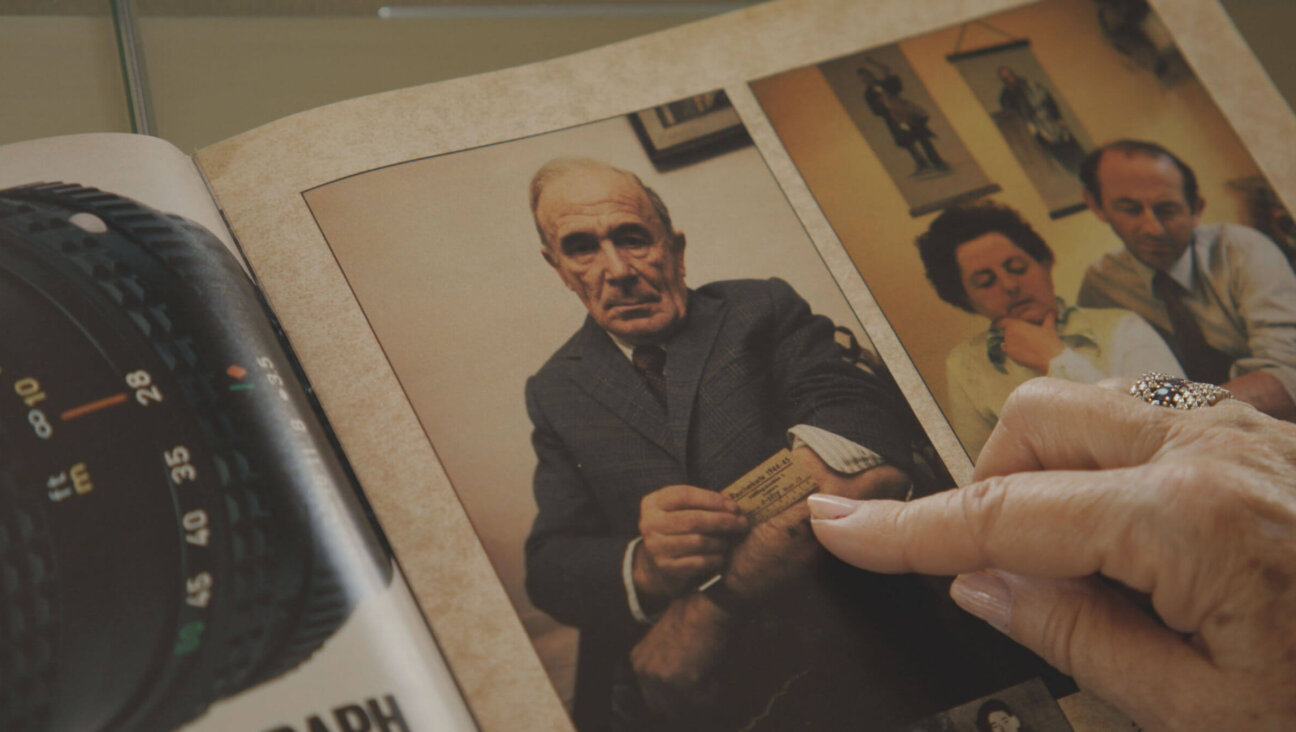
Betty keeps her mother’s original letter in her home, but she provided a scanned copy for a new digital exhibition unveiled at Yad Vashem, Israel’s Holocaust research center and museum in Jerusalem.
After spending several years in a ghetto in Amsterdam, the family separated. In 1943, two-year-old Betty was sent to a Christian foster home in the town of Eibergen in The Netherlands until the end of the war.
Her mother and eight-week-old baby brother were hidden by a Christian family in Neede, but were betrayed by locals.
“She always wrote with a lot of hope and never depressive,” said Betty with a smile. “Here she writes mommy. It is her and then I feel very close with her.”
Yad Vashem recently launched its third digital exhibition of letters obtained from the Holocaust, entitled “Last Letters From The Holocaust: 1943.” The exhibit “I Left Everyone At Home” includes ten handwritten letters in different languages.—Reuters
This is a moment of great uncertainty. Here’s what you can do about it.
We hope you appreciated this article. Before you go, we’d like to ask you to please support the Forward’s independent Jewish news. All donations are still being matched by the Forward Board - up to $100,000 until April 24.
This is a moment of great uncertainty for the news media, for the Jewish people, and for our sacred democracy. It is a time of confusion and declining trust in public institutions. An era in which we need humans to report facts, conduct investigations that hold power to account, tell stories that matter and share honest discourse on all that divides us.
With no paywall or subscriptions, the Forward is entirely supported by readers like you. Every dollar you give is invested in the future of the Forward — and telling the American Jewish story fully and fairly.
The Forward doesn’t rely on funding from institutions like governments or your local Jewish federation. There are thousands of readers like you who give us $18 or $36 or $100 each month or year.

Support our mission to tell the Jewish story fully and fairly.