Russian missiles reportedly damage a historic synagogue in southeastern Ukraine
An unconfirmed photo of the Huliaipole synagogue on Twitter shows a massive hole in the building’s exterior
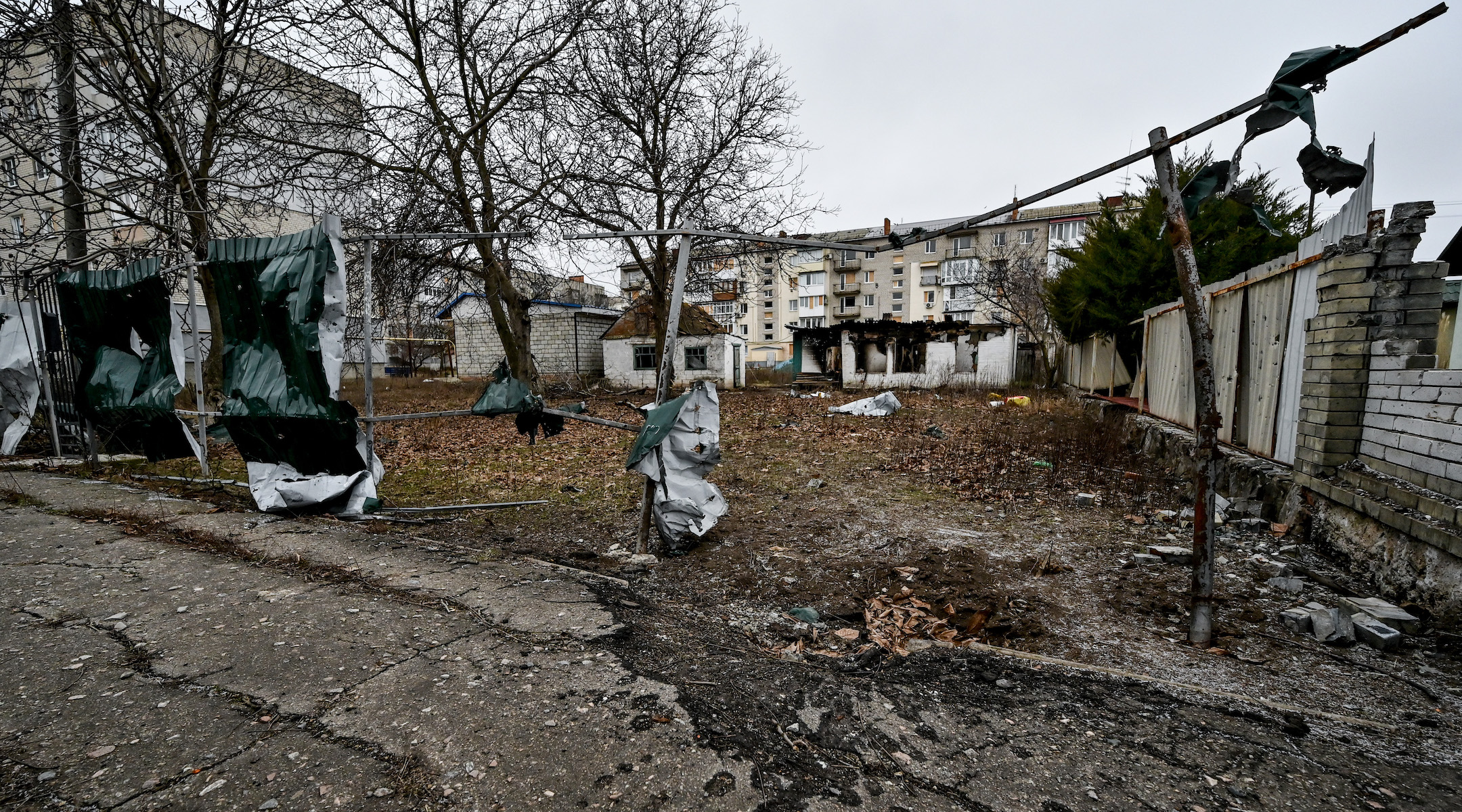
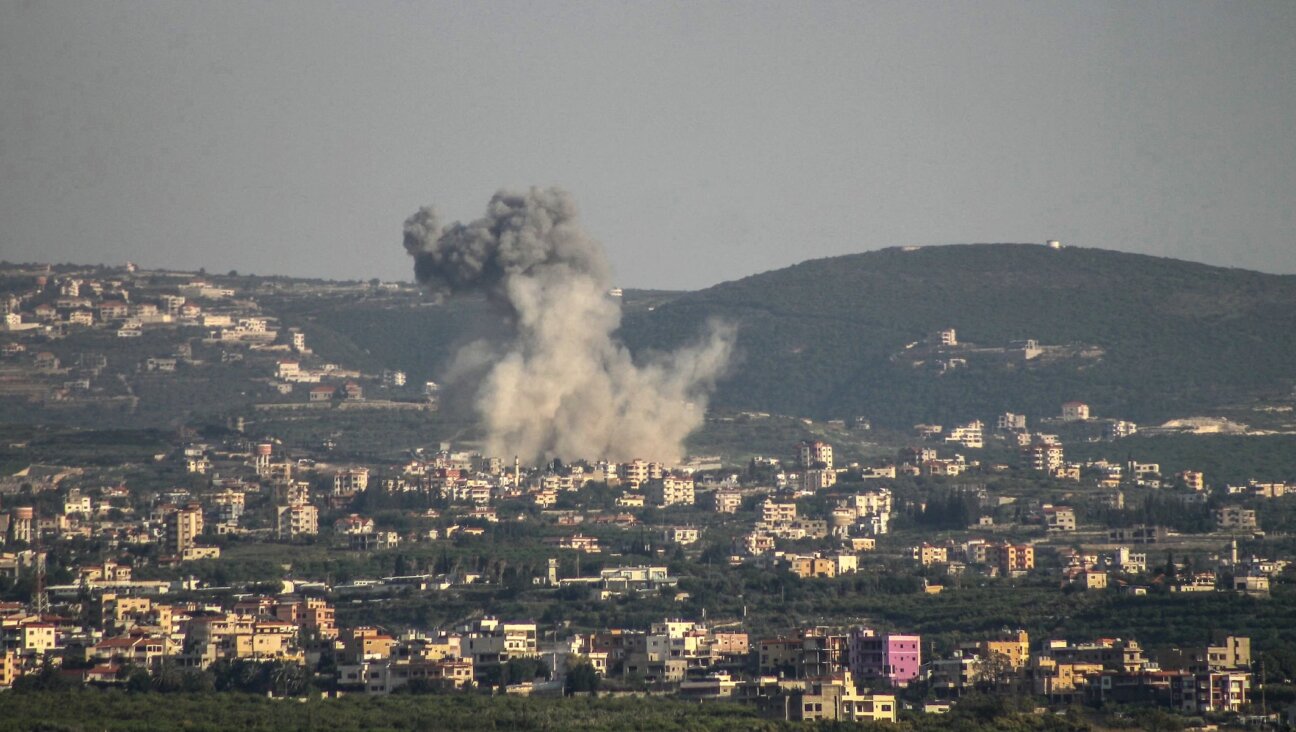
A view of Huliaipole, Ukraine, shows the effects of Russian bombing, Jan. 14, 2023. (Dmytro Smolienko/Ukrinform/Future Publishing via Getty Images)
(JTA) — Russian missile fire damaged an 113-year-old synagogue in the city of Huliaipole, Ukraine, last weekend.
An unconfirmed photo of the synagogue on Twitter shows a massive hole in the building’s exterior; the state of the interior is unclear.
??Оккупационные войска ударили по синагоге в Гуляйполе
— Serg (@NHunter007) January 31, 2023
Это здание постройки 1909 года регулярно страдает от российских обстрелов. pic.twitter.com/6x9FlRXRr3
“On behalf of the Jewish community of Ukraine, I strongly condemn the Russian bombardment of the Synagogue in the city of Huliaipole,” said Moshe Reuven Azman, a Ukrainian chief rabbi affiliated with the Chabad-Lubavitch movement, according to Ynet. “It is common knowledge that holy sites are off-limits during an armed conflict. It’s an understanding the Russians chose to violate. I expect world leaders to condemn this act.”
In the late 1800s, Huliaipol was home to more than 1,000 Jews, over 10% of its population. By 1939, that number was less than 600, according to Yad Vashem, Israel’s Holocaust remembrance authority and museum.
Since the onset of the Russian invasion last February, Huliaipole has seen fierce fighting, as it is located in the center of the contested Zaporizhia oblast. In 2021, its overall population was around 12,000 but that number dipped to as low as 2,000 by March 2022.
This article originally appeared on JTA.org.
This is a moment of great uncertainty. Here’s what you can do about it.
We hope you appreciated this article. Before you go, we’d like to ask you to please support the Forward’s independent Jewish news. All donations are still being matched by the Forward Board - up to $100,000 until April 24.
This is a moment of great uncertainty for the news media, for the Jewish people, and for our sacred democracy. It is a time of confusion and declining trust in public institutions. An era in which we need humans to report facts, conduct investigations that hold power to account, tell stories that matter and share honest discourse on all that divides us.
With no paywall or subscriptions, the Forward is entirely supported by readers like you. Every dollar you give is invested in the future of the Forward — and telling the American Jewish story fully and fairly.
The Forward doesn’t rely on funding from institutions like governments or your local Jewish federation. There are thousands of readers like you who give us $18 or $36 or $100 each month or year.

Support our mission to tell the Jewish story fully and fairly.