Man charged with making threats against Toulouse Jewish school that was site of 2012 shooting
In 2012, a gunman killed a rabbi and three students at Ozar Hatorah, in an attack that was often cited in depictions of the rise in antisemitism in France
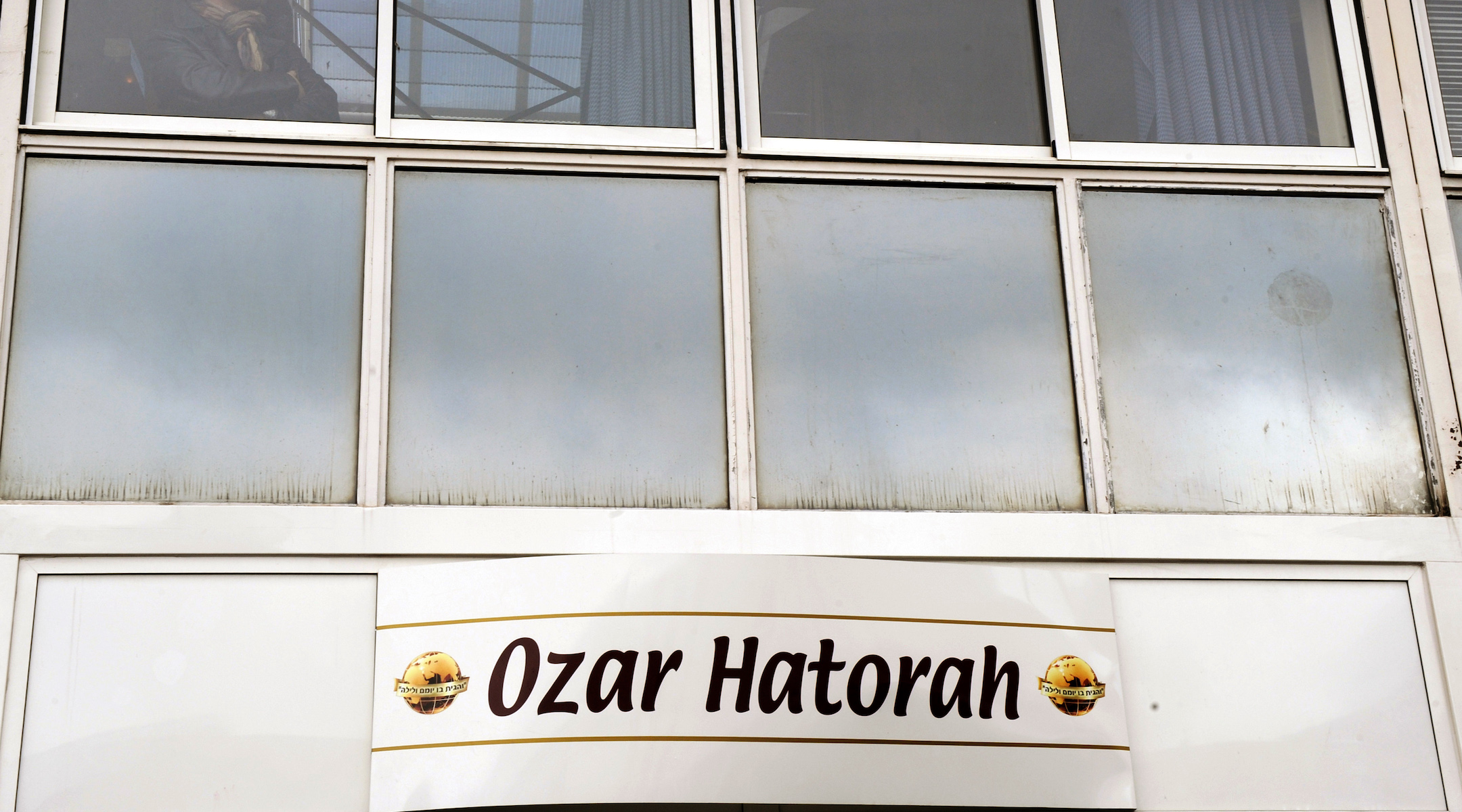
A view outside the Ozar Hatorah school in Toulouse, France, shortly after a gunman killed a rabbi and three students inside, March 19, 2012. (Eric Cabanis/AFP via Getty Images)
(JTA) — French authorities have placed under judicial supervision a man who allegedly made threatening phone calls last month to a Jewish school in Toulouse that was the site of a deadly terror attack in 2012.
The 34-year-old suspect made 163 phone calls in total, reports show, including some to a hospital and to a Marseille surgeon.
“I fear that he could attack the Jewish community,” a public prosecutor said, according to The Times of Israel.
In March 2012, an Islamist gunman entered the Ozar Hatorah school and shot dead a rabbi and three young students, wounding four others. He was killed after a 30-hour standoff with police.
The attack was often cited as one of the manifestations of a rise in antisemitism in France that drove a surge in French-Jewish immigration to Israel throughout the 2010s. In 2019, the shooter’s brother was sentenced to 30 years in prison as an accomplice in the attack.
The defendant who made the phone calls throughout January, whose identity has not been publicly revealed, was described as without a permanent home and staying in hotels. Last week, a court in Castres ordered a psychiatric assessment and put him under supervision in his mother’s house in the town of Mazamet, in southern France, and they adjourned his case until March.
This article originally appeared on JTA.org.
It’s our birthday and we’re still celebrating!
We hope you appreciated this article. Before you go, we’d like to ask you to please support the Forward’s independent Jewish news.
This week we celebrate 129 years of the Forward. We’re proud of our origins as a Yiddish print publication serving Jewish immigrants. And we’re just as proud of what we’ve become today: A trusted source of Jewish news and opinion, available digitally to anyone in the world without paywalls or subscriptions.
We’ve helped five generations of American Jews make sense of the news and the world around them — and we aren’t slowing down any time soon.
As a nonprofit newsroom, reader donations make it possible for us to do this work. Support independent, agenda-free Jewish journalism and our board will match your gift in honor of our birthday!
Support our mission to tell the Jewish story fully and fairly.