Netanyahu, citing violence, withdraws his decision to fire his defense minister
“In recent days, we have worked and stood together around the clock on all fronts in the face of security challenges,” Netanyahu said
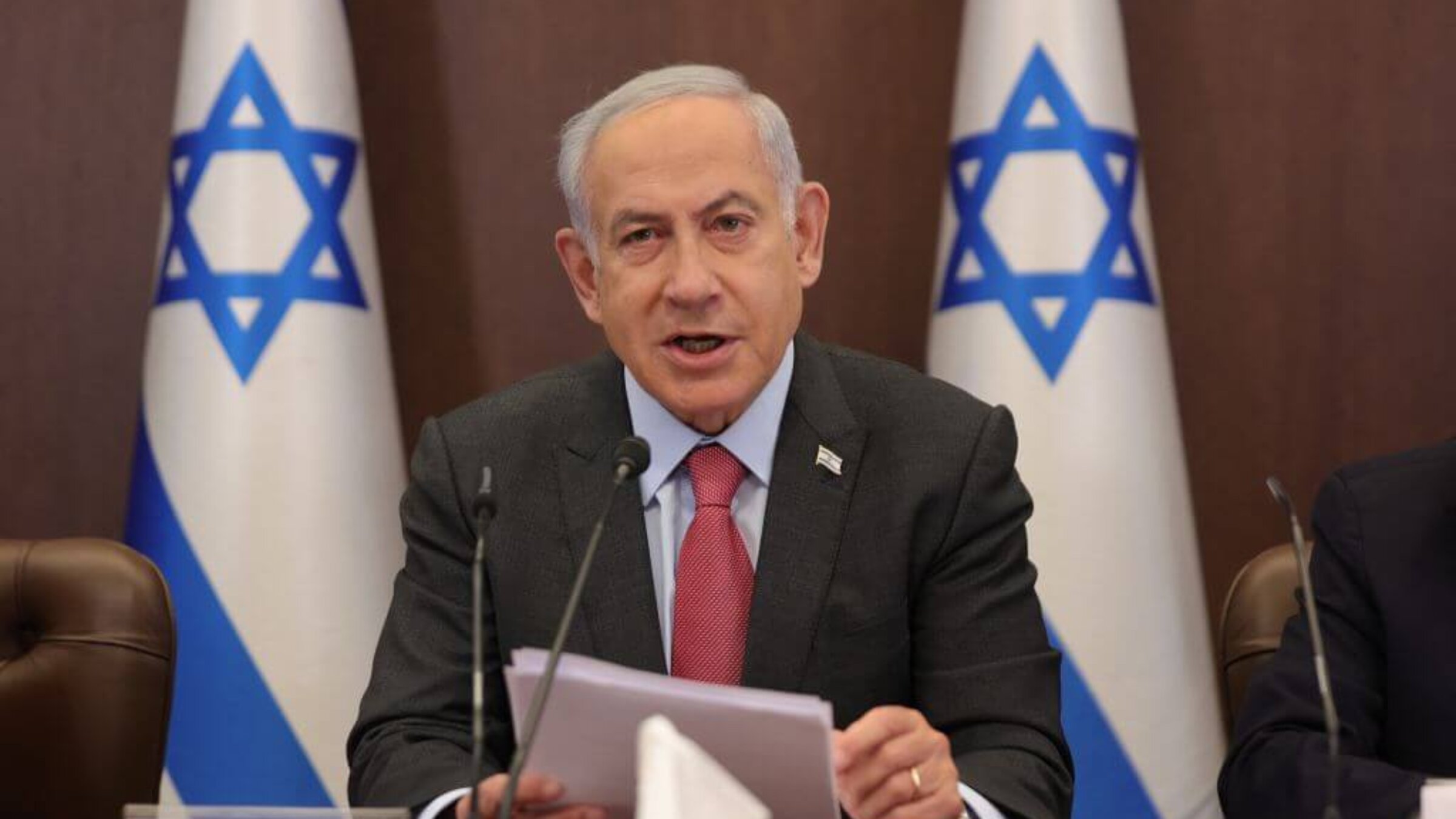
Israeli Prime Minister Benjamin Netanyahu attends the weekly cabinet meeting at his office in Jerusalem, on March 19, 2023. Photo by Getty Images

By Ron Kampeas April 10, 2023
(JTA) — Prime Minister Benjamin Netanyahu withdrew his firing of Defense Minister Yoav Gallant, citing a sharp rise in violence in recent days and suggested that proposed changes to the country’s judicial system that have sparked widespread protest were no longer imminent.
In another concession to the hundreds of thousands of Israelis who have flooded the streets to protest the planned changes, Netanyahu added on Monday that a yet-to-be established national guard corps would not answer to his far-right security minister, Itamar Ben-Gvir.
“In recent days, we have worked and stood together around the clock on all fronts in the face of security challenges,” Netanyahu said, referencing multiple terror attacks that have rocked Israel, in addition to rockets fired from Lebanon and the Gaza Strip over the Passover holiday. “We had differences, even tough difference on a number of topics but I decided to leave this differences behind us. Gallant remains in his job.”
Netanyahu fired Gallant, a member of his Likud Party, late last month after the defense minister called for a pause in legislation that would sap much of the Supreme Court’s power and independence. The proposed reforms triggered a massive protest movement and criticism from across the political spectrum around the world. After Israeli soldiers began to join the protests by refusing to show up for duty, Gallant called the situation an issue of national security, and his firing added fuel to the fire for protest leaders.
Despite Netanyahu’s announcement of firing, the formal dismissal apparently never went through and Gallant remained in the post.
Asked by a reporter if the reforms were “dead,” Netanyahu said that while he has a “clear mandate to repair the judiciary,” he was now seeking consensus. “What we must concentrate on now is to try and arrive at a broad agreement,” he said, without suggesting a timetable.
Netanyahu also made clear that he was not entrusting the establishment of a proposed new national guard to the minister who demanded it in turn for agreeing to temporarily shelve the judicial legislation. Ben-Gvir had threatened to leave the government unless its was established.
“This will not be anyone’s militia, it will be a security body, orderly, professional that will be subordinate to one of the [existing] security bodies,” Netanyahu said.
Netanyahu also dismissed claims that ties with the United States are suffering because of the Biden administration’s disapproval of the judicial proposals and others favored by the far right in power.
He noted his friendship of 40 years with Biden and the countries’ close military and intelligence ties. “The U.S. is our indispensable ally,” he said.
He added that he was not worried that Biden had yet to invite him to the White House. “There will be a visit, don’t worry,” he said.
This article originally appeared on JTA.org.
This is a moment of great uncertainty. Here’s what you can do about it.
We hope you appreciated this article. Before you go, we’d like to ask you to please support the Forward’s independent Jewish news this Passover. All donations are being matched by the Forward Board - up to $100,000.
This is a moment of great uncertainty for the news media, for the Jewish people, and for our sacred democracy. It is a time of confusion and declining trust in public institutions. An era in which we need humans to report facts, conduct investigations that hold power to account, tell stories that matter and share honest discourse on all that divides us.
With no paywall or subscriptions, the Forward is entirely supported by readers like you. Every dollar you give this Passover is invested in the future of the Forward — and telling the American Jewish story fully and fairly.
The Forward doesn’t rely on funding from institutions like governments or your local Jewish federation. There are thousands of readers like you who give us $18 or $36 or $100 each month or year.
Support our mission to tell the Jewish story fully and fairly.