German man who was oldest-ever person tried for Nazi crimes has died at 102
Josef Schütz was convicted in 2022 on more than 3,500 counts of accessory to murder
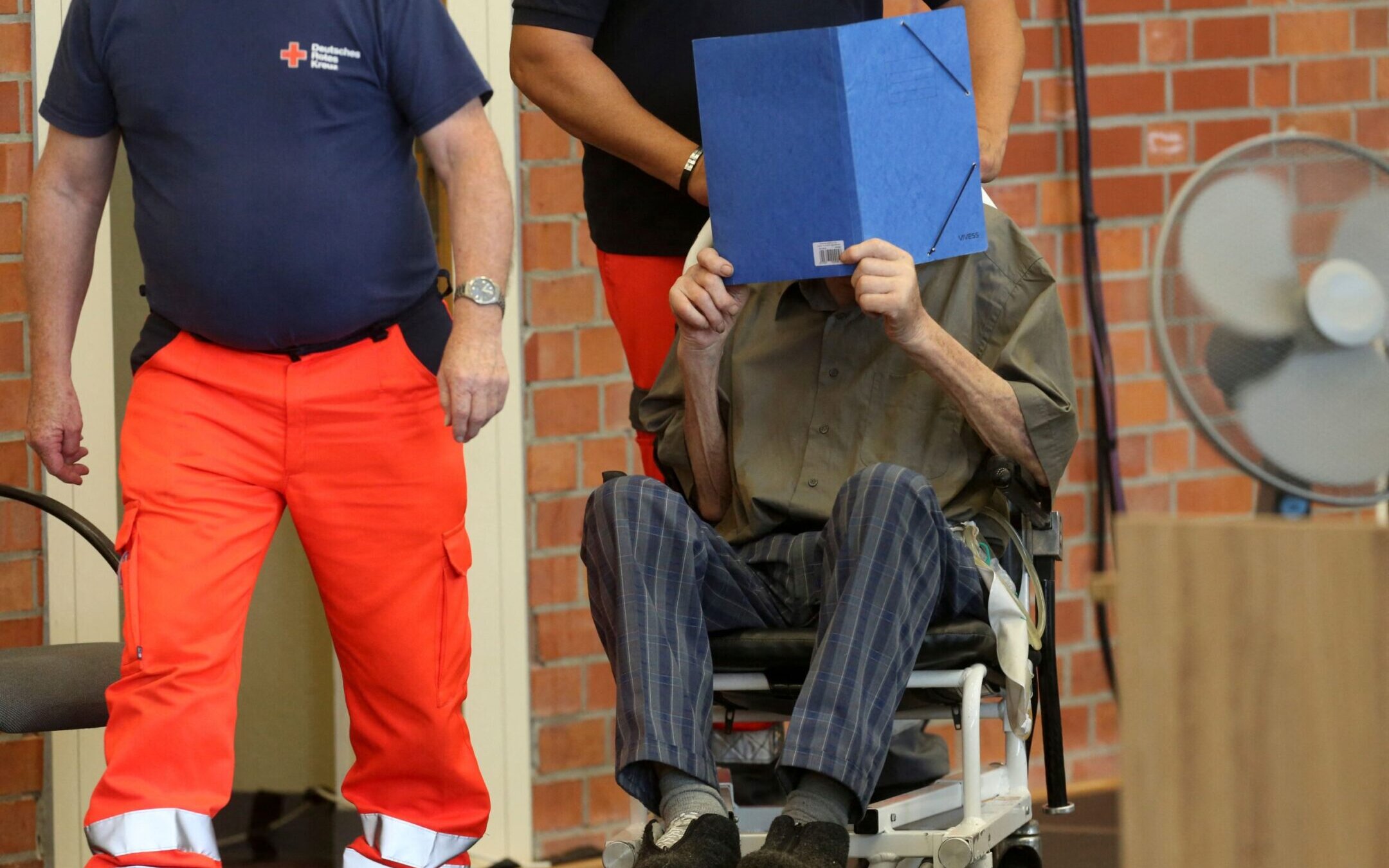
Former Nazi concentration camp guard Josef Schütz hides his face with a folder as he arrives to a makeshift courtroom in Brandenburg-Havel to hear the verdict in his trial, June 28, 2022. (Adam Berry/AFP via Getty Images)
(JTA) — The oldest former Nazi camp guard ever put on trial in Germany has died while waiting for an appeal after being sentenced to five years in prison. He was 102.
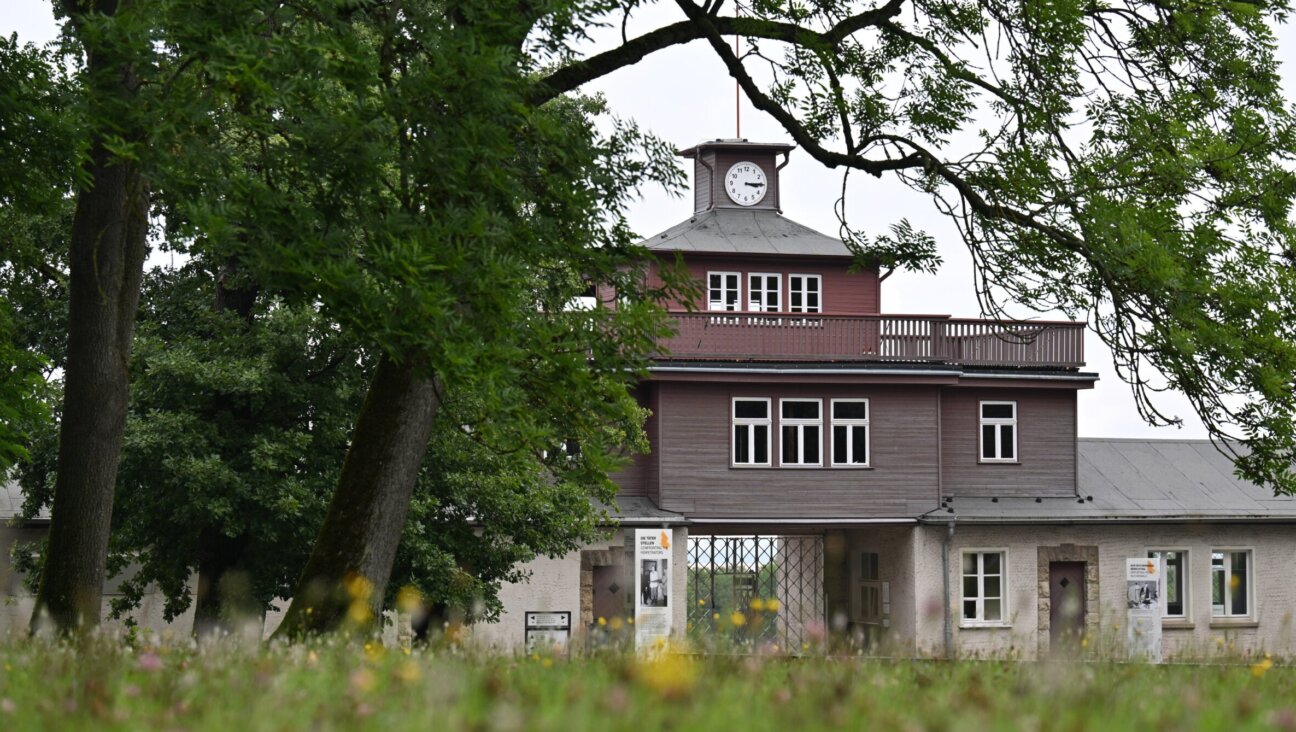
Josef Schütz was found guilty last year of more than 3,500 counts of accessory to murder for serving as a guard at the Sachsenhausen concentration camp, north of Berlin, between 1942 and 1945.
During the hearings, Schütz, a non-commissioned officer of the Waffen-SS, repeatedly denied the charges against him, but prosecutors presented evidence placing him at the camp and showing that he shot and killed Soviet prisoners of war and assisted in murders using Zyklon B poison gas. Schütz was also accused of keeping prisoners in inhumane conditions.
Sachsenhausen opened in 1936 and initially held political prisoners. By the time it was liberated in 1945, some 200,000 prisoners had been held there, including Jews, homosexuals, Jehovah’s Witnesses, “asocials” — including Roma and Sinti — and Soviet civilians.
Tens of thousands of people are estimated to have died at Sachsenhausen from systematic executions carried out by the Nazis, as well as from starvation, disease, forced labor and other causes.
“You willingly supported this mass extermination with your activity,” presiding Judge Udo Lechtermann said while delivering Schütz’s guilty verdict. “You watched deported people being cruelly tortured and murdered there every day for three years.”
This article originally appeared on JTA.org.
This is a moment of great uncertainty. Here’s what you can do about it.
We hope you appreciated this article. Before you go, we’d like to ask you to please support the Forward’s independent Jewish news this Passover. All donations are being matched by the Forward Board - up to $100,000.
This is a moment of great uncertainty for the news media, for the Jewish people, and for our sacred democracy. It is a time of confusion and declining trust in public institutions. An era in which we need humans to report facts, conduct investigations that hold power to account, tell stories that matter and share honest discourse on all that divides us.
With no paywall or subscriptions, the Forward is entirely supported by readers like you. Every dollar you give this Passover is invested in the future of the Forward — and telling the American Jewish story fully and fairly.
The Forward doesn’t rely on funding from institutions like governments or your local Jewish federation. There are thousands of readers like you who give us $18 or $36 or $100 each month or year.
Support our mission to tell the Jewish story fully and fairly.