In a first, Sami Rohr Prize for Jewish Literature goes to Hebrew author and translator
“It was important to expand the reach of the prize, and concomitantly and consequentially the reach of these books,” said the prize organization’s director
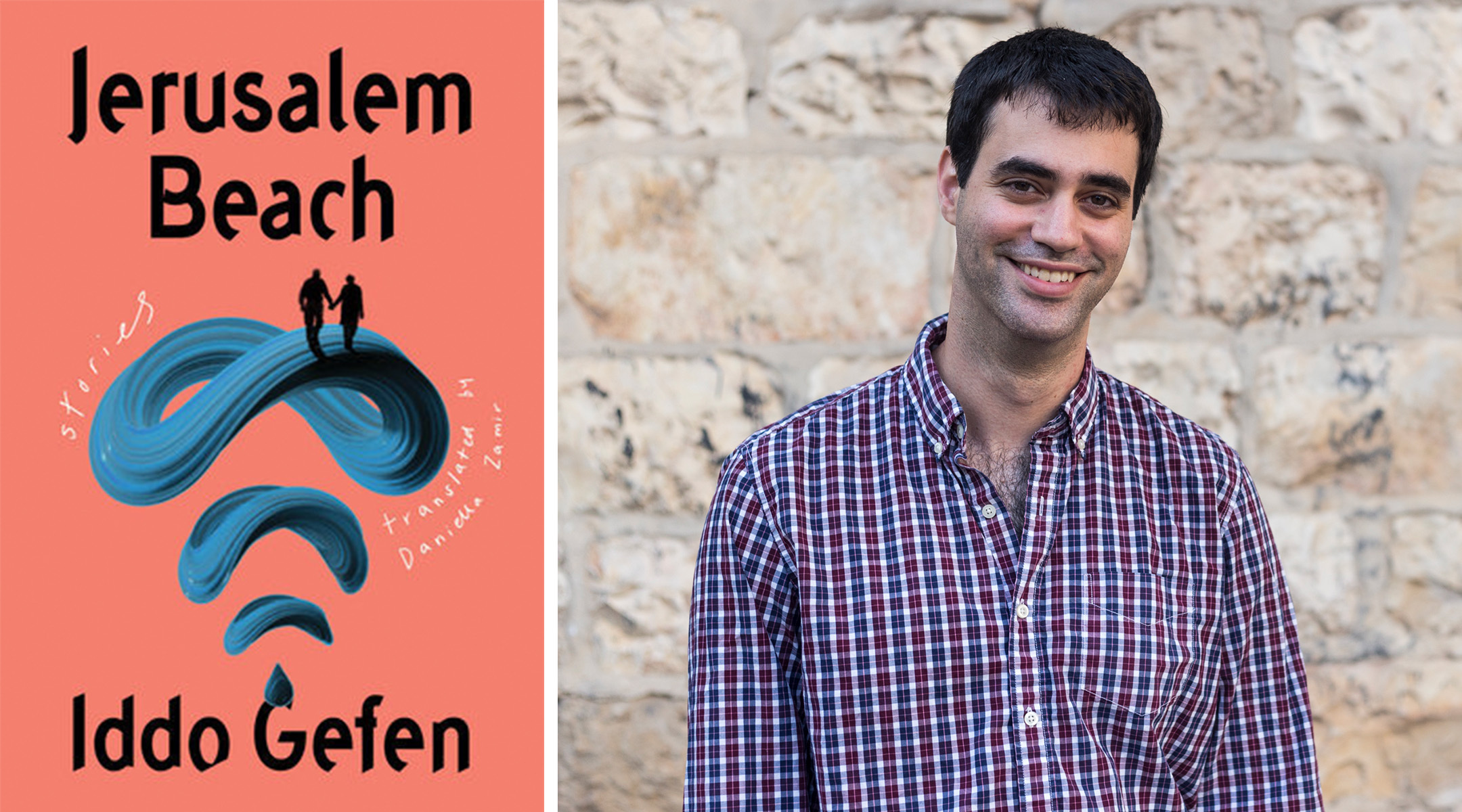
Iddo Gefen won the 2023 Sami Rohr Prize for Jewish Literature. (Uri Barkat)
(JTA) — For the first time, the Sami Rohr Prize for Jewish Literature was given to the author of a book in Hebrew and its translator, in a sign of the award organization’s desire to expand the prize to non-English works.
“Jerusalem Beach,” a book of short stories that draws on Israeli author Iddo Gefen’s background as a neurocognitive researcher, won the prize, which alternates between honoring fiction and non-fiction works each year. The book’s translator, Daniella Zamir, was also honored as the first translation winner in the prize’s 17-year history and will receive 25% of the $100,000 prize money.
“The awarding of and honoring works in translation, not just Hebrew — because one of our finalists is also the author of a book that is translated into from Polish to English — that is a new dimension of the prize,” said Debra Goldberg, director of the prize organization, on Tuesday.
The prize, previously award in association with the Jewish Book Council based in New York, is now administered by the National Library of Israel. But Goldberg emphasized that the choice of a work of Hebrew “is not connected necessarily with our association with the library, it was something that we decided independently.”
“It was important to expand the reach of the prize, and concomitantly and consequentially the reach of these books,” she said.
She added that the prize will not consider books that have not been translated into English.
Gefen, born in 1992, is a Ph.D. student in cognitive psychology at Columbia University. At its Zuckerman Institute for Neuroscience, he researches how storytelling can improve understanding of the human mind. A reviewer wrote that the 13 stories in his collection cover “virtual realities, the Middle East, and the furthest reaches of the solar system.” A description from its publisher called the book a group of “snapshots of contemporary life in Israel” for fans of Etgar Keret.
Gefen was previously a fellow in the National Library of Israel’s Pardes: Literary Incubator program. Goldberg said that fact “truly has nothing to do with the fact that he won the prize and we’re associated with the library.”
This year’s finalists include “The Lost Shtetl” by New Yorker Max Gross, “I’d Like to Say Sorry, But There’s No One to Say Sorry To” by the Polish-Jewish writer Mikołaj Grynberg and “The Book of V.” by Anna Solomon, who lives in Brooklyn. The authors and translators will be honored at a ceremony on Aug. 9 at the National Library of Israel in Jerusalem.
This article originally appeared on JTA.org.
Listen to That Jewish News Show, a smart and thoughtful look at the week in Jewish news from the journalists at the Forward:
<iframe height=”200px” width=”100%” frameborder=”no” scrolling=”no” seamless src=”https://player.simplecast.com/5baed578-338e-4f02-8255-dae57acd7418?dark=true“></iframe>
This is a moment of great uncertainty. Here’s what you can do about it.
We hope you appreciated this article. Before you go, we’d like to ask you to please support the Forward’s independent Jewish news this Passover. All donations are being matched by the Forward Board - up to $100,000.
This is a moment of great uncertainty for the news media, for the Jewish people, and for our sacred democracy. It is a time of confusion and declining trust in public institutions. An era in which we need humans to report facts, conduct investigations that hold power to account, tell stories that matter and share honest discourse on all that divides us.
With no paywall or subscriptions, the Forward is entirely supported by readers like you. Every dollar you give this Passover is invested in the future of the Forward — and telling the American Jewish story fully and fairly.
The Forward doesn’t rely on funding from institutions like governments or your local Jewish federation. There are thousands of readers like you who give us $18 or $36 or $100 each month or year.
Support our mission to tell the Jewish story fully and fairly.