Second season of ‘Beauty Queen of Jerusalem’ will hit Netflix July 14
The historical drama focuses on three generations of a Sephardic Ladino-speaking family
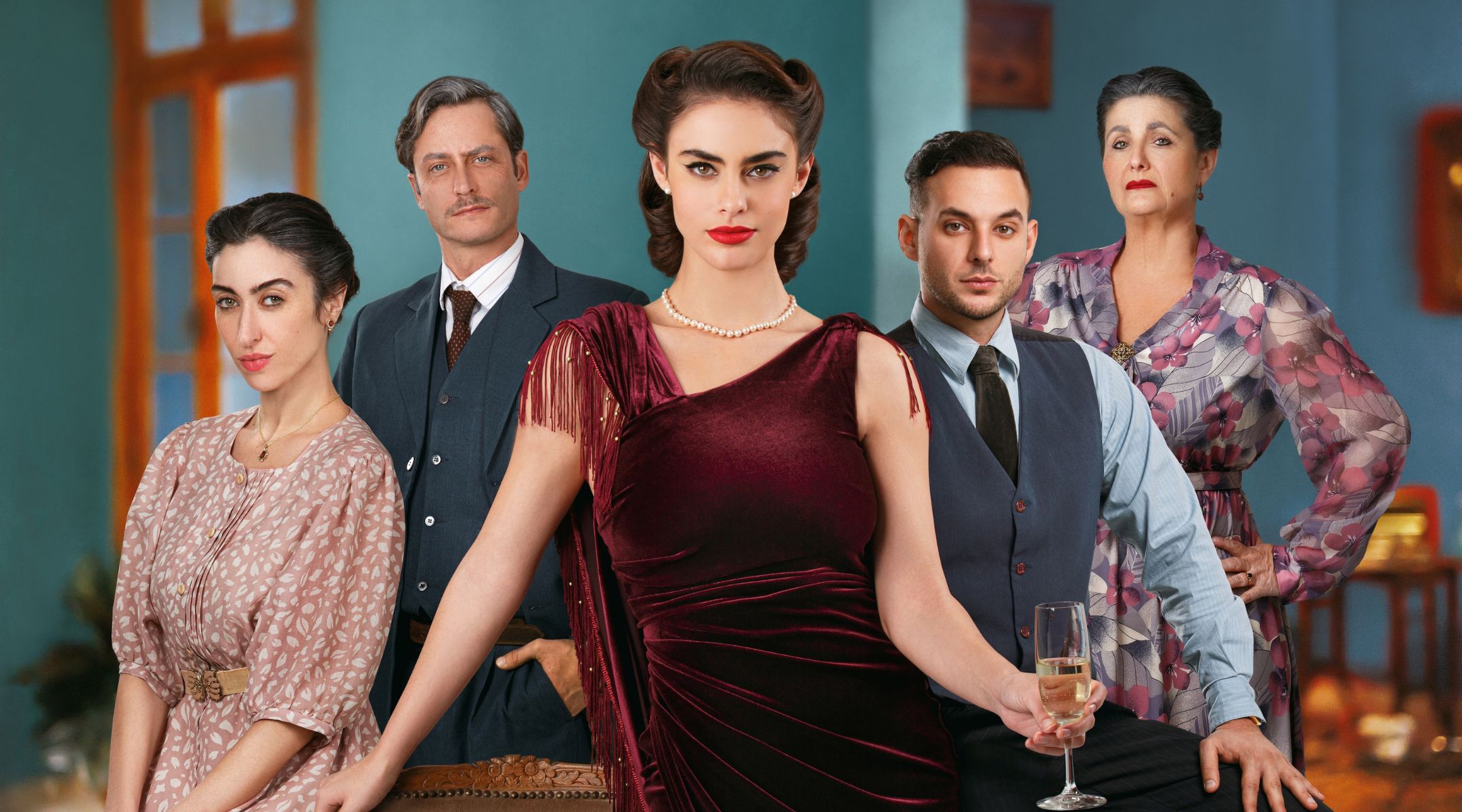
The main cast of “The Beauty Queen of Jerusalem” pictured from left to right: Rosa (Hila Saada), Gabriel (Michael Aloni), Luna (Swell Ariel Or), David (Israel Ogalbo), Merkada (Irit Kaplan) (Courtesy of yes Studios)
(JTA) — On July 14th, viewers who have waited a year for the second season of Netflix’s “The Beauty Queen of Jerusalem” will finally get to see what comes next for the Ermoza family.
The historical drama focuses on three generations of the Sephardic Ladino-speaking family and their travails as they contend with violence and romance in their hometown of Jerusalem.
The first season of “The Beauty Queen of Jerusalem” largely took place during the British Mandate era, flashing back and forth between the 1920s and the years before and during World War II.
The show stars Michael Aloni, star of the hit Israeli show “Shtisel,” as Gabriel Ermoza, and Swell Ariel Or as his daughter, Luna. It is based on the 2015 novel of the same name by Sarit Yishai-Levi.
In season two, Luna and her new husband, David (Israel Ogalbo), are newlyweds celebrating their honeymoon while David deals with trauma from his military service in the war. The couple’s relationship troubles are further complicated when they meet a group of British soldiers and their bohemian wives. Meanwhile, Gabriel searches for his lost son and reconnects with his former Ashkenazi love Rochel (Yuval Scharf), straining his marriage to Rosa (Hila Saada). Ephraim (Tom Hagi), Rosa’s militant brother, will join the right-wing Zionist paramilitary organization Lehi, putting the family in danger.
The second season, which contains 16 episodes, features multiple new cast members, including Michael Givati as Gabriel and Rochel’s son, who was introduced at the end of the first season.
The show’s first season, which was released on Netflix last May, received mostly positive audience reviews on IMDB and Rotten Tomatoes. It won multiple prizes, including Best Daily Drama at the Awards of the Israeli Television Academy last year. The second season premiered on YesTV, an Israeli network, earlier this year.
This article originally appeared on JTA.org.
This is a moment of great uncertainty. Here’s what you can do about it.
We hope you appreciated this article. Before you go, we’d like to ask you to please support the Forward’s independent Jewish news this Passover. All donations are being matched by the Forward Board - up to $100,000.
This is a moment of great uncertainty for the news media, for the Jewish people, and for our sacred democracy. It is a time of confusion and declining trust in public institutions. An era in which we need humans to report facts, conduct investigations that hold power to account, tell stories that matter and share honest discourse on all that divides us.
With no paywall or subscriptions, the Forward is entirely supported by readers like you. Every dollar you give this Passover is invested in the future of the Forward — and telling the American Jewish story fully and fairly.
The Forward doesn’t rely on funding from institutions like governments or your local Jewish federation. There are thousands of readers like you who give us $18 or $36 or $100 each month or year.
Support our mission to tell the Jewish story fully and fairly.