New York’s Jewish Museum taps former Israel Museum head James Snyder as its next director
Snyder could steer the museum into new territory by taking on current issues like antisemitism, a departure from its tradition as a center for art and culture
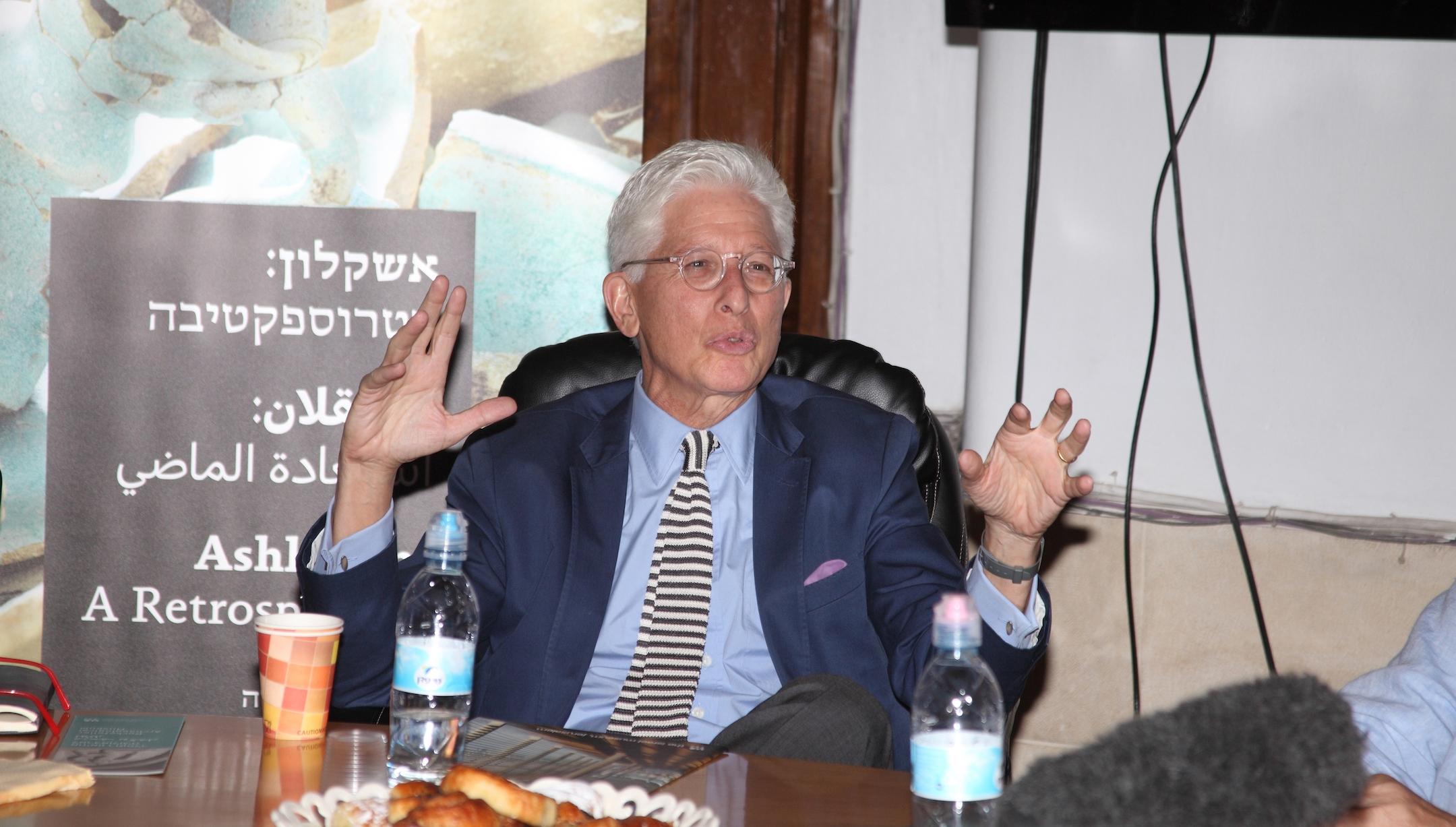
Then the director of the Israel Museum, James Snyder appears at the Rockefeller Museum during a press conference about thirty years of archaeological excavations in Ashkelon which culminated in the discovery of the first Philistine cemetery ever found in Jerusalem, Israel, July 10, 2016. (Dan Porges/Getty Images)

By Asaf Elia-Shalev August 14, 2023
(JTA) – The next director of New York’s Jewish Museum will be James Snyder, the former director of the Israel Museum in Jerusalem who is known as a prolific fundraiser for Jewish causes.
Snyder, 71, will assume the role in September after serving for the past four years as the executive chairman of the Jerusalem Foundation, supporting projects that foster and showcase coexistence and diversity in the city.
Museum officials said Snyder was selected because of his 40-year track record in museum leadership, which includes 22 years at the helm of the Israel Museum and, earlier in his career, as deputy director of the Museum of Modern Art in New York.
“Running a museum today is harder than it’s ever been and James’s experience is a huge asset for us at this time,” Robert Pruzan, the museum’s board chairman, told the New York Times. “James has a very expansive vision of the opportunity for the museum, aligned with the board.”
Under the leadership of Claudia Gould, who stepped down in June after 12 years, the Jewish Museum earned praise for putting on a variety of exhibitions in the fields of art, fashion and design framed around Jewish themes.
Pruzan told the New York Times that the museum is not looking for Snyder to make major curatorial changes. But he also suggested that Snyder could steer the institution into new territory by taking on current issues such as antisemitism, a departure from its tradition as a center for art and culture.
“The opportunity is to explore how we can play a leadership role around societal issues like antisemitism and demonstrate the importance of culturally specific institutions in advancing the dialogue on these topics through our exhibitions and education programming,” Pruzan said.
Established in 1904 in the library of the Jewish Theological Seminary, the Jewish Museum is considered to be the first museum in the United States to focus on a specific culture.
In a recent article in the Sapir Journal on the future of museums, Snyder argued that amid the rise in polarization and extremism around the world, cultural institutions have a special responsibility. He called on museums to embrace “cultural diplomacy” and “explore and celebrate the wonders of social and communal inclusion and integration that give strength to the backbone of world history.”
After Snyder took the helm of the Israel Museum in 1997, he elevated its profile as a center for visual art and archaeology. He oversaw a $100 million expansion at the museum’s 20-acre campus. Under his leadership, the museum saw its annual attendance increase by more than double to about 1 million visitors. The institution’s endowment increased from $40 million to $200 million during Snyder’s tenure.
He now takes over a museum with an endowment of $114 million and a growing number of visitors.
“In addition to its deep and far-ranging collections, dynamic exhibition programming, and professional expertise, what drew me to the Museum is the opportunity it offers to anchor Jewish world culture in the context of the times and places where it has flourished globally,” Snyder said in a statement attached to the museum’s announcement of his new role on Monday.
This article originally appeared on JTA.org.
This is a moment of great uncertainty. Here’s what you can do about it.
We hope you appreciated this article. Before you go, we’d like to ask you to please support the Forward’s independent Jewish news this Passover. All donations are being matched by the Forward Board - up to $100,000.
This is a moment of great uncertainty for the news media, for the Jewish people, and for our sacred democracy. It is a time of confusion and declining trust in public institutions. An era in which we need humans to report facts, conduct investigations that hold power to account, tell stories that matter and share honest discourse on all that divides us.
With no paywall or subscriptions, the Forward is entirely supported by readers like you. Every dollar you give this Passover is invested in the future of the Forward — and telling the American Jewish story fully and fairly.
The Forward doesn’t rely on funding from institutions like governments or your local Jewish federation. There are thousands of readers like you who give us $18 or $36 or $100 each month or year.
Support our mission to tell the Jewish story fully and fairly.