Columbia University President Minouche Shafik resigns after year marked by pro-Palestinian protests
Faculty issued a vote of no confidence in Shafik in May
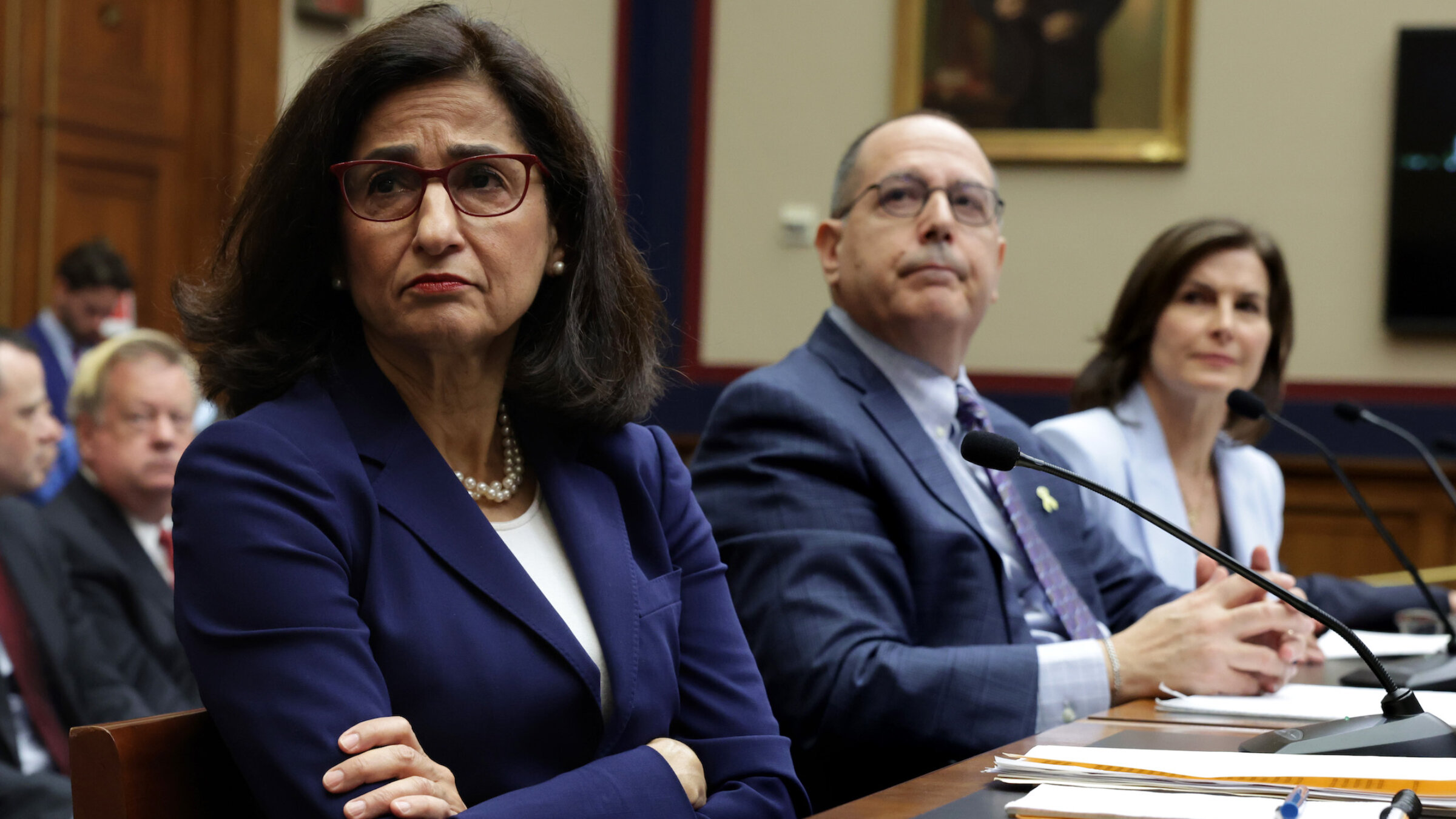
President Nemat “Minouche” Shafik, left, announced her resignation Wednesday. Photo by Alex Wong/Getty Images
By Louis Keene and JTA StaffAugust 14, 2024
Columbia University President Minouche Shafik resigned Wednesday, bowing to pressure from university faculty and students and public officials who widely criticized her handling of pro-Palestinian campus protests last school year.
Shafik, 62, announced her resignation in a letter to the Columbia community.
“This period has taken a considerable toll on my family, as it has for others in our community,” Shafik wrote. “Over the summer, I have been able to reflect and have decided that my moving on at this point would best enable Columbia to traverse the challenges ahead.”
The school’s board of trustees said Wednesday in an email that Katrina Armstrong, the chief executive officer of Columbia University Irving Medical Center, will serve as interim president.
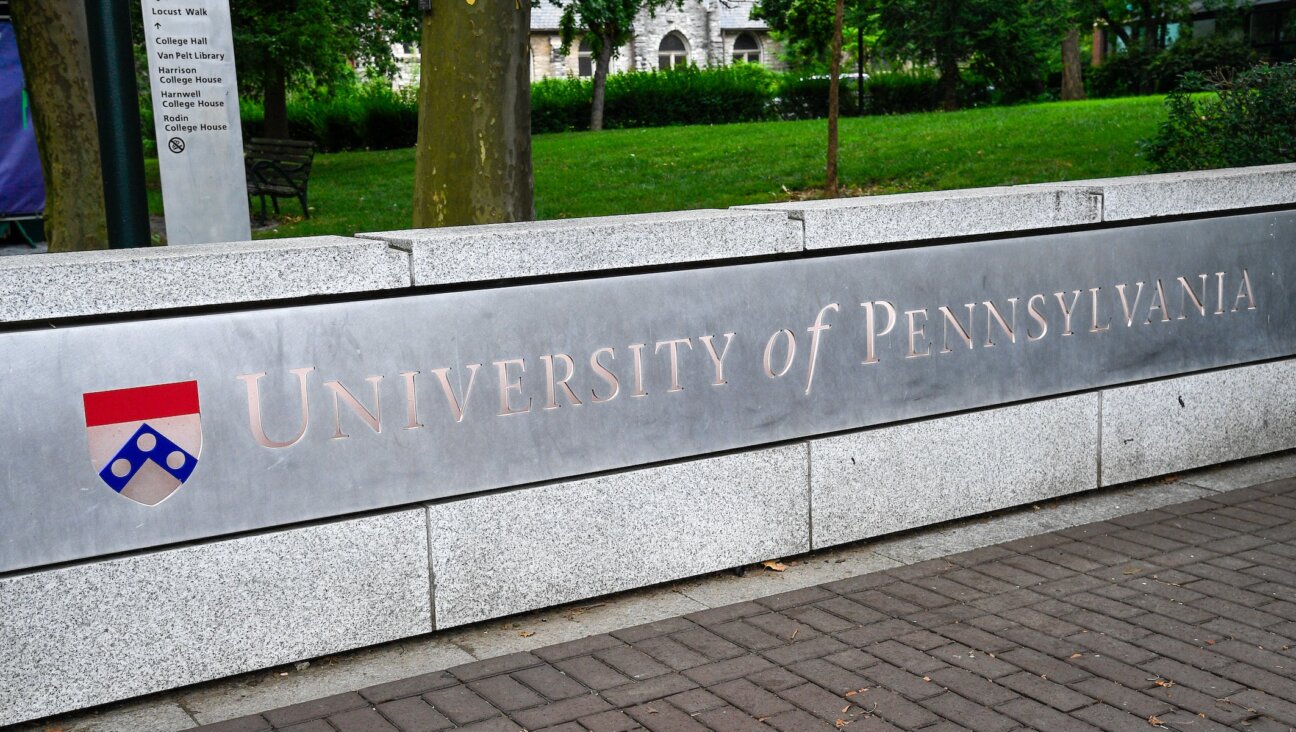
Shafik’s resignation — barely more than a year after taking the helm — makes her the latest Ivy League president to step down following the wave of protests that roiled college campuses, joining Claudine Gay of Harvard, Martha Pollack of Cornell and Liz Magill of University of Pennsylvania.
Columbia University president Minouche Shafik has resigned. pic.twitter.com/pKnNWNaQwy
— Louis Keene (@thislouis) August 15, 2024
Named to the position in January 2023, Shafik was inaugurated as president on Oct. 4, three days before a Hamas terrorist attack killed some 1,200 people in Israel. Columbia quickly became a hotspot for protests about the ensuing war, which many Jewish students said took on antisemitic overtones. Shafik responded by closing the campus to outsiders Oct. 12, an extraordinary step for the campus located in the heart of Manhattan.
As the complaints from Jewish students persisted, the school suspended chapters of Students for Justice in Palestine and Jewish Voice for Peace in November, saying they had violated policies around holding protests.
Shafik acknowledged a wave of antisemitism on campus when she appeared at a Congressional hearing April 17. The same day, pro-Palestinian students began pitching tents on Columbia’s campus, setting off an encampment movement that quickly swept across the country.
Shafik’s decision to call in the NYPD to clear the encampment, leading to the arrests of more than 100 students of Columbia and Barnard, and her subsequent request that they stay on campus for the next month, came as a shock to many. Hundreds of faculty and staff pledged to strike from “all activities that serve the administration” until NYPD left campus.
A second Columbia encampment, set up on an adjacent campus lawn, elicited further outrage when a clip surfaced of one of its leaders, a student named Khymani James, saying that “Zionists don’t deserve to live.” James was eventually banned from campus.
On April 30, eight days after Shafik made all classes remote for the rest of the school year, members of the pro-Palestinian movement on campus barricaded themselves inside Hamilton Hall, trapping some janitorial workers inside.
Antisemitism scandals at the school persisted even after classes let out. Last week, three Columbia deans resigned after getting caught sending disparaging messages about Jewish speakers at a campus panel on antisemitism during the peak of the protests.
Columbia faculty issued a symbolic vote of no confidence against Shafik in May.
Even before Shafik’s resignation, there were signs that the school expects the turmoil to continue. Columbia announced last week that it would continue to keep its campus closed to outsiders this fall, in anticipation of renewed protests.
Shafik, an economist, said she was taking a role with the British government, resuming work that she had done before being taking the helm at Columbia just 13 months ago.
“Columbia University’s President Minouche Shafik’s failed presidency was untenable,” Republican Rep. Elise Stefanik, the face of the congressional crusade against campus antisemitism, tweeted upon learning of Shafik’s resignation. “After failing to protect Jewish students and negotiating with pro Hamas terrorists, this forced resignation is long overdue.”
JTA contributed reporting.
This is a moment of great uncertainty. Here’s what you can do about it.
We hope you appreciated this article. Before you go, we’d like to ask you to please support the Forward’s independent Jewish news this Passover. All donations are being matched by the Forward Board - up to $100,000.
This is a moment of great uncertainty for the news media, for the Jewish people, and for our sacred democracy. It is a time of confusion and declining trust in public institutions. An era in which we need humans to report facts, conduct investigations that hold power to account, tell stories that matter and share honest discourse on all that divides us.
With no paywall or subscriptions, the Forward is entirely supported by readers like you. Every dollar you give this Passover is invested in the future of the Forward — and telling the American Jewish story fully and fairly.
The Forward doesn’t rely on funding from institutions like governments or your local Jewish federation. There are thousands of readers like you who give us $18 or $36 or $100 each month or year.
Support our mission to tell the Jewish story fully and fairly.