A Jewish museum in Tulsa held a funeral for remains of Holocaust victims it kept for years
The Sherwin Miller Museum of Jewish Art wasn’t the first museum to bury remains of Holocaust victims in its collection
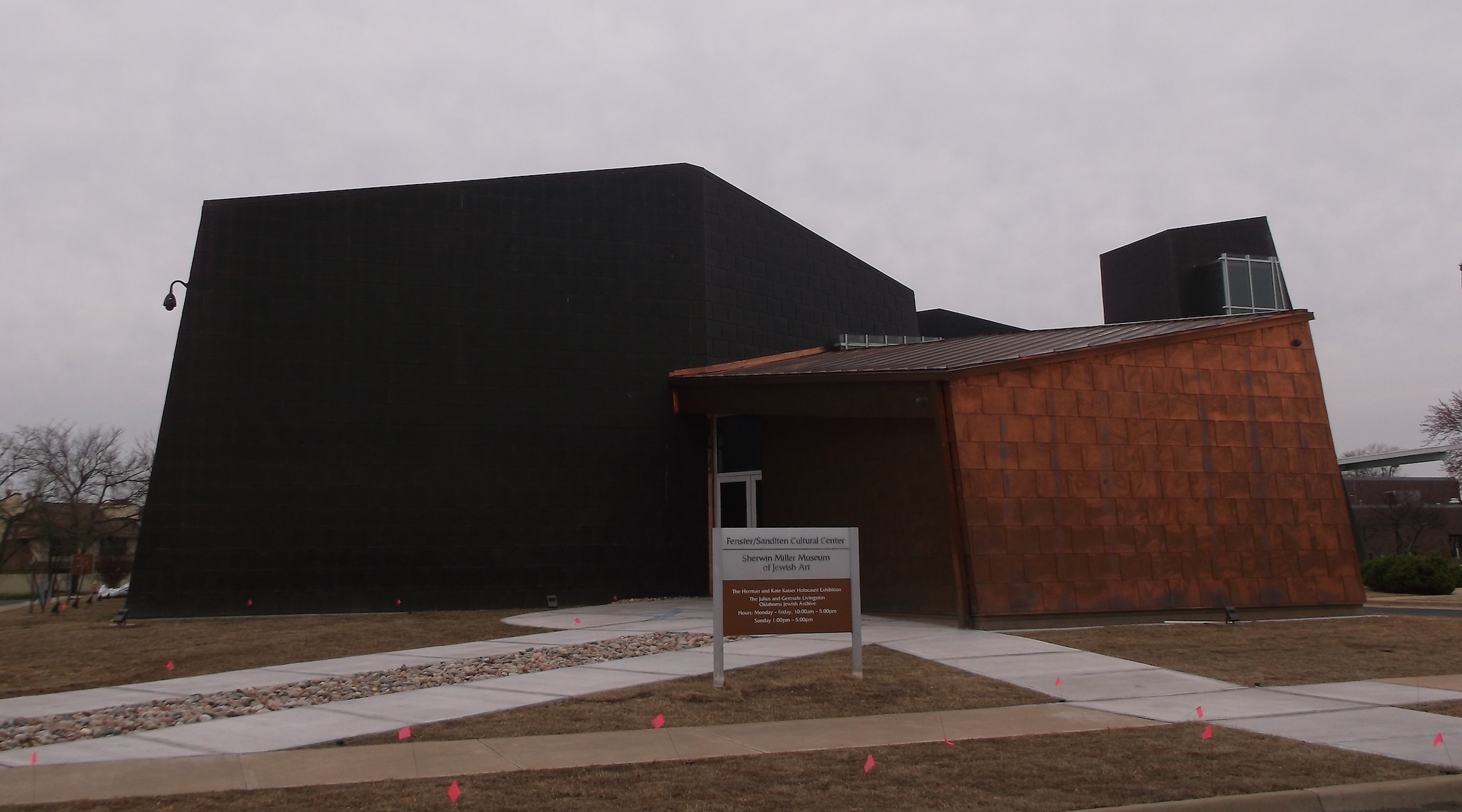
The Sherwin Miller Museum of Jewish Art in Tulsa, Oklahoma, January 1, 2014. (Kiddo27 via Wikimedia Commons)
(JTA) — For decades a museum of Jewish art in Tulsa, Oklahoma, held the remains of several unidentified Holocaust victims in its collection.
But last week the Sherwin Miller Museum of Jewish Art took steps to give those remains a proper home, by burying and holding a Jewish funeral for them.
“We are committed to preserving history in a way that respects human dignity,” Sofia Thornblad, the museum’s chief curator, told local news organizations. “This burial is a testament to our dedication to honoring the memories of Holocaust victims and educating future generations about the importance of remembrance and ethical stewardship.”
The museum said the remains likely dated back to before the year 2000, when it was more common for museums to accept human remains into their collections. Shifting priorities in the museum space have led to a reexamination of such practices. The Tulsa museum also includes an extensive collection of Holocaust-era artifacts donated by Jewish Oklahomans, including refugees from Nazi Germany.
Thornblad said the museum was “unable” to perform any DNA testing that might have revealed the identities of the remains, but said that they had originally come from the Auschwitz and Dachau concentration camps. (Jewish groups including Operation Benjamin have invested considerable resources as of late into identifying and reburying World War II-era Jewish remains.)
The Tulsa museum isn’t the only one to have taken steps to bury remains of Holocaust victims in its collection. In 2019 the Rockland Holocaust Museum and Center for Tolerance and Education, in Rockland, New York, announced it would hold a proper Jewish funeral for the ashes of victims of the Chelmno death camp it had recently discovered in its collection. The ashes had been donated in 2006 by a Holocaust survivor who’d gathered dirt from the camp, apparently without realizing it held the ashes of others.
The same year, the Imperial War Museum in London also announced it had the remains of several Jewish death camp victims in its collection and would be giving them a Jewish funeral. The remains of five adults and a child, all murdered at Auschwitz, were donated in 1997 by a private donor; the museum’s decision to bury them on English soil marked the first time that Holocaust victims had been laid to rest in the United Kingdom, according to Museums Journal.
The question of what to do with human remains has vexed museums in recent years, particularly when it comes to Native American remains. Decades after passage of a law urging tribal remains to be returned to their descendants, many museums had yet to act on their own collections, according to a ProPublica investigation last year.
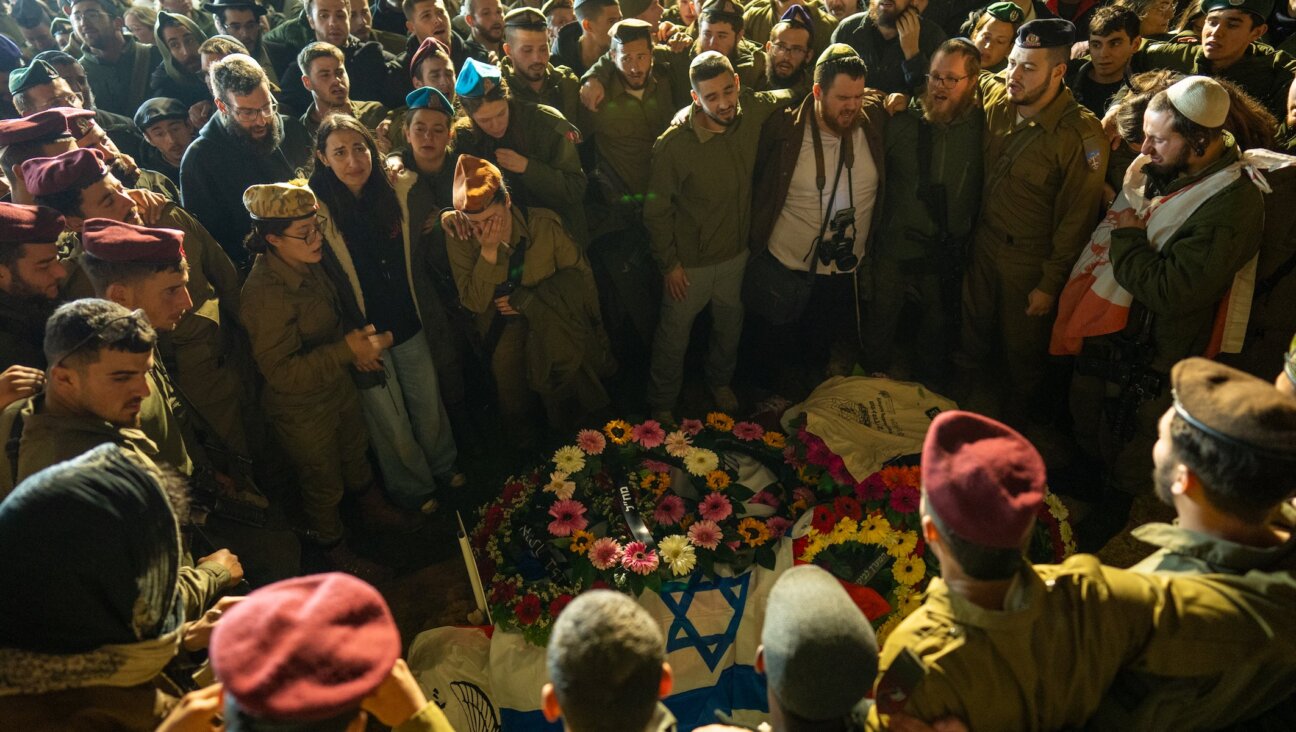
Those present at the Tulsa funeral last Thursday, held at a Jewish cemetery, included local rabbis, an archaeologist, and local descendants of Holocaust survivors. Thornblad was among those who took turns shoveling dirt into the grave, in accordance with Jewish custom.
This is a moment of great uncertainty. Here’s what you can do about it.
We hope you appreciated this article. Before you go, we’d like to ask you to please support the Forward’s independent Jewish news this Passover. All donations are being matched by the Forward Board - up to $100,000.
This is a moment of great uncertainty for the news media, for the Jewish people, and for our sacred democracy. It is a time of confusion and declining trust in public institutions. An era in which we need humans to report facts, conduct investigations that hold power to account, tell stories that matter and share honest discourse on all that divides us.
With no paywall or subscriptions, the Forward is entirely supported by readers like you. Every dollar you give this Passover is invested in the future of the Forward — and telling the American Jewish story fully and fairly.
The Forward doesn’t rely on funding from institutions like governments or your local Jewish federation. There are thousands of readers like you who give us $18 or $36 or $100 each month or year.
Support our mission to tell the Jewish story fully and fairly.