Play about Roald Dahl’s antisemitism wins 3 Olivier Awards
Jewish actor Elliot Levey won best actor in a supporting role
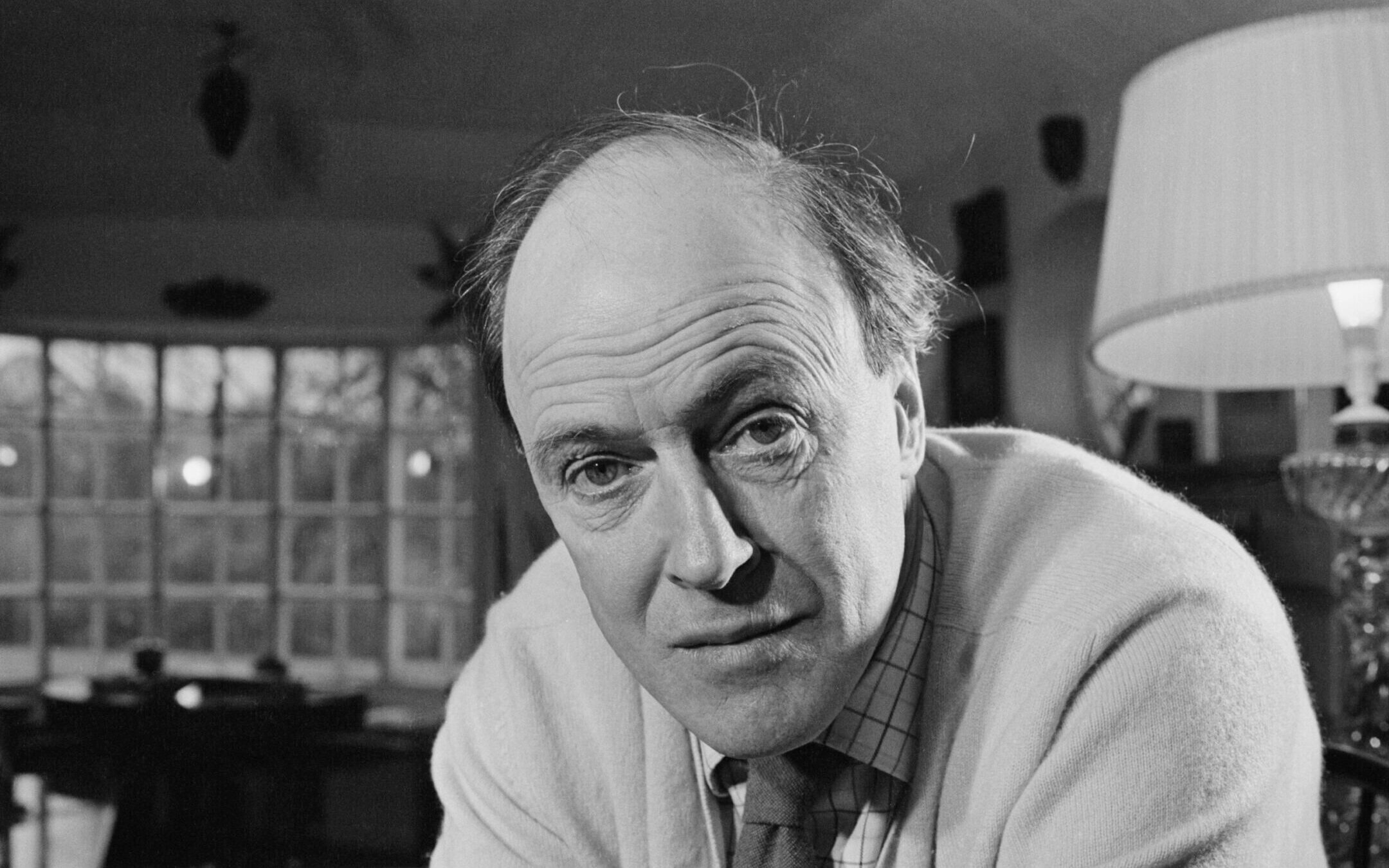
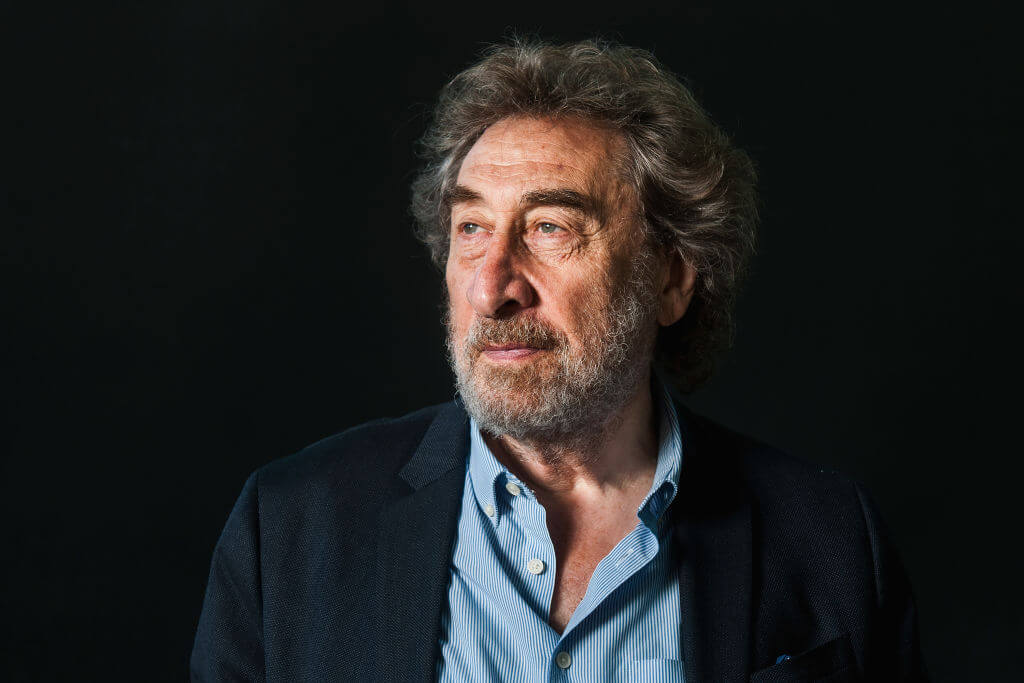
British novelist Roald Dahl, pictured here in 1971, made multiple anti-Semitic comments in the decade before his death in 1990. (Ronald Dumont/Daily Express/Getty Images)
(JTA) — A show by a Jewish playwright interrogating the antisemitism of acclaimed children’s book author Roald Dahl took home three prizes at the Olivier Awards on Sunday.
At the prestigious London theater awards ceremony on Saturday, “Giant” earned the prize for best new play, and its star John Lithgow won the award for best actor. Lithgow’s co-star, Jewish actor Elliot Levey, won best actor in a supporting role.
Written by Mark Rosenblatt, “Giant” portrays a fictional lunch with Dahl and two Jewish publishers as they embark on a conversation pleading with the late author to issue an apology for a 1983 essay in which he suggested that Jews had turned into Nazis.
In the essay, a review of a photobook about Israel’s war in Lebanon, Dahl wrote, “Never before in the history of man has a race of people switched so rapidly from being much-pitied victims to barbarous murderers. Never before has a race of people generated so much sympathy around the world and then, in the space of a lifetime, succeeded in turning that sympathy into hatred and revulsion.”
Dahl added, “The authentic tales of horror and bestiality throughout this book make one wonder in the end what sort of people these Israelis are. It is like the good old Hitler and Himmler times all over again.”
The author of “Charlie and the Chocolate Factory,” “Matilda” and many other children’s classics made several antisemitic statements throughout his life. He identified as antisemitic shortly before he died in 1990.
The year he wrote the essay, Dahl also said, “There is a trait in the Jewish character that does provoke animosity, maybe it’s a kind of lack of generosity towards non-Jews. I mean, there’s always a reason why anti-anything crops up anywhere; even a stinker like Hitler didn’t just pick on them for no reason.”
The impetus for the play came from Rosenblatt’s reaction to present-day rhetoric around Israel. He told The Guardian he had become “alarmed, as a British Jew, by how openly antisemitic language and stereotyping was blurring with meaningful, constructive debate around Israel and Palestine.”
The play, he said, provided a platform for that conversation to play out. Rosenblatt chose Dahl as the subject because of people’s “affectionate relationship” with him, he told The Times.
A revival of another Jewish play, “Fiddler on the Roof,” directed by Jewish director Jordan Fein, also took home three Olivier Awards including best musical revival, best set design, and best sound design.
This is a moment of great uncertainty. Here’s what you can do about it.
We hope you appreciated this article. Before you go, we’d like to ask you to please support the Forward’s independent Jewish news this Passover. All donations are being matched by the Forward Board - up to $100,000.
This is a moment of great uncertainty for the news media, for the Jewish people, and for our sacred democracy. It is a time of confusion and declining trust in public institutions. An era in which we need humans to report facts, conduct investigations that hold power to account, tell stories that matter and share honest discourse on all that divides us.
With no paywall or subscriptions, the Forward is entirely supported by readers like you. Every dollar you give this Passover is invested in the future of the Forward — and telling the American Jewish story fully and fairly.
The Forward doesn’t rely on funding from institutions like governments or your local Jewish federation. There are thousands of readers like you who give us $18 or $36 or $100 each month or year.
Support our mission to tell the Jewish story fully and fairly.