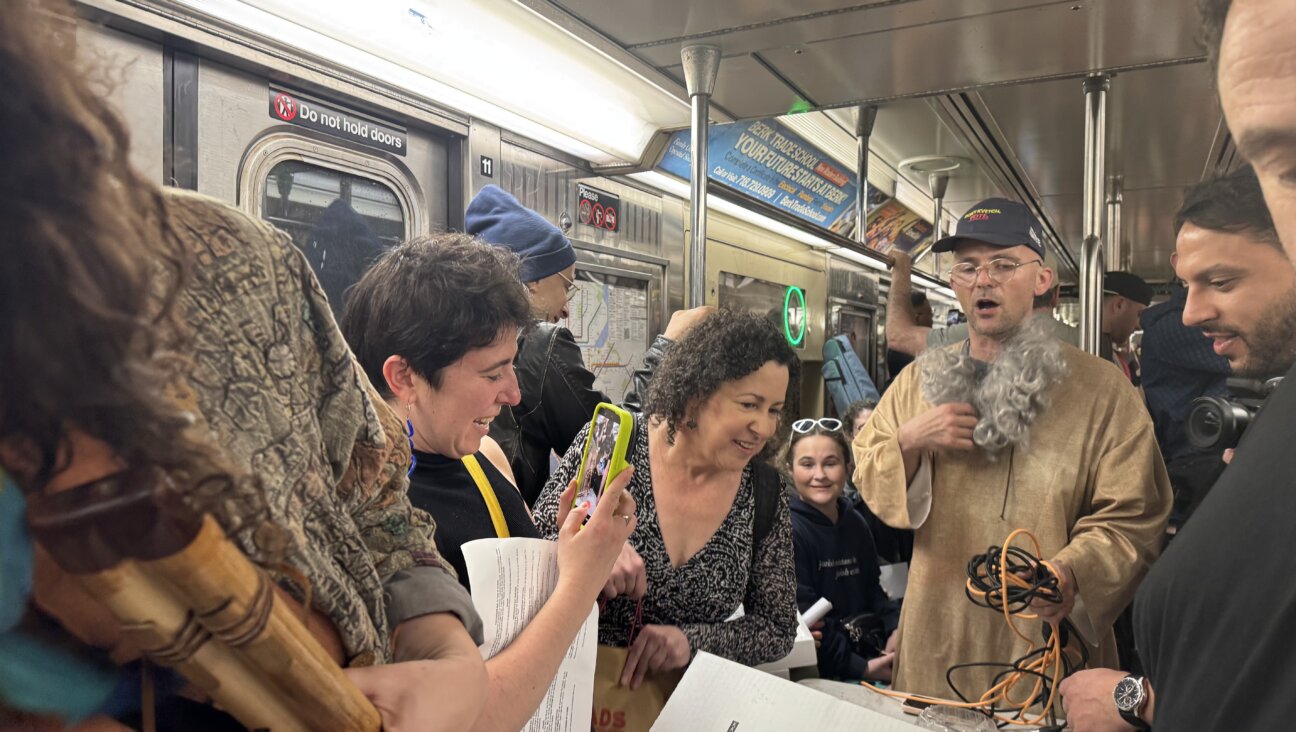
This Reform rabbi is one of 456 competitors on Season 2 of Netflix’s ‘Squid Game’
On Netflix’s ‘Squid Game: The Challenge,’ Rabbi Jamie Field said she was ‘representing the rabbinate as best I could’
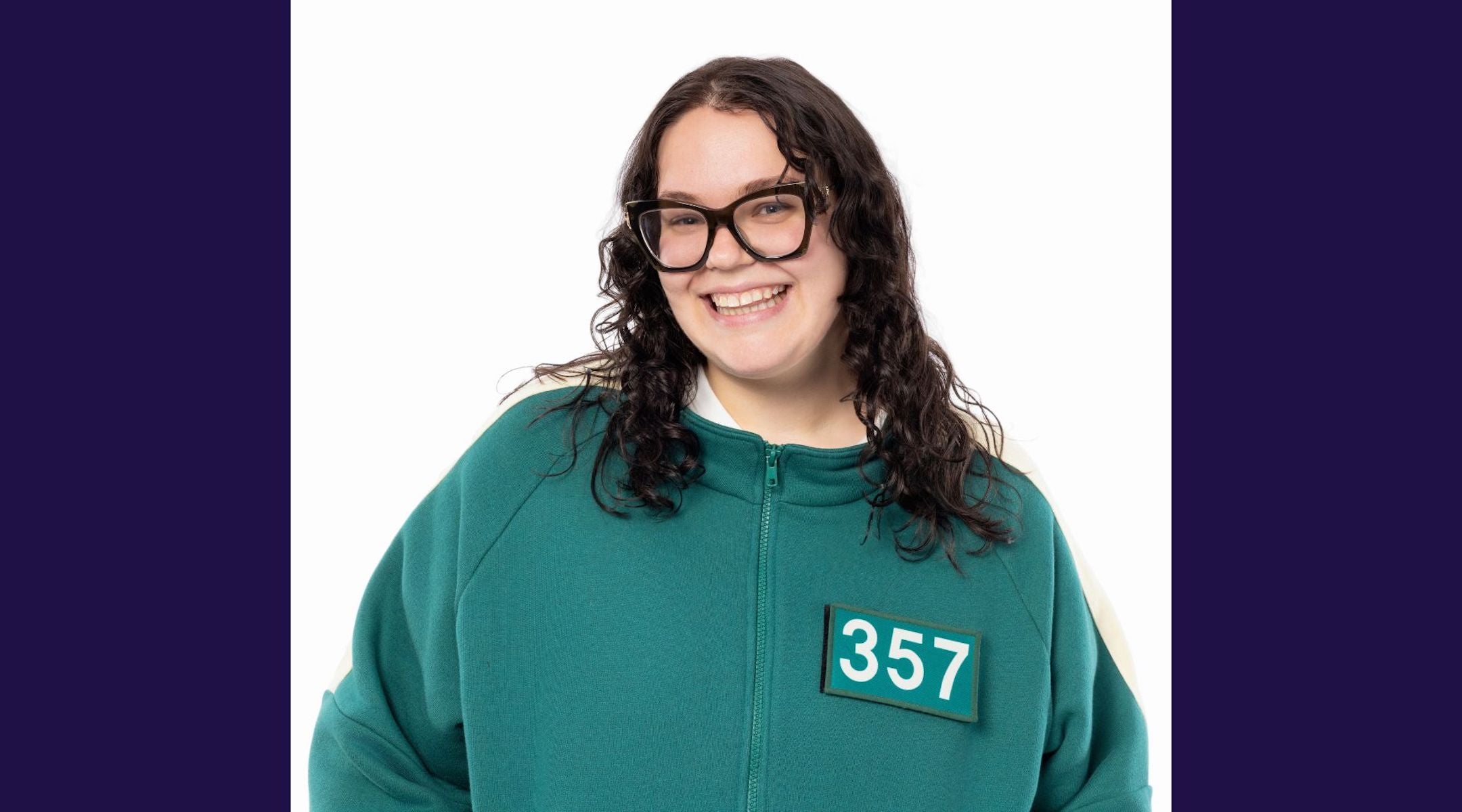
Rabbi Jamie Field poses as a contestant for “Squid Game: The Challenge” on Netflix. Courtesy of Tom Dymond/Netflix
(JTA) — Jamie Field was still a rabbinical student at Hebrew Union College in New York City when she watched the first season of “Squid Game: The Challenge” and saw a call to action flash across the screen: “Could this be you? Apply now.”
It was 2023, and Field, who had long gravitated toward other reality television shows like “Survivor” and “The Amazing Race,” said she saw something deeply Jewish in them.
“The really beautiful thing about these shows is that when you’re in such a pressure cooker, for me, it’s not about the challenges, although those are fun to watch, but it’s about watching people be people and make mistakes and grow and foster connections between one another, and I’ve found so much Torah in these moments,” Field said in an interview. “I know it’s very rabbi to say.”
Two years later, Field is bringing that approach to the Netflix show’s second season, which premiered Tuesday. She was chosen to be one of over 456 contestants from around the world competing in a series of physical and mental challenges for a $4.56 million prize.
While Jewish contestants have competed on a number of reality TV shows, ordained rabbis have been rarer. Field said she went into the experience feeling a weighty responsibility around portraying Jewish clergy even as she was shackled to a team of players and competed in a relay race of mini games like stacking a house of cards and swinging a ball on a string into a cup.
“I never expected to be the very best of the challenges,” she said. “I’ve always said, I have a heart of gold, but I’m not very dexterous, and so for me, it was about trying my best and giving it my all, and also trying to be true to myself and bringing my values and wisdom and sense of community and representing the rabbinate as best I could into the show.”
Field grew up in Los Angeles and where her family attended Temple Ahavat Shalom, a Reform congregation in the San Fernando Valley.
After graduating from Boston University in 2017, she worked for the Washington Hebrew Congregation, a Reform synagogue in Washington D.C., before enrolling at HUC in 2019, spending her first year in Jerusalem.
After being ordained in 2024, Field began working as the director of education at Beth El Temple Center, a Reform synagogue in Belmont, Massachusetts.
Just four months later, she received a call back from “Squid Game: The Challenge’ asking her if she was still interested. She was soon on her way to London for an extended break for filming.
A year later, in a post on Instagram announcing her appearance on the show, Field said her experience reminded her of what she has learned from Jewish tradition.
“I often share that the Torah is a sacred story of people being people — of being hurt, of making mistakes, of building connections, of adventure, and of finding the divine in it all,” she said. “I felt this so deeply during my experience on Squid Game.”
Among her co-competitors was a NFL cheerleader, a former bomb technician and an Anglican priest with whom Field said she connected on set.
“I had a really good conversation about religion and what it means to sort of be a faith leader on the show with the priest,” said Field. “I actually found that I had conversations about faith with almost everyone I talked to because, you know, people bring things up when you tell them you’re a rabbi.”
This is a moment of great uncertainty. Here’s what you can do about it.
We hope you appreciated this article. Before you go, we’d like to ask you to please support the Forward’s independent Jewish news this Passover. All donations are being matched by the Forward Board - up to $100,000.
This is a moment of great uncertainty for the news media, for the Jewish people, and for our sacred democracy. It is a time of confusion and declining trust in public institutions. An era in which we need humans to report facts, conduct investigations that hold power to account, tell stories that matter and share honest discourse on all that divides us.
With no paywall or subscriptions, the Forward is entirely supported by readers like you. Every dollar you give this Passover is invested in the future of the Forward — and telling the American Jewish story fully and fairly.
The Forward doesn’t rely on funding from institutions like governments or your local Jewish federation. There are thousands of readers like you who give us $18 or $36 or $100 each month or year.
Support our mission to tell the Jewish story fully and fairly.