Amid campus tensions, CUNY steps up outreach to Brooklyn yeshivas
CUNY is betting that a dual enrollment program with yeshivas can help attract Jewish students
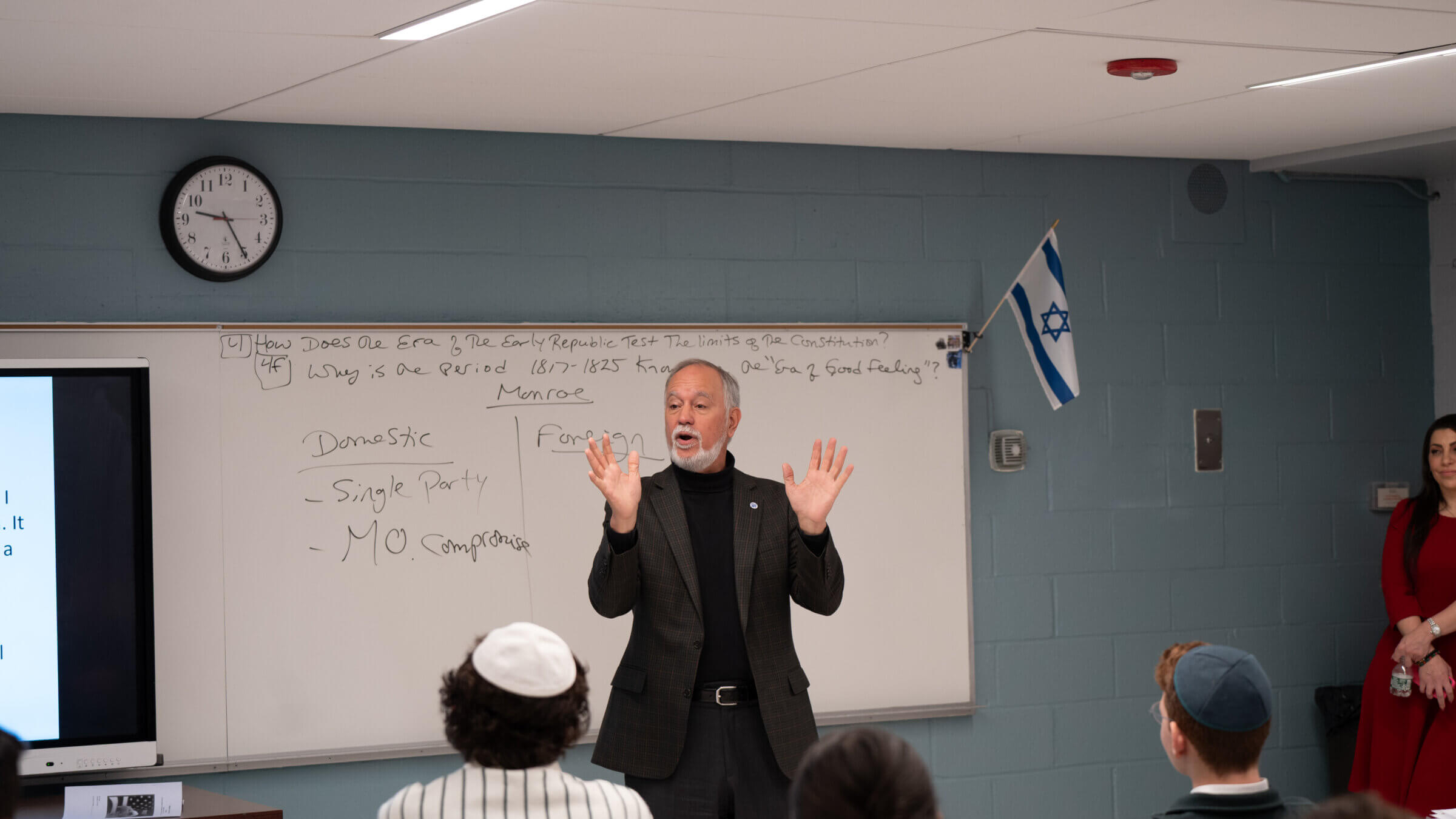
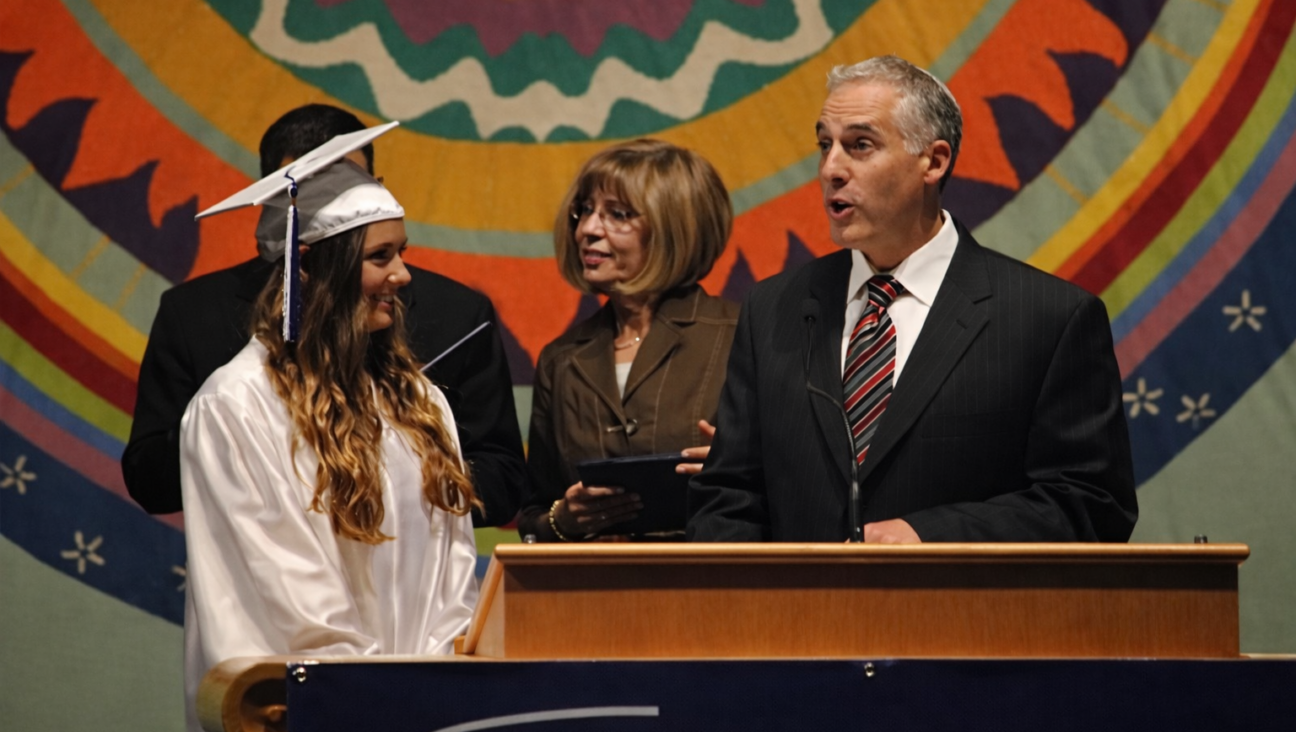
CUNY chancellor Félix Matos Rodríguez speaks to a classroom of students at Yeshivah of Flatbush Joel Braverman High School. Courtesy of CUNY/Jermine Hodge

By Hannah Feuer December 2, 2025
The City University of New York is boosting its outreach to Jewish high schools as tensions over antisemitism allegations continue to flare on some of its 26 colleges across the five boroughs.
On Tuesday, CUNY chancellor Félix Matos Rodríguez and Brooklyn College president Michelle Anderson visited Yeshivah of Flatbush Joel Braverman High School, a Modern Orthodox school in Brooklyn where students study halacha, Talmud, and Tanakh alongside secular subjects.
Their visit focused on promoting a dual enrollment program that allows students to take Brooklyn College courses without leaving the building. Teachers at the high school were hired as adjunct faculty for Brooklyn College to teach college-level subjects including calculus, physics, English composition, algebra II, and “American pluralism.” Students who pass the courses earn college credit.
While CUNY has partnered with New York City public schools to offer the dual enrollment program since 2000, it opened the program to independent religious schools only last year. This fall, 78 students from religious schools participated, including students from Joel Braverman and Magen David Yeshivah School in Brooklyn.
The visit to a yeshiva from top-level CUNY administrators also came amid fallout from an interfaith event at CUNY’s City College last month, where a speaker urged Muslim students to leave in protest because a “Zionist” was present. The chancellor’s visit to the yeshiva was planned prior to that incident, according to a CUNY spokesperson.
“You’re in shock? We’re not, we’re used to it,” a Jewish student says in a recording of the event at City College reviewed by the Forward. “That’s how interfaith goes at CCNY.”
Ilya Bratman, Hillel director for multiple campuses in the CUNY system and the Jewish representative at the event, told the Forward in a phone interview that the incident unfortunately typified the climate Jewish students face at CUNY.
“Whenever the college has tried to create interfaith opportunities, they often end up in this kind of environment — terrible, overwhelming,” Bratman said.
In a statement, a City College spokesperson said the school “has zero tolerance for acts of hate or bigotry of any kind and will promptly take all necessary and appropriate actions to address any such discrimination and remedy its effects.”
During Tuesday’s visit, CUNY administrators did not directly discuss the incident but said the yeshiva partnership reflects a broader commitment to making campuses welcoming to Jewish students.
“The pilot shows that we want to be able to attract students from the yeshivas,” Matos Rodríguez said. “There’s things out there in the world that we have to navigate, but we want to continue to send signals about what we consider to be important.”
Anderson highlighted that Brooklyn College received an “A” from the Anti-Defamation League’s Campus Antisemitism Report Card. She touted the school’s active Hillel, Judaic Studies department and accommodations for Jewish holidays.
Jacob Hanan, a Joel Braverman junior taking four dual-enrollment classes, said Jewish life is central to his college search — and Brooklyn College is currently at the top of his list.
“I look for programs that have a healthy environment, not that much antisemitism going around, as well as other Jewish students on campus I can interact with, and maybe a Hillel to make it easier to practice,” he said in an interview with the Forward.
Rebecca Weinwurzel, another junior in the program, told the Forward she’s been grateful for the opportunity to take more challenging courses. She, too, is considering Brooklyn College, partly because of her experience in the dual enrollment program.
“I do see a lot that Brooklyn College is one of the schools that will knock down any antisemitism that comes their way very quickly,” she said. “And that is a very big plus for me.”
This story has been updated to clarify that the CUNY administrator’s plan to visit Yeshivah of Flatbush predated the incident at CUNY’s City College.