Trump’s new White House ballroom architect is a Jewish immigrant who has advocated for refugees
Shalom Baranes is a prominent architect in the D.C. area
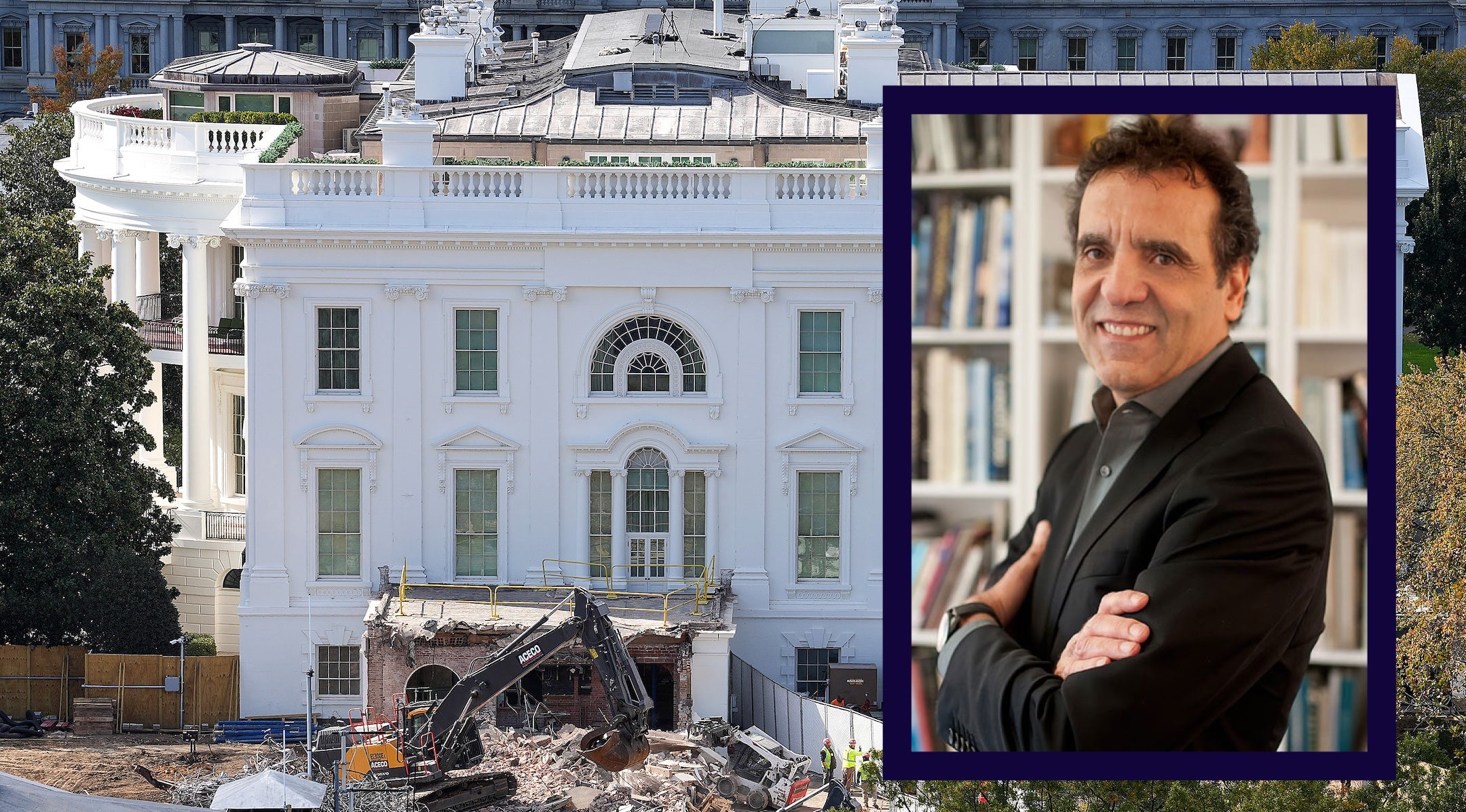
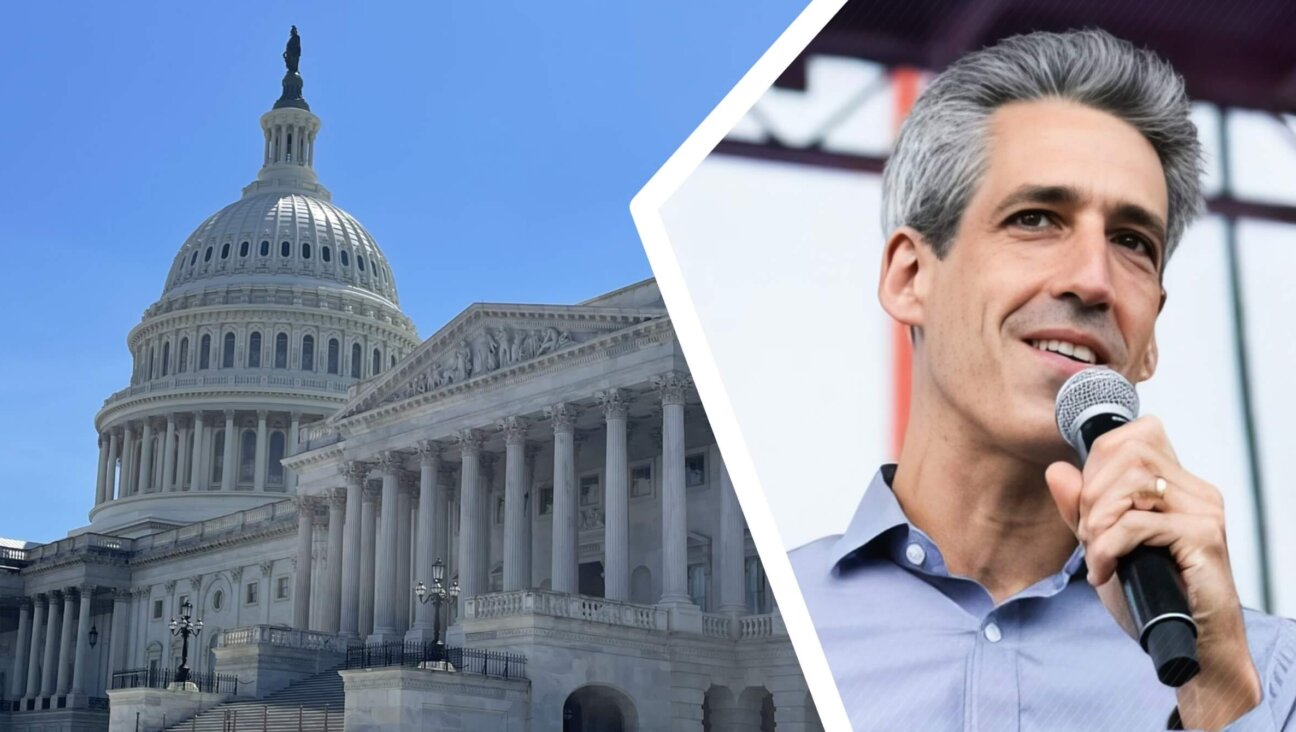
An excavator works to clear rubble after the East Wing of the White House was demolished on Oct. 23, 2025. Shalom Baranes, inset, has been chosen to lead the reconstruction. Photo by Eric Lee/Getty Images; Shalom Baranes Associates
(JTA) — After parting ways with the first architect hired to carry out his vision for the White House’s East Wing, President Donald Trump has picked a replacement — turning to a firm run by prominent Jewish architect who once called on Trump to keep the country’s doors open to refugees and immigrants.
Shalom Baranes was born soon after his parents fled Libya amid antisemitic sentiment there, coming to the United States as a child with the help of the Hebrew Immigrant Aid Society, now known as HIAS. He rose to prominence as an architect in Washington, D.C., where he has designed both private and government buildings, including the Pentagon, that trend toward the modern.
The White House confirmed on Friday that it had chosen his firm, Shalom Baranes Associates, to continue the East Wing project, centered around the ballroom that Trump wishes to construct. Trump clashed with the first architect on the job over the ballroom’s size.
“Shalom is an accomplished architect whose work has shaped the architectural identity of our nation’s capital for decades, and his experience will be a great asset to the completion of this project,” a White House spokesman, Davis Ingle, said in a statement on Friday.
The firm did not immediately publicly confirm its attachment to the project, and Baranes did not reply to a Jewish Telegraphic Agency request for comment.
Baranes’ selection stands out in an administration that has typically favored partisan and ideological loyalists. Baranes is a repeated donor to Democratic candidates who has openly advocated against one of Trump’s signature policies, his efforts to limit refugee admissions.
In 2017, two months into Trump’s first term, Baranes penned an op-ed for the Washington Post about the new president’s travel ban. Trump had declared a ban on migrants from seven mostly Muslim countries and refugees from around the world soon after taking office, igniting wide opposition including from Jewish groups.
“The anti-immigrant sentiment I feel today is nothing new to me,” he wrote. “When my Jewish parents arrived in the United States just a few years after fleeing persecution in an Arab regime, it was as difficult for them to be accepted here as it is for Muslims now.”
Baranes laid out his criticism gingerly while saying he hoped the travel ban would be short-lived.
“As I watch the news and see families struggling to leave their countries and escape tyranny, I wonder who among them will make it to our shores and become part of the next generation of researchers, teachers, inventors, real estate developers and, yes, architects,” he wrote. “My hope is that the Trump administration will take actions to ensure that the travel ban is indeed temporary, so that good, hard-working individuals fleeing tyranny can find a new home as I did — and that each of them will be given the same opportunity to help build this great nation that I had.”
Among the Jewish groups to lobby against Trump’s travel ban was HIAS, the organization that had helped Baranes and his family come to the United States. HIAS declined to comment on his selection as White House architect but said through a spokesperson that the organization was working to respond to Trump’s crackdown on refugees, which the president renewed last week after an Afghan refugee shot and killed a member of the National Guard in Washington.
To those who are familiar with Baranes’ style, he is a surprising pick for more than just because of his personal politics. His designs typically trend toward the modern, not the gilded classical style that Trump favors. He also has said he prefers to think carefully before tackling a project — an impossibility when it comes to the White House ballroom, which is already mid-construction.
“You have to wonder why he would risk a stellar career and near pristine reputation for a project that could possibly end up in disaster. He could be publicly fired and castigated by the developer-in-chief or ostracized among his colleagues and clients,” wrote Douglas Freuhling, the editor in chief of the Washington Business Journal, on Friday.
But Fruehling noted that a successful build at the White House — one that balances Trump’s tastes with the gravitas of the White House — would be a defining capstone for any architect’s career. “He may just be the perfect architect for the job. For his sake, I hope it turns out that way,” he wrote of Baranes.
Baranes’ portfolio includes multiple synagogue renovations. He donated his services to restore the interior of Sixth & I, the Jewish center in downtown Washington, D.C., when it was reconstructed just over two decades ago.