Meet the rabbi running for State Assembly on the Upper West Side
If she wins in 2026, Stephanie Ruskay would be the first female rabbi to hold elected state office in American history
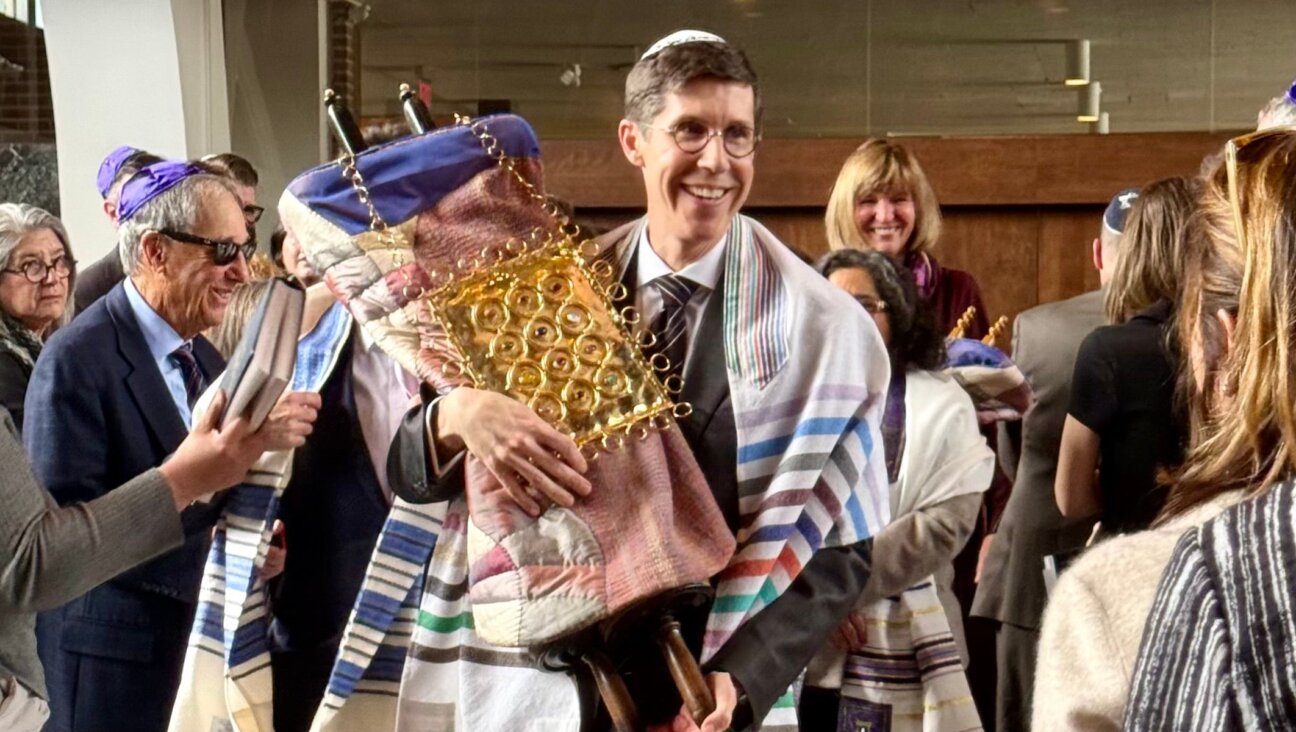
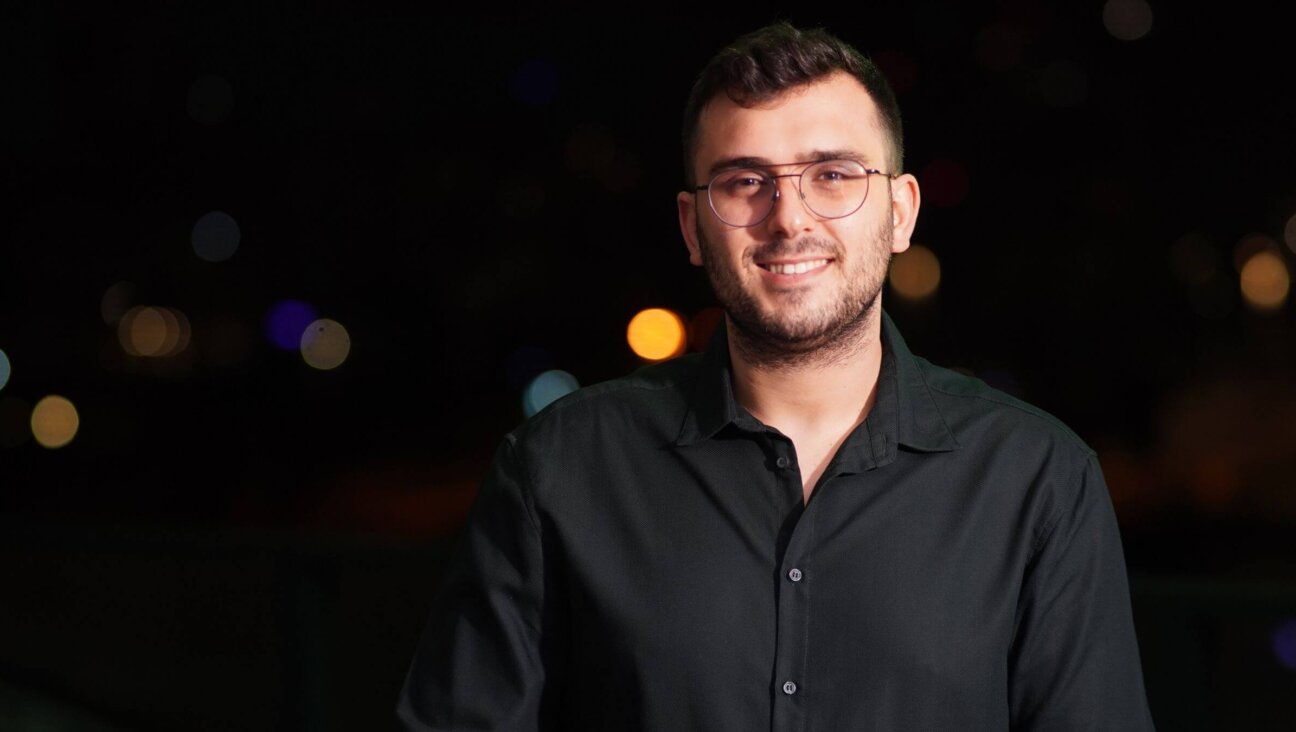
![Rabbi Stephanie Ruskay said she views running for State Assembly as “an extension of [her] rabbinate.” (Courtesy)](https://forward.com/wp-content/uploads/2025/12/Rabbi-Stephanie-Ruskay.jpg)
Rabbi Stephanie Ruskay said she views running for State Assembly as “an extension of [her] rabbinate.” (Courtesy) Courtesy of Rabbi Stephanie Ruskay
(JTA) — Rabbi Stephanie Ruskay has worked for American Jewish World Service and the Jewish Service Corps. She’s been an associate dean for the last 10 years at the Conservative movement’s Jewish Theological Seminary.
Ruskay has made a point of centering justice at each of those organizations, including in the curriculum at JTS, where community organizing and social justice are part of her fourth-year seminar.
Now, Ruskay is hoping to bring that commitment to justice to a new, wider stage as she runs for State Assembly in Manhattan.
Ruskay, a self-described progressive, is running to represent the 69th district that includes parts of the Upper West Side, Morningside Heights and West Harlem. A victory would make her the first female rabbi to hold elected state office in American history.
In a phone interview, Ruskay said she would view being elected to the State Assembly as “an extension of her rabbinate.”
“I don’t feel like I’m changing careers,” she said.
The Assembly seat opened up in the fall when current Assembly member Micah Lasher, whom Ruskay praised, decided to run for Congress.
Ruskay has been endorsed by former Manhattan borough president and onetime Democratic mayoral nominee Ruth Messinger, a longtime Jewish mentor of Ruskay, and City Council member Shaun Abreu.
In a conversation this week, Ruskay talked about rabbis who sign petitions, the Jews who are wary about Mayor-elect Zohran Mamdani, and why running for State Assembly is the next step in her career.
This interview has been lightly edited for clarity and length.
What prompted you to run for State Assembly? Why now?
I have felt like the country and the world are in a difficult spot, and I have been civically engaged and doing multifaith justice work for many years. And I felt like I needed to and wanted to be doing a bit more than I’m able to currently do. I’ve been watching the New York legislators and feeling like [they’re] doing a formidable job trying to make New York the safest it could be for all people in the face of real difficulty in the country, and I wanted to be part of that.
What would be your biggest priorities in office, and how do you describe yourself on the political spectrum?
First of all I would describe myself as a community organizer who listens to people and looks for the intersection of what they care about and I care about and meet it together. I’m a progressive and a Democrat. My priorities are immigration, housing, education, environment. In some ways they’re all bastions of democracy. Democracy did not used to be a thing we had to say was overtly a goal — it is today.
You’ve been endorsed by former Manhattan borough president Ruth Messinger, who was president of American Jewish World Service from 1998 to 2016. What’s your relationship with Messinger like, and have you spoken with other current or former elected officials or public figures?
Ruth has been my mentor and friend and teacher for many years. I worked for her at AJWS, and that was a place that really shaped my philosophy around how you partner with people. They work in the developing world with the philosophy that people know best what they need — we won’t tell you what you need, we’ll bring the resources we have and we’re going to work together. And the reason it’s in our self-interest [as Jews] is that we don’t think we can live in a world where other people’s dignity is not valued; it’s a diminishment of our ability to be human and Jews in the world. I was 22 then, I’m 51 now, so that was a formative time in my life.
I’ve been talking to current and former elected officials. We do plan to announce other endorsements in the coming weeks. I am a person who believes you can and should learn from everyone. I think my campaign is going to be a combination of lots of things I hear from other people who served over many decades.
The incoming Zohran Mamdani mayoral administration will take over in just a few weeks. There are many Jewish constituents who have concerns about a mayor whose views on Israel are completely opposed to theirs on Israel. What do you make of this moment for Jewish New Yorkers, and how do you view your role as a Jewish leader?
I feel like choosing to run for State Assembly is actually an extension of my rabbinate. I don’t feel like I’m changing careers. I feel like, if I take seriously the things that I teach about and preach about and study about related to caring for people who are poor and making a community that is safe for people and where people can thrive — that is some of what our texts teach, and the way you do that is you go be involved in how their lives unfold and be partners.
I’m doing this like I’ve done everything — you listen to people. So, of course, I have my own perspective on the election and voted. And if I want to be people’s representative, I have to listen to what’s on their minds, and take that into account in a serious way. So I’m hearing from people who are very excited, I’m hearing from people who are very anxious. And I’m hoping to be the representative of all those people. And you come in and bring their voices into the room.
What was your perspective during the election?
I think this is an exciting and anxiety-provoking time all at the same time, and so we now have a mayor-elect, and I think that you go in and you be a partner and you represent your people. And when we agree, I’ll be very excited to work together, and when we don’t agree or when I know that I represent people who have a very different perspective from what’s happening, then my job is to bring that into the room. In organizing, we say no permanent friends and no permanent enemies. You work with people who you can work with at every moment, and that’s what I’ll do as an assemblyperson.
Earlier in the fall, there was a letter signed by 1,100-plus rabbis from New York and around the country, which called out anti-Zionism and specifically named Mamdani. I’m curious what went into your decision not to sign the letter, and what you made of this huge open letter as it was circulating?
I’m an administrator at the [Jewish Theological] Seminary, so we don’t sign letters at all, it’s just the institutional policy. I think the war of the letters is a challenging thing. I understand what would move somebody to sign on, either they feel personally very moved or they’re getting a lot of pressure from constituents and they want to go on the record. I don’t know, I guess in 50 years we’re going to look back at this time and decide if all the letter-signing was productive or not.
In my time working, I have seen people choose to sign letters and then have enormous ramifications in looking for jobs. It’s very complicated, and at some point there’s too much noise of too many letters and it’s hard to keep track of. And you have to ask yourself, are all the letters making an impact, and in what way?
According to your campaign site you would be the first female rabbi elected to state office in American history. What does that mean to you?
I’m not doing it to be history-making, I’m doing it because I feel like I don’t know what else to do in this time. It happens to be that a female rabbi has not done that before — maybe I’ll start a trend and there will be tons of us, you know, the first of many. But I think if you want to walk the walk, you have to not be inhibited by not having seen it before. This is my idea of what I could do that would have even more impact than I’m having now.
Could you tell me more about your experience as associate dean of JTS? What have you learned from the role, and how might that inform how you operate as a State Assembly member?
I love my job. I feel like it’s always different. The student body is constantly changing, you’re constantly having to ask, ‘Why are we doing it this way?’ We are continuously experimenting. And the world doesn’t stay still — I’ve been there 10 years, you don’t do the same thing for 10 years. You’re constantly trying to meet the moment, and the moment has changed a lot.
I recently had a chance to meet someone who’s an Assemblyperson, and watching how they interacted in the community made me think there was a lot of similarity between constituent services and what we do in the dean’s office. In the dean’s office, students come in with individual issues — it could be about money, course requirements, a lot of things. And you have to try to help the person who’s right in front of you, but you also have to think, ‘Who else is struggling with this issue?’ And is there a policy that would help alleviate this issue for more people?
What’s been your career journey as a rabbi, and how did that lead you to your role with JTS?
I grew up in the Conservative community. I was born in Manhattan, lived in a Mitchell-Lama building [for moderate and middle-income families], 50 West 97th St., until I was 7, and then we moved to Mahopac, which is in Putnam County. We spent a lot of time at our synagogue, and we learned about tradition and history. But justice at that time was not a piece of Jewish life that we talked about in a big way. I thought, how come these feel like separate endeavors? And so I think a lot of my career is about trying to integrate those two things and be part of leading in the Jewish community in a way in which justice and service were as important as all of the other halachic observances — not more important, but as important.
So prior to rabbinical school, I served for a year in Bulgaria in the Jewish community for the Jewish Service Corps for the Joint Distribution Committee, and then worked at American Jewish World Service. Part of my role with AJWS was communicating with rabbis around the country, trying to raise up justice work and civic engagement and international development into what they were doing in communities. I thought, ‘Rabbis play a really important role in setting the agenda for the Jewish community,’ so I thought, ‘I would like to become one!’
I went to rabbinical school at JTS, I worked at Auburn Theological Seminary running their multifaith conflict resolution and leadership program for teenagers — Israelis, Palestinians, South Africans, Northern Irish and American kids. After rabbinical school, I worked at Avodah, the Jewish Service Corps, and led alumni and community engagement. And through that work, I ended up having a relational meeting with someone at JTS — and the next thing I knew, I worked there. The challenge was: Maybe you can come here to make justice more central to how we train students. And I thought, I don’t know if I can. But if I don’t try, I definitely won’t.
Favorite spot for Jewish food in the district?
I’m going to say I spend an equal and large amount of time at both Kosher Marketplace and Six 60 One. And I meet people I know at both places regularly.