How Jewish politics are shaping the 2026 election map, from coast to coast
In New York, Maine, Michigan and more, antisemitism and anti-Israel sentiment are driving high-stakes contests
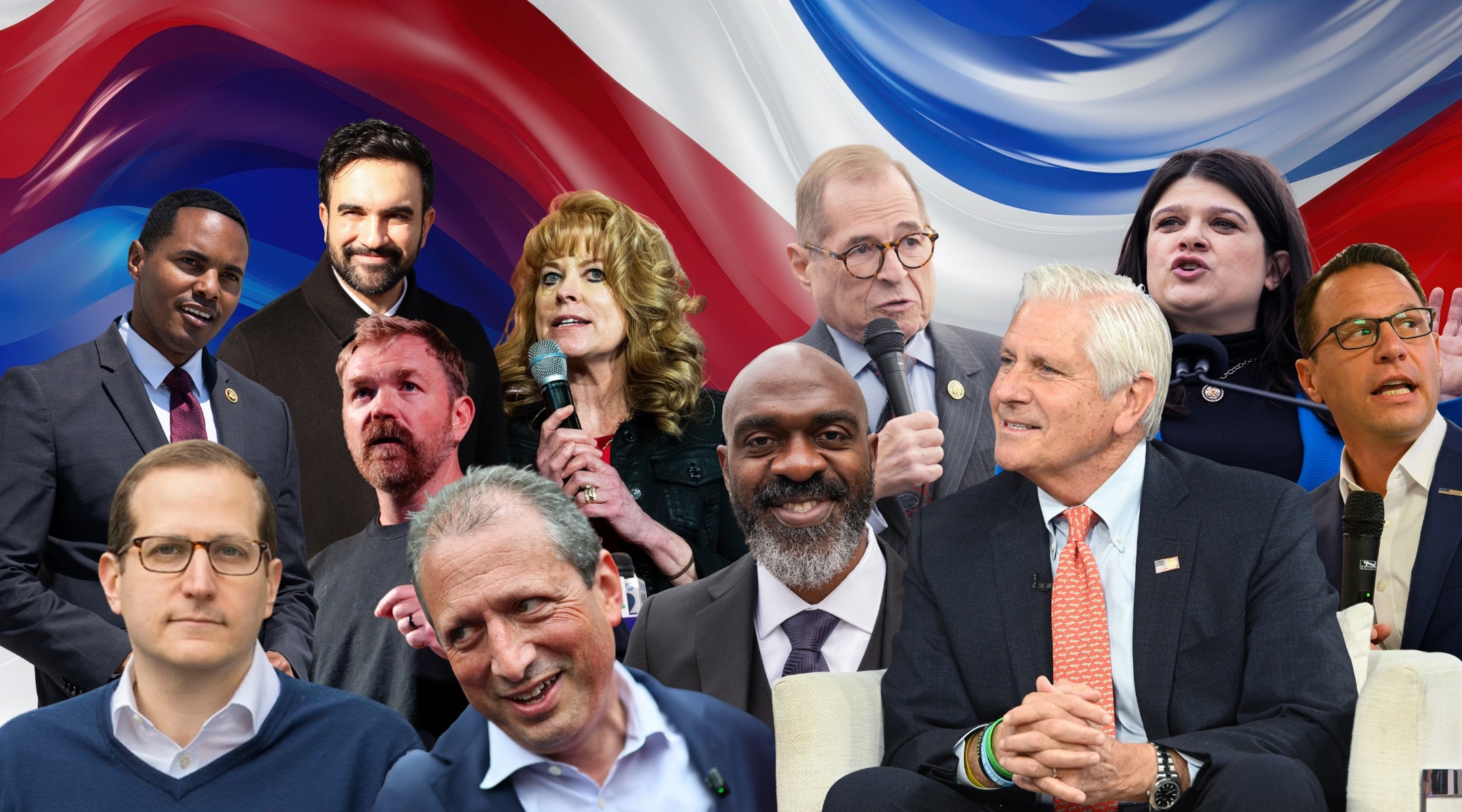
Some of the political candidates likely to make waves among Jewish voters in 2026. Graphic by Lev Radin/Pacific Press/LightRocket; John Nacion/Deadline; Tom Williams/CQ-Roll Call, Inc.; Tom Williams/CQ-Roll Call, Inc.; Michael M. Santiago/Getty Images; Sophie Park/Getty Images; Noam Galai/Getty Images; John Lazenby/UCG/Universal Images Group; Bill Clark/CQ-Roll Call, Inc.; Micah for Assembly; Udo Salters Photography; Design by Jackie Hajdenberg
(JTA) — After a year in which Israel, antisemitism and political polarization scrambled long-standing alliances, the American Jewish political map is heading into 2026 unusually unsettled.
From New York City Hall to swing-state governors’ mansions to some of the most crowded Democratic primaries in memory, the coming election cycle will test how much Jewish voters still cohere as a political bloc — and whether the issues that have dominated Jewish life since Oct. 7 will continue to shape the ballot box. The rise of outspoken pro-Palestinian candidates, fractures inside both parties over Israel, and the growing visibility of antisemitism on the left and the right have turned races that might once have seemed parochial into national bellwethers.
As Democrats and Republicans jockey for control of Congress and key statehouses, Jewish candidates and Jewish issues are no longer confined to the margins. Instead, they are central — sometimes uncomfortably so — to debates about ideology, identity and power. These are the big political questions facing the American Jewish community as 2026 approaches.
The Mamdani era begins
After the most closely watched — and, in some Jewish corners, feared — mayoral race in generations, Zohran Mamdani will be sworn in as New York City’s next chief executive on the first day of the year. For many Jews, both in and beyond New York, 2026 will be measured by how the democratic socialist mayor will wield his power and influence once in office — and by how many candidates in the midterms are able to follow in his footsteps when it comes to explicit pro-Palestinian activism.
Ahead of his inauguration, Mamdani seemed to heed some of the Jewish alarms over his harsh criticism of Israel. During his transition he dismissed a staffer over her past antisemitic posts; met with the New York Board of Rabbis, which include some vocal critics of his; and, after the deadly attack on a Hanukkah celebration in Australia, visited the grave of the Lubavitcher Rebbe.
Tensions remain. The Anti-Defamation League has launched a controversial monitoring project focused on his administration. He also still pledges to arrest Benjamin Netanyahu should the Israeli prime minister visit New York, a threat that Netanyahu has shrugged off.
Once he takes power, Mamdani’s outreach efforts to Jews will continue to be closely scrutinized, as will Jewish leaders’ willingness to be in the same room with him — or to discourage, or encourage, further attacks on him.
Seismic shifts on the right
Republicans could have seized upon the rise of Mamdani as an effort to appeal to worried Jews ahead of the midterms as the pro-Isael, anti-antisemitism party. Instead, the GOP now seems unsure what it thinks about Jews at all.
While President Donald Trump says he remains resolutely pro-Israel, and many establishment Jewish groups continue their eagerness to work with him, his second-in-command JD Vance has opened the door to a rising tide of anti-Israel and anti-Jewish sentiment on the party’s hyper-nationalist wing. At Turning Point USA’s annual convention, Vance declined to join the critics of conservative antisemitism, and instead encouraged the party to widen its tent.
Meanwhile, conservative thought leaders such as the Heritage Foundation and Turning Point USA, which have wielded power to vet and promote GOP candidates, have opened doors to outright conspiratorial talking points about Jewish and Israeli power, via figures such as open antisemite Nick Fuentes and podcaster Tucker Carlson, who has offered him a friendly platform.
Already some Republican candidates, driven by “America First” ideology and their disdain for U.S. aid to Israel, are taking explicitly anti-Israel platforms. Florida gubernatorial hopeful James Fishback, for example, has pledged to refuse donations from AIPAC, the pro-Israel lobby, and praised Heritage for its defense of the Carlson-Fuentes interview. “Why is it that when we’re critical of Israel, it feels like a fourth branch comes out to almost criminalize our speech?” the Gen Z hedge-fund manager has said.
And in the Ohio gubernatorial race, the biotech entrepreneur Vivek Ramaswamy — who as a 2024 presidential candidate was one of the first major figures of his party to suggest cutting aid to Israel — appears to be the likely GOP nominee. He will likely face a Jewish Democratic candidate, former state health official Dr. Amy Acton.
A test for Josh Shapiro
A Jewish governor with a national profile, Josh Shapiro is seeking reelection in November. Stacy Garrity, his GOP opponent, is the only person to earn more votes in Pennsylvania history than Shapiro when she was elected state treasurer in 2024. A popular moderate with a reputation as a humanitarian war hero, Garrity hopes to unite the state as Shapiro did, despite her record of boosting election denials. She’ll remind Jewish voters that she boosted the state’s Israel bond investments.
An upset — seen by insiders as unlikely but not impossible — could put a screeching halt to talk of Shapiro becoming the first Jewish president.
The Upper West Side story
Few Democratic primaries this year promise to be more circus-like than the race for the Manhattan district being vacated by longtime Jewish Rep. Jerry Nadler, a progressive on domestic issues who could read the haftarah at synagogue one day and offer what he considered loving criticism of Israel the next. Nine candidates have so far thrown their hats in, including three big Jewish names with very different takes on Jewish issues.
The favorite is New York State Assembly member Micah Lasher — a close confidant of Nadler. But Lasher’s path to the nomination is far from guaranteed, especially if progressives want to send a message to a Democratic establishment that they are unhappy for a range of reasons — including Israel.
Enter Cameron Kasky, a survivor of the Parkland High School shooting and Jewish Gen Z political activist. The 25-year-old, courting pro-Palestinian voters, has already made fighting “support for genocide” a central plank of his campaign (he recently returned from a pro-Palestinian solidarity mission to the West Bank). And Kasky isn’t alone among Jewish candidates popular with the online left: Jack Schlossberg, 32, a Kennedy scion with millions of social media followers, is running on what he describes as the “cost-of-living crisis” and erosion of democratic norms under Republican leadership.
Threading the needle on Israel
As support for Israel erodes in the Democratic party and in portions of the right, a number of Jewish candidates insist that there is room for progressive Jewish voices who can be critical of Israeli policy. A number of declared Jewish candidates this year are looking to represent this vanguard. In many cases they’re vying to replace long-serving Jews and/or stalwart Democratic leaders.
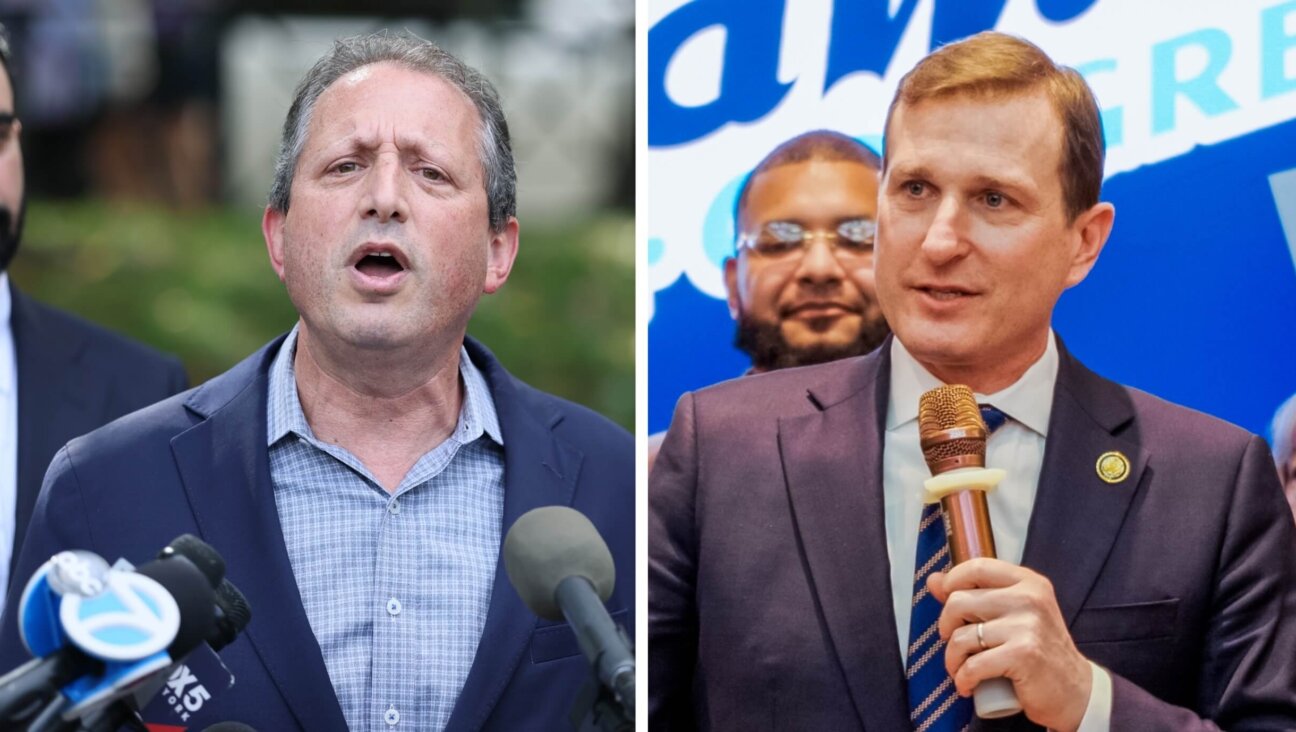
Kasky exemplifies the trend. But progressive Brad Lander, the Jewish New York City comptroller and Mamdani ally, may have a clearer path to Congress: He is challenging Jewish Rep. Dan Goldman, a more typically pro-Israel lawmaker, for his House seat, and early polling has given him an advantage.
Scott Wiener, a state senator in California, is running for the seat being vacated by retiring Democratic figurehead Nancy Pelosi. Wiener holds conventionally left-of-center views on housing reform, civil rights, LGBTQ+ issues, climate and tech regulation and has pushed for antisemitism prevention in schools. He has also publicly condemned actions by the Netanyahu government.
And Daniel Biss, the progressive Jewish Israeli mayor of Evanston, Illinois, is running in the Chicago-area congressional district previously held by retiring Jewish Rep. Jan Schakowski. Like many pro-Israel centrists, he’s an advocate of the two-state solution, but has veered to their left by calling for an early ceasefire in Gaza and for pausing offensive U.S. weapons sales to the Israeli government amid the humanitarian crisis in Gaza. He is facing, amid a slew of challengers, the leftist Palestinian-American influencer Kat Abugazelah.
Israel and the midterms
Months after the tentative ceasefire, will voter sentiment about the Gaza war have an impact on midterm races? AIPAC, whose endorsements were once courted by politicians, is now seen as toxic by candidates who have been reading the tea leaves. Case in point: Rep. Seth Moulton, the Massachusetts Democrat, has publicly said he will return the campaign donations he previously received from AIPAC and will not accept future support from the organization.
In New York’s 15th Congressional District race, where Democratic Rep. Ritchie Torres is seeking reelection, former state assemblyman and ex‑Democratic National Committee vice chair Michael Blake has made Torres’s pro‑Israel stance a central issue of his campaign. Blake has accused Torres of prioritizing U.S. support for Israel over his constituents’ needs, including alleging that Torres’s positions effectively support what Blake calls a “genocide” — language that has drawn criticism from local Jewish leaders.
In the Michigan Senate race, Rep. Haley Stevens, a non-Jewish pro-Israel stalwart who previously won AIPAC’s support over progressive Jewish incumbent Andy Levin, is the favorite in the race right now. But she faces two progressive challengers, including one, former county health executive Abdul el-Sayed, who has also labeled Israel’s military campaign in Gaza as “genocide” and opposes U.S. military aid to Israel.
A Jewish hopeful for New York governor
Bruce Blakeman is the first Jewish county executive of Long Island’s Nassau County. He shouldered aside former frontrunner Elise Stefanik, upstate’s fiery Trump ally and scourge of college presidents, for both Trump’s endorsement and the likely Republican nomination to challenge Gov. Kathy Hochul. Blakeman’s hawkish pro‑Israel advocacy aligns him with the segment of the Republican base that emphasizes strong U.S.-Israel ties and opposition to movements like BDS. In the 2026 governor’s race, he’s likely to draw a contrast with Democrats, even if Hochul herself has strong pro-Israel bona fides.
Much ado about a tattoo
Graham Platner, the progressive Maine Senate candidate running in what Democrats see as a must-win race, has refused to quit following revelations that the military veteran had a Nazi-era tattoo on his chest for years. Even after shedding staff and facing fiery condemnations over both the tattoo and derogatory comments he made on Reddit, a defiant Platner is still polling within range of establishment candidate Gov. Janet Mills ahead of the June 9 Democratic primary.
Could the oyster farmer (who has claimed he didn’t know what the tattoo was, and covered it up following the revelations) actually pull off the upset primary win? Like Mamdani and several other progressive candidates this year, Platner also holds ardently pro-Palestinian views and has accused Israel of genocide. The elder statesman of the progressive wing of the Democratic Party, Vermont Sen. Bernie Sanders, has shrugged off questions about his tattoo, giving it a Jewish stamp of non-concern.