Can Mamdani stop NYC’s Jewish comptroller from purchasing millions in Israel Bonds for the city?
Mark Levine has said he’ll reinvest in the bonds, which the city held from 1974 through 2023
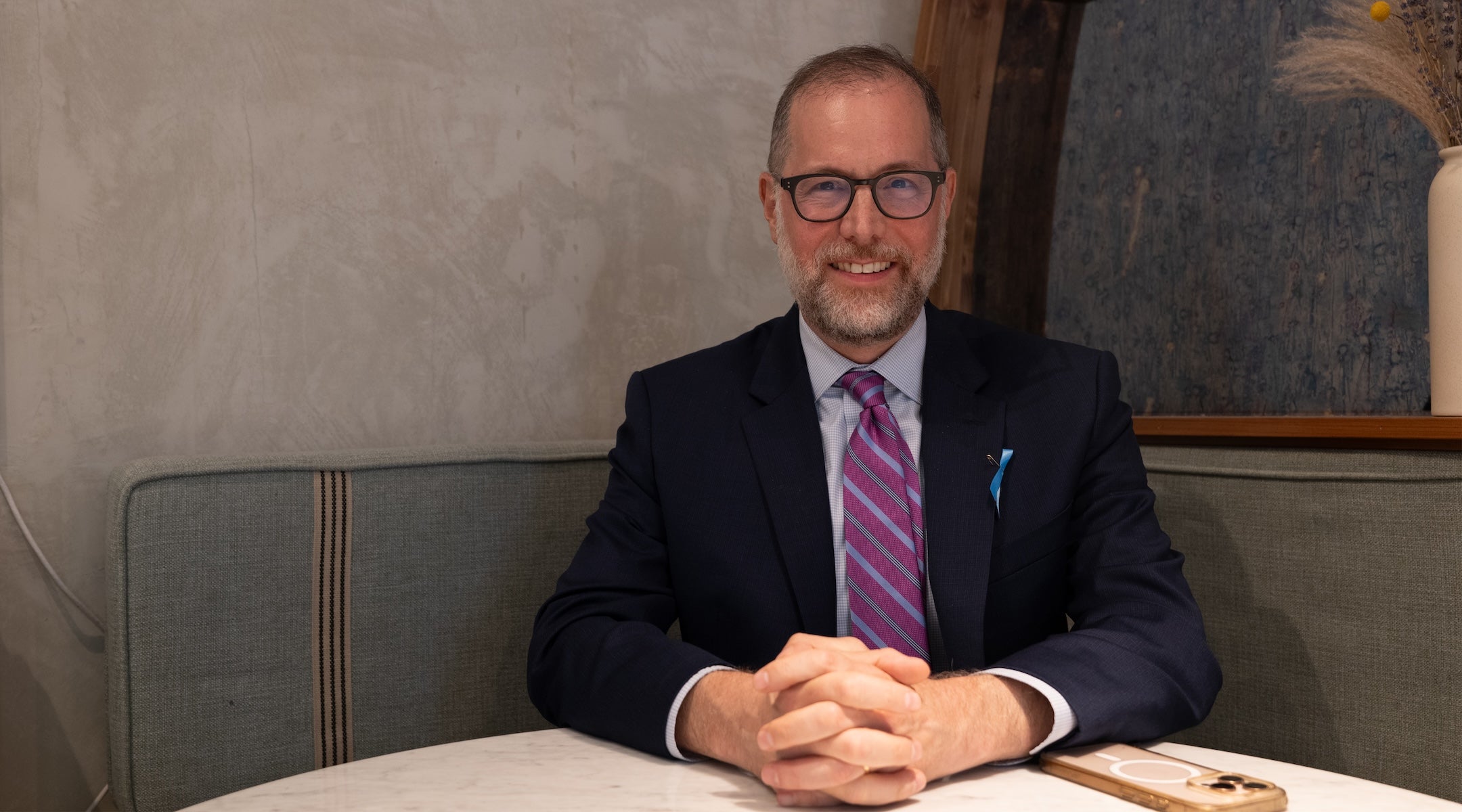
As comptroller of New York City, Mark Levine is one of him the highest-ranking Jewish officials in city government. Photo by Joseph Strauss

By Jacob Kornbluh January 22, 2026
New York City’s mayor and Jewish comptroller are at odds over the city’s investment in Israel Bonds, debt securities issued by the Israeli government with a roughly 5% return. New York held the bonds between 1974 and 2023, when then-comptroller Brad Lander, who is also Jewish, ended the city’s investment of $39,947,160 in them.
The city’s new comptroller, Mark Levine, said last week he remains committed to resuming the purchases of Israel Bonds. “Israeli bonds had been part of the portfolio for decades,” said Levine, who endorsed Mamdani after the primary.
“Israel has never missed a bond payment, and a good, balanced portfolio should have global diversity,” Levine said during the Democratic primary. And in an interview in September with JTA, Levine said that “in a globally diversified portfolio which has probably more than 10,000 different investments and stocks and bonds and more, that that should have a place because it’s a long-term safe and secure investment.”
The comptroller is the city’s chief fiscal officer, responsible for auditing agencies and nonprofits, approving contracts and managing pension funds. The trustees of the city’s five pension funds have final authority over investment decisions and are appointed by the comptroller, the mayor, and the unions representing city workers.
Mamdani reiterated his position this week, saying, “I’ve made clear my position, which is that I don’t think that we should purchase Israel bonds. We don’t purchase bonds for any other sovereign nation’s debt, and the comptroller has also made his position clear and I continue to stand by mine.”
The decision rests with the comptroller and trustees, so Mamdani can neither prevent the investment nor overrule it.
When Landers ended the investment, Mayor Eric Adams protested but couldn’t stop it.
In an interview last July, Lander maintained that his decision not to purchase new bonds in January 2023, when the holdings matured, was not political. Lander said he was following the city’s policy of avoiding foreign sovereign debt, treating Israel the same as other countries rather than giving it special treatment in the pension portfolio.
Mamdani, a supporter of the boycott Israel movement, pledged during the primary that he would end economic ties with the Israeli government, and said he supported Lander’s move as a political statement.
On his first day in office, Mamdani revoked an executive order, signed by Adams in the final days of his term, that barred city agencies from adopting practices that discriminate against Israel or Israeli citizens. It also directed the city’s chief pension administrator and pension trustees appointed by the mayor not to support divestment from Israel Bonds or other assets.
Mamdani maintained he was revoking all executive orders issued by Adams after Sept. 26, 2024, the day of his indictment on federal bribery and fraud charges. That included a measure adopting a controversial working definition of antisemitism. In a rare joint statement, a coalition of mainstream Jewish organizations said they were deeply concerned by Mamdani’s actions and called for “clear and sustained leadership that demonstrates a serious commitment to confronting antisemitism” and one that ensures that the mayor’s office is not used to advance BDS.
In the JTA interview, Levine said, “I don’t think a comptroller should wake up every morning and say that I’m automatically going to oppose or automatically going to support the mayor. I think it has to be based on the merits. Whoever the mayor is, that’s going to be my approach.”
This is a moment of great uncertainty. Here’s what you can do about it.
We hope you appreciated this article. Before you go, we’d like to ask you to please support the Forward’s independent Jewish news this Passover. All donations are being matched by the Forward Board - up to $100,000.
This is a moment of great uncertainty for the news media, for the Jewish people, and for our sacred democracy. It is a time of confusion and declining trust in public institutions. An era in which we need humans to report facts, conduct investigations that hold power to account, tell stories that matter and share honest discourse on all that divides us.
With no paywall or subscriptions, the Forward is entirely supported by readers like you. Every dollar you give this Passover is invested in the future of the Forward — and telling the American Jewish story fully and fairly.
The Forward doesn’t rely on funding from institutions like governments or your local Jewish federation. There are thousands of readers like you who give us $18 or $36 or $100 each month or year.
Support our mission to tell the Jewish story fully and fairly.