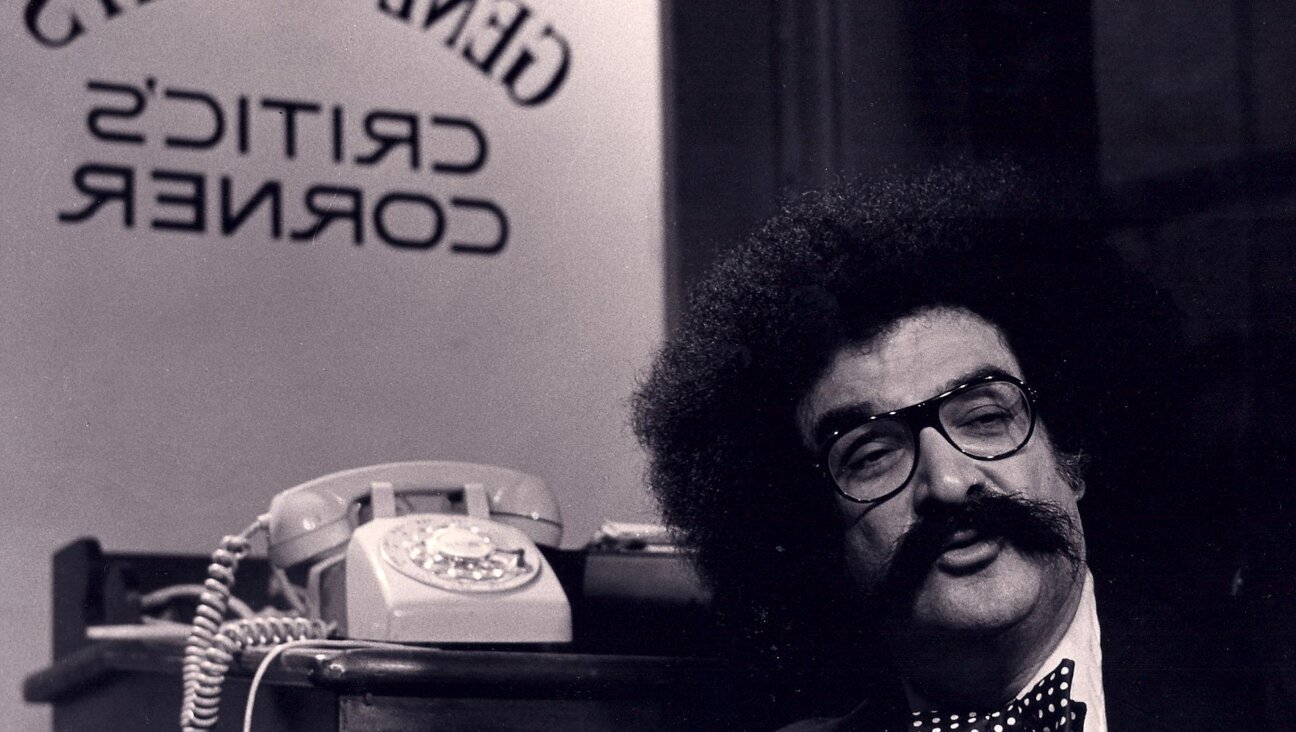
Isaiah Zagar, renowned Jewish mosaic artist who created Philadelphia’s Magic Gardens, dies at 86
‘When you’re a Jew growing up in Brooklyn, they don’t name you Isaiah,’ he said about changing his name from Irwin
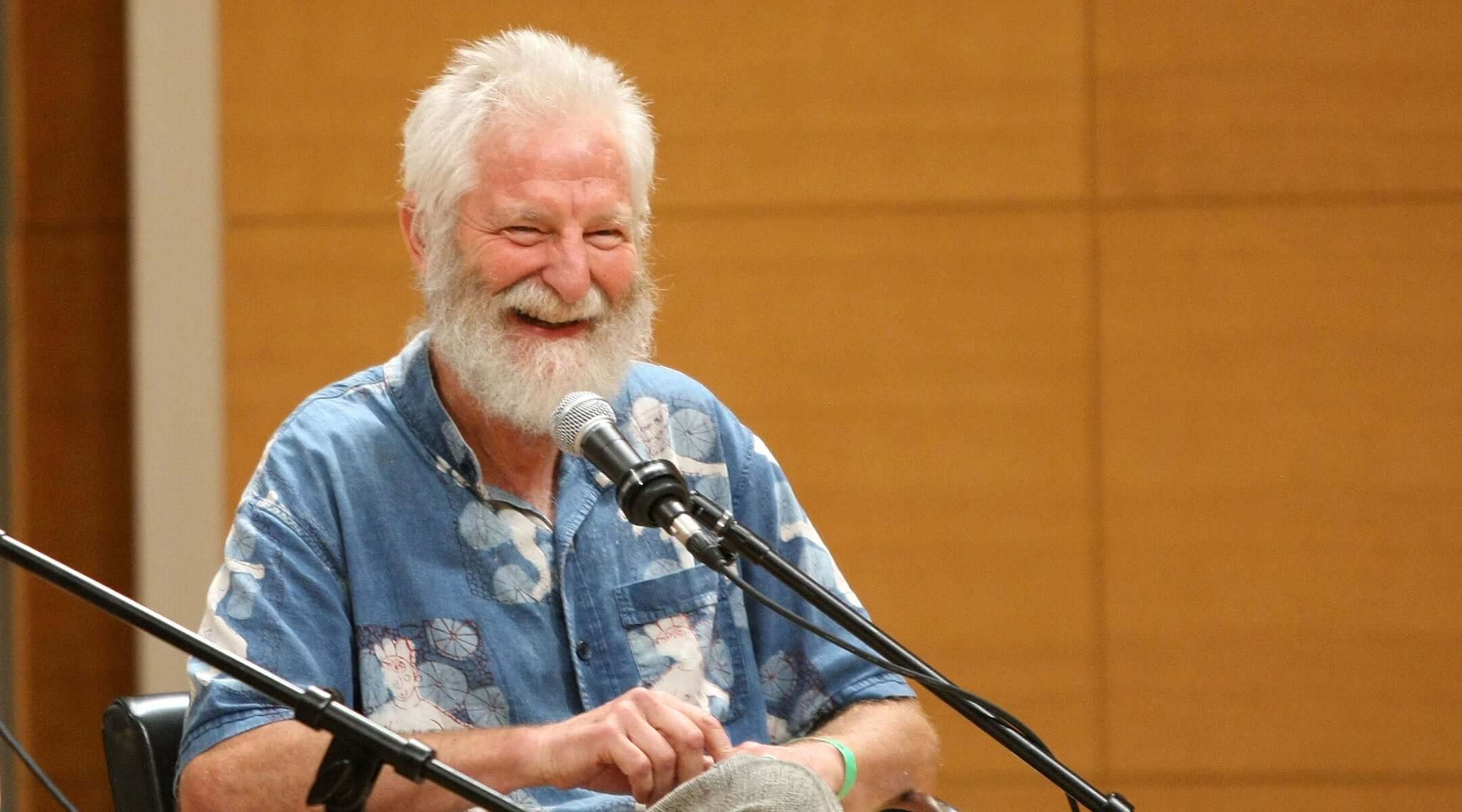
Isaiah Zagar at the HBO documentary screening of “In A Dream” at the Brooklyn Museum on August 23, 2009 in the Borough of Brooklyn, New York City. Photo by Michael Loccisano/Getty Images for HBO
(JTA) — Isaiah Zagar, the famed Jewish mosaic artist whose shimmering, kaleidoscopic installations transformed streets and buildings across Philadelphia and founded the city’s Magic Gardens, has died.
Zagar died on Thursday of complications from heart failure and Parkinson’s disease at his home in Philadelphia. He was 86.
“The scale of Isaiah Zagar’s body of work and his relentless artmaking at all costs is truly astounding,” Emily Smith, the executive director of the Magic Gardens, told The Philadelphia Inquirer. “Most people do not yet understand the importance of what he created, nor do they understand the sheer volume of what he has made.”
Born Irwin Zagar in Philadelphia in 1939, Zagar grew up in Brooklyn, New York, where he received his bachelor’s in painting and graphics at the Pratt Institute of Art. “When you’re a Jew growing up in Brooklyn, they don’t name you Isaiah,” he told the Philadelphia Inquirer in 1980. “They name you Ira, or Irving or Irwin.”
In 1959, when Zagar was 19, he received a summer art scholarship to go to Woodstock, New York, where he encountered the works of famed “outside artist” Clarence Schmidt who would later become his mentor. During that summer, he also studied Jewish religious texts which later inspired him to change his first name to Isaiah, according to the Daily Mail.
In 1963, Zagar met artist Julia Zagar and the pair were married three months later and joined the Peace Corps as conscientious objectors to the Vietnam War.
Zagar and his wife moved to South Philadelphia in 1968, where she opened the Eye’s Gallery on South Street and he created his first art installation by embellishing the building’s facade.
Over the following decades, Zagar used broken tiles, mirrors and bottles to adorn roughly 50,000 square feet of walls and buildings across Philadelphia with his iconic mosaic art. In the late 1990s, transformed two empty lots near his South Philadelphia home into an immersive mosaic and sculpture installation that would later become the iconic Magic Gardens.
Zagar’s works are featured in the permanent collections of the Philadelphia Museum of Art and the Pennsylvania Academy of the Fine Arts. More than 200 of his mosaic pieces can also be found across several states and in Mexico and Chile.
In 2008, Zagar’s son, the filmmaker Jeremiah Zagar, released the documentary “In a Dream,” an intimate portrait of his father’s struggles with mental health and drive to build the Magic Gardens. He worked with a producer whom he met while in Hebrew class at the Jewish day school now known as Jack M. Barrack Hebrew Academy, according to a 2022 profile in the Philadelphia Jewish Exponent.
“Isaiah was more than our founder; he was our close friend, teacher, collaborator, and creative inspiration,” wrote the Magic Gardens in a post on Facebook. “He was unlike anyone we have ever met and will ever meet. Above all things, he was an artist. In his lifetime, he created a body of work that is unique and remarkable, and one that has left an everlasting mark on our city.”
Zagar is survived by his wife and two sons, Jeremiah and Ezekiel.
This is a moment of great uncertainty. Here’s what you can do about it.
We hope you appreciated this article. Before you go, we’d like to ask you to please support the Forward’s independent Jewish news this Passover. All donations are being matched by the Forward Board - up to $100,000.
This is a moment of great uncertainty for the news media, for the Jewish people, and for our sacred democracy. It is a time of confusion and declining trust in public institutions. An era in which we need humans to report facts, conduct investigations that hold power to account, tell stories that matter and share honest discourse on all that divides us.
With no paywall or subscriptions, the Forward is entirely supported by readers like you. Every dollar you give this Passover is invested in the future of the Forward — and telling the American Jewish story fully and fairly.
The Forward doesn’t rely on funding from institutions like governments or your local Jewish federation. There are thousands of readers like you who give us $18 or $36 or $100 each month or year.
Support our mission to tell the Jewish story fully and fairly.