What happened during the 2025 Israel-Iran war? A timeline.
It’s been eight months since Israel and the US last struck Iran
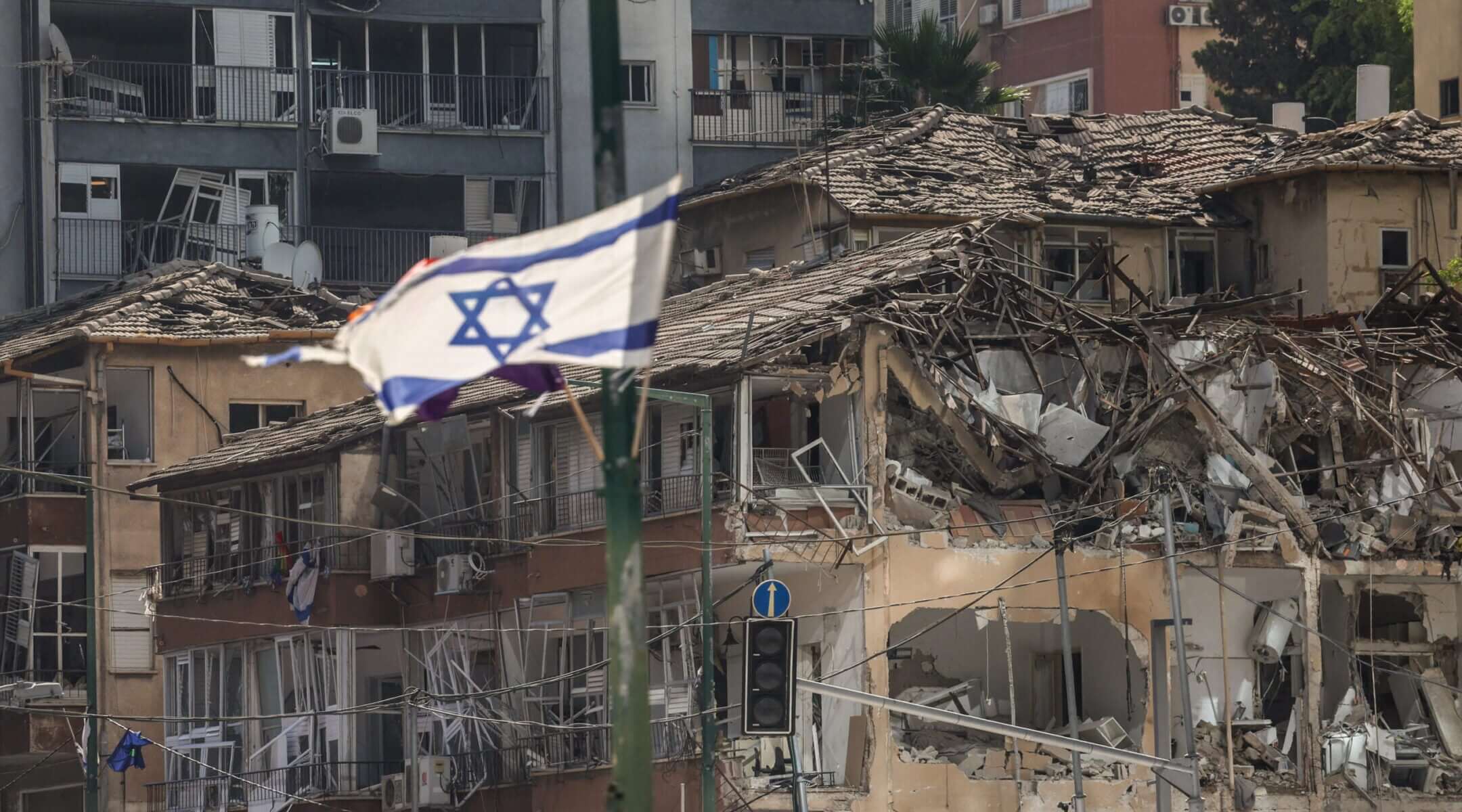
The Israeli flag flutters in front of a destroyed building at the site of an Iranian missile attack in Ramat Gan in central Israel near Tel Aviv, on June 19, 2025. Photo by Ahmad Gharabli/AFP via Getty Images
(JTA) — The U.S.-Israeli military attack on Iran that launched early Saturday morning comes eight months after the last Israel-Iran war, in June 2025.
As we wait to see what happens in the current war, here’s a look back at how the 2025 conflict played out, from uneasy tensions to U.S. intervention to a grim death toll for Israelis.
- April 2024: First exchange of missiles between Israel and Iran in the 45-year history of the Islamic Republic:
-
May-June 2025: Tensions built in the weeks and days leading up to the attack, with the international community condemning Iran’s failure to abide by past nuclear agreements. Diplomatic efforts stalled as officials on all sides signaled that a direct confrontation was possible.
-
June 13: Israel launches its attack on Iranian nuclear facilities and ballistic missile program, followed shortly by a warning from Israeli Prime Minister Benjamin Netanyahu that retaliation by Iran was “expected in the immediate future.”
-
June 13—: As Israel continues to pummel targets in Iran, Tehran counter-attacks, sending missiles almost nightly. Twenty-eight people are killed in Israel, including four women in an Arab town in northern Israel; a Ukrainian family that had come for cancer treatment for their daughter; and an activist at her home in Beersheba. Many others lost their homes. Flights, schools and workplaces are all massively disrupted.
-
June 18: Donald Trump, who had run on a platform of opposing all war, sends mixed signals about whether he will jump in, as the Israelis clearly hoped he would. Trump tells reporters days into the conflict that “nobody knows what I’m going to do.”
-
June 21: The United States joins the fight, striking three sites associated with Iran’s nuclear program, including Fordow, Natanz and Esfahan, alongside Israeli forces. The deeply buried facilities were seen as impossible to target without U.S. arms.
-
June 23: Trump announces a ceasefire on social media. Iran’s Supreme National Security Council claims victory following the announcement despite striking Israel in its immediate wake. Israel does not say it had acceded to a ceasefire until many hours later.
-
Aftermath: The extent of damage to the Iranian regime was unclear. Even on Saturday, as Trump renewed the fight against the Islamic Republic following negotiations that he said had not been satisfactory, he said last year’s strikes had “obliterated” Iran’s nuclear program. But the regime was rebuilding it, he and other observers said, and Iran had reportedly stockpiled more missiles than it had before the 2025 war. And the regime remained intact, clamping down a domestic protest movement by killing tens of thousands of protesters within 48 hours last month. Trump initially threatened to strike over the mass killings but did not.
This article originally appeared on JTA.org.
This is a moment of great uncertainty. Here’s what you can do about it.
We hope you appreciated this article. Before you go, we’d like to ask you to please support the Forward’s independent Jewish news this Passover. All donations are being matched by the Forward Board - up to $100,000.
This is a moment of great uncertainty for the news media, for the Jewish people, and for our sacred democracy. It is a time of confusion and declining trust in public institutions. An era in which we need humans to report facts, conduct investigations that hold power to account, tell stories that matter and share honest discourse on all that divides us.
With no paywall or subscriptions, the Forward is entirely supported by readers like you. Every dollar you give this Passover is invested in the future of the Forward — and telling the American Jewish story fully and fairly.
The Forward doesn’t rely on funding from institutions like governments or your local Jewish federation. There are thousands of readers like you who give us $18 or $36 or $100 each month or year.
Support our mission to tell the Jewish story fully and fairly.