Trade war meets tradition: Canadian Jews confront a Manischewitz-free Passover
The ban on American booze, which came in response to the country’s tariffs, has “created a meaningful opening” for Israeli wineries in Canada, according to a wine executive
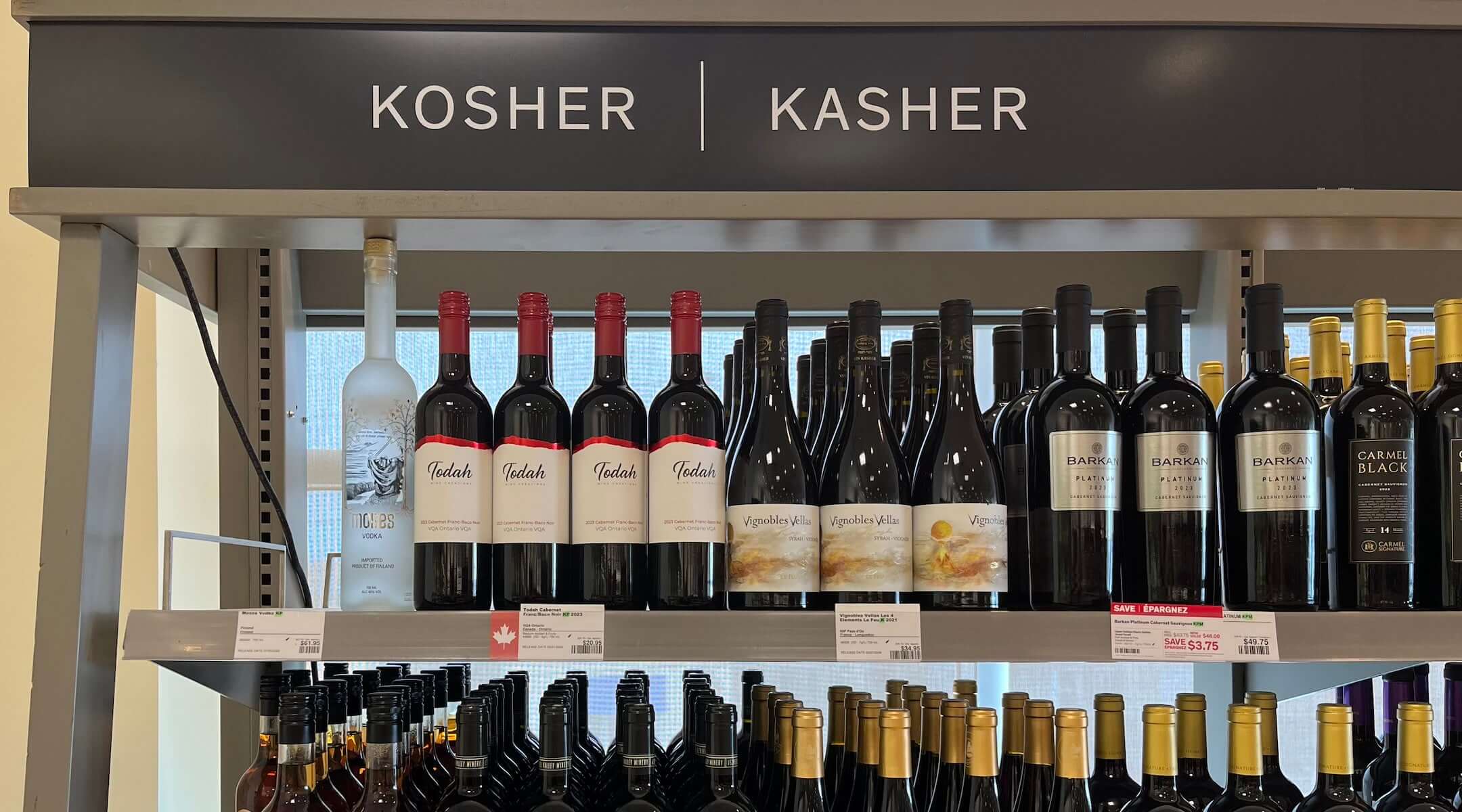
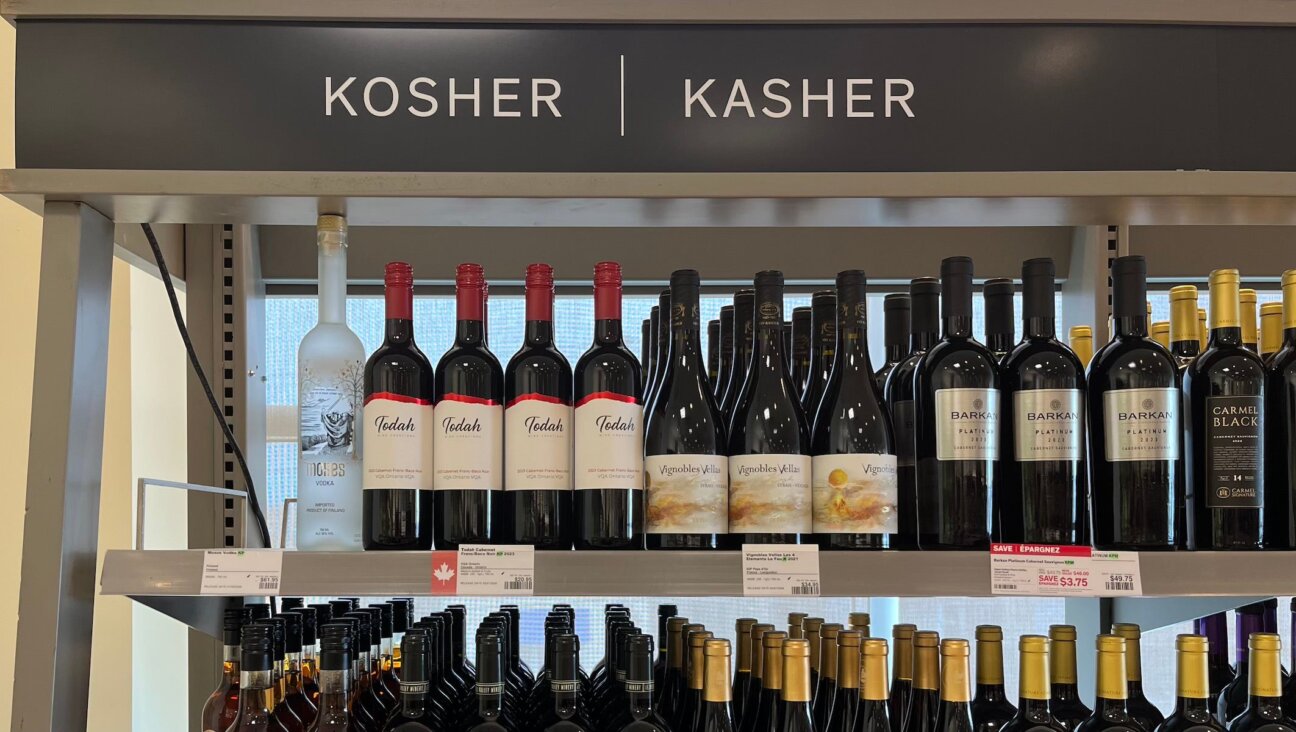
A wide selection lines the shelves of the kosher section of an LCBO (Liquor Control Board of Ontario) in Toronto, Canada. Photo by Joseph Strauss
(JTA) — TORONTO — Max Kirschner pondered the kosher wine section at an uptown Toronto liquor store, two days before the start of Passover.
As he mulled over which six bottles to purchase for his two seders, he had plenty of options: Wines from Israel, Italy, Chile, Argentina and New Zealand lined the shelves. The South African sauvignon blancs were directly below the French bordeaux.
There was something missing, though: any product from the United States.
That’s because all U.S.-produced wines and spirits have been pulled from the shelves across the province of Ontario in response to Donald Trump’s sweeping tariffs. Other provinces have enacted similar bans.
Which means that, for the second year in a row, Jewish customers don’t have access to some traditional, kosher-for-passover options such as Manischewitz.
The change has left some Jewish Canadians scrambling for alternative, sweet kosher red wines, or even having bottles shipped across the country. On Monday afternoon, however, Kirschner seemed unbothered by the change.
“I graduated from Manischewitz,” Kirschner said. “Twenty, 25 years ago Manischewitz and Carmel were the only two choices. Now, there’s lots of choices.”
Though tucked away in a corner on the second floor, the kosher section is particularly robust at this liquor store location, in the predominantly Jewish Ledbury Park neighborhood. An employee, who’d been speaking on the phone about wines for haroset, guided a steady stream of customers through the global selection of kosher wines.
Mike, who declined to share his last name to avoid potential backlash at his workplace for supporting Israel, said Manischewitz has never been on the table at his family’s Moroccan Jewish seders.
But he said he saw a silver lining for those who partook in the Manischewitz tradition. “Now people can buy Israeli,” he said.
A number of customers said they would be supporting Israel by buying bottles from its wineries. And according to Josh Greenstein, executive vice president of the Israeli Wine Producers Association, the American booze ban in provinces like Ontario has “created a meaningful opening” for Israeli wineries in Canada.
That demand has been “absorbed primarily by domestic Canadian wines,” but Greenstein said there are “pockets of increased interest in imported alternatives, including Israeli wines — particularly within the kosher market and among consumers already familiar with the category.”
While the long-term impact will depend on future trade dynamics and consumer behaviors, he said, “Israeli wine is well-positioned to gain incremental share, and we are actively working with partners to support that growth.”
Some Jewish Torontonians are not making a trip to the liquor store at all.
For Sylvia Babins, Manischewitz is a crucial ingredient in her haroset recipe — so she ordered a shipment from a liquor store across the country, in Calgary, Alberta, where American wines are still on shelves.
Babins said she ordered nine bottles of the kosher wine — six for her, three for her sister — at a cost of $11 per bottle and about $50 in shipping.
“I’m sure I can go find a sweet, red kosher wine [at a Toronto liquor store], but I make haroset every year for the family and I always use Manischewitz,” Babins said. “I need it.”
In a Jewish Toronto Facebook group that she’s in, Babins said other members reported making the two-hour drive to Buffalo, New York. But between paying for gasoline and import duties, Babins said the costs would’ve exceeded her shipping payment anyway. Plus, she added, she didn’t have to give her business to an American store.
“Yeah, I’d rather support Canada,” she said.
There was clearly some demand for the sweet Manischewitz taste at the store on Monday. An employee pointed out a spot on the bottom-left shelf, where they’d kept the bottles of Carmel Palwin, a sweet, yellow-labeled Israeli wine that tastes similar to Manischewitz (though it isn’t made with Concord grapes).
They had run out.
This article originally appeared on JTA.org.
This is a moment of great uncertainty. Here’s what you can do about it.
We hope you appreciated this article. Before you go, we’d like to ask you to please support the Forward’s independent Jewish news this Passover. All donations are being matched by the Forward Board - up to $100,000.
This is a moment of great uncertainty for the news media, for the Jewish people, and for our sacred democracy. It is a time of confusion and declining trust in public institutions. An era in which we need humans to report facts, conduct investigations that hold power to account, tell stories that matter and share honest discourse on all that divides us.
With no paywall or subscriptions, the Forward is entirely supported by readers like you. Every dollar you give this Passover is invested in the future of the Forward — and telling the American Jewish story fully and fairly.
The Forward doesn’t rely on funding from institutions like governments or your local Jewish federation. There are thousands of readers like you who give us $18 or $36 or $100 each month or year.
Support our mission to tell the Jewish story fully and fairly.