What I learned at a Holocaust survivors’ Purim party
The undisguised joy of dancing together
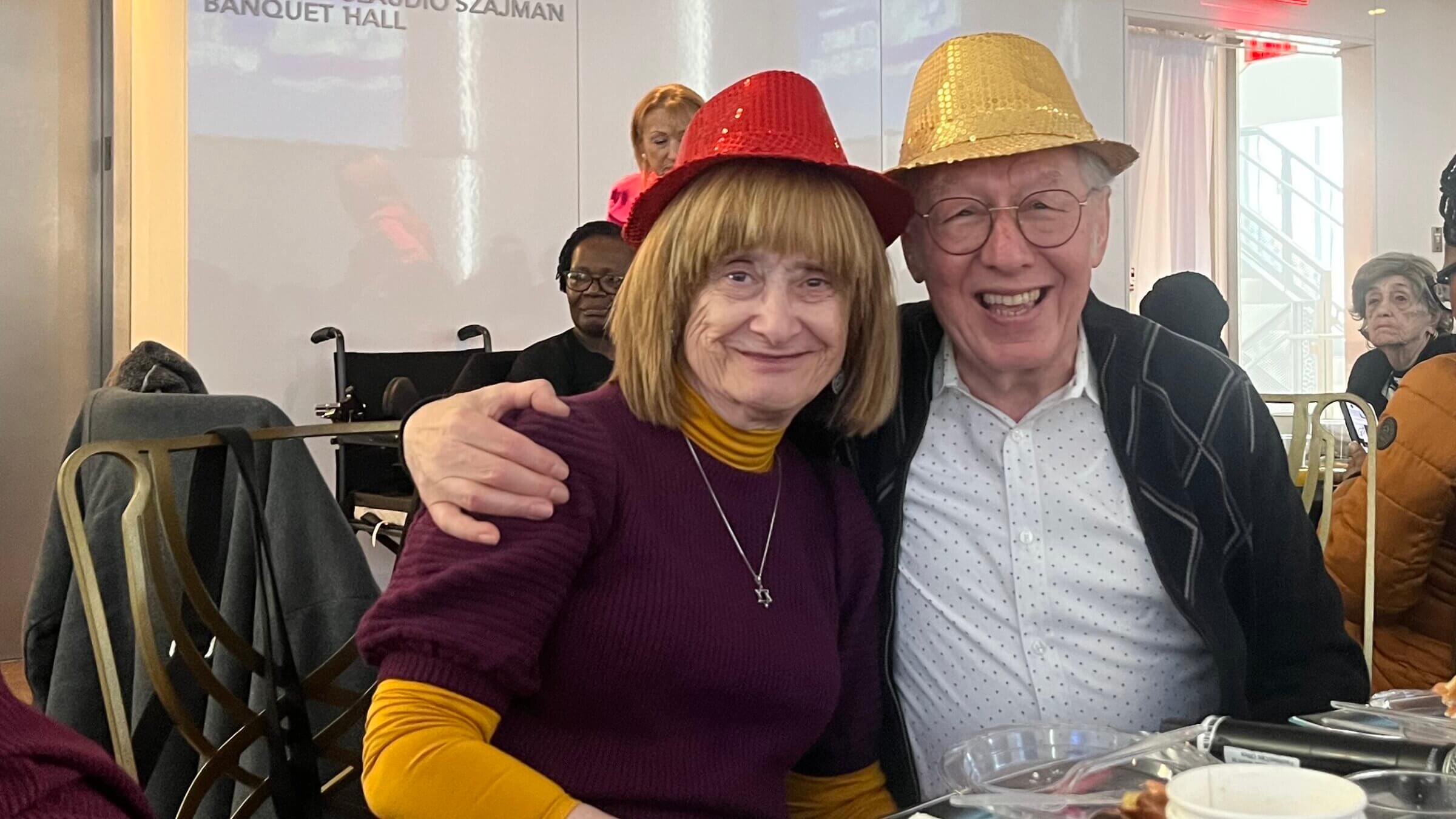
NAHOS president Yossie Finkelstein, right, with wife Lea, at the group’s Purim party, March 8, 2026. Photo by Alyssa Katz
By Alyssa Katz March 13, 2026
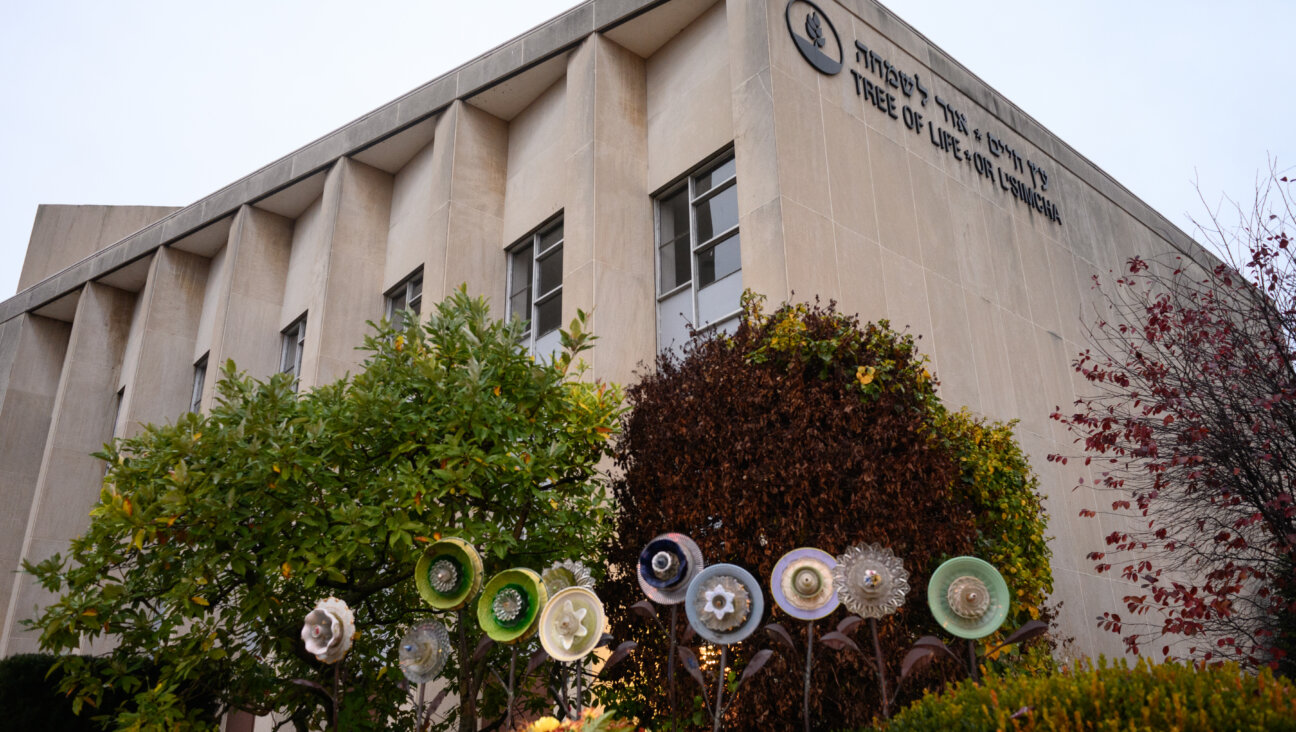
Six weeks into my time as editor-in-chief at the Forward, a new and unprecedented war led by the U.S. and Israel, and now a thwarted attack on an American synagogue, have Jews everywhere confronting their vulnerability and asking how to wield power in line with their values. It’s one of those moments in which Jewish communities must write their history — exactly the work I came to the Forward to do.
Part of that story — the most important part, ultimately — is to chronicle Jewish life as it’s lived. As I periodically do, I spent time recently with Holocaust survivors. They have a lot to teach us about how to travel through this moment, in community.
The newsletters arrived in my mailbox unbidden, their envelope labeled with an unfamiliar acronym: NAHOS.
Upon opening them, I immediately knew who had signed me up and why. The typeface matched the one on clippings my mother had handed me on a few occasions over the years within her stacks of news she wanted me to read, announcing opportunities for Holocaust survivors to file compensation claims.
The source of these unlabeled news items had been a mystery to me. My mom did not volunteer information or reflections about her past, making an exception when she was summoned to record a video testimonial at Yale in 1992. And she was not a joiner, bridge clubs aside.
Yet here it was: Without discussion, I was a member of the National Association of Jewish Child Holocaust Survivors. No conversation, no consent. She didn’t have a choice, and evidently I didn’t, either.
Sometimes I skimmed the headlines and member obits. Usually the newsletters descended to the bottom of the mail pile. Who had time?
Indeed, none of us did. The Claims Conference counts 196,000 living survivors as of January, and virtually all by definition were children. Time is the one adversary the survivors cannot overcome.
Gradually the detailed newsletters gave way to a different kind of communique: holiday party invitations. People whose early lives had been defined by forced separation from their families and communities come together in their late lives, twice a year, at Manhattan’s Safra Center, which generously provides an event space to the volunteer group.
My mother lived across the street from the gatherings, and here was a room where my mom, the non-joiner, did very much show up, with her husband. I did not. Scheduling conflicts inevitably got the better of my RSVPs and intentions.
Her turn to leave the party forever came in July 2023. The shock of losing my mother, a commitment to helping my stepfather maintain continuity and a desire to meet her survivor community finally got me in the door.
The most recent NAHOS gathering took place last Sunday: a Purim party. Even knowing that the survivors were elderly, in their 80s, 90s and even 100s, I anticipated some gesture toward dressing up — a funny headband here, a mask there.
Not a soul. Why no costumes? Hadassah Carlebach could scarcely believe I was asking. “It was Tuesday,” she patiently explained regarding the holiday already observed on March 3, as if to a child — which I am, when speaking to someone born in 1927.
The pounding Israeli party music in the room made it difficult for either of us to hear. But she wanted me to know her story — or rather, her father’s.
Before she took on her famous married name as the wife of Rabbi Eli Carlebach, twin brother to Rav Shlomo of Manhattan’s legendary Carlebach shul, she was Hadassah Schneerson (yes, from that Schneerson dynasty), born in Leningrad.
They emigrated to France, after a brief stop in British Mandate Palestine — only to find themselves again under a regime where Jews could not live openly. Both under Stalin and then Philippe Pétain, her family organized risky and ultimately life-saving efforts to enable Jewish learning and worship to continue underground. “He had a feeling for who he could trust,” she said of her father, Schneor Zalman Schneerson, who placed dozens of Jewish children in foster homes in France and then stayed behind after liberation to try to find them.
Back at my table, where a plate of lox and blintzes awaited, NAHOS director Yossie Finkelstein offered another explanation for why no one among dozens of survivors, family and friends in the room was dressed for Purim at a Purim party: “They are old. Not a lot are mobile.”
He had nonetheless come prepared with a pair of sparkly hats, and he and his wife, Lea, proceeded to don them for the rest of the party.
As for the not mobile: My mom’s bridge club friend Irving Gewirtzman, 93, a retired pharmacist who lives in Queens, rose from his seat and crossed the event space with some difficulty but intense enthusiasm when a hora circle formed. We joined hands. My other clasped the hand of a tiny woman with rouged cheeks who appeared even older than Irving. (Her daughter protectively intervened when I pulled my notebook out a little later, so I do not know more than her first name: Lucy.) Both smiled brightly as we danced.
Here in this room, in motion together, we were fully ourselves.
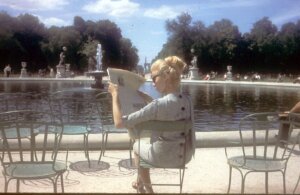
My mom, I came to realize later in life, was always in disguise. She dyed her hair blonde until it went white — keeping up the appearance of the Polish girl whose identity she had taken at the age of 4. In New York after the war, she evolved that style to resemble Kim Novak, or Tippi Hedren.
One of her daughters became an actress. The other was me, a journalist, living vicariously through other people’s expertise and biographies, and utterly unable to even pick a college major, never mind a single professional discipline.
I am also undisciplined and lazy about dressing up in costume, for Halloween, Purim or anything else. I use items at hand, if I must. I’m terrible with makeup. (Though the 1970s mask Woolworth’s sold of the Bionic Woman — blonde, physically powerful — was something I demanded to wear for Halloween.) Hiding is uncomfortable, and not something I freely choose.
Inevitably, now, engaging with the stories of hidden children brings up grief for those living underground in the United States, unable to get medical care or education for fear of being intercepted by authorities — much as Schneerson recalls under Stalin.
Purim is a holiday of inversion, a standing up to power. Asking: What if we had that power, what if we didn’t have to hide — who and what would we be?
The joy in that room was answer enough.
This is a moment of great uncertainty. Here’s what you can do about it.
We hope you appreciated this article. Before you go, we’d like to ask you to please support the Forward’s independent Jewish news this Passover. All donations are being matched by the Forward Board - up to $100,000.
This is a moment of great uncertainty for the news media, for the Jewish people, and for our sacred democracy. It is a time of confusion and declining trust in public institutions. An era in which we need humans to report facts, conduct investigations that hold power to account, tell stories that matter and share honest discourse on all that divides us.
With no paywall or subscriptions, the Forward is entirely supported by readers like you. Every dollar you give this Passover is invested in the future of the Forward — and telling the American Jewish story fully and fairly.
The Forward doesn’t rely on funding from institutions like governments or your local Jewish federation. There are thousands of readers like you who give us $18 or $36 or $100 each month or year.
Support our mission to tell the Jewish story fully and fairly.