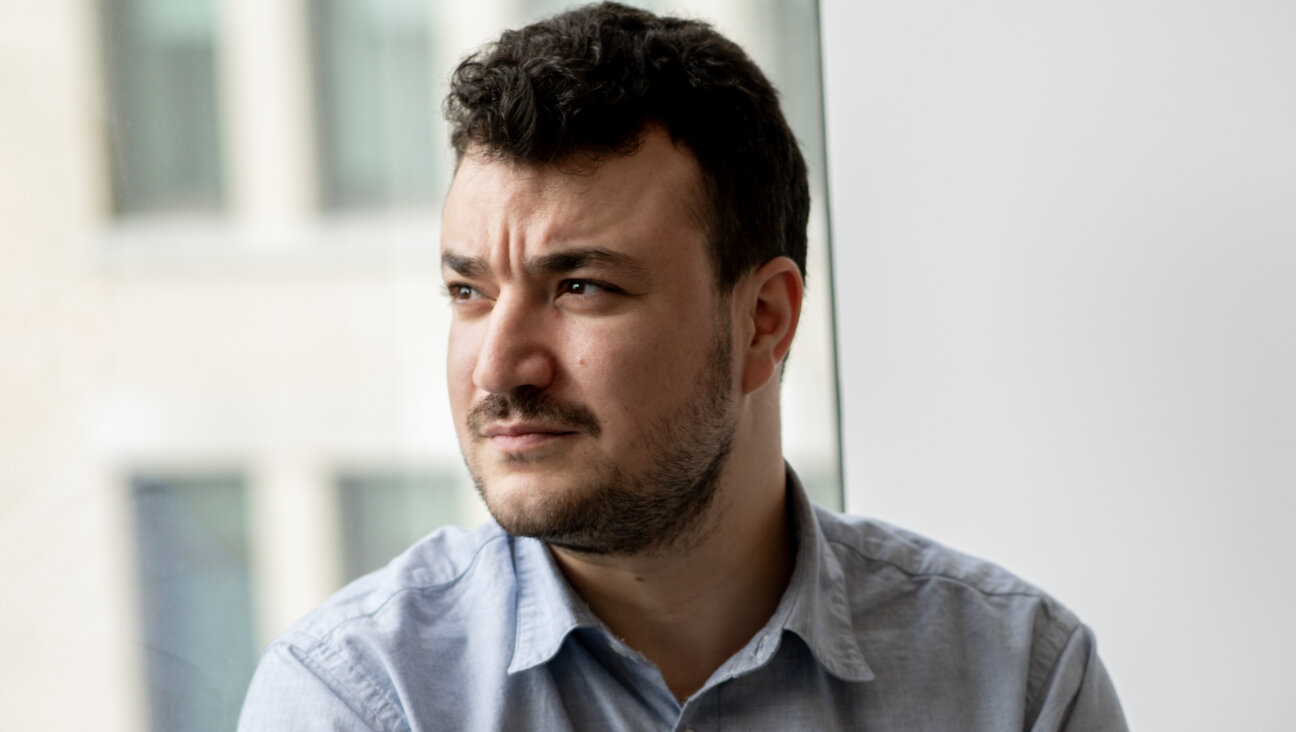
Ezekiel Emanuel
Graphic by Angelie Zaslavsky
It’s not hard to be the least famous Emanuel brother. With one sibling who’s mayor of Chicago and another who has inspired an HBO series, Ezekiel Emanuel, 55, the eldest, could be forgiven if he suffered from an inferiority complex. But it’s hard to imagine he does. This Emanuel’s prominence in the field of bioethics has provided him his own special kind of celebrity.
Currently a professor at the University of Pennsylvania, where he heads up the department of medical ethics and health policy, Emanuel has held positions — including chief of the department of bioethics at the National Institutes of Health, a post he held for over a decade — that have allowed him to shape public health policies. In the past year he became a columnist at The New York Times, where he found a platform to write about the faults he sees in America’s health care system.
For those who favor a comprehensive health care overhaul, Emanuel has been a leading voice. He has taken positions that have often conflicted with the Obama administration he served from January 2009 to January 2011 as special advisor for health policy to the director of the Office of Management and Budget. Emanuel has called for getting rid of employer-paid health care insurance, Medicaid and Medicare and replacing it with health care vouchers funded by a value-added tax. He has also taken outspoken positions on doctor-assisted suicide, which he doesn’t think should be legalized.
As health care and other issues of bio-ethics continue to be hotly debated, Emanuel’s voice might become as influential in its own way as his brothers’.
This is a moment of great uncertainty. Here’s what you can do about it.
We hope you appreciated this article. Before you go, we’d like to ask you to please support the Forward’s independent Jewish news. All donations are still being matched by the Forward Board - up to $100,000 until April 24.
This is a moment of great uncertainty for the news media, for the Jewish people, and for our sacred democracy. It is a time of confusion and declining trust in public institutions. An era in which we need humans to report facts, conduct investigations that hold power to account, tell stories that matter and share honest discourse on all that divides us.
With no paywall or subscriptions, the Forward is entirely supported by readers like you. Every dollar you give is invested in the future of the Forward — and telling the American Jewish story fully and fairly.
The Forward doesn’t rely on funding from institutions like governments or your local Jewish federation. There are thousands of readers like you who give us $18 or $36 or $100 each month or year.

Support our mission to tell the Jewish story fully and fairly.