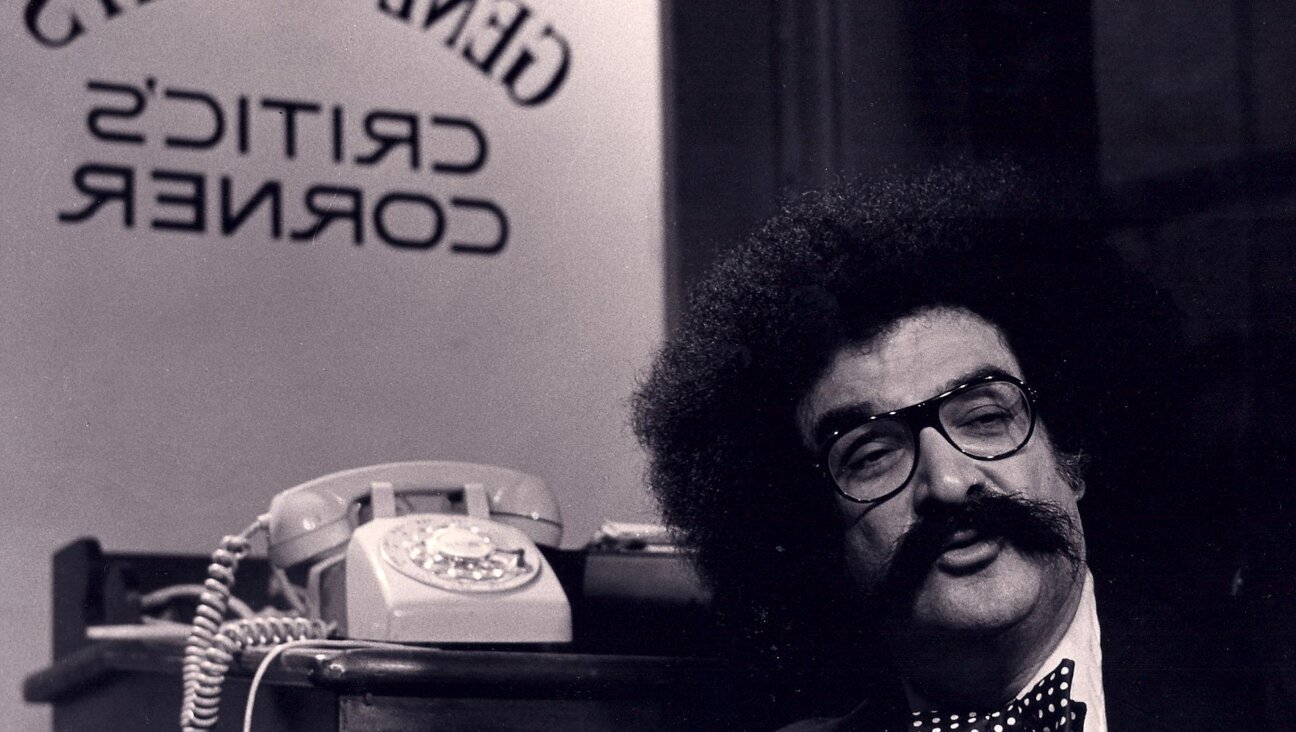
Sarah Koenig
Graphic by Angelie Zaslavsky
By late fall 2014, you could count on one thing coming up in every conversation with anyone who might ever have listened to NPR: Sarah Koenig’s podcast “Serial.” From hours-long debates over the possible guilt of Adnan Syed — the convicted murderer who was the podcast’s subject — to parodies of the ad for MailChimp, one of the show’s sponsors, that preceded every episode, the engrossing true-crime story seemed to be everywhere.
Koenig, 46, daughter of the legendary Jewish advertising copywriter Julian Koenig, has been a producer on “This American Life” since 2004 and produced the show’s 2006 Peabody-award winning episode “Habeas Schmabeas.” And she brought serious journalistic chops to her podcast’s first season. Koenig managed to strike a balance between intense investigative reporting and exceptional storytelling.
Speaking with NPR’s Terry Gross in December 2014, Koenig said the show’s producers “wanted it to feel like a living thing… a vital thing.” They succeeded; “Serial” shattered records for podcast downloads, bringing unprecedented celebrity to the podcast form. This year Fox 21 Television optioned “Serial” for TV, although the show in development reportedly will not concern the case of Adnan Syed.
The second season of “Serial” is due to arrive on iTunes and on a new platform — the audio streaming service Pandora — sometime before the close of this year. A third season is also in development. Koenig and her team have stayed close-lipped about the subject, although rumors are circling that the season will focus on Bowe Bergdahl, the GI kidnapped then released by the Taliban in Afghanistan. Regardless of where Koenig next fixes her gaze, we can trust her to deliver something challenging and fascinating.
This is a moment of great uncertainty. Here’s what you can do about it.
We hope you appreciated this article. Before you go, we’d like to ask you to please support the Forward’s independent Jewish news this Passover. All donations are being matched by the Forward Board - up to $100,000.
This is a moment of great uncertainty for the news media, for the Jewish people, and for our sacred democracy. It is a time of confusion and declining trust in public institutions. An era in which we need humans to report facts, conduct investigations that hold power to account, tell stories that matter and share honest discourse on all that divides us.
With no paywall or subscriptions, the Forward is entirely supported by readers like you. Every dollar you give this Passover is invested in the future of the Forward — and telling the American Jewish story fully and fairly.
The Forward doesn’t rely on funding from institutions like governments or your local Jewish federation. There are thousands of readers like you who give us $18 or $36 or $100 each month or year.
Support our mission to tell the Jewish story fully and fairly.