Somaliland already operates as a de facto state. So why is Israel’s recognition of it so controversial?
Several countries have accused Israel of undermining international norms
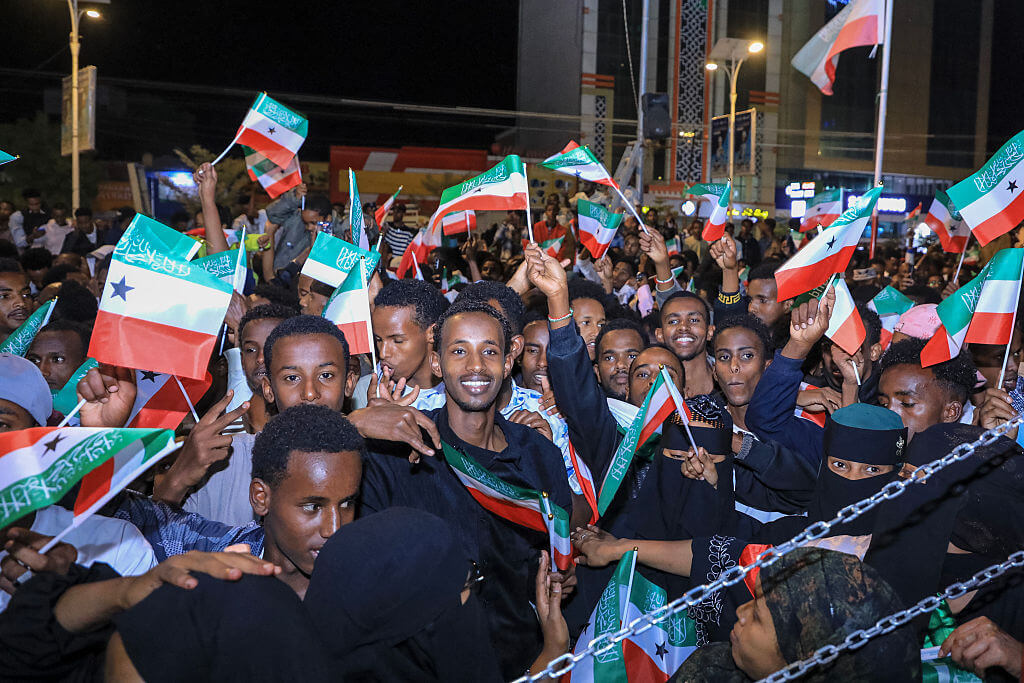
Residents wave Somaliland flags as they gather to celebrate Israel’s announcement recognizing Somaliland’s statehood in downtown Hargeisa. Photo by Farhan Aleli/AFP via Getty Images

By Hannah Feuer December 31, 2025
Israel became the first nation in the world to recognize Somaliland as a country last week, prompting global outcry and an emergency meeting of the United Nations.
The de facto state on the northern coast of the Horn of Africa has long operated independent of Somalia, but before Israel’s announcement, its sovereignty had not been officially recognized by any U.N. members.
After the collapse of Siad Barre’s regime in Somalia in 1991, Somaliland declared independence. The breakaway region has its own democratically elected government, military, currency, license plates and passports. It is often lauded for bringing relative stability to the region, with a record of peaceful transfers of power, though it is still only rated “partly free” by Freedom House amid crackdowns on journalists.
Somaliland also benefits from relative social cohesion, with the Isaaq clan comprising the majority of the population — a factor which has contributed to its stability in a clan-based society, according to Seth Kaplan, a lecturer at Johns Hopkins School of Advanced International Studies who has researched Somaliland.
Somalia, however, considers Somaliland to be part of its territory, and slammed Israel’s recognition as an “illegal act” that undermines the region’s stability.
Is the recognition illegal?
There is no international law that bars countries from unilaterally recognizing a state. But countries generally consider international norms, including deference to the preservation of existing borders so as to prevent cascading secessionist conflicts.
The African Union has been especially committed to this principle, adamant that post-colonial borders remain intact to avoid instability and ever-changing lines.
“Any attempt to undermine the unity, sovereignty, and territorial integrity of Somalia runs counter to the fundamental principles of the African Union and risks setting a dangerous precedent with far-reaching implications for peace and stability across the continent,” Nuur Mohamud Sheekh, spokesperson for the African Union, wrote in a statement.
In Somalia’s case, its border disputes trace to the late 19th century, when the north was governed by Britain as British Somaliland, the south by Italy as Italian Somaliland, and the area that is now Djibouti by France as French Somaliland. In 1960, the British and Italian territories gained independence and united to form the Somali Republic.
In Somalia, tens of thousands of people protested against the recognition, many waving Somali flags. Turkey’s president, Recep Tayyip Erdoğan, also called Israel’s move to recognize Somaliland illegal.
At the same time, there is no blanket ban on recognizing breakaway states that challenge existing borders: Kosovo declared independence from Serbia in 2008, and more than 100 U.N. member states, including the United States, recognize it. Serbia does not, nor do five European Union countries, which have cited concerns that recognition could embolden separatist movements within their own countries.
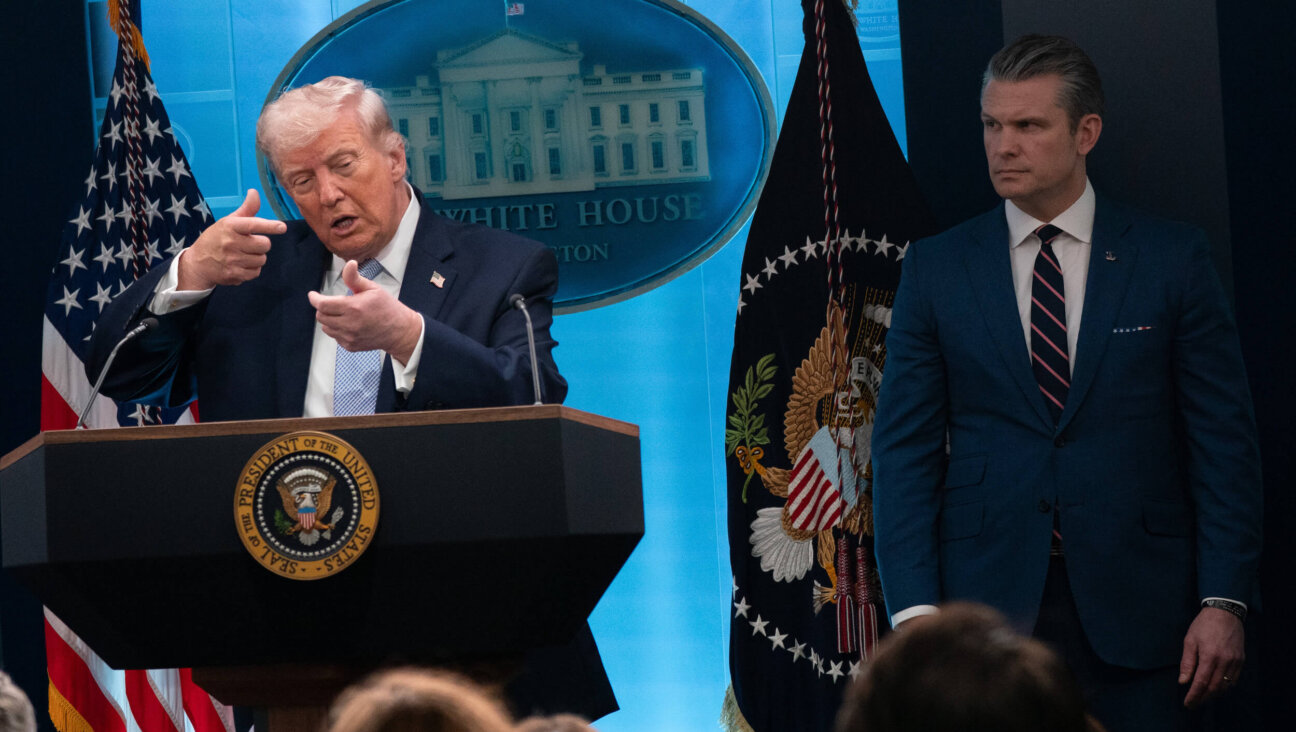
Meanwhile, U.S. Ambassador to the U.N. Tammy Bruce accused the international body of applying double standards when it comes to unilateral recognition, noting that several countries have independently recognized Palestine as a state without triggering emergency U.N. meetings.
Somaliland’s bid for recognition is bolstered by the fact that it already functionally operates as a relatively stable, autonomous state, according to Kaplan. It meets many of the widely cited criteria for statehood, including a permanent population, a defined territory, and an independent government.
“In general, I support those norms of not recognizing breakaway states,” Kaplan said. “But if there’s one country or one state in the world that deserves it, this would be the one place.”
Israel’s goals
For others, resistance to Somaliland’s independence appears less driven by objections to Somaliland’s sovereignty than by opposition to Israel’s goals in the region.
While Israel’s exact motivations remain unclear, Kaplan said the move seems intended to secure a strategically important foothold in the Horn of Africa. As part of the recognition, Somaliland has agreed to join the Abraham Accords, a series of normalization agreements between Israel and Muslim-majority nations.
“From the Israeli perspective, this is going to be a base that it can leverage to get a better handle on Yemen, as well as anything that Iran or other rivals of Israel might be doing in the Red Sea,” Kaplan said.
There is also fear about ulterior Israeli motives, with Israel having reportedly contacted Somaliland about sending Palestinians forcibly displaced from Gaza to the region. Somaliland has denied that such a discussion took place.
Even in Somaliland, some residents expressed disappointment that the long-awaited recognition came from Israel of all countries, though most coverage has depicted scenes of celebration.
“It would be less controversial if Ethiopia or the UAE had done it,” Kaplan said. “But for the people of Somaliland, you can understand why they might be happy with this decision by the Israeli government.”
This is a moment of great uncertainty. Here’s what you can do about it.
We hope you appreciated this article. Before you go, we’d like to ask you to please support the Forward’s independent Jewish news this Passover. All donations are being matched by the Forward Board - up to $100,000.
This is a moment of great uncertainty for the news media, for the Jewish people, and for our sacred democracy. It is a time of confusion and declining trust in public institutions. An era in which we need humans to report facts, conduct investigations that hold power to account, tell stories that matter and share honest discourse on all that divides us.
With no paywall or subscriptions, the Forward is entirely supported by readers like you. Every dollar you give this Passover is invested in the future of the Forward — and telling the American Jewish story fully and fairly.
The Forward doesn’t rely on funding from institutions like governments or your local Jewish federation. There are thousands of readers like you who give us $18 or $36 or $100 each month or year.

Support our mission to tell the Jewish story fully and fairly.