An audiobook narrator told Zionists to kill themselves. A popular romance novelist hired him anyway.
As the romance genre has grown more inclusive, some authors say Jews still aren’t getting their happily-ever-after
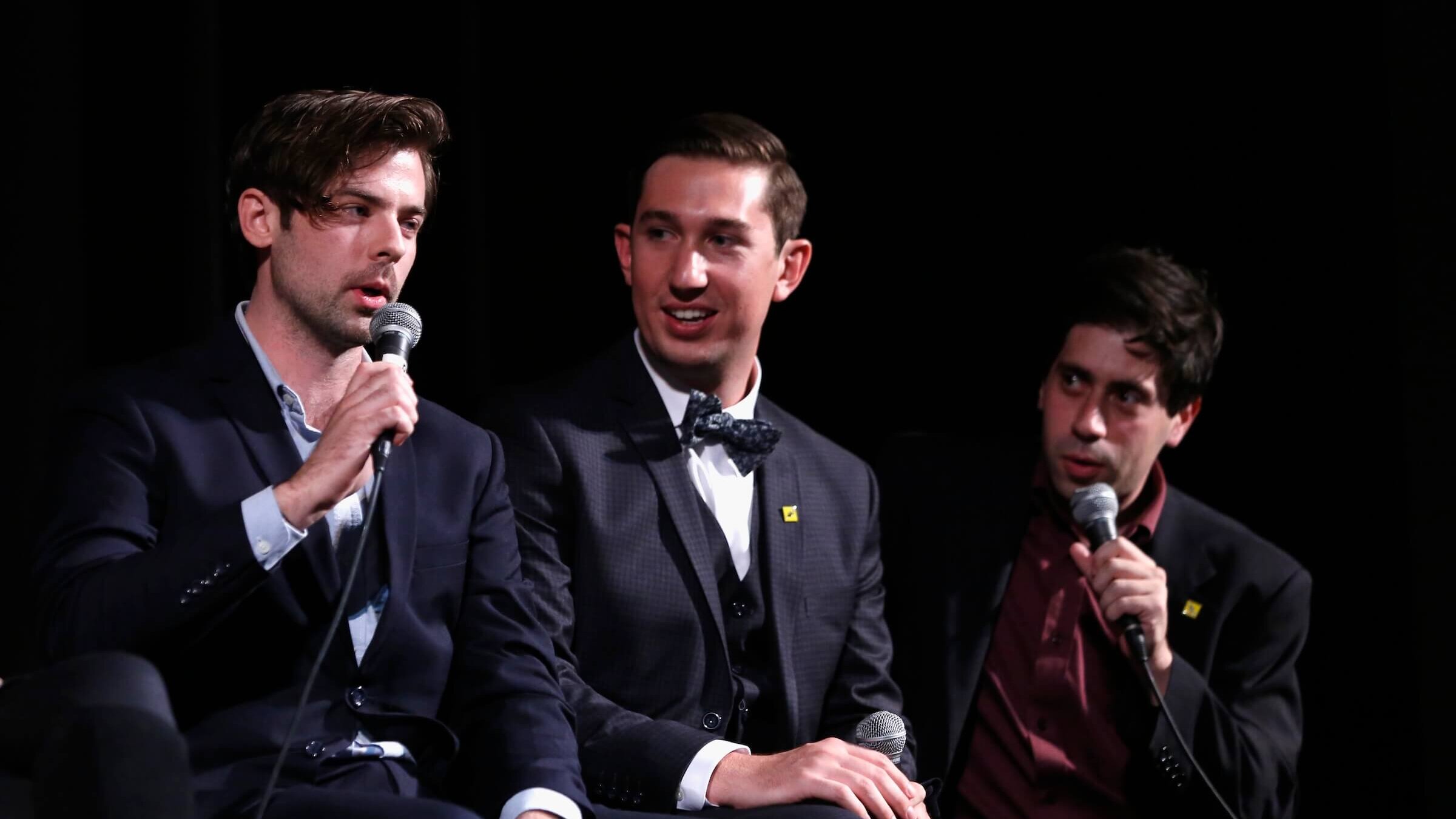
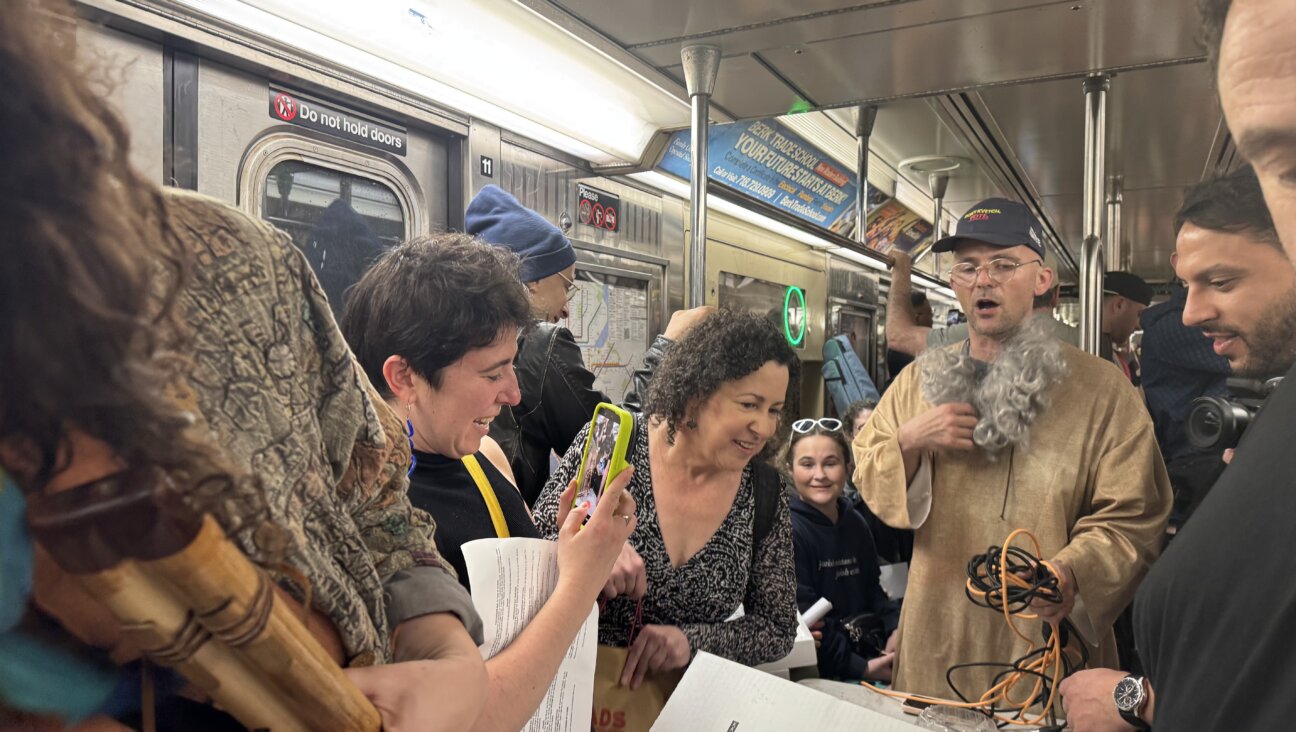
Actor Zachary Webber (left) speaks at the 18th Annual Savannah Film Festival in October 2015. Photo by Cindy Ord/Getty Images for SCAD

By Hannah Feuer February 18, 2026
A bestselling romance novelist is facing backlash from her Jewish readers after hiring an audiobook narrator who previously posted on social media telling Zionists to kill themselves.
Abby Jimenez’s novel The Night We Met, set to be published next month, features voice actor Zachary Webber as the narrator of the audiobook.
“If you’re a Zionist and you exist, you should not do that anymore,” Webber posted on his Instagram story in September 2024. “No one likes you and you suck, and go f—ing kill yourself.”
Webber later apologized on Instagram, writing that his comment was “a poorly-worded joke aimed at a violent settler-colonialist enterprise. I regret any language that suggested otherwise. Fortunately, my anti-Zionist Jewish friends understood it was a joke, and moved on with their beautiful lives.” He did not respond to the Forward’s request for comment.
Webber, who has a low, gravelly voice and sums up his job as “I READ SEX,” has narrated more than 250 steamy audiobooks, including eight of Jimenez’s. But amid backlash over Webber’s social media comments, Jimenez originally said she would go in a different direction for the audio narration of The Night We Met, a novel about forbidden love between two best friends.
But earlier this month, Jimenez changed her mind.
“I know I mentioned that I was going with a male voice actor that I’ve never used before, but I’m going to be really honest with you — the fit wasn’t right,” Jimenez posted in her private readers Facebook group. “We did a day of recording and he just wasn’t Chris. All I could think the whole time was how perfectly Zachary would have captured the tone and personality of this character and at the end of recording Day One, I made the choice to change narrators.”
Several readers commented in the Facebook group expressing concern about Webber. But those comments were removed, with Jimenez citing group rules against “political or negative conversations.” She added that she did not “want to be forced to leave to protect my mental health. I cannot go to a comment section to see vitriol, even if it’s vitriol I happen to agree with.”
Neither Jimenez’s literary agent nor Hachette Book Group, the publisher of The Night We Met, responded to the Forward’s request for comment.
The backlash among Jimenez’s readers represents the latest flare-up over Israel in progressive-coded subcultures, from knitting circles to vegan cooking. The romance publishing world, consistently the top-grossing genre in adult fiction, has not been immune: Other recent flashpoints have included boycotts of authors labeled “Zionist” and the decision by SteamyLitCon, a romance book convention, to remove Israeli-born author Michelle Mars from its lineup last year over social media posts organizers said were “anti-Palestinian.”
“It just made me really sad about the state of the industry,” said Chayla Wolfberg, a Jewish author and former fan of Jimenez’s books. “There’s a lot of obviously very complicated things when it comes to engaging with criticism of Israel. And what [Webber] was doing wasn’t that.”
Happily ever after?
Romance publishing has spent the past few decades broadening its vision of who gets a love story — elevating LGBTQ+ narratives, highlighting authors and characters of color, and celebrating diverse body types. But some Jewish writers and readers say they have been excluded from that push.
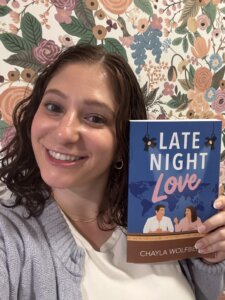
The lack of Jewish representation in romance was part of what inspired 27-year-old Wolfberg to self-publish Late Night Love, a Saturday Night Live-inspired enemies-to-lovers rom-com featuring a Jewish protagonist. Too often, Wolfberg said, Jewish characters only appear in stories defined by trauma and suffering.
Romance, by contrast, is governed by two nonnegotiable rules: The story must center on a developing romantic relationship, and the conclusion must be emotionally satisfying — the genre’s trademark “happily ever after” (HEA), or at least “happy for now” (HFN). When it comes to Jewish storytelling, Wolfberg said, that structure can feel subversive.
But Wolfberg didn’t feel accepted by the broader romance book community. When she promoted her work online, viewers commented that she was a Zionist and thus shouldn’t support her book.
“It is a radical thing, especially if you are from a historically oppressed or a minority community, to be writing a story that has a happy ending and isn’t just about suffering,” Wolfberg said. “But I think that is where anti-Zionism unfortunately creeps in, in the way that it has become part of the lexicon for people who are anti-oppression.”
Wolfberg has instead found support mostly among other Jewish authors. She said her next book will feature a character who has family in Israel — even though she’s aware that aspect could make it a tough sell.
Meanwhile, popular romance authors whose books have nothing to do with Judaism or Israel have also been targeted.
In a 2015 interview with The Jewish Chronicle, Sarah J. Maas, author of the massively popular A Court of Thorns and Roses series, mentioned going on a Birthright trip to Israel. Maas said she “left Israel overflowing with pride,” and described the country as “a magical, welcoming place.” Nearly a decade later, those comments landed her on the X account Zionists in Publishing, which points out Zionist authors to boycott.
Rebecca Yarros, author of the bestselling romantasy series Empyrean, appeared on a similar account that exposes Zionist authors. Her offense? Posting on Oct. 15, 2023, that “children are not collateral damage” and that she was “horrified by the despicable attack on Israel” and “terrified for the children and Palestinian innocents in Gaza.”
The extent to which those blacklists actually impact sales is unclear; both Yarros and Maas have sold millions of copies.
But it’s still a dynamic Jewish romance enthusiasts would prefer to avoid. In response, they’ve carved out their own spaces: Author Jean Meltzer, who writes Jewish rom-coms such as The Matzah Ball and Kissing Kosher, runs a Facebook group called “Jewish Women Talk About Romance Books,” which has 3,300 members. There, women discuss books they read as part of the The Jewish Joy Book Club, which has one rule: “We read books where nobody dies at the end.”
The need for a Jewish space in the romance genre was also evident to Gillian Geller, a 35-year-old in Toronto, who used to run a book blog focused on all kinds of novels, with a focus on romance. But after Oct. 7, she shifted to spotlighting Jewish books.
For her, Jimenez’s decision to rehire Webber is another example of how Jewish authors and readers have been excluded from a genre that is otherwise increasingly sensitive to inclusion.
“I felt like if I wasn’t stepping up to help promote these books,” she said, “then nobody else would.”
This is a moment of great uncertainty. Here’s what you can do about it.
We hope you appreciated this article. Before you go, we’d like to ask you to please support the Forward’s independent Jewish news this Passover. All donations are being matched by the Forward Board - up to $100,000.
This is a moment of great uncertainty for the news media, for the Jewish people, and for our sacred democracy. It is a time of confusion and declining trust in public institutions. An era in which we need humans to report facts, conduct investigations that hold power to account, tell stories that matter and share honest discourse on all that divides us.
With no paywall or subscriptions, the Forward is entirely supported by readers like you. Every dollar you give this Passover is invested in the future of the Forward — and telling the American Jewish story fully and fairly.
The Forward doesn’t rely on funding from institutions like governments or your local Jewish federation. There are thousands of readers like you who give us $18 or $36 or $100 each month or year.
Support our mission to tell the Jewish story fully and fairly.