For Iranian American Jews, Trump’s talk of regime change stirs hopes of return
From Great Neck to Los Angeles, Iranian Jews in exile cautiously dream of a homecoming
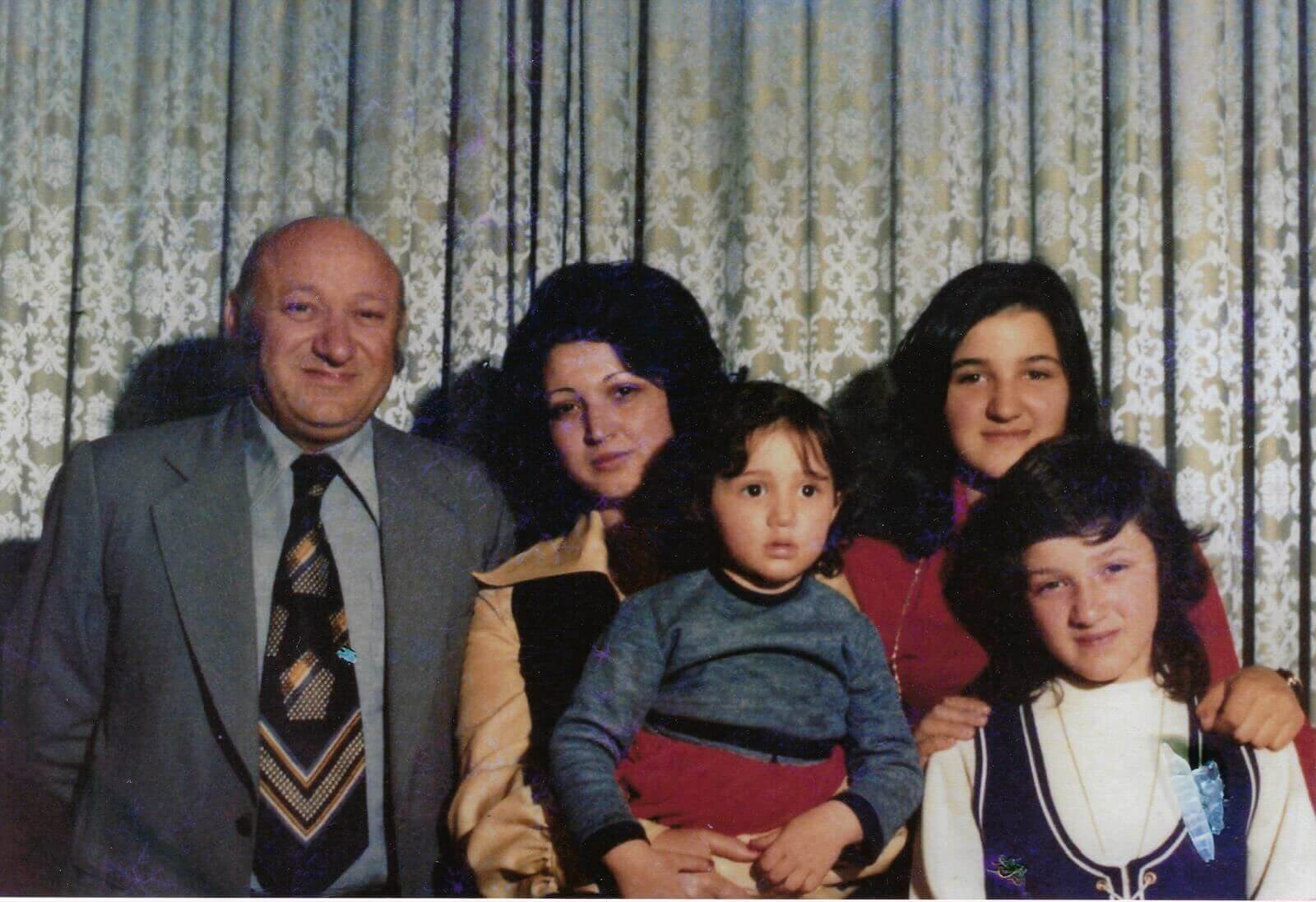
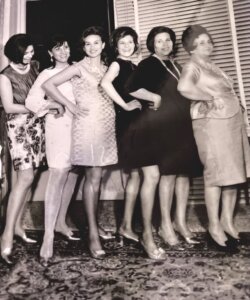
Jasmine Rokhsar, center, as a child in Iran with her family. Courtesy of Jasmine Rokhsar

By Simone Saidmehr and Hannah FeuerMarch 2, 2026
Iranian American Jews are celebrating after the joint U.S.-Israel operation that killed Iranian Supreme Leader Ali Khamenei on Saturday — with many expressing newfound hope that they may one day return to the country they fled.
As the conflict has spread across the Middle East in the days since, the military action has sparked fears of a prolonged regional war and power vacuum in Iran. The attacks have claimed hundreds of lives, including 11 in Israel and four U.S. service members, as of the third day of combat.
But for Jews who fled Iran in the decade after the Islamic Revolution in 1979, the military campaign represents a long-awaited reckoning with the brutal regime that forced them into exile. An estimated 60,000 Iranian Jews emigrated, and tens of thousands settled in the U.S., with the largest communities in Los Angeles, south Florida, northern Texas, and the Long Island suburb of Great Neck, New York, where Farsi is heard as often as English along Middle Neck Road and Israeli flags hang in the windows of shops and Persian restaurants.
“You can’t just have peace for nothing. It clearly just doesn’t land on the table. You have to work at it, and sometimes you have to fight for it,” said Jasmine Rokhsar, a Persian Jewish Great Neck resident. “I think Iranians understand that well. I think Iranian Jews understand that better.”
Rokhsar left Iran as a kindergartner in 1978 and has vague memories of playing in a park she would like to visit, as well as a restaurant she’s been told was her favorite. She dreams of visiting Iran with her children, whom she said were raised to be as proud of their Iranian identity as their Jewish identity — despite having never been able to visit her home country.
Her daughter, Sophie Rokhsar, a 23-year-old student at the Cardozo School of Law, said growing up, Iran always felt like a “mythical place” that her relatives would tell stories about. Now, the possibility of one day visiting the country — and seeing the apartment where her grandparents lived — feels more real.
Moji Pourmoradi, a Persian Jew who lives in Great Neck and came to the U.S. as a young child in 1968, said the operation awakened a longing to visit her birth country she didn’t fully realize she had been carrying.
“My cousin said it best. We were out Saturday night, and he said, ‘I feel like I’m a prisoner that was set free, and I didn’t even know I was a prisoner,’” Pourmoradi said. “I don’t think that we realized what it means that we weren’t allowed to go back, we couldn’t go back, and now we might possibly someday be able to. It’s a level of freedom that we didn’t know we wanted and needed.”
In Los Angeles — nicknamed “Tehrangeles,” where anywhere between 22,500 to 50,000 Jews help constitute the largest Iranian community outside Iran — the community shares similar views, according to Rabbi Tarlan Rabizadeh, who works as vice president for Jewish engagement and director of the Maas Center for Jewish Journeys at American Jewish University in LA.
Rabizadeh’s parents left Iran for the U.S. to attend university in the mid-1970s, and after the Islamic Revolution, they could never go back. Farsi was Rabizadeh’s first language, but she has never been able to visit the country she’s heard so much about.
She added that she believes the situation in Iran should be treated as a bipartisan issue.
“Whether Trump is good or bad, he’s doing something really good for humanity right now,” said Rabizadeh. “And I wish we could come out of our Democrat versus Republican boxes and just see the bigger picture.”
Sophie Rokhsar expressed a similar sentiment. For her, the arguments she’s seen against the U.S. intervention circulating online feel disconnected from her reality.
“Most of those people have no idea what it feels like to have to leave your country and have no idea if they’re ever going to go back home,” Sophie said. “Everybody in my community has been waiting for this. So it’s a little frustrating when someone who’s just coming to the conversation has such a strong opinion.”
What comes next
Some Iranian American Jews have expressed their hope that the next leader of Iran may be former Iranian Crown Prince Reza Pahlavi, who lives in Maryland and has positioned himself as a potential transitional leader. He is outspokenly pro-Israel.
His father, Mohammad Reza Pahlavi, ruled Iran as shah until he was overthrown in 1979. The shah’s rule was marked by sweeping modernization policies and close ties to the U.S. and Israel — as well as political repression, censorship, and the use of secret police to silence dissent. Yet an older generation of Iranians remembers Pahlavi’s rule as a time when Jews in Iran flourished.
“When we lived there with the Shah, it was perfect,” said Mahin Moezinia, who left Iran when she was in her 30s. She said many Jewish Iranians in her generation are “absolutely” excited about the prospect of his son at the helm of a new Iran. “He is a very good guy; I love him,” she said.
Younger generations are slightly more cautious.
“He’s the one unifying figure that everybody recognizes abroad and in Iran,” Jasmine Rokhsar said. “He says all the right things. He seems to be connected to people who can get us where we need to go. The negative is that he’s never been tested.”
But the elation many in the community are feeling is tinged with fear for what a volatile war situation could mean for Iran. “Until I can get on that damn plane,” said Rokhsar, laughing, “until the regime change does happen and the government is stable, I’m skeptical.”
“I think everyone is still very cautious,” said Pourmoradi. “I hope that the vacuum is filled with people of integrity.”
This is a moment of great uncertainty. Here’s what you can do about it.
We hope you appreciated this article. Before you go, we’d like to ask you to please support the Forward’s independent Jewish news this Passover. All donations are being matched by the Forward Board - up to $100,000.
This is a moment of great uncertainty for the news media, for the Jewish people, and for our sacred democracy. It is a time of confusion and declining trust in public institutions. An era in which we need humans to report facts, conduct investigations that hold power to account, tell stories that matter and share honest discourse on all that divides us.
With no paywall or subscriptions, the Forward is entirely supported by readers like you. Every dollar you give this Passover is invested in the future of the Forward — and telling the American Jewish story fully and fairly.
The Forward doesn’t rely on funding from institutions like governments or your local Jewish federation. There are thousands of readers like you who give us $18 or $36 or $100 each month or year.
Support our mission to tell the Jewish story fully and fairly.