Purim gets creative in Israel, with festivities driven underground
Reading Megillat Esther in the bomb shelter takes place of the usual raves and parades in a country at war
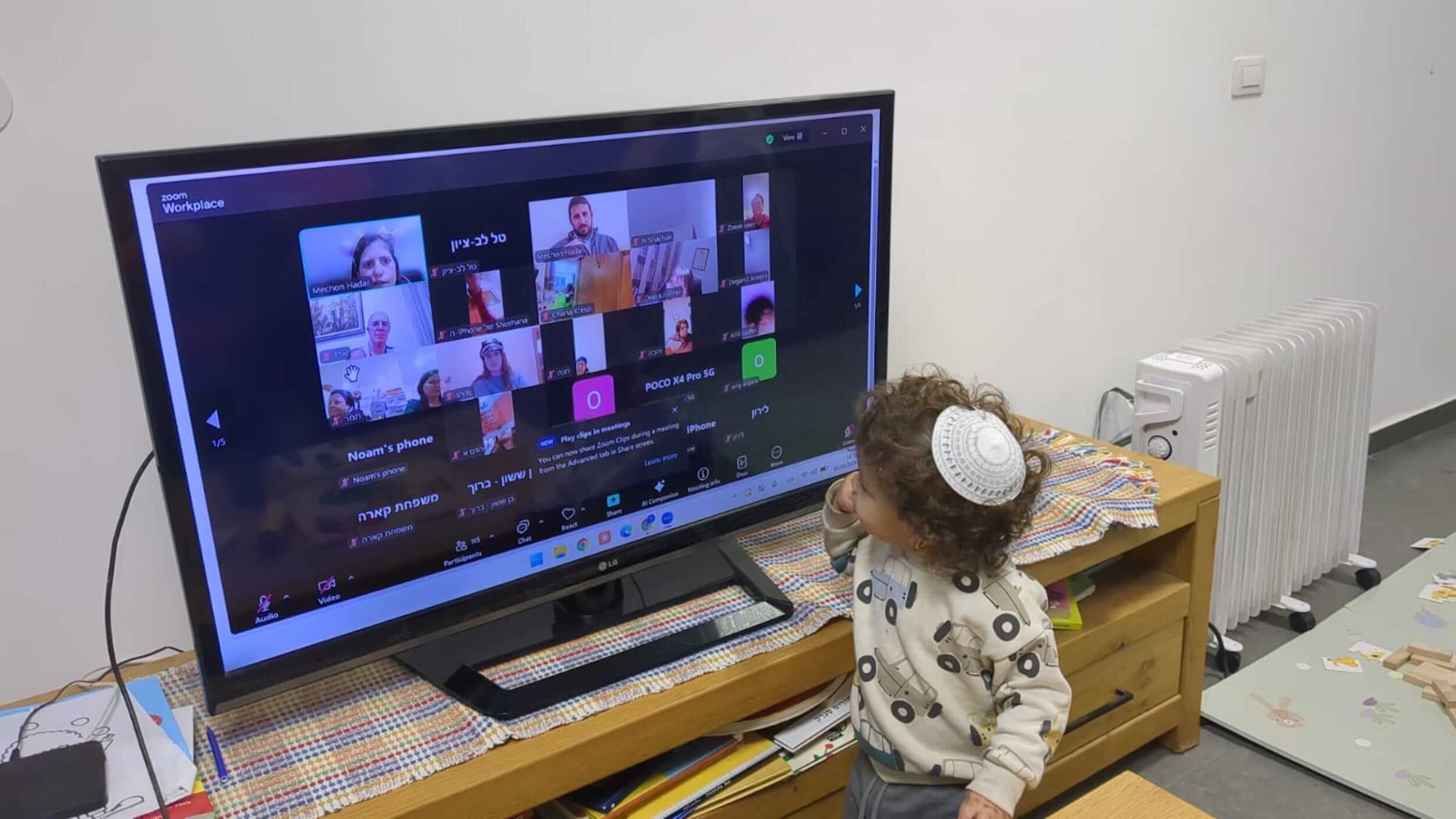
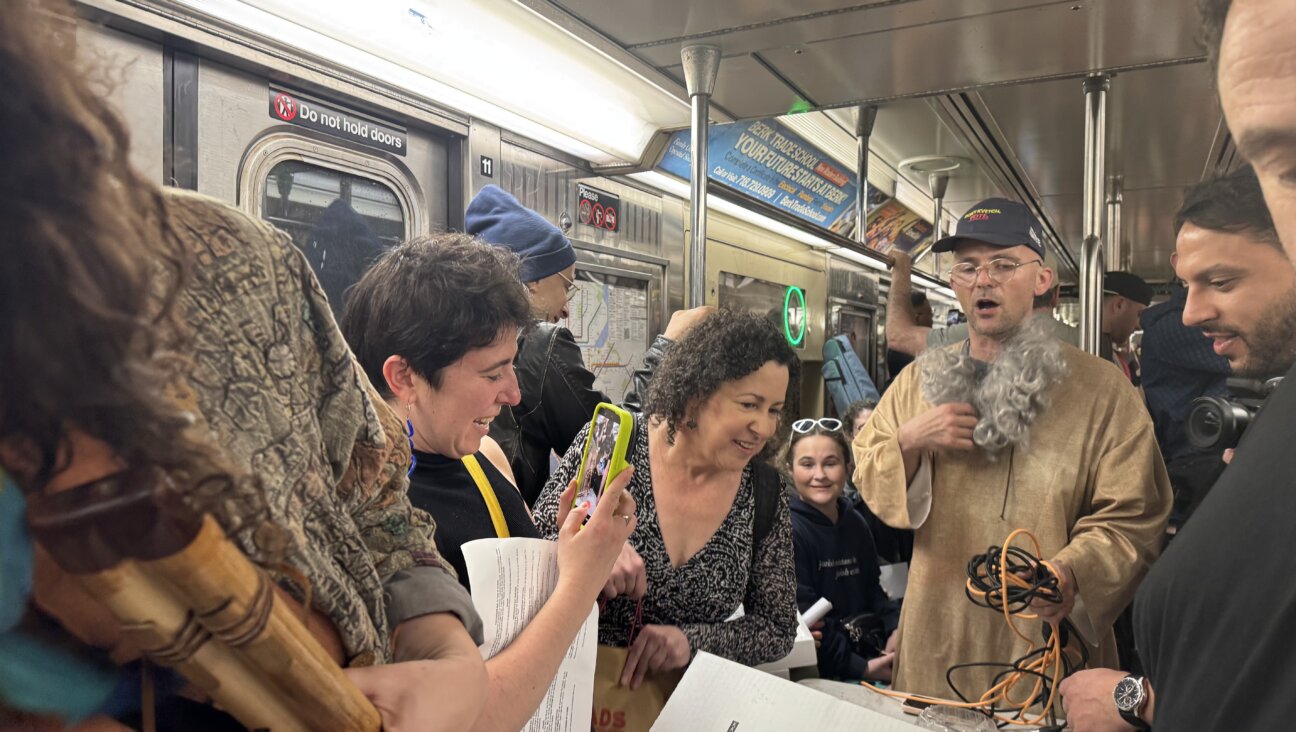
A megillah reading in Tel Aviv, which more than 150 participants accessed via Zoom. Photo by Tal Lev Tzion

By Rachel Fink March 2, 2026
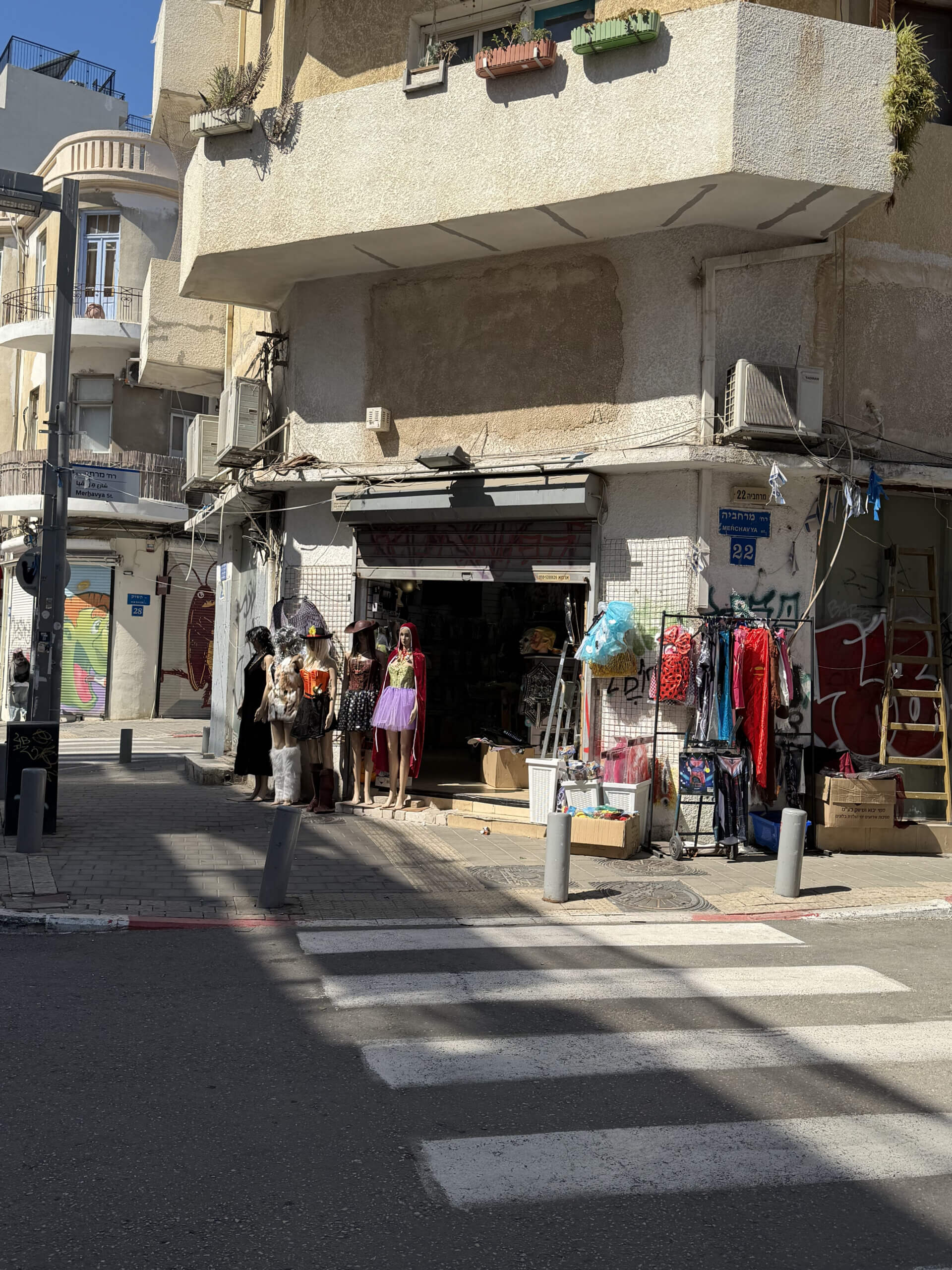
TEL AVIV — On the corner of a sun-bleached side street in Tel Aviv’s Shuk Levinsky, costumed mannequins stand guard over a half-dark shop, their painted eyes fixed on a street gone strangely still. Cardboard boxes of sequined capes and feathered wings spill onto the sidewalk, untouched. The neighboring businesses are shuttered, heavy padlocks fastened across their metal doors.
On any weekday, the quiet would feel unusual in this bustling pocket of south Tel Aviv. But this is Purim week — normally the market’s most frenetic stretch of the year. In ordinary times, the sidewalks would be clogged with parents and teenagers clamoring for last-minute costume details, with vendors shouting prices over the din.
That was precisely the scene just 48 hours earlier, on the Friday before the Purim madness was set to begin. Despite weeks of speculation about a looming confrontation with Iran, most Israelis pressed ahead with their plans. Hamantashen were baked, school carnivals assembled, parties confirmed. A meme circulated in school group chats: “Can someone let us know if we are supposed to be buying costumes or canned goods?”
Early Saturday morning, an answer came via the piercing trill of the emergency alert system. The United States and Israel had begun what officials described as “preemptive strikes” against Iran. Within hours, thousands of reservists were called up. Citizens scrambled for shelter plans. WhatsApp groups filled with instructions and anxieties. And as Iran launched retaliatory rockets, Israelis absorbed a different blow: Purim was officially canceled.
Hence, the shuk’s current ghost town atmosphere. Inside the darkened shop, Rotem Avidan sat at the register, scrolling on his phone.
“There’s no real reason to be open,” he said. “Mostly I was just bored at home. I’ll probably close up in a couple of hours.”
Avidan has been selling costumes in the shuk for more than 15 years and relies heavily on Purim sales. The day before the holiday is typically his busiest of the year. Instead, he estimates he’ll make about 80% of his usual income.
“It’s not terrible,” he said with a shrug. “But it’s just one more irregular year. We had corona. We had two years of war. This was supposed to be the year things finally went back to normal.”
The past two Purims were indeed subdued, shadowed by the war in Gaza and the fight to bring hostages home. Even celebrations that went ahead felt muted. With the last living hostages returned in October, many had hoped this would finally be an uncomplicated holiday.
To fully grasp why the cancellation hit so hard, one must understand Purim in Israel. This is not a single-event celebration. It is a multi-day spectacle that spills from nursery school classrooms into city streets. Municipal adloyadas — elaborate parades with floats and marching bands — draw families by the thousands. Teenagers roam in coordinated group costumes. It is not uncommon to find yourself seated on a bus beside an elderly woman in full clown makeup, or handed paperwork at the bank by a teller wearing butterfly wings.
None of which is happening this year.
Children feel the loss most acutely. For many, Purim is the highlight of the school calendar: themed dress-up days, costume parades, parent-run carnivals, and the exchange of mishloach manot before a three-day vacation. On Sunday morning, children across the country woke to the bad news.
Teachers scrambled to salvage what they could. Virtual parades were arranged over Zoom. Students were asked to send photos in costume. Mishloach manot became neighborhood drop-offs.
In some cases, the children made their own Purim joy. In one Tel Aviv apartment building, the kids organized a costume party, complete with printed invitations for guests. Playgrounds around the country — at least those equipped with shelters — were filled with rambunctious children dressed as superheroes and princesses, their bleary-eyed parents dragging slightly behind them.
If children are Purim’s most visible protagonists, they are hardly its only devotees. For young adults, the holiday is the high point of Israel’s nightlife calendar — a sanctioned blur of themed raves and packed bars. This year, the bomb shelter became a stand-in for the nightclub.
Within hours of the first rocket fire, 20-somethings in Tel Aviv’s Florentin neighborhood had organized an impromptu party in a public shelter, complete with makeshift costumes and an amateur DJ. When video of the event went viral, social media flooded with young people asking about the nearest mesibat miklat — a “shelter party.”
Not everyone approved.
“Wow. How disconnected can you be?” one commenter wrote. “People have been killed and you can’t give up your Purim party for one year?”
By nightfall, hundreds had gathered — some in small, shared building shelters for private parties, others in larger municipal bunkers — determined to carve out a pocket of joy, even as Iranian missiles soared overhead.
Shahar Rubin, 24, hadn’t planned on going to a party when he and his friends noticed a stream of people heading into the Dizengoff Center parking garage. “We figured, why not?” he said.
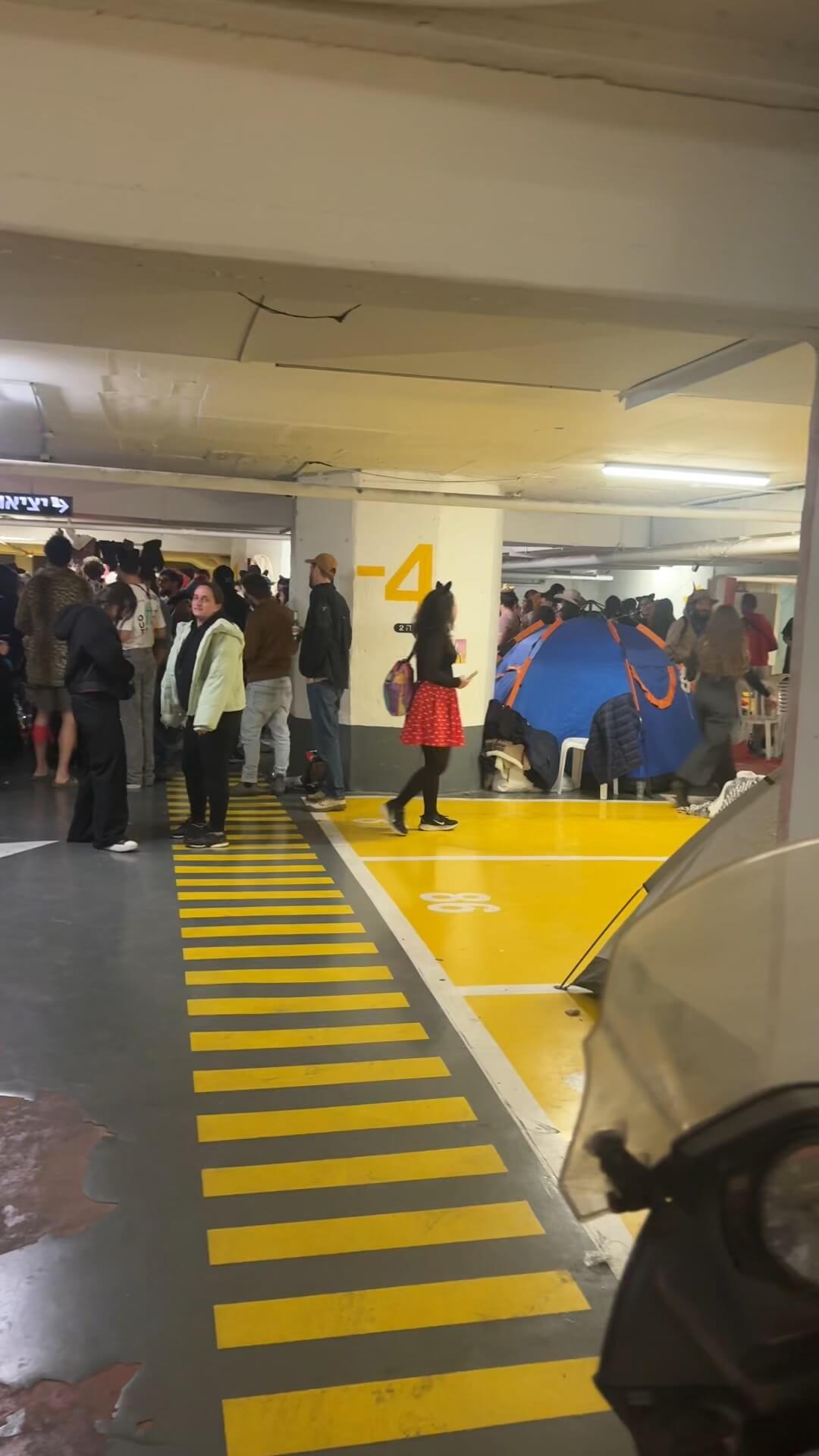
Four stories underground, in one of the city’s largest public shelters, a DJ blasted music as costumed revelers danced beneath the fluorescent lights and exposed concrete.
“This is exactly why we come to Tel Aviv,” said Rubin, who is originally from the north. “There’s nothing like the Purim atmosphere here.”
After more than 400 days of wartime reserve duty in the Israel Defense Forces, the celebration felt like a rare exhale — and perhaps a brief one, before he is called up again. “It was a last hurrah of sorts,” he added, as he and his friends headed off in search of their next mesibat miklat.
Beyond the costumes and parties, Purim is anchored in four religious obligations: a festive meal, the exchange of food gifts, donations to the poor and — most famously — the public reading of Megillat Esther.
“According to Jewish law, men and women are required to hear the reading of the entire Megillah from a kosher scroll,” said Rabbi Nadav Berger, head of Hadar’s Beit Midrash in Jerusalem. “Because the obligation is about publicizing the miracle of Purim, there is a strong preference to do it in public, in a group of at least 10 people.”
That preference became complicated as soon as Home Front Command restricted public gatherings.
“No one is required to risk their life to hear the Megillah — or to fulfill any other Torah commandment. Safety overrides everything.”Rabbi Nadav BergerHead of Hadar’s Beit Midrash in Jerusalem
By the time Shabbat ended, observant Jews were organizing small readings in private homes and shelters. Hadar put out a call for community members who owned kosher megillot.
“Owning a personal megillah isn’t as rare as owning a Torah scroll,” Berger explained. “Many people inherit one or receive one for a bar mitzvah or wedding. Hearing the Megillah in person is still our first recommendation, so we wanted to help facilitate that safely.”
For those unable to attend, Hadar is also offering Zoom options, drawing on halachic guidance developed during the pandemic. “The rulings get into the technical question of how to understand electronically transmitted sound,” Berger said. “But it goes without saying: No one is required to risk their life to hear the Megillah — or to fulfill any other Torah commandment. Safety overrides everything.”
He added: “Typically, one would perform a mitzvah all in one sequence, from beginning to end. But if a siren goes off while you are reading the megillah, it is perfectly acceptable to pause the reading, even for a few hours, until it is safe to return.”
For Berger, the tension between caution and celebration may be truer to Purim than one might expect for a holiday typically associated with pure, unadulterated joy. When he sent out Hadar’s revised Purim plans, he opened with Mordechai’s words to Esther: “Who knows. Perhaps it was for just such a moment that you attained royalty?”
“Meaning, you have to be responsible right now,” Berger explained. “You have to think about your situation and respond accordingly. That’s what we’re trying to do in light of all that’s happening.”
He went on, “If you read the Megillah, most of it is actually anxiety-provoking. It is a very tense story. The joy comes only at the end.”
“The hope,” he said, “is that this, too, is only the middle — and that Israel will once again return to celebrating Purim happily, joyously, as we do every year.”
This is a moment of great uncertainty. Here’s what you can do about it.
We hope you appreciated this article. Before you go, we’d like to ask you to please support the Forward’s independent Jewish news this Passover. All donations are being matched by the Forward Board - up to $100,000.
This is a moment of great uncertainty for the news media, for the Jewish people, and for our sacred democracy. It is a time of confusion and declining trust in public institutions. An era in which we need humans to report facts, conduct investigations that hold power to account, tell stories that matter and share honest discourse on all that divides us.
With no paywall or subscriptions, the Forward is entirely supported by readers like you. Every dollar you give this Passover is invested in the future of the Forward — and telling the American Jewish story fully and fairly.
The Forward doesn’t rely on funding from institutions like governments or your local Jewish federation. There are thousands of readers like you who give us $18 or $36 or $100 each month or year.
Support our mission to tell the Jewish story fully and fairly.