Seder subway stunt rolls Passover out in public — but watch that matzo ball soup
At the third annual “Subway Seder,” participants danced, shvitzed and noshed
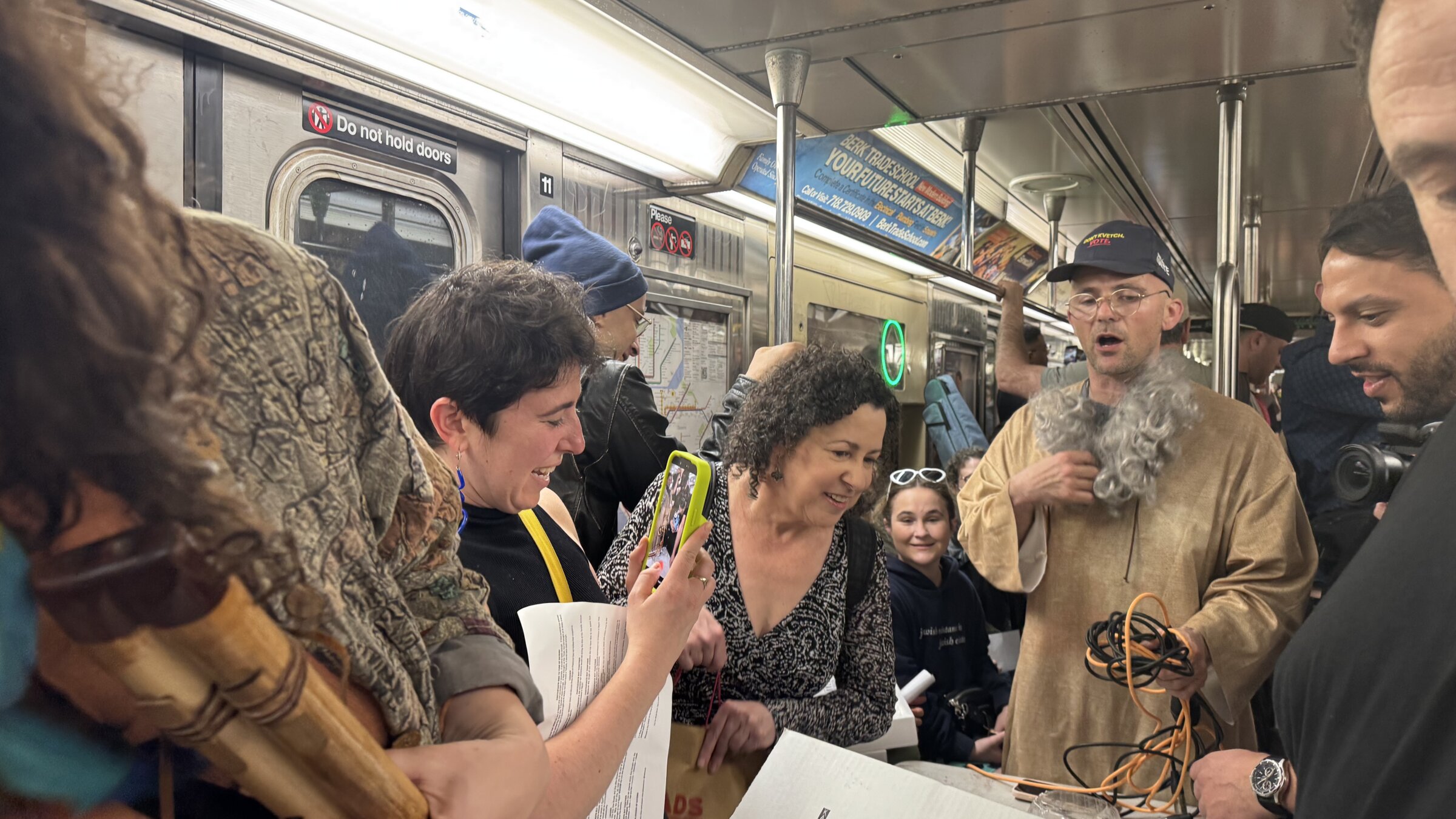
Rapper Kosha Dillz (right) leads the subway Seder. Photo by Hannah Feuer

By Hannah Feuer April 1, 2026
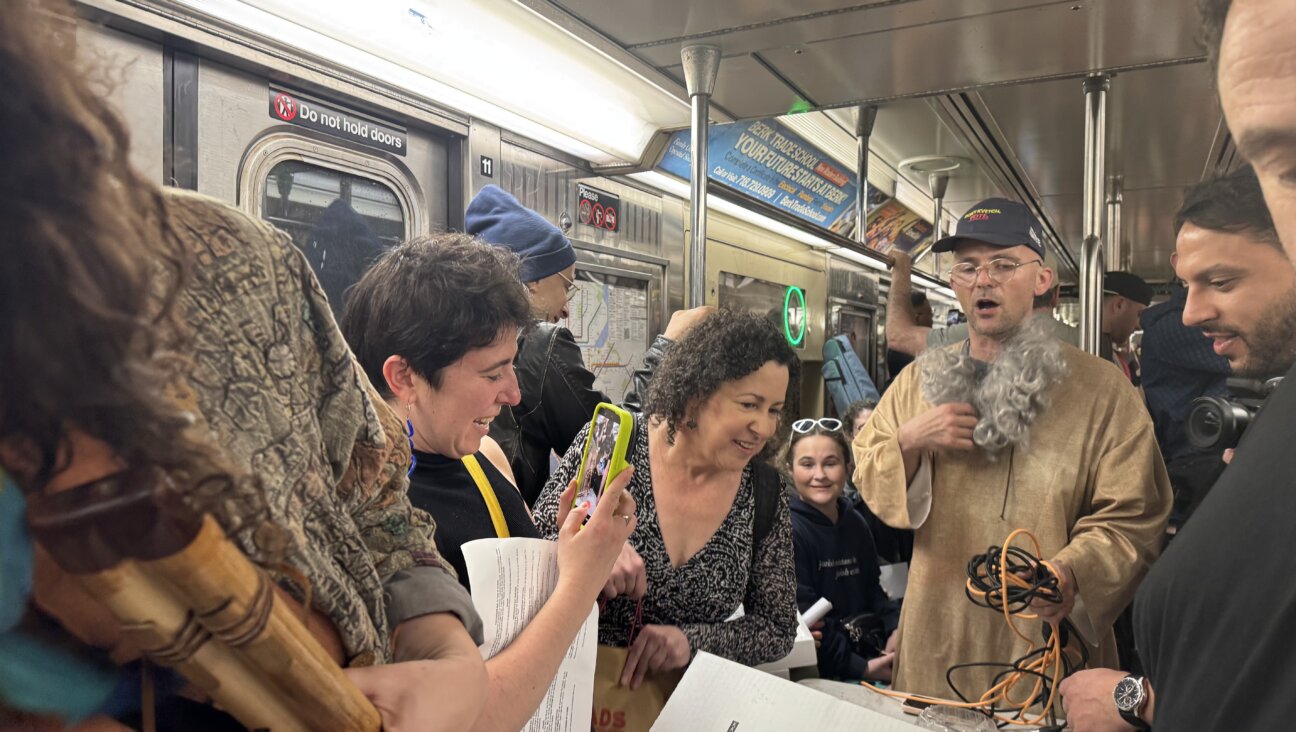
It was one of those only-in-New-York moments: Roughly 60 Jews packed into a muggy subway car, grape juice sloshing with every bump, preparing to hold a Passover Seder on the ride from Union Square to the Bronx.
Given the tight quarters, the meal was surprisingly comprehensive, complete with a rabbi, Seder plate, the Four Questions, and spirited renditions of “Dayenu” while Yiddish singer Riki Rose played guitar. The only crucial component missing was the hunt for the afikoman, which was a blessing — no one seemed on board with going head-to-head with Pizza Rat for the prize.
This was the third annual “Subway Seder,” a stunt organized by the rapper Kosha Dillz, whose real name is Rami Even-Esh. The event doubled as both a social media spectacle and something more meaningful. Attendees told the Forward the Seder offered a chance to be loudly and proudly Jewish in the most public of spaces, at a time when being visibly Jewish can feel scary. As the Seder unfolded, a few plainclothes volunteer security guards stood watch.
“Matzo ball soup spills and antisemitic comments, I suppose, are the range of concerns,” said Elizabeth Weinstein, who attended the subway Seder with her husband, Andrew, and dog, Finley, who sported a matzo-patterned bandana.
Dillz came dressed as Moses, wearing a tan tunic, long white beard and a backwards baseball cap that read “Don’t Kvetch, Vote.”
The evening began outside the subway at Union Square Park, where Dillz and the rapper Princess Superstar led the crowd in song. The group then descended underground, chanting “Subway! Seder!” in call-and-response format, while commuters looked on.
Upon boarding, Dillz set up a plastic folding table and took out the Seder plate. Attendees referred to their “Ten Minute Seder” Haggadah by Rabbi Yonah Bookstein as they followed along with the prayers.
Some logistics proved challenging. At one point, the folding table collapsed. The subway car lacked working air conditioning. Attendees packed in shoulder to shoulder, while social media influencers jostled for the best camera shot. With all the shvitzing and sloshing, few seemed eager to touch their matzo ball soup from Katz’s Delicatessen. Organizers apparently did hide the afikomen, but they forgot to direct participants to search.
But a little balagan didn’t kill the good vibes. Soon people were dancing, chanting prayers and tapping out rhythms on Manischewitz matzo boxes.
“Judaism needs to meet the people where they’re at, and this is a fabulous way to do it,” said Rabbi Arielle Stein, who typically leads above-ground services at Congregation Rodeph Sholom on Manhattan’s Upper West Side. “It’s fun, and it also provides people some education, culture and adventure.”
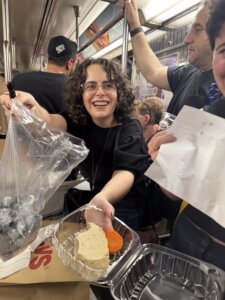
Nor did the sticky environment deter Seder-goers from eating non-soup foods. Attendees chowed down on matzo, gefilte fish and kosher-for-Passover seven-layer cake from the Orwashers Bakery.
Officially, using the subway for “non-transit” activities can result in a $50 fine, and open liquids on board are a no-no, according to the Metropolitan Transit Authority’s rules of conduct. But in practice, MTA employees who witnessed the Seder mostly shrugged; one politely turned down an offer of matzo.
“Just consider us street performers,” Dillz told the Forward.
Beyond transit authorities, Dillz knew the Seder had the potential to provoke passengers. During the inaugural subway Seder in 2024, he said a passerby yelled “Free Palestine” at the group. Just a few weeks ago, Dillz said, he was assaulted and briefly arrested after he tore down a sign for Ayatollah Khomeini at a vigil for the Iranian Supreme Leader.
But Dillz wasn’t about to let fear for his safety spoil a good meal. After all, who could really hate a subway Seder?
“People are here to see me and do something cool. It’s not like a rally,” Dillz said. “They don’t know what to make out of it, even very antisemitic people.”
As the train pulled into the Bronx, the Seder concluded with the final cup of grape juice. Participants began to disembark, but with a hope: Next year on the Q train.
This is a moment of great uncertainty. Here’s what you can do about it.
We hope you appreciated this article. Before you go, we’d like to ask you to please support the Forward’s independent Jewish news this Passover. All donations are being matched by the Forward Board - up to $100,000.
This is a moment of great uncertainty for the news media, for the Jewish people, and for our sacred democracy. It is a time of confusion and declining trust in public institutions. An era in which we need humans to report facts, conduct investigations that hold power to account, tell stories that matter and share honest discourse on all that divides us.
With no paywall or subscriptions, the Forward is entirely supported by readers like you. Every dollar you give this Passover is invested in the future of the Forward — and telling the American Jewish story fully and fairly.
The Forward doesn’t rely on funding from institutions like governments or your local Jewish federation. There are thousands of readers like you who give us $18 or $36 or $100 each month or year.
Support our mission to tell the Jewish story fully and fairly.