Israel antiwar protests spur intensifying government crackdown
Arrests have put a spotlight on a small but steadily growing opposition demonstrating in Tel Aviv and other cities against the Iran war
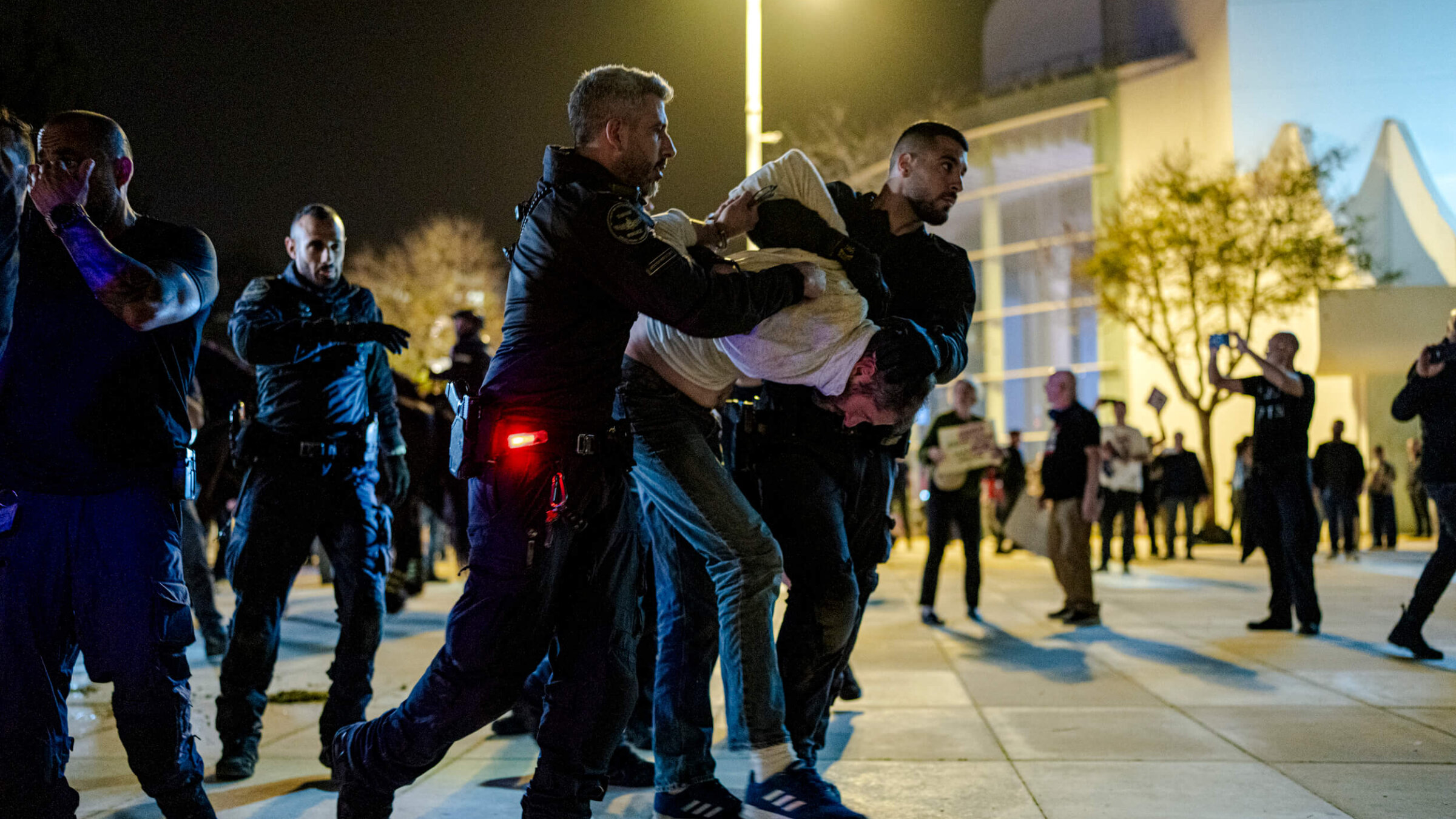
Israeli police arrest an anti-war protester amid a gathering in Habima Square in Tel Aviv on April 4. Photo by Erik Marmor/Getty Images

By Rachel Fink April 6, 2026
TEL AVIV, Israel — It was a strange sight, even for wartime Israel: A line of police horses descended into the vast public bomb shelter beneath Tel Aviv’s Habima Square — hooves clattering against the concrete as officers led them to safety.
While the horses got a police escort, just a few feet away, 17 antiwar demonstrators were stuck on a police bus, pleading to be let off before the incoming barrage of Iranian missiles reached the city.
They had been detained as part of the ongoing crackdown on Israelis protesting against the war with Iran, carried out in the name of wartime public safety.
This round of arrests took place on Saturday night. “Our phones began buzzing with the pre-siren warning,” recalled Alon-Lee Green, co-director of the Jewish-Palestinian coexistence group Standing Together and now one of the leaders of a burgeoning antiwar movement. “We kept asking them to let us go down to the shelter. They refused, even though this is completely against the law. They told us it was our problem because we chose to come to the protest.”
When the siren sounded — signaling 90 seconds to take cover — the argument escalated. Onlookers tried to intervene, urging police to allow the detainees into the shelter. Instead the driver took off for a nearby residential building. The activists, some still in handcuffs, were rushed into the lobby and ordered to lie on the floor. “This was not a protected space. We were under a bunch of glass windows,” Green recounted. “If there had been a direct hit … they put our lives at risk in a very serious way.”
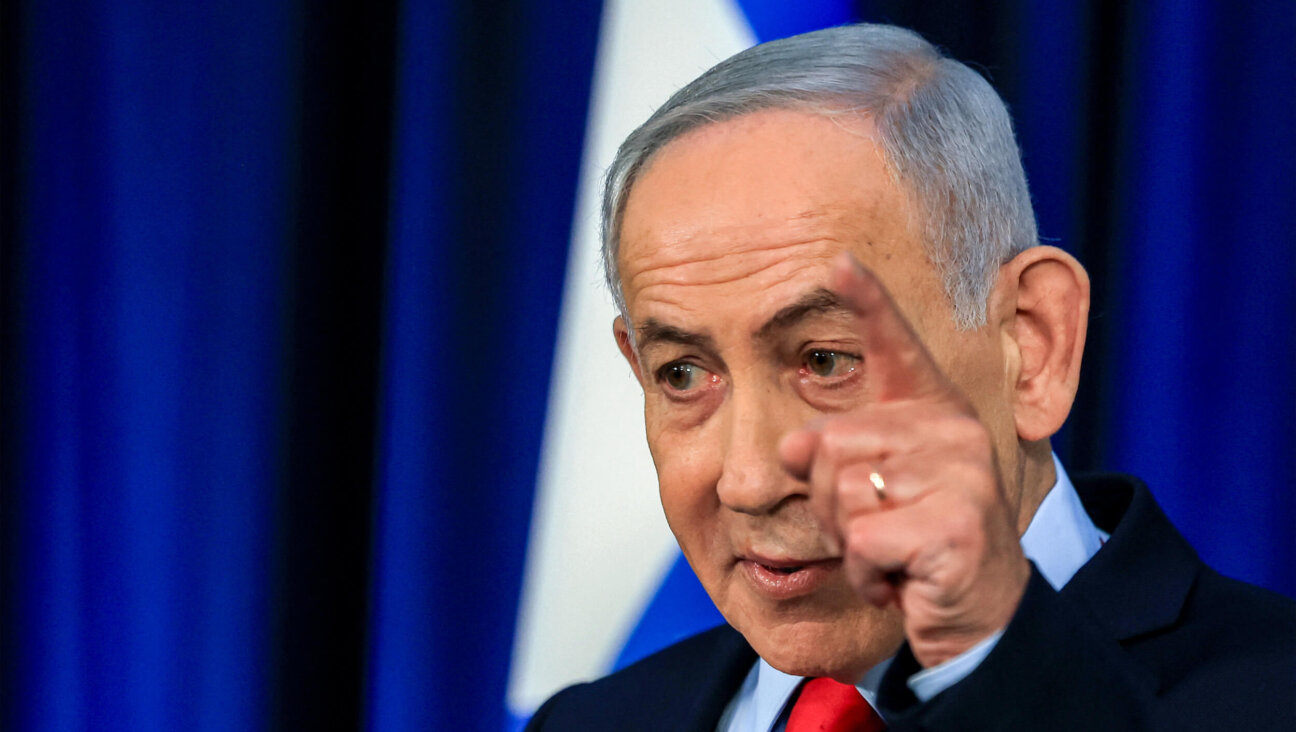
In the weeks leading up to Israel and the United States’ joint strikes on Iran, support for full-scale war among Israelis was high, with most people convinced that Prime Minister Benjamin Netanyahu’s dire warning of the immediate and existential threat posed by Iran and his promise to eliminate it “for generations” were both truths. As the war began, and Israelis found themselves rushing into bomb shelters, support remained widespread.
But as the fighting has continued to drag on, the antiwar movement has followed a sharp growth trajectory: from a small gathering of far-left activists outnumbered by the journalists reporting on them to multi-city demonstrations drawing more than 1,000 participants each week. The numbers are still modest compared to the tens of thousands who filled Israel’s streets weekly during the judicial overhaul protests and the hostage demonstrations after Oct. 7, but a significant jump given how popular the war was at its outset.
The rise of the protest movement coincides with a shift in public opinion. Support for the war, which began above 80%, has dropped into the high 60s in recent weeks — still a clear majority, but a meaningful decline for a conflict that initially drew near-unanimous backing. One month in, war fatigue has begun to set in. In addition to the growing death and injury toll and financial loss, Israelis are sleep-deprived, desperate for school to resume, and frustrated that the airport is still not operating at full capacity. They are also watching as the government slashes the state budget.
Organizers say they are encouraged by the rapid growth, even as they navigate the pitfalls of coalition-building. But for now, the movement faces a more immediate challenge: as crowds grow, so too does the force being used by uniformed and plainclothes Israeli police officers to disperse them.
Arrests, forcible removal of demonstrators and confiscation of equipment have now become regular occurrences. According to police, these are legitimate methods for dispersing protests, which they say violate Home Front Command directives restricting large gatherings during wartime. But with beaches and malls around the country packed with people, and Haredi communities holding massive funerals, weddings and holiday celebrations, critics have accused far-right National Security Minister Itamar Ben-Gvir of using those same restrictions as a pretext to silence dissent.
That debate has now moved from the streets to the courtroom. Just as Saturday’s protest was getting underway, Israel’s High Court of Justice ruled that blanket restrictions used to shut down demonstrations did not sufficiently account for the basic right to protest, which the court president stated exists even during wartime. The court ordered the state to raise the cap on demonstrations from 150 to at least 600 people, including at Habima Square.
The ruling came in response to a petition filed the day before by the Association for Civil Rights in Israel and activist Itamar Greenberg, following weeks of aggressive police dispersals. The court also raised concerns about selective enforcement, noting that similar restrictions were not being applied to other large gatherings.
By Saturday night, the decision was already being tested. As hundreds of demonstrators gathered once again at Habima Square, part of coordinated protests that also drew crowds in Haifa and Jerusalem, organizers said they were operating within the court’s guidelines. Police disagreed. Citing security concerns and Home Front Command restrictions, officers moved quickly and forcefully to disperse the crowd, confiscating amplification equipment and signs and arresting 17 people, including Green.
“But we learned afterwards that the police had begged Home Front Command to give the order that the protest was illegal, and they refused,” he said. “After 30 minutes, the police just decided to act on their own command and begin arresting people.”
IDF officials later confirmed to Haaretz that dispersing the demonstration had not been approved by the Home Front Command, saying the decision was made by police alone. The High Court is expected to revisit the issue this week, even as Justice Minister Yariv Levin has called on the government to consider defying any ruling that expands protest rights during wartime.
For Green, the past few weeks reflect a deeper societal shift. “What we’re seeing is the legitimization of political violence,” he said. “It starts with words — calling people traitors for opposing the war or supporting peace — and it slowly becomes something more.” In recent months, a spate of right-wing provocateurs have begun harassing and intimidating journalists, politicians, and protesters with whom they disagree. Prominent leaders, including Green, have also been targeted at their homes.
He added: “When the public sees that it’s becoming dangerous to speak out, to organize, to protest — that violence is an acceptable way to silence a political camp — it changes the entire public space.”
Both Green and Greenberg stress that the antiwar movement is not the first, nor the primary, target of such force. “By no means did this start with our movement,” Greenberg noted. “It begins with the Palestinians. They bear the brunt of police brutality. But that’s how fascism works — people remain silent, and eventually it comes for them.”
Green agrees. “It’s a slow but powerful process of stripping legitimacy from an entire political camp,” he said, “and giving permission to act against it with violence.”
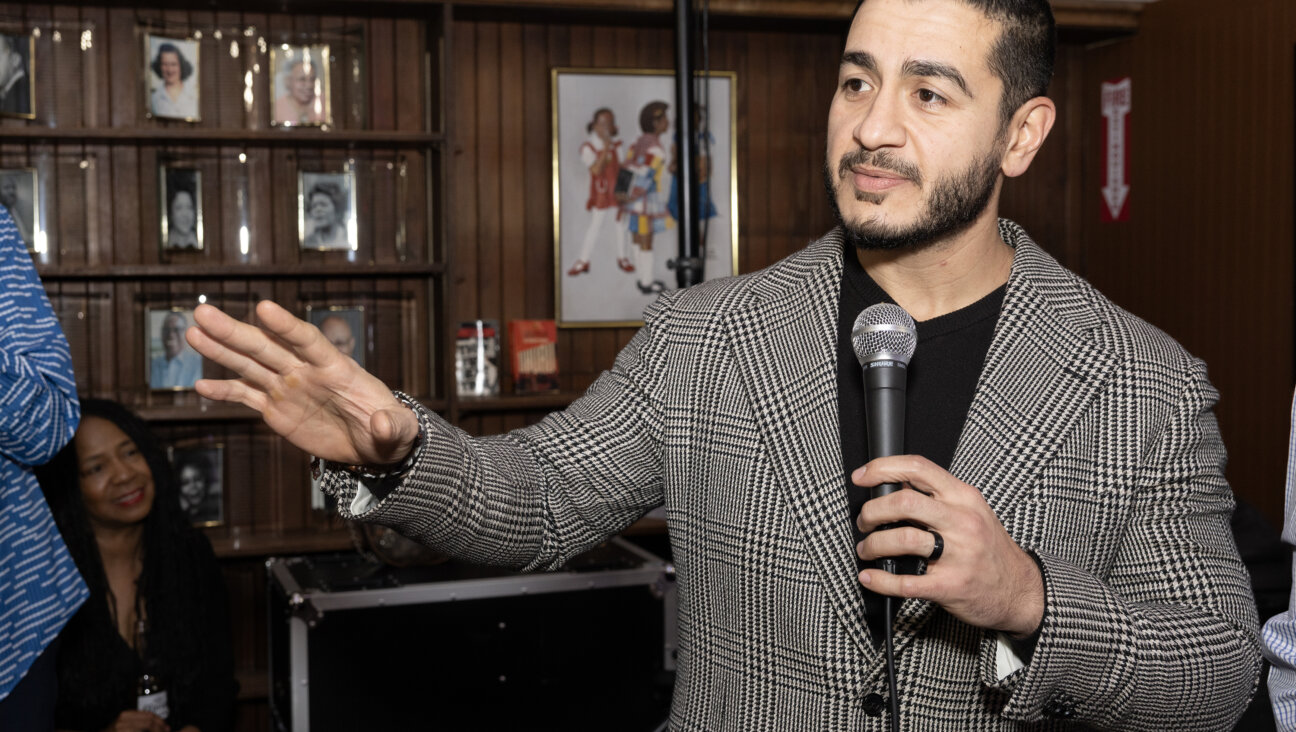
While that threat has surely kept individuals at home, the movement as a whole continues to expand. It now includes veterans of the antigovernment movement, first-time demonstrators, and public figures such as Hadash-Ta’al political party lawmakers Ofer Cassif and Ayman Odeh — even as many prominent opposition figures remain absent.
For Greenberg, the growth is both intentional and complicated. “We not only expected it,” he said. “We were trying to make it happen as soon as possible.”
“As someone who identifies as a radical anti-Zionist, I understand the limits of my political power. We are a small group. But we are part of this society, and we can still create a movement of resistance to this war.”
That has required letting go of control. “We started this, but now we are part of something bigger,” he said. “There are people at the protests whose views I totally disagree with … but right now we have one mutual goal, to stop this war. I cannot afford to be picky.”
Green suggests that tension is central to the movement’s future. “This is where we see Standing Together’s role — to help build as wide a coalition as possible,” he said, describing efforts to bring together more than 50 groups around a broadly shared platform. “Anti-war, anti-government, anti-abandonment, pro-life. Whoever can agree to this can be in the tent.”
It is a fragile coalition. “Right now, we still feel that our specific voice is being heard loudly and clearly,” Greenberg said. “But what happens when it grows to 10,000 people and suddenly we are in the minority?”
“It becomes about finding a balance,” he continued, “Continuing to show up at largest protests and representing the anti-occupation bloc but also making sure that we are developing separate ways to express our specific beliefs.”
For Green, however, the moment feels larger than any one single cause or agenda.
“I think we’re facing a moment where all the different fronts are uniting,” he said. “People are starting to understand that whether you are coming from a humanitarian viewpoint or from a solidarity viewpoint or anti-government or even self-interest, it’s all connected to one overarching question: Are we going to find a way to live here in peace or are we are going to be stuck in this constant state of war, forever fighting, stealing, assassinating, running to shelters, our children missing school?”
As the protests continue to grow — even amid efforts to suppress them — organizers believe they have opened a space that did not exist just weeks ago.
“We have the opportunity,” Green said, “to present a different way.”
This is a moment of great uncertainty. Here’s what you can do about it.
We hope you appreciated this article. Before you go, we’d like to ask you to please support the Forward’s independent Jewish news this Passover. All donations are being matched by the Forward Board - up to $100,000.
This is a moment of great uncertainty for the news media, for the Jewish people, and for our sacred democracy. It is a time of confusion and declining trust in public institutions. An era in which we need humans to report facts, conduct investigations that hold power to account, tell stories that matter and share honest discourse on all that divides us.
With no paywall or subscriptions, the Forward is entirely supported by readers like you. Every dollar you give this Passover is invested in the future of the Forward — and telling the American Jewish story fully and fairly.
The Forward doesn’t rely on funding from institutions like governments or your local Jewish federation. There are thousands of readers like you who give us $18 or $36 or $100 each month or year.
Support our mission to tell the Jewish story fully and fairly.