Some people are learning the wrong lessons from Ahmed al Ahmed
Divergent reactions to al Ahmed’s heroics demonstrates the difficulty of having honest conversations about antisemitism
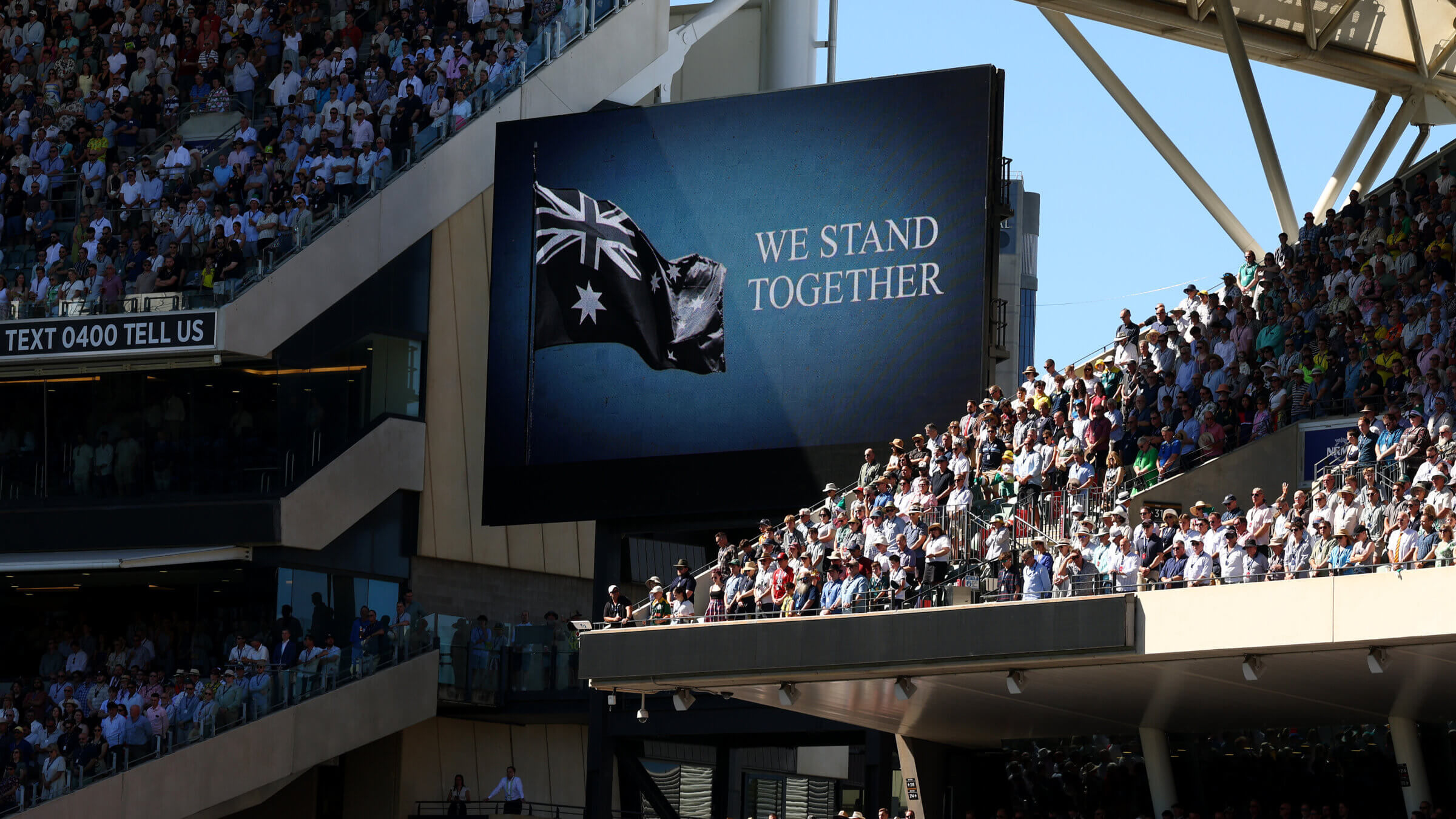
A message on display during a moment of silence to pay respects to the victims of the Bondi shootings during day one of the Ashes Series between Australia and England at Adelaide Oval on December 17, 2025 in Adelaide, Australia. Photo by Robert Cianflone/Getty Images

By Arno Rosenfeld December 17, 2025
Antisemitism Decoded is the Forward’s biweekly newsletter that helps you separate the signal from the noise and understand current debates over Jewish safety. Sign-up here.
Ahmed al Ahmed’s seizure of a gun from one of the two killers in the Bondi Beach massacre over the weekend was irresistible to anyone looking for a sliver of hope in an otherwise completely devastating attack.
And yet that wasn’t how some chose to spin it.
On parts of the left, the focus on al Ahmed seemed to eclipse what should have been the dominant story — simmering antisemitism exploding into shocking violence — while some on the right scrambled to erase al Ahmed’s religious identity or claim he was an aberration rather than a reminder of our shared humanity.
Rosy Pirani, a liberal social media influencer, told her nearly 700,000 followers on Instagram that the massacre was “evil” but emphasized another “truth buried under agenda-driven narratives.”
“The man who put his life on the line, stopped the attacker and saved countless Jewish lives was Muslim,” she wrote in a Monday post shared thousands of times. “Muslim violence is amplified. Muslim heroism is buried. Good Muslims don’t fit the narrative, so they’re edited out.”
In fact, al Ahmed’s courage was being so widely celebrated that Mehdi Hasan, the veteran journalist, focused his analysis of the Bondi shooting on what it meant for Muslims.
“Even the well-meaning liberals who say, ‘Hey, look, look a Muslim saved the day! See, it proves Muslims are peaceful,’ — well it shouldn’t require a hero,” Hasan argued.
A fair point, but one that elided any discussion of the antisemitism that motivated the original massacre, which he described more simply as an inexcusable act of terrorism.
It should be indisputable by now that, among the scores who have protested Israel’s actions in Gaza over the past two years, are some who were motivated by antisemitism — or who have gravitated toward antisemitism over time — and are willing to vent their anger at Israel through violence and discrimination against Jews in the diaspora.
While the motives of the Bondi Beach perpetrators remain less clear than the D.C. and Boulder killers — who both shouted anti-Zionist slogans while carrying out their attacks — police said the younger gunman, Naveed Akram, had ties to an Islamic preacher who was recently convicted of inciting hatred for referring to Jews as a “treacherous” and “vile people” who were “descendants of apes and pigs.”
Wissam Haddad, the preacher, said that he was simply trying to convey that “what the Israeli government is doing to the people of Gaza” is “not something new.”
This kind of antisemitic logic — either that Israel’s faults are the result of it being a country run by Jews, or that its faults justify animosity toward all Jews — has become prevalent. Yet that received little discussion among many prominent left-wing figures who responded to the Sydney attack as if it were a natural disaster.
***
The lack of introspection was also glaring among Jewish leaders who seized on the attack as proof that the framework they’ve used to understand antisemitism in recent years was right all along. As Em Hilton, policy director at the left-wing Diaspora Alliance and an Australian Jew, wrote in +972 Magazine:
Before the blood of the victims had even dried, right-wing politicians and public figures — in Australia and around the world — were declaring the attack a consequence of growing anti-Zionist sentiment and pro-Palestine activism, without any proof or indication of the attackers’ motivations.
Deborah Lipstadt, President Joe Biden’s former antisemitism envoy, claimed that Zohran Mamdani had helped “facilitate” the Sydney killings by declining to condemn the slogan “globalize the intifada,” a term Mamdani has never used but which he has been asked about for months.
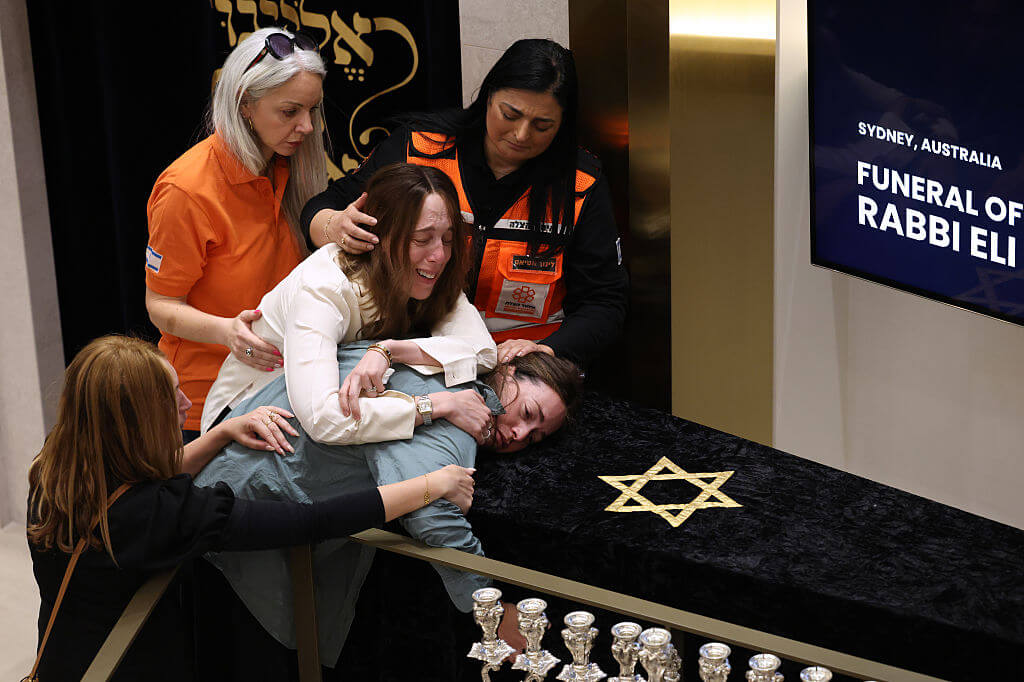
Meanwhile, Sen. John Fetterman, a darling of the pro-Israel crowd, rather bizarrely responded to the attack by writing on X, “I stand and grieve with Israel.”
And that’s to say nothing of how some on the right responded to al Ahmed’s bravery. Israeli Prime Minister Benjamin Netanyahu initially claimed that al Ahmed was Jewish, while others online tried to insist he was a Maronite Christian rather than a Muslim.
“There were zero Ahmed al Ahmeds in Gaza,” an anonymous pro-Israel influencer who goes by Max Nordau posted on X.
This kneejerk insistence that any political opposition to Israel — including the Australian government’s recent recognition of a Palestinian state — is to blame for the worst instances of antisemitic violence inevitably pushes Israel’s critics into a defensive posture from which they’re loath to consider whether some of their their broad demonization of “Zionists,” for example, might be fueling antisemitism.
***
The Australian massacre might have put some things in perspective, suggesting that the biggest problem facing Jews is not “globalize the intifada” — a slogan that is neither especially popular, nor described as a call for violence by many of its proponents — but rather murderous violence carried out by antisemitic zealots.
And similarly, those focused on defending Palestinian rights should perhaps have viewed the attack as a wake-up call for considering who they accept as part of their movement and who they shun, whether that’s antisemitic preachers in Sydney or protesters outside a Manhattan synagogue chanting for Hamas to “take another settler out.”
Yet sadly, I have seen tragically few good faith efforts to take stock of how we got here, and to draw an honest line in the sand that sets aside one’s views on Israel in favor of a divide between antisemites who would perpetrate or encourage this kind of horrendous violence from those who believe Jews deserve to live in safety and dignity.
Instead, the discourse on antisemitism has calcified to the point that now it seems like little more than a proxy for views on the Israeli-Palestinian conflict in which those most invested are loath to reconsider their positions even in the face of shocking events.