Trump and Biden officials clash over campus antisemitism actions as federal investigation kicks off
The first hearing in the U.S. Commission on Civil Rights probe prompted dueling accusations of overreach and indifference
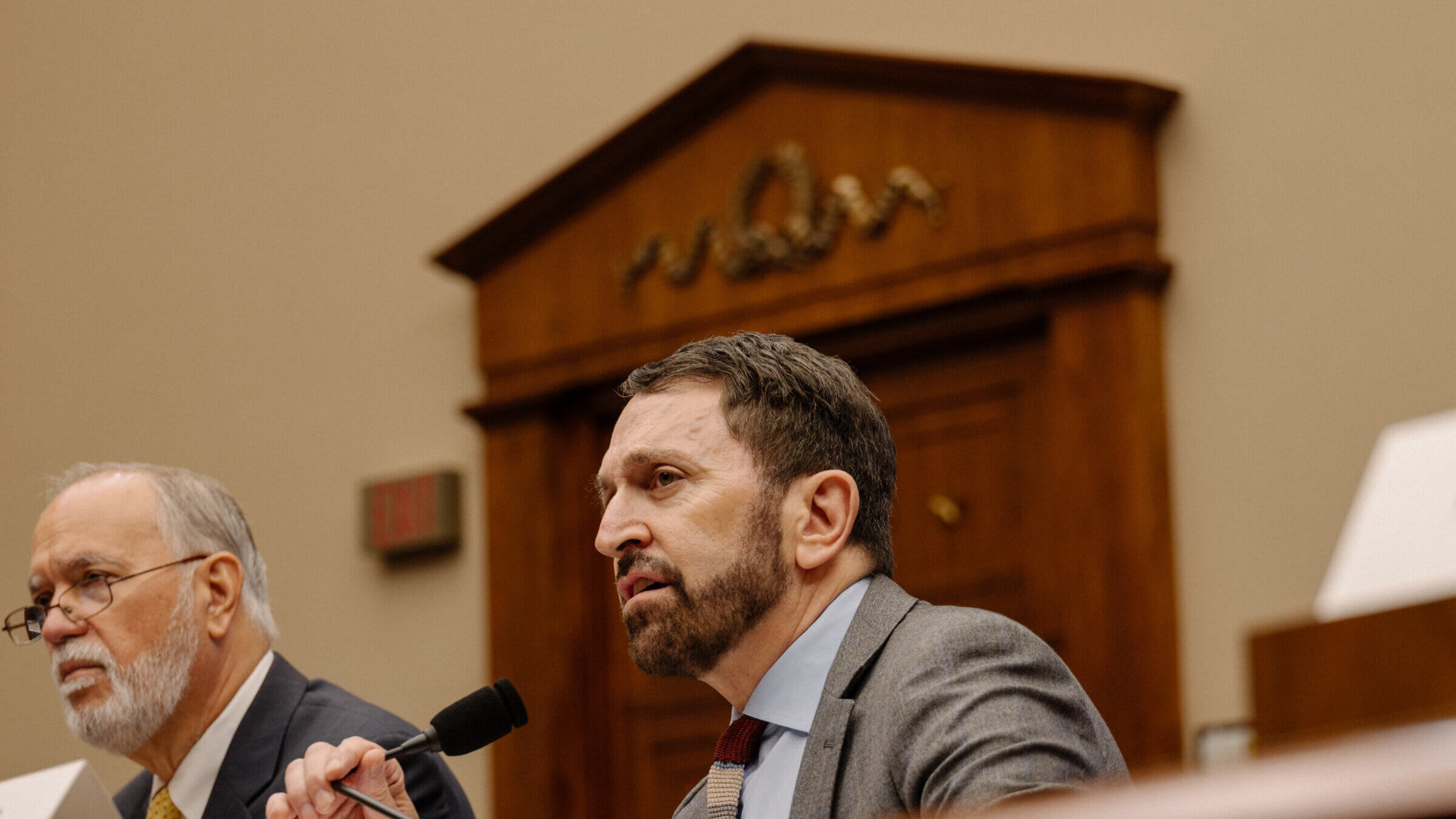
Matt Nosanchuk, a former civil rights official at the Department of Education, pictured at a Congressional hearing in July. Nosanchuk defended the Biden administration’s handling of antisemitism reports and said that President Donald Trump’s White House was using similar claims as a “Trojan horse” to attack higher education. Photo by Caroline Gutman for The Washington Post via Getty Images
By Arno Rosenfeld February 19, 2026
The first hearing held as part of a federal investigation into how the Trump administration has sought to counter campus antisemitism turned into a showdown between Democratic and Republican officials over how civil rights laws are being enforced.
Craig Trainor, who ran civil rights investigations at the Education Department for most of last year, described his predecessors in the Biden administration as unable to stop what he called “coordinated harassment and violence against Jewish students” and said its approach had been “equivocal, craven and pathetic.”
Matt Nosanchuk, who worked in same department under former President Joe Biden, defended his team’s work and said the White House under Trump is no longer concerned with helping Jewish students: “In the name of combating antisemitism, the current administration has built a Trojan horse to unleash a frontal, ideological attack on higher education.”
And Mondaire Jones, a former Democratic congressman from New York and current member of the U.S. Commission on Civil Rights, which is conducting the federal probe, accused the Trump officials who testified of violating federal law by refusing to turn over documents the commission requested as part of its inquiry. “You have a statutory obligation to comply,” Jones said.
The all-day hearing, which also included dueling analyses of civil rights law from academics and testimony from Jewish college students, is part of the first independent federal investigation into how the government has responded to allegations of antisemitism on college campuses. The bipartisan commission, whose members are appointed by Congress and the president, currently has a narrow Democratic majority and chair.
“When we started this project I thought there was no chance this could be anything other than bipartisan and free from sniping and partisanship about who did a better job,” J. Christian Adams, a Republican member of the commission, said at one point. “Alas, like everything else around here, that dream has died.”
The civil rights commission said it expects to release its findings and potential recommendations in the fall, although by that point it may be deadlocked between Democratic and Republican appointees and unable to reach agreement. Trump has unsuccessfully sought to remove its Democratic chair, Rochelle Garza.
Dueling views of federal actions
Several of the witnesses at the hearing focused on the Trump administration’s diminishment of the federal government’s capacity to investigate claims of antisemitism through its mass layoffs, which took a heavy toll at the departments of education and justice. The Education Department has closed 7 of its 12 regional offices and laid off around half of the employees tasked with enforcing civil rights laws before bringing many of them back to work in January.
Alyssa Lareau, a 16-year veteran of the civil rights division at the Justice Department who left last March, told the commission that the Trump administration appeared to violate federal law by freezing billions of dollars in grants to universities accused of tolerating antisemitism without following the rigorous process required and that courts had ruled several of the freezes to be illegal.
“Title VI has a detailed process for terminating federal funding,” said Lareau, referring to the section of civil rights law that applies to most antisemitism claims. “DOJ appears to not have adhered to the procedures mandated by Title VI or its own Title VI regulations.”
But Trainor argued that the Biden administration had let bureaucracy serve as an excuse for not taking sufficient action against the “mobs” and “hateful hordes” he described as brutalizing Jewish students on campus following the Oct. 7 Hamas attack in Israel and subsequent Gaza war.
“The president, when he was campaigning to Make America Great Again in 2024, promised to put an end to this,” Trainor said. “And he did.”
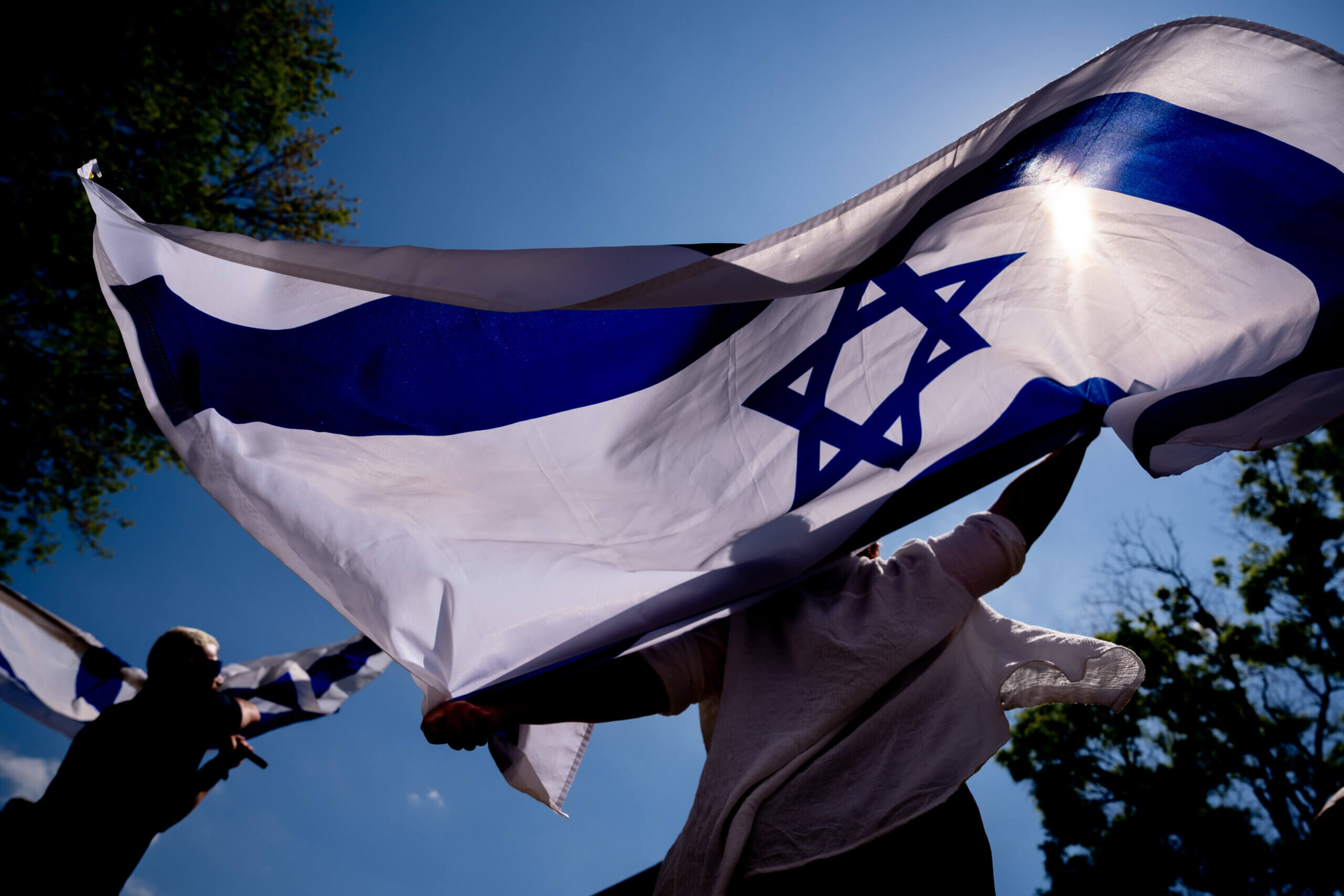
The Trump administration has made countering what it has described as antisemitism on the political left, and especially on college campuses, a top priority. That has included creating a special task force of its own to address it and reaching unprecedented settlements with elite schools that include Columbia, Brown, Cornell and the University of California, Los Angeles.
Some Jewish students have credited the Trump administration for lighting a fire under university administrations they felt had been reluctant to crack down on campus activism they believed created an antisemitic environment on their campuses. Others have described feeling like political pawns.
Sarah Silverman, a Jewish sophomore at Harvard, told the commission that the Justice Department had used the story of a mezuzah being removed from her doorframe as evidence in its attempt to strip research funding from the university and make its students ineligible to receive federal financial aid.
“How does destroying and discrediting educational institutions fight antisemitism?” she asked.
Most American Jews have also expressed skepticism of the White House’s approach. None of its main tactics — including attempting to deport international students who spoke out against Israel during the Gaza war — have received majority approval in surveys of the Jewish community, even as Jews remain alarmed by the level of domestic antisemitism.
Early in the panel, several legal scholars and activists voiced opposite views on whether strident anti-Zionist activism could create the kind of hostile environment for Jewish students that schools are required by law to prevent.
Benjamin Eidelson, an expert in anti-discrimination at Harvard Law School, argued that anti-Zionism could not be treated as a de facto form of antisemitism because “no views about Zionism or Israel are inherent in anyone’s ancestry.”
Eidelson said he was sympathetic to Jewish students who felt alienated by campus protests but “not everything that’s bad is a violation of Title VI.”
Mark Goldfeder, director of the pro-Israel National Jewish Advocacy Center, took the opposite tack. He brought a rock from Mount Zion in Jerusalem to demonstrate that Zionism was linked to the ancestral Jewish connection to Israel.
“Excluding someone based on where their ancestors are from — or based on an identity rooted in where they’re from — is not only wrong, it’s national origin discrimination and civil rights law forbids it,” he said.
This is a moment of great uncertainty. Here’s what you can do about it.
We hope you appreciated this article. Before you go, we’d like to ask you to please support the Forward’s independent Jewish news this Passover. All donations are being matched by the Forward Board - up to $100,000.
This is a moment of great uncertainty for the news media, for the Jewish people, and for our sacred democracy. It is a time of confusion and declining trust in public institutions. An era in which we need humans to report facts, conduct investigations that hold power to account, tell stories that matter and share honest discourse on all that divides us.
With no paywall or subscriptions, the Forward is entirely supported by readers like you. Every dollar you give this Passover is invested in the future of the Forward — and telling the American Jewish story fully and fairly.
The Forward doesn’t rely on funding from institutions like governments or your local Jewish federation. There are thousands of readers like you who give us $18 or $36 or $100 each month or year.
Support our mission to tell the Jewish story fully and fairly.