Photo EssayPhotos: A somber Holocaust remembrance trip with Second Gentleman Doug Emhoff
Emhoff spent Holocaust Remembrance Day visiting the sites of concentration camps in a landmark trip
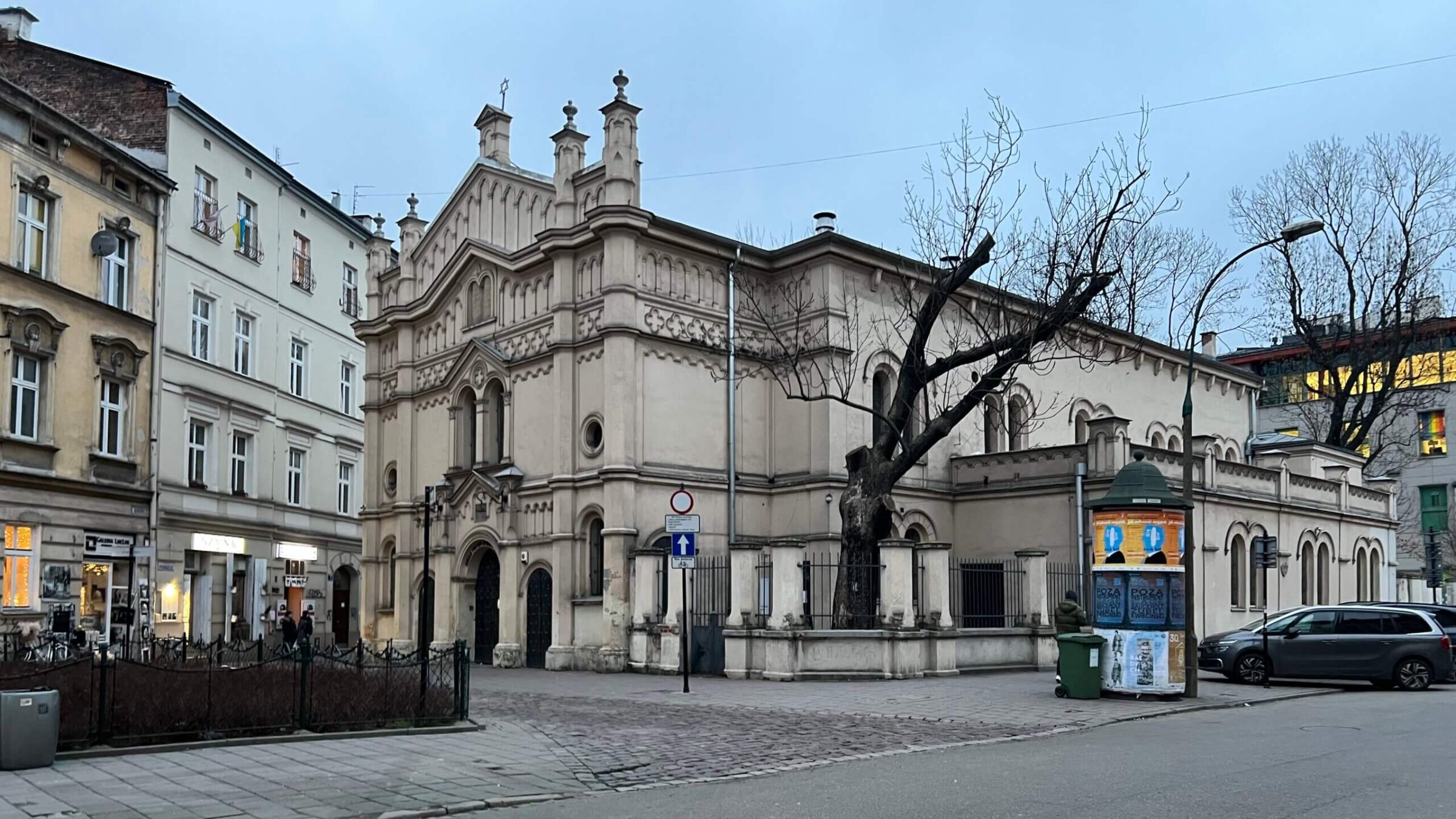
Adjacent to the Krakow JCC stands a beautiful synagogue, the neo-Romanesque Tempel Synagogue, constructed in the 1860s. Photo by Laura E. Adkins
Photo EssayPhotos: A somber Holocaust remembrance trip with Second Gentleman Doug Emhoff
Emhoff spent Holocaust Remembrance Day visiting the sites of concentration camps in a landmark trip

Laura E. Adkins January 29, 2023
I’ve spent these past few days on a trip to Poland with Second Gentleman Doug Emhoff.
It’s been a historic moment: Emhoff, the first Jewish spouse of a president or vice president, has been touring sites made infamous by Nazi atrocities and speaking with the Polish Jewish leaders of today. Along the way, he’s tried to make sense of the most ghastly moments in Jewish history — even as antisemitism continues to grow at home and abroad.
In public and private, he’s told those of us traveling with him that he hasn’t even begun to process what he’s seen.
And how could you? The tragedy is unspeakable, and the contemporary reality constantly changing. Below I’ve captured photographs of several moments from the trip that have moved me, and given me insight into what Jewish life in Poland looks like today — and looked like in the stolen past.
1 / 10
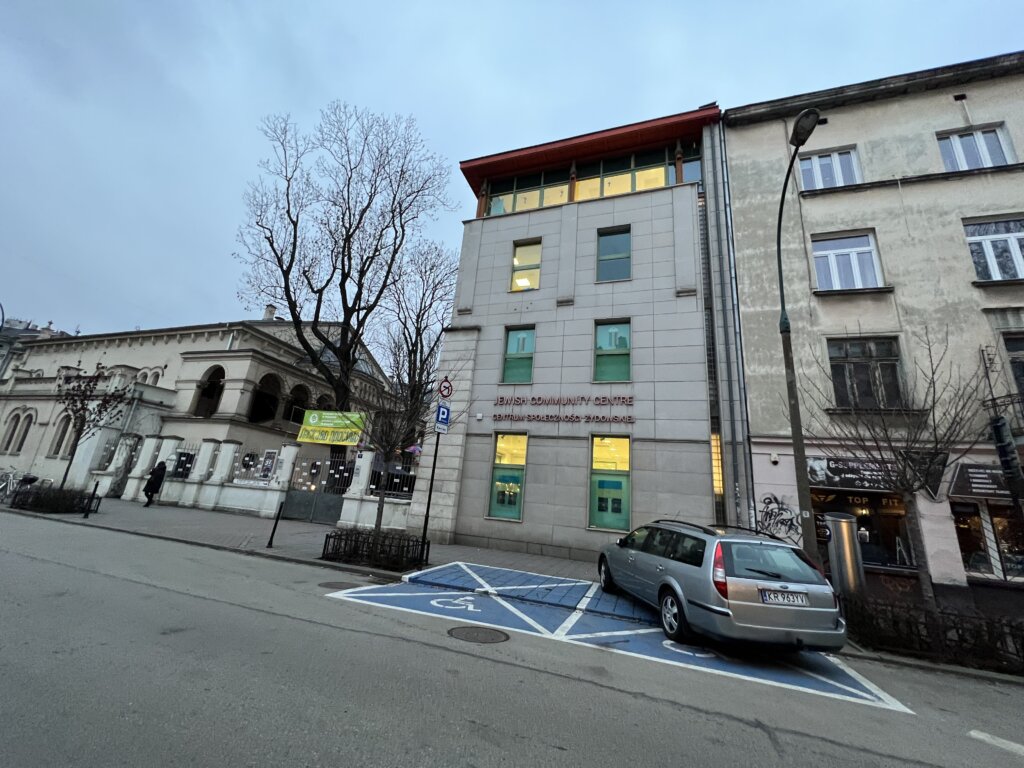
Photo by Laura E. Adkins
The JCC in Krakow serves nearly 500 Ukrainian refugees a day, and is central to the lives of a bustling community of Holocaust survivors.
2 / 10
Photo by Laura E. Adkins
3 / 10
Photo by Laura E. Adkins
4 / 10

Photo by Laura E. Adkins
5 / 10
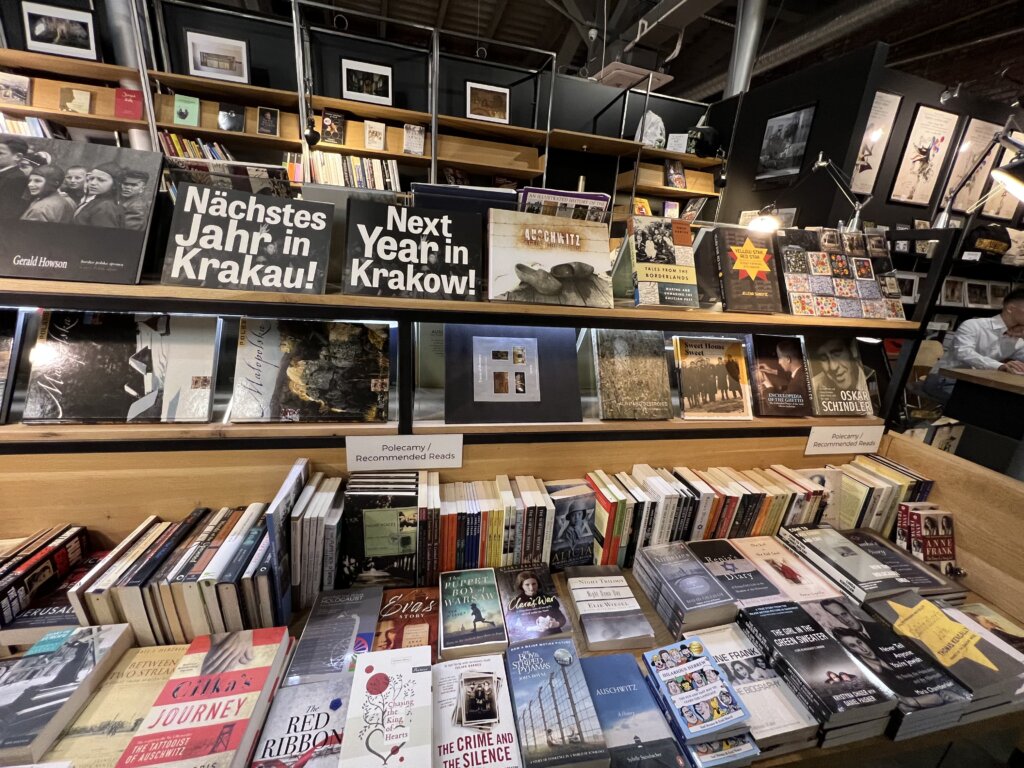
Photo by Laura E. Adkins
6 / 10

Photo by Laura E. Adkins
During a Saturday visit to the Oskar Schindler factory museum, Emhoff participated in a moving tour focused on the efforts Schindler and others made to save lives during the Holocaust. He quickly turned his attention to the antisemitic attacks that had just occurred in Jerusalem. “What we are seeing today, we cannot have history repeat itself,” he said.
7 / 10
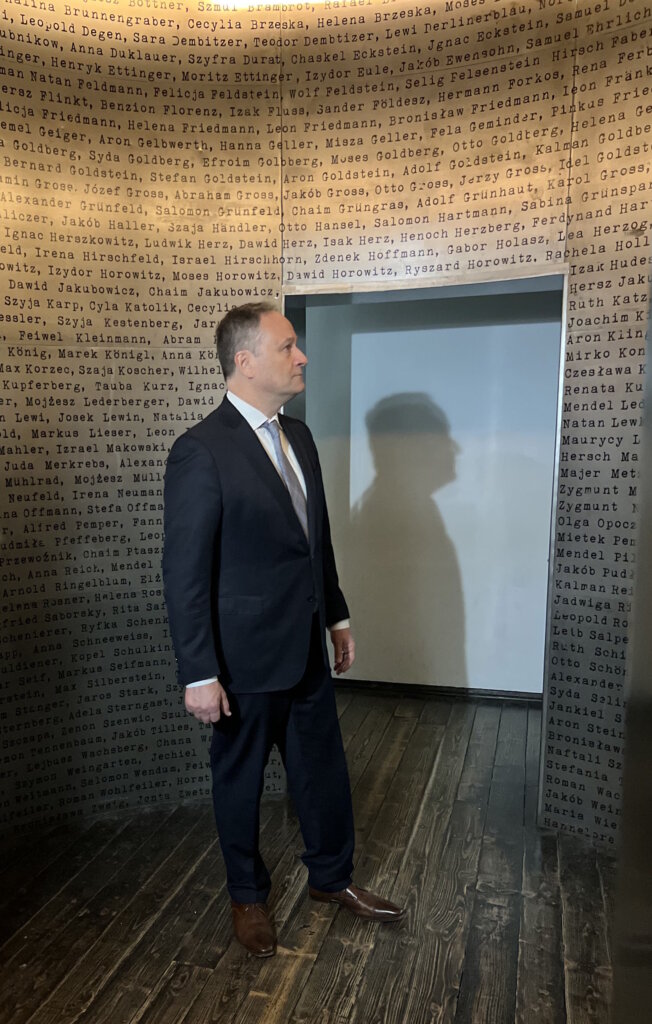
Photo by Laura E. Adkins
8 / 10
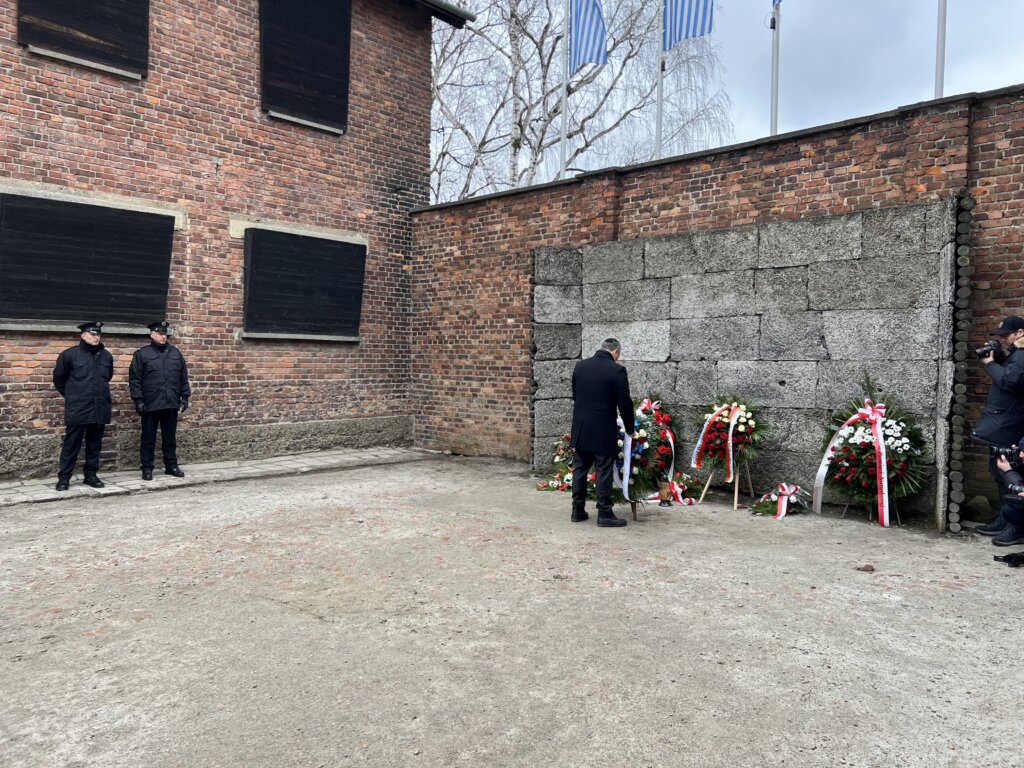
Photo by Laura E. Adkins
A ceremony honoring the liberation of Auschwitz included benedictions from a rabbi and from multiple Christian leaders. Many of the survivors present made the sign of the cross over themselves; I was told it was because most Jewish survivors left Poland long ago, so most of the ceremony’s attendees were non-Jewish survivors. During the ceremony, I thought about the surrounding forests, and the frigid air. How could anyone survive this place, I wondered? And how could these bare trees possibly serve as refuge for anyone brave enough to attempt to escape?
9 / 10
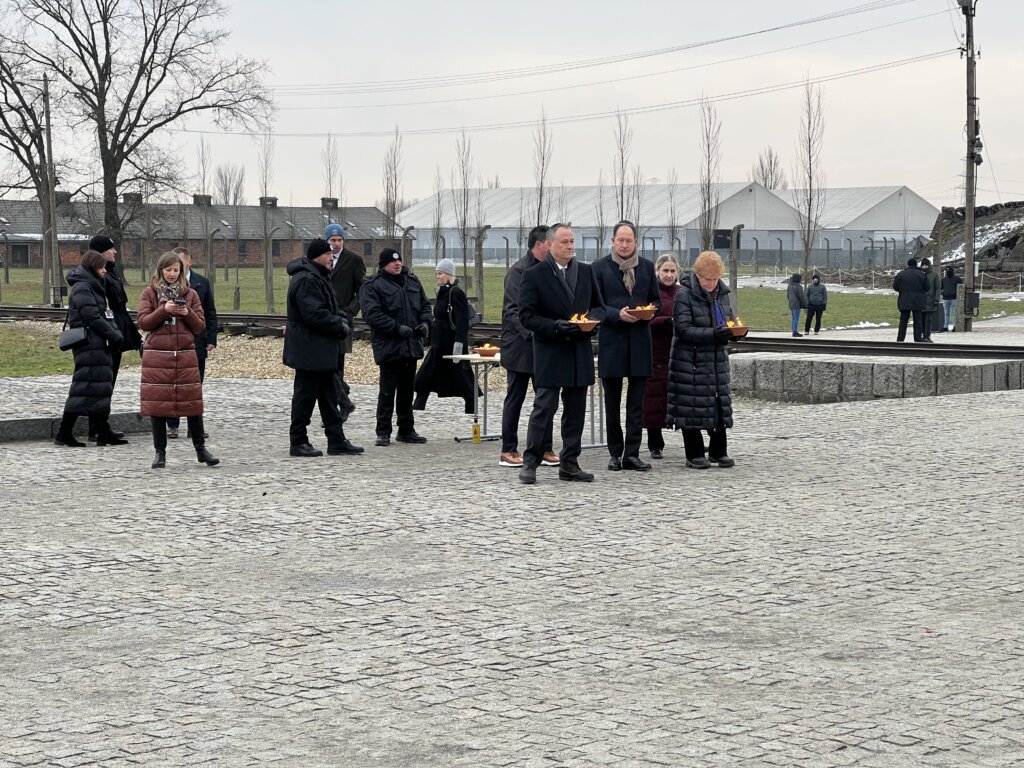
Photo by Laura E. Adkins
10 / 10
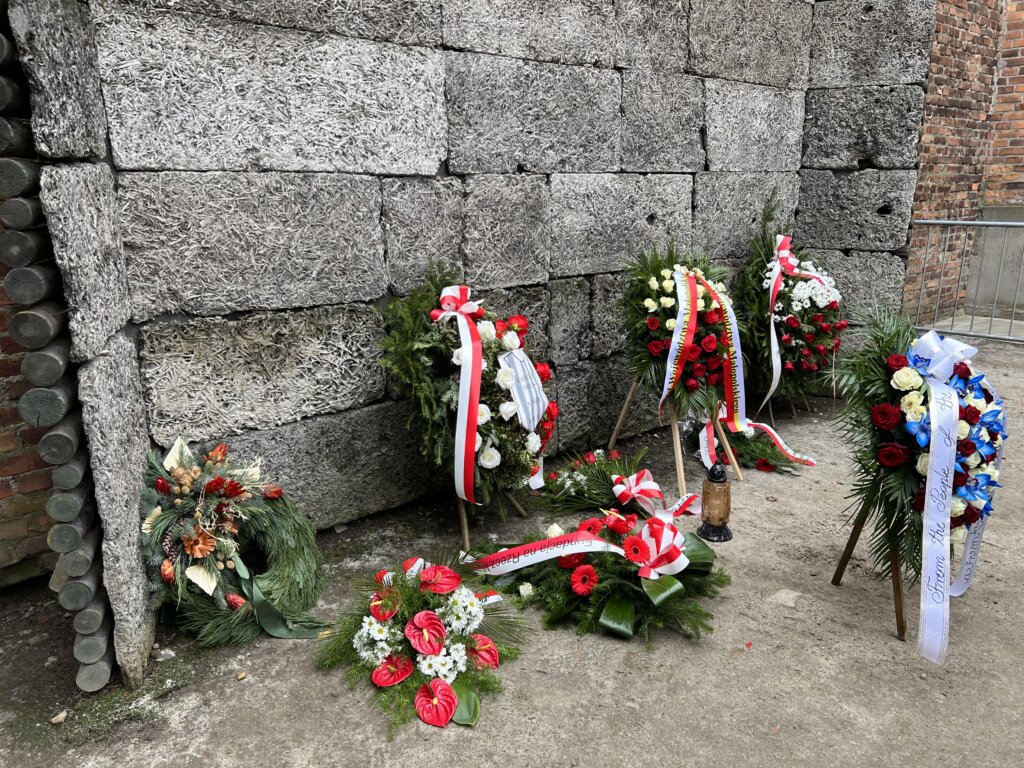
Photo by Laura E. Adkins
Did you know that only 2% of Forward readers donate to support our nonprofit newsroom? That 2% make it possible for millions to read the Forward without a paywall or subscription — removing any barriers to the full and fair Jewish story.
But while the Forward is free to read, it isn’t free to produce. Big stories — like deep dives into the antisemitism data, political scoops or reporting trips to college campuses — take months of research and fact-checking. All while we keep you informed of what you need to know each day.
— Rachel Fishman Feddersen, Forward Publisher & CEO
Support our mission to tell the Jewish story fully and fairly.