‘His love was so, so big’: Mourning Oriya Goshen, 21, a Bronfman alum killed in combat
An Israeli alum of the Bronfman Fellowship, soldier Oriya Goshen was killed in combat in southern Gaza last Wednesday
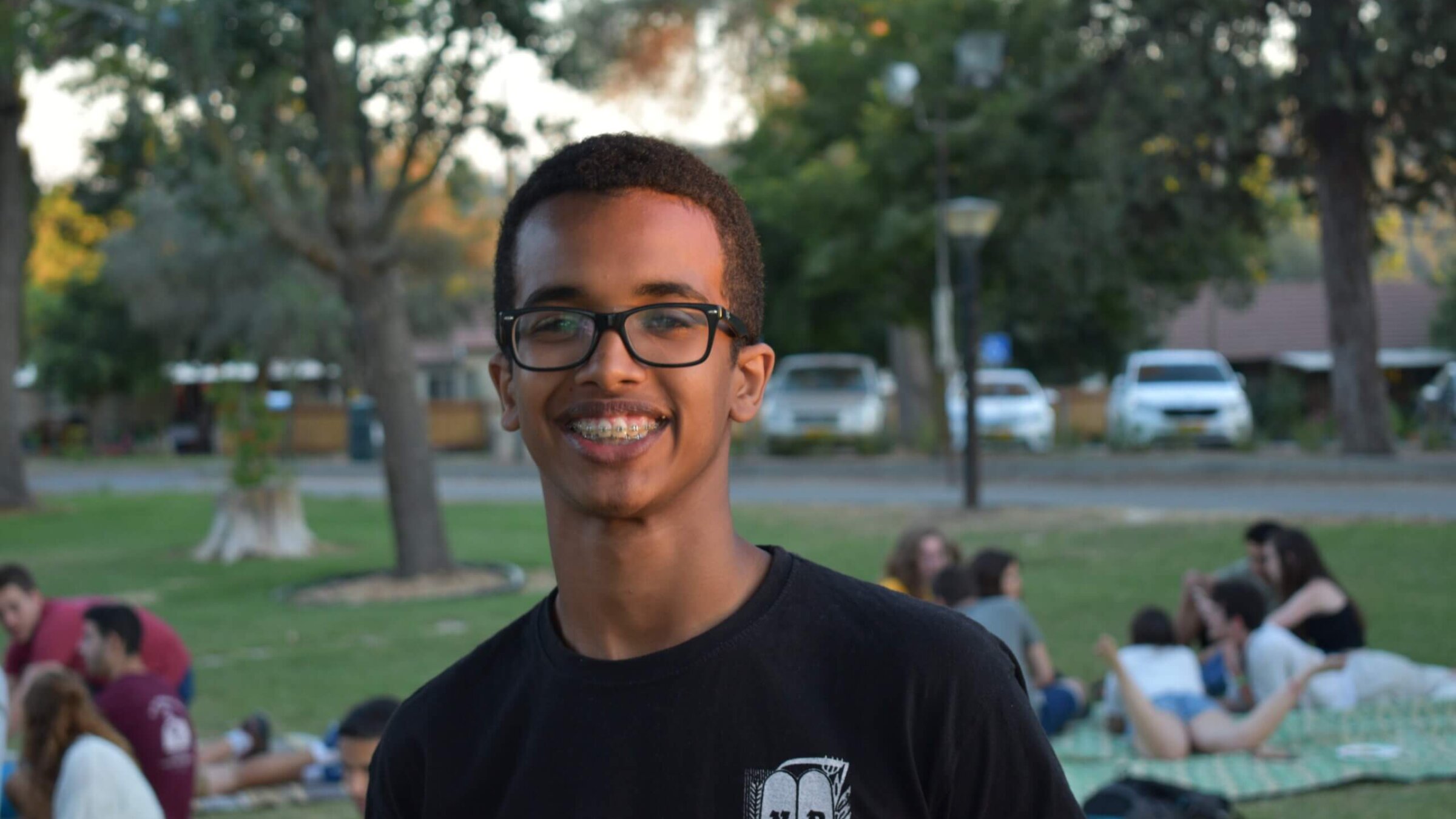
A combat soldier from Jerusalem, Sergeant Oriya Goshen is remembered by his peers. Courtesy of Bronfman Fellowship
Editor’s note: The Bronfman Fellowship is an educational program for Jewish high school students from North America and Israel. Since the Oct. 7 terror attack, the Forward has been publishing pieces showcasing the experience of some of Bronfman’s Israeli fellows and alumni. The following is a tribute to Oriya Goshen, an alum of the Bronfman Fellowship class of 2019.
The last time I saw Oriya Goshen was in summer 2021, when I was living in Modi’in during a gap year. He sent me a direct message on Instagram out of nowhere, writing, “Want me to come visit?” He drove from Jerusalem “just to say hi.”
The second-to-last time I saw Oriya was at Gan Sacher, where we had a reunion with some of the American and Israeli Bronfman Fellows from the 2019 cohort on a Friday morning. I remember running to meet him, barefoot in the grass, and he hugged me so hard my feet lifted off the ground. This is how I will always feel having known Oriya — held, lifted, suspended in the moment of his embrace, cared for so purely and embraced so dearly that I left the earth on which I stood, pulled into a new realm entirely.
My most immersive experience with Oriya was a long weekend in Brooklyn in December 2019, hosted at our friend Emmett’s house with Rinat, another Israeli Bronfman alum. We had Shabbat dinner and went to a drag show and ate dim sum and watched SNL and took pictures on the Brooklyn Bridge.
Oriya was from an Orthodox Ethiopian family in Jerusalem. He was deeply moved by the ways Black people lived and conducted themselves in the U.S. I still think about the questions he asked me, under a rattling subway station, about slavery and police brutality. Earlier that morning, as we ate bagels from the deli down the street, Oriya had told us about how his family came to Israel — by walking through Sudan — and he and Rinat probed us about our own relationships to Israel. Seeing both my country and Oriya’s country through his eyes changed profoundly how I thought about being American, and about Israelis; the ways he so consciously and joyously moved through the world with questions and earnest, unconditional care and curiosity.
My last correspondence with Oriya was a selfie he sent me from his unit when the war broke out. He was holding a cigarette while making a thumbs up. “Big love,” he wrote to me. His love was so, so big.
I am learning how in grief it’s important to remember not only how people were at the time they died, or how they died, but the many, many layers of selfhood they carried. I hope that the world can see Oriya not only as a young, brave man lost in the painful and evil throb of history but also as he was when I first met him: a beautiful teenager with braces and a huge smile and thick glasses, who loved basketball and music and would comment emojis on all of my Instagram posts. I hope that in cherishing Oriya’s fullness we can hold ourselves and each other warmly in his memory, lift our communities, as I am sure he would have wanted, with such strength that our toes lift off the grass. Baruch dayan haemet.
This is a moment of great uncertainty. Here’s what you can do about it.
We hope you appreciated this article. Before you go, we’d like to ask you to please support the Forward’s independent Jewish news. All donations are still being matched by the Forward Board - up to $100,000 until April 24.
This is a moment of great uncertainty for the news media, for the Jewish people, and for our sacred democracy. It is a time of confusion and declining trust in public institutions. An era in which we need humans to report facts, conduct investigations that hold power to account, tell stories that matter and share honest discourse on all that divides us.
With no paywall or subscriptions, the Forward is entirely supported by readers like you. Every dollar you give is invested in the future of the Forward — and telling the American Jewish story fully and fairly.
The Forward doesn’t rely on funding from institutions like governments or your local Jewish federation. There are thousands of readers like you who give us $18 or $36 or $100 each month or year.

Support our mission to tell the Jewish story fully and fairly.