A Judicious Punt
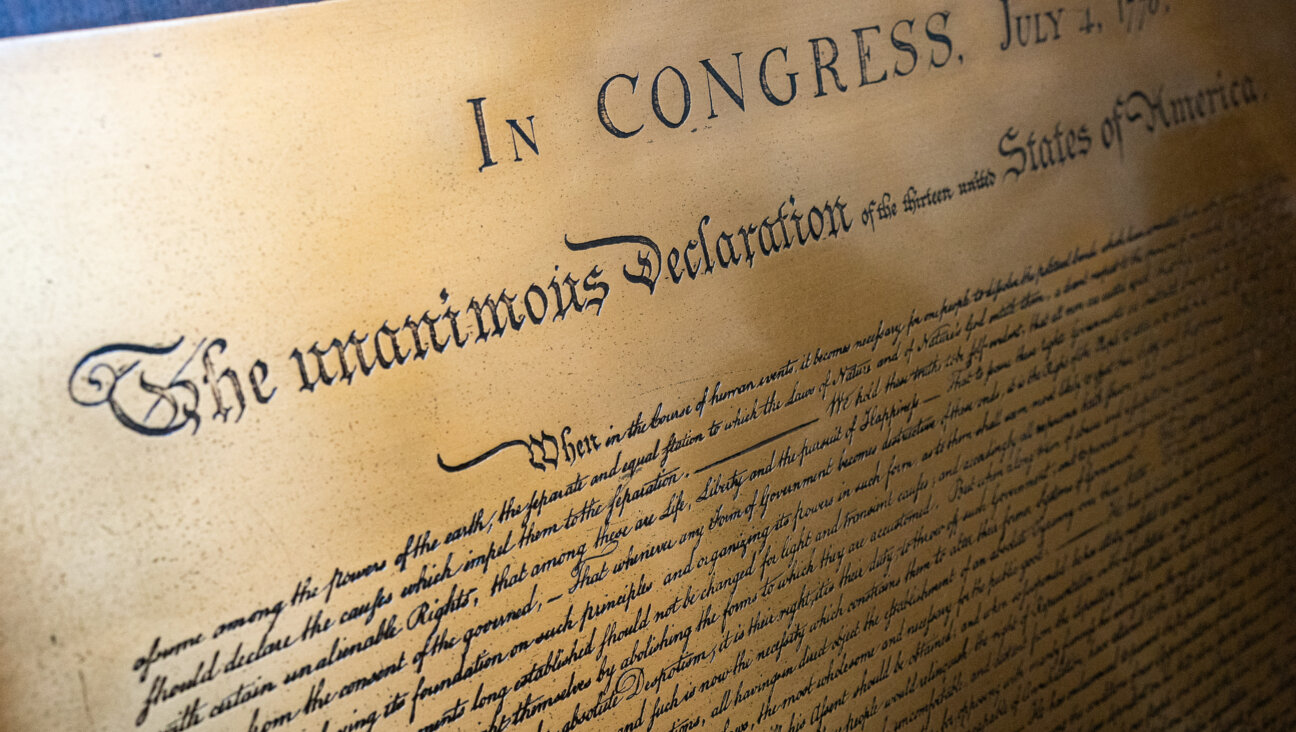
The United States Supreme Court seems to have left just about everybody feeling grumpy following its narrowly cast ruling this week upholding the current wording of the Pledge of Allegiance. And that’s probably just as well. This was a case that nobody could win, and that’s how the court left it — for now, at least.
To be sure, our sympathies are with the plaintiff, Michael Newdow. A California physician and lawyer, Newdow has been seeking for years to have the federal judiciary remove the words “under God” from the pledge, on the grounds that the enforced school religious ceremony drove a wedge between him and his daughter by casting a shadow over his atheist beliefs. Representing himself before the court, including a dramatic appearance before the Supreme Court, he has fought ably and courageously for the rights of religious dissenters everywhere.
The Court seemed to recognize those stakes with its decision this week. In a carefully worded ruling, Justice John Paul Stevens, the lion of the court’s embattled liberal wing, decided not to rule on the constitutionality of the pledge but rather tossed the case out on the technical grounds, claiming that Newdow had no standing because he did not have custody of his daughter.
A decision in Newdow’s favor, while constitutionally appropriate, would not have served the Constitution or the nation, at least not this spring. His early victories in the lower courts had infuriated religious conservatives, who are waging their own battles nationwide to lower the wall of church-state separation. If Newdow had won, the decision would have injected new rage and new energy into the religious right, just at a moment when it is losing political steam because of the ineptness of the current administration. The stakes right now are far, far greater than the phrasing of the pledge and the discomfort it causes to schoolchildren.
Congress acted wrongly when it decided in 1954, in the middle of the Cold War, to add the provocative words to the pledge. But Newdow’s one-man crusade to right that wrong, however justified, would have ended up causing more mischief than he could have imagined. With real, life-and-death issues at stake, this was a symbolic victory that liberty could not afford.
This is a moment of great uncertainty. Here’s what you can do about it.
We hope you appreciated this article. Before you go, we’d like to ask you to please support the Forward’s independent Jewish news this Passover. All donations are being matched by the Forward Board - up to $100,000.
This is a moment of great uncertainty for the news media, for the Jewish people, and for our sacred democracy. It is a time of confusion and declining trust in public institutions. An era in which we need humans to report facts, conduct investigations that hold power to account, tell stories that matter and share honest discourse on all that divides us.
With no paywall or subscriptions, the Forward is entirely supported by readers like you. Every dollar you give this Passover is invested in the future of the Forward — and telling the American Jewish story fully and fairly.
The Forward doesn’t rely on funding from institutions like governments or your local Jewish federation. There are thousands of readers like you who give us $18 or $36 or $100 each month or year.
Support our mission to tell the Jewish story fully and fairly.